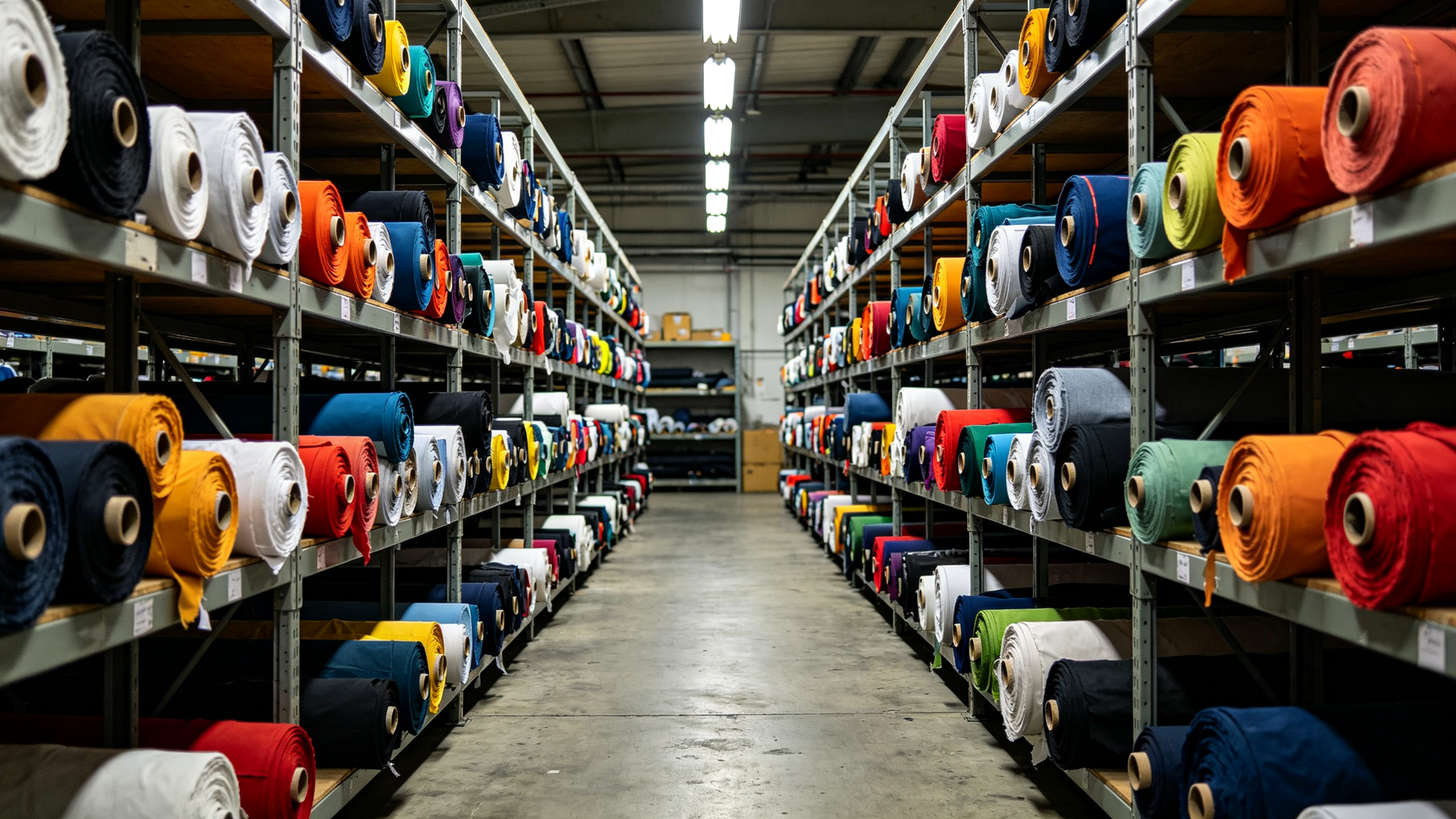
Organic cotton can suit lifestyle layers, light studio pieces, recovery wear and branded merchandise, but it is not a shortcut for performance or certification. B2B buyers should separate an organic-fibre claim from yarn, knit, finish, blend, label claim and testing decisions. For movement products, select a development route that validates stretch, recovery, coverage and care in approved samples.
For an activewear brand, the useful question is rarely “Is organic cotton better?” A better question is: *Which fabric construction and claim scope fit this product, user, selling market and approval plan?* A tee for a studio team, a soft warm-up layer, a yoga cover-up and a high-movement training legging do not ask the fabric to do the same job. Their fibre direction, knit structure, stretch requirement, colour approach, trims and test plan should therefore be different.
This guide helps brands compare organic cotton with conventional cotton, recycled cotton and common activewear blends without treating any one fibre as a universal answer. It also explains how a sourcing brief moves from a material request to an approved sample and then, where appropriate, to production coordination.
What does “organic cotton” mean in an activewear brief?
In a sourcing brief, organic cotton describes the agricultural origin of the cotton fibre. It does not by itself define the knit, yarn quality, fabric weight, stretch, recovery, opacity, colourfastness, chemical processing, finished-garment performance or final label claim. Those are separate specifications that the brand, material supplier and manufacturer need to review.
That distinction matters because cotton terminology is often mixed together. A buyer may ask for “organic combed cotton,” “organic cotton with stretch,” or “GOTS activewear.” Each phrase can point to more than one decision. The first may combine an agricultural claim with a yarn-preparation description. The second adds a blend and performance question. The third may involve a particular standard’s processing and chain-of-custody requirements, which must be verified against the current certified scope of the relevant supplier and project.
For a B2B project, write the request in layers:
- Fibre and claim direction: organic cotton, conventional cotton, recycled cotton, or another defined fibre direction.
- Composition target: for example, a proposed cotton/elastane or cotton/polyester blend, subject to fabric availability and sample confirmation.
- Construction target: jersey, rib, interlock, fleece, French terry, woven poplin, spacer or another construction appropriate to the product.
- Use and fit target: lifestyle, low-impact studio, warm-up, staff uniform, light training layer, or a specified movement test.
- Evidence needed: composition documents, applicable claim documentation, lab or buyer-required tests, garment measurements, wash review and approved samples.
This approach keeps the claim clear without asking a material label to carry the whole product decision.
Which cotton terms are fibre claims, and which are construction choices?
The table below prevents a common sourcing mistake: treating farming method, fibre length, spinning method and performance construction as interchangeable descriptions.
| Term in a buyer brief | What it describes | What it does not confirm | Useful question before quotation |
|---|---|---|---|
| Organic cotton | The requested agricultural origin of the cotton fibre, subject to the claim and documentation scope. | Knit type, finish, stretch, final garment certification or performance. | Which standard or customer claim applies, and what documentation must follow the material through the project? |
| Conventional cotton | Cotton without an organic-fibre request in the brief. | Fibre quality, comfort, performance, social or environmental attributes, or certification. | What yarn, construction, weight and finish does the product need? |
| Recycled cotton | A recycled-input direction with its own content and traceability requirements. | An organic claim, fibre length consistency or automatic suitability for every construction. | What recycled-content evidence, blend and performance evidence are required? |
| Long-staple or extra-long-staple cotton | Fibre-length classification used in fibre and yarn discussions. | Organic origin, finished-fabric quality or garment performance. | Is fibre length relevant to the desired yarn appearance, handfeel or durability target? |
| Carded or combed cotton | Yarn-preparation approach. Combing generally removes more short fibres before spinning. | Organic origin, certification status or a particular performance result. | Is the goal a smoother surface, lower visible lint, a softer hand or a specified yarn route? |
| Ring-spun or open-end yarn | Spinning method. | Fibre origin, stretch or final product quality on its own. | What surface, weight, cost direction and end use should the yarn support? |
| Cotton/elastane blend | A composition direction that adds an elastic component. | Adequate recovery, opacity, fit retention or a final percentage without sample evidence. | What stretch and recovery behaviour must the sample demonstrate after wear and wash review? |
| Cotton/polyester blend | A composition direction combining cotton with polyester. | A fixed moisture, odour, durability or care result. | What is the product role, fabric hand, surface appearance and care expectation? |
The practical lesson is simple: an organic claim belongs in the fibre and documentation portion of the brief. “Combed,” “rib,” “interlock,” “stretch” and “brushed” belong in the yarn, construction or finishing portion. Buyers get a more comparable response when they state both.
Why might a brand choose organic cotton for activewear-related products?
Organic cotton is often considered when a brand has a defined material programme, a customer-facing fibre preference, a requirement from a retailer, or a product category that benefits from a cotton-led hand. It can be a relevant option for relaxed studio apparel, low-impact yoga layers, warm-up pieces, staff uniforms, community merchandise, casual travel sets and branded tees.
The benefit for the buyer is not an automatic performance promise. It is the ability to build a product conversation around a defined fibre direction and an evidence path. That can make it easier to align the design team, sourcing team, brand claims reviewer and factory-development team before sample approval.
Cotton-led products can also give a collection a different hand, surface and product role from a technical synthetic performance range. A brand may deliberately use that contrast: a cotton-rich layer for arrival, warm-up, recovery or off-duty wear, alongside a separate fabric programme for higher-sweat or high-recovery garments. The Activewear Performance Collection is a useful contrast reference when a team needs to compare a cotton-led layer with a closer-fitting technical direction; the catalogue does not confirm the final fabric for a new project. The garment’s intended activity should lead the decision, not the keyword on a hangtag.
Avoid broad claims such as “organic cotton is chemical-free,” “organic cotton is hypoallergenic,” “organic cotton performs better,” or “organic cotton is always more sustainable.” Those statements are too broad for a production brief. Agricultural rules, processing, dyeing, finishing, composition, certification scope, user sensitivity and performance all need their own evidence and approval process.
How does organic cotton compare with other cotton and activewear fabric directions?
The following comparison is a planning tool, not a specification sheet. The selected supplier, composition, construction, weight, finish, colour, trims and sample results determine the final product.
| Fabric direction | Possible product role | Buyer advantages to explore | Decisions that still need approval | Route that usually fits |
|---|---|---|---|---|
| 100% organic cotton jersey or interlock | Branded tee, relaxed studio layer, recovery piece, staff apparel. | Cotton-led hand, simple product story and an organic-fibre documentation path where applicable. | Weight, shrinkage behaviour, surface appearance, colour, coverage, care and any claim wording. | Catalogue-informed development or small-batch custom, depending on the fit and branding changes. |
| Organic cotton with elastane | Fitted top, ribbed layer, light studio bottom or close-fitting warm-up piece. | A cotton-led composition with a defined stretch direction. | Stretch percentage, recovery after movement and wash, seam behaviour, opacity and fit. | Factory custom manufacturing with sample review. |
| Organic cotton with polyester | Hoodie, fleece, French-terry layer or training-lifestyle crossover. | A blend direction that can be developed around hand, surface and care requirements. | Blend ratio, inside surface, pilling expectations, colour behaviour, logo method and wash review. | Factory custom manufacturing or an approved existing construction. |
| Conventional cotton construction | Broad apparel categories where an organic-fibre claim is not required. | Potentially wider material options for the required construction and colour direction. | Exact fibre quality, yarn, construction, finish, quality checks and claims. | Match the route to product and branding scope. |
| Recycled-cotton blend | Merchandise, lifestyle layer or defined material programme. | A separate recycled-input story where documentation supports it. | Source-content evidence, yarn route, blend, surface consistency, testing and label language. | Factory custom manufacturing with a defined material brief. |
| Polyester/elastane or nylon/elastane performance knit | High-movement legging, bra, fitted training top or performance base layer. | Construction and recovery options designed around movement-product requirements. | Stretch, recovery, coverage, support, seam layout, care, colour and use-specific test evidence. | Factory custom manufacturing with fit and wear testing. |
No row in this table is “best” by default. A cotton-rich rib can be right for a studio set where hand and relaxed movement are central. A technical stretch knit can be more appropriate for a product whose design requires high recovery, targeted support or repeated intensive movement. The Light Support Bra Program can help a buyer name support, neckline and recovery questions in a reference brief, while the final material and support level still need sample confirmation. A smart range can use both, provided each garment has a clear job.
When is cotton-led fabric a good fit for yoga, workout and gym wear?
Start with the user’s session and the garment’s position in the range. For yoga, cotton-led materials may be explored for cover-ups, relaxed tanks, easy trousers, low-intensity layers or studio merchandise. For workout and gym wear, they may suit branded tees, staff uniforms, warm-up hoodies, travel layers or recovery-oriented pieces. They are not automatically the right answer for compression garments, high-support bras, heat-intensive training or close-fitting products that depend on a specific recovery profile.
Ask the design team to define what the wearer must be able to do. Is the garment for arriving at the studio, teaching a class, lifting, stretching, commuting, team presentation, repeated high-sweat training or post-session recovery? Does it need to be close-fitting, layered, oversized, structured or easy to remove? Those answers determine whether the buyer should request a cotton-rich construction, a cotton blend or a technical performance knit.
For fitted cotton-led pieces, make movement review explicit. Stretch is only one part of the question. The sample should also be assessed for recovery, seam comfort, coverage in the intended poses, neckline or waistband stability, leg-opening behaviour where relevant, and appearance after the agreed care review. A ribbed cotton built-in bra top is a useful silhouette reference for discussing a close-fitting studio layer; it is not evidence that a future custom style has the same composition, coverage or support. The label “organic” cannot substitute for those checks.
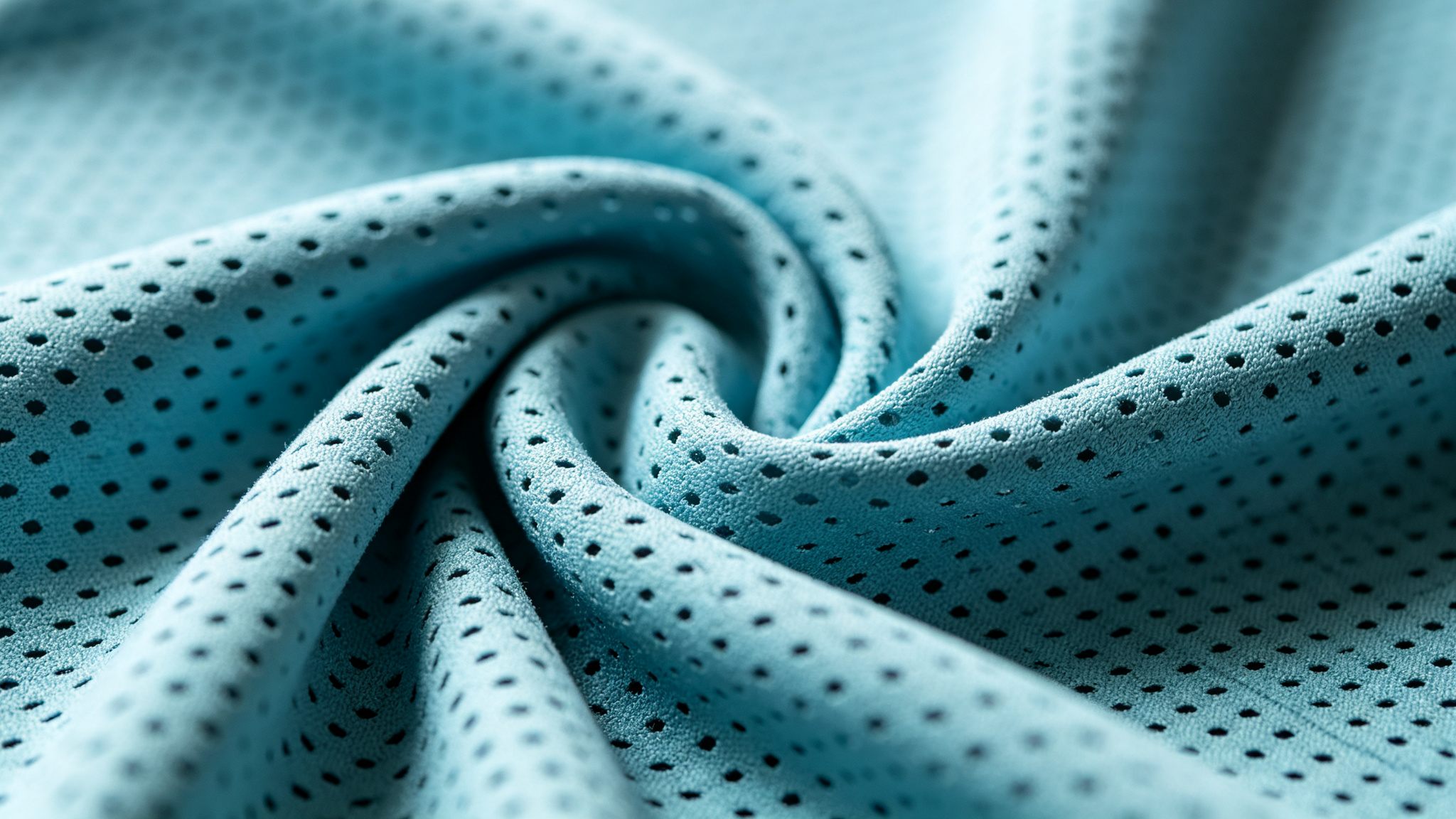
This construction reference does not identify fibre origin, composition, finish, certification status or performance of a specific project. Confirm those points on the selected fabric and approved sample.
How should a brand specify an organic cotton activewear fabric?
An effective brief makes the product and evidence path visible before a supplier tries to quote it. The following checklist works for a new custom development, an existing style adapted for a material programme, or a collection refresh.
Buyer preparation checklist
- Product category and role: tee, tank, hoodie, jogger, yoga layer, fitted rib top, short, bra, legging or another defined item.
- End use and movement: lifestyle, studio, low-impact movement, warm-up, staff uniform, retail merchandise or a specified training use.
- Fibre request: organic cotton direction, blend preference and any retailer, customer or market claim requirement.
- Required documentation: the exact certificate, transaction, scope or chain-of-custody documents your programme needs, confirmed with the relevant material supplier and claim owner.
- Construction: jersey, rib, interlock, fleece, French terry, woven or another stated option; include a reference swatch when possible.
- Hand and surface: soft, dry, structured, brushed, smooth, textured, compact or other observable direction.
- Weight and coverage target: a starting range or reference sample, plus any opacity or lining concern.
- Fit and measurements: body fit, grade range, preferred ease, length, neckline, armhole, waistband and movement points.
- Colour and branding: colour reference, artwork, logo position, label, hangtag, packaging and market language for any material claim.
- Sample evidence: measurement review, fit comments, movement photos or videos, wash observations and open decisions for the next sample.
- Quantity direction and delivery market: enough context to discuss the manufacturing route, packing requirements and the right production coordination.
If a detail is not ready, label it as an open question. A transparent “to be developed in sample” note is more useful than a vague instruction that produces different assumptions across quotations. Teams comparing a relaxed layer can use the Jogging & Printed Activewear Catalog and its raglan training-layer reference to name length, layering and logo-zone questions before requesting a cotton-led alternative; catalogue imagery is not a fabric or claim specification.
What should be checked in the sample before bulk approval?
An approved fabric swatch is not yet an approved activewear garment. Once the material is cut, sewn, branded and worn, the interaction between fibre, construction, elastic components, seam type and fit becomes visible. This is where a buyer turns a material preference into a product decision.
| Approval point | What the buyer should review | Why it matters for a cotton-led activewear product |
|---|---|---|
| Composition and claim paperwork | Match the selected material, supplier documents and planned label language to the project’s defined claim scope. | Prevents a fibre request from becoming an unsupported consumer-facing claim. |
| Hand, surface and weight | Compare the garment to the intended product role and reference. | A soft tee, a compact rib and a brushed layer create different wearing expectations. |
| Stretch and recovery | Test in the actual movement zones, then review return after wear and the agreed wash cycle. | A fitted piece can look acceptable at rest while performing differently in movement. |
| Coverage and shape | Review seated, bent, stretched and layered positions appropriate to the product. | Coverage depends on construction, colour, fit, lining and body movement, not fibre name alone. |
| Seams, trims and branding | Check seam comfort, puckering, print or embroidery compatibility, labels and hardware. | Added components can change hand, stretch and visible surface behaviour. |
| Care and appearance | Agree the care method and assess the sample after the required review cycle. | Shrinkage, surface change and colour appearance must be evaluated on the selected construction. |
| Measurement and grading | Confirm the base size, tolerances, length points and grade direction. | Fabric behaviour and fit are linked; a good material decision still needs a controlled pattern. |
| Packing and market language | Confirm composition labels, care labels, claim wording, polybag and carton requirements. | The finished product must communicate only what the approved materials and documentation support. |
This is also the moment to decide whether a style should remain cotton-led or move to a different construction. A well-run sample review does not defend the original assumption at all costs. It uses evidence to select the construction that best supports the product role. The activewear sample plan can help organise the evidence and decision owners, while the stretch-activewear logo-method guide is relevant when a placement or decoration choice could alter the surface and recovery discussion.
How do Supplier, Manufacturer and Factory responsibilities differ here?
The three words are often used as synonyms, but they answer different buyer questions.
- A supplier conversation helps a buyer compare material options, documentation requirements, product references, branding scope and quotation assumptions.
- A manufacturer conversation turns the selected direction into a garment: pattern, fit, fabric and trim choices, construction, sample sequence and approval criteria.
- A factory conversation focuses on implementing approved specifications through material handling, cutting, sewing, logo application, quality checks, packing and production coordination.
For an organic cotton activewear project, the best path connects all three. The buyer should not ask the factory to guess the desired claim scope, and the material supplier should not be expected to approve garment fit. A clear brief allows each party to review the decision it owns.
How inPACE can support this decision
inPACE Sports can begin a custom activewear discussion from a brand brief, reference image, existing sample or tech pack. For cotton-led products, the discussion can cover the intended garment role, fabric hand, stretch direction, coverage, structure, fit and branding details before the sample route is confirmed. Final material, fit, scope and timing remain subject to the selected fabric and approved sample.
The programme is built on more than 30 years of garment-production experience through Yinshan Garments. Where a project needs a particular construction, decoration method or production route, inPACE can coordinate an appropriate path through multiple partner factories. That coordination does not imply every factory is owned by inPACE or that capacity, pricing or timing is fixed. It means the product, material, construction, decoration, quantity direction and approval plan can be considered together.
For projects that include printing, embroidery or wash effects, those details should be reviewed against the selected cotton construction and the intended garment surface. Sample planning commonly falls in a 5–10 day range and production planning commonly falls in a 25–50 day range after scope and approvals are confirmed, but the actual route requires project confirmation. Those ranges are planning context, not a promise of delivery.
Three useful next destinations for a cotton-led collection
Custom Activewear Development
Factory custom manufacturing route. Use the custom activewear development route when the project needs a new fit, specific fabric construction, custom colour, changed details or a controlled sample process. Share the product role, fabric direction, reference and movement requirements.
Fabrics and Trims Review
Material and component review. The fabric and trim review is useful when the team needs to compare a cotton-led construction with stretch, lining, label, logo or other component choices before confirming a sample.
Yoga Activewear Catalog
Product-reference route. The Yoga Activewear Catalog can help a brand identify silhouettes, coverage points and product roles to use as references. Catalogue images are a starting point, not proof of the organic composition, colour, stock or specification of a future project.
What should the RFQ say if the brand is still comparing fabrics?
It is acceptable to ask for comparison guidance. State the product outcome you need, then give the manufacturer room to identify open material questions. For example:
We are developing a fitted studio top for low-impact movement and travel. We would like to evaluate an organic cotton-led stretch construction against a cotton/polyester alternative. The sample must demonstrate the intended hand, coverage, neckline stability and recovery after agreed movement and wash review. Please identify the composition, construction, documentation scope, assumptions and open decisions in the quotation.
That request is more useful than “Please quote organic cotton activewear.” It creates a comparable record of what is requested, what is proposed and what must be validated in the sample.
For the wider development sequence, see the activewear sampling process, the activewear manufacturing workflow, and this adjacent guide on how fabric construction changes gym wear colour. Each can help the brand separate material decisions from later production approval.
Start with a material-and-product brief
If your brand is exploring organic cotton activewear fabric, send inPACE Sports the product category, use case, reference garment or tech pack, target composition, construction direction, required claim scope, fit points, colour and branding plan, sample evidence needed, quantity direction and delivery market. We can discuss whether an existing product direction, small-batch custom development or factory custom manufacturing better fits the project. Request an activewear manufacturing quote with the decisions you already know and the questions you still need to test.
FAQ
Buyer questions
Is organic cotton suitable for activewear?
Organic cotton can be considered for activewear-related products such as relaxed studio layers, warm-up pieces, branded tees, staff apparel and recovery wear. Its suitability for a specific garment depends on the required construction, blend, stretch, recovery, coverage, fit, care and use. Confirm those points on the selected material and approved sample.
Is organic cotton the same as GOTS-certified activewear?
No. An organic-fibre request and a finished-garment standard claim are not the same thing. Standards can have different chain-of-custody and processing requirements. Confirm the current standard, certificate scope, supplier documentation and allowed label language for the actual project before making a claim.
Is combed cotton automatically organic cotton?
No. “Combed” describes a yarn-preparation approach. It does not describe how the cotton was farmed or certify the fibre origin. A brief can request both an organic-fibre direction and a combed yarn direction, but each needs its own confirmation.
Can an organic cotton blend stretch enough for a fitted yoga top?
It may be possible to develop a cotton-led stretch construction, but the result depends on composition, knit structure, garment pattern, seam construction and the intended movement. Review stretch, recovery, coverage and neckline or hem stability in the actual sample before bulk approval.
Is recycled cotton the same as organic cotton?
No. Recycled cotton and organic cotton are different fibre-input and claim directions. A recycled-content request needs its own documentation and material review. Do not treat a recycled claim as proof of organic content, or an organic claim as proof of recycled content.
What documents should a buyer request for an organic cotton claim?
Request the documentation required by the applicable standard, retailer, market and project claim. Confirm that the documents relate to the selected material and supplier scope, and review the final label wording before production. The right document set depends on the claim route rather than a single universal checklist.
Can we add printing, embroidery or a wash effect to an organic cotton garment?
These details can be discussed during sampling, but their compatibility, appearance, processing requirements and any claim implications must be reviewed on the selected fabric and sample. Share artwork, placement, wash target, handfeel expectation and documentation needs before approving the route.