
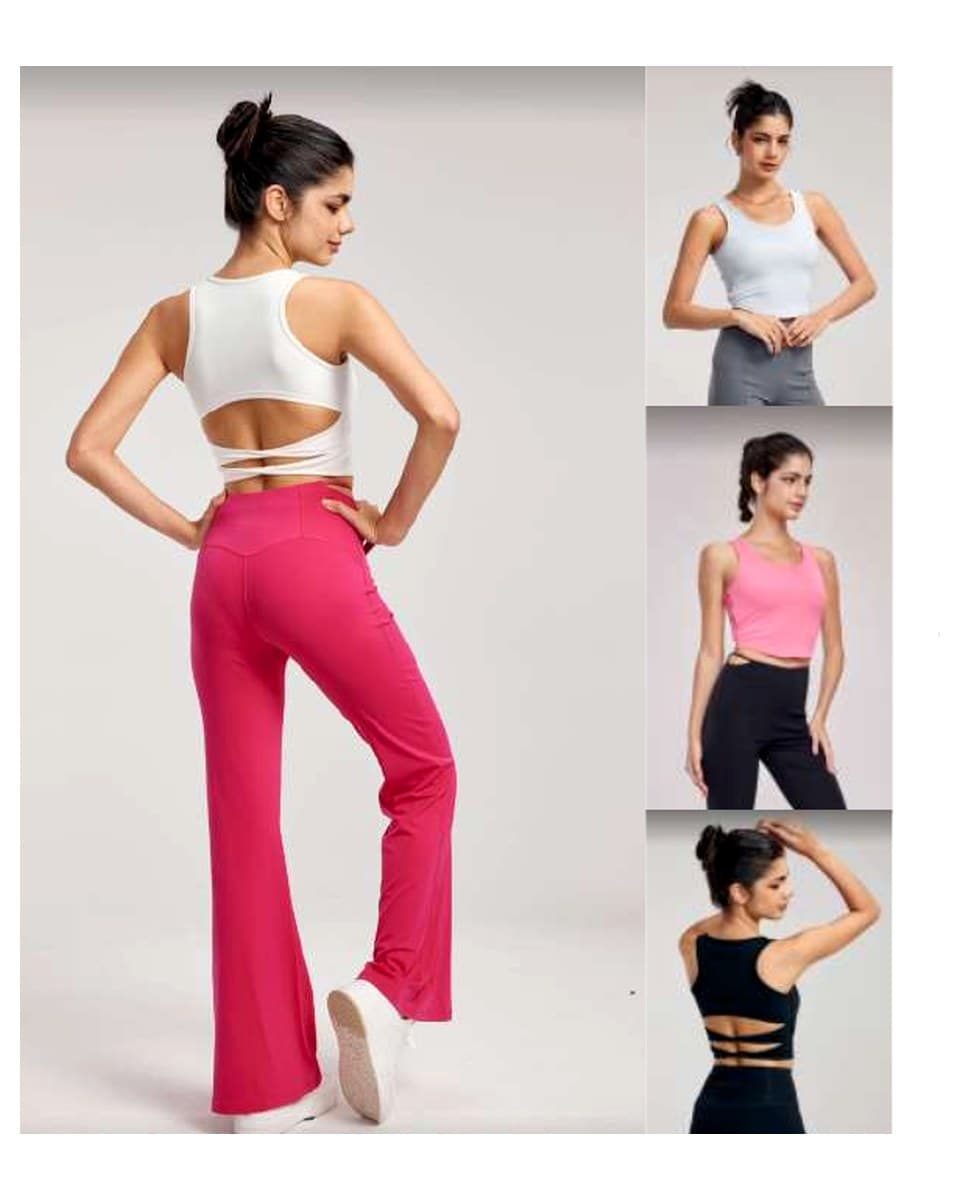
Why should a regional enquiry become a country and channel plan?
A regional sales ambition does not tell a supplier which product to prepare. A studio shop and an online store may need different presentation and receiving arrangements even when they sell the same garment. Orders for separate countries may also require distinct product-information reviews and destination records.
Consider an illustrative adult activewear brand exploring a studio range in Singapore and an online range in Malaysia. It wants to compare selected existing styles with a more developed product direction. The example is a way to organise the sourcing decision; it is not a reported customer order or a statement about demand in either market.
The brand should identify what is confirmed and what remains a proposal. A possible Malaysian launch is not yet a quantity commitment. A studio owner's interest in a top is not approval of its fit or branding. Keep each statement connected to the decision it can support so the supplier does not build a quotation around assumptions presented as facts.
Use the local versus China supplier guide to frame the broad route comparison. For this project, the next task is narrower: define what can stay common across the range, what belongs to a country or channel, and what product work must happen before those decisions can be made.
How can a brand make the first country and channel matrix?
Create one row for each actual selling arrangement. Name the destination, channel, garment role, information owner and sample question. A simple matrix helps the team see whether it is evaluating one shared product or several different briefs that happen to carry the same brand name.
| Proposed arrangement | Product role to define | Local work to arrange | Supplier information needed |
|---|---|---|---|
| Singapore studio shop | Selected garments for the studio's stated audience and use | Review of physical samples, size explanations and approved product information | Exact styles, confirmed branding scope and the agreed selling unit |
| Malaysia online store | Identified products supported by accurate images and descriptions | Destination review, product-page preparation and receiving instructions | Approved garment identity, variant details, artwork and packing allocation |
| Shared product across both channels | Features that remain the same in both arrangements | One consolidated decision on the common garment | A common product reference with separate destination or channel schedules |
| A later proposed market | An unconfirmed extension of the range | Investigation before quantities or claims are committed | A clearly labelled enquiry rather than an instruction to add it to the order |
These rows describe the illustrative project, not standard operating conditions for all businesses in Singapore or Malaysia. Add or remove rows to match the real order. If the team cannot name the owner of a row, keep that part of the plan open until someone can make its decisions.
Distinguish location from channel. An online store may serve one country or several, while a studio may also sell online. The supplier needs the actual destination and packing arrangement rather than a general label such as e-commerce or Southeast Asia.
Which core products should enter the supplier comparison?
Choose product references that represent the range's real purpose. The activewear performance collection can support the initial discussion, but the brand should identify the particular garments and questions it wants a supplier to assess. A collection link by itself leaves too much room for different interpretations.
For the example, a cutout-back top reference gives the team a concrete neckline, body shape and back detail to review. Decide whether those features suit the intended wearer and activity. The photograph does not establish support, cooling, coverage during movement or suitability for every studio session.
A short-sleeve top reference provides a separate sleeve and body direction. It may have a different role in the range, but that role should be explained in the brief. Do not create two product requirements merely because two catalogue images are available.
Keep the first comparison manageable. For each style, identify the accepted reference features, the branding request and the unresolved sample questions. If the proposed product requires a new back structure or fit, describe that work explicitly rather than presenting it as a routine change to an existing style.
What separates local buying, a hybrid route and China development?
A local purchase can involve an existing garment, local branding or locally managed development. A China proposal can also cover different levels of work. Compare the actual responsibilities in each response rather than assuming that sourcing location determines customization depth, quality or the amount of work left with the brand.
| Route | Product basis | Work retained by the brand | Question that decides suitability |
|---|---|---|---|
| Local buying or locally managed development | The partner's identified style or agreed development proposal | Confirmed use, destination information, channel plan and approvals | Does the offer cover the product and branding work the range needs? |
| Local review with China selected-style supply | Existing styles assessed through physical samples | Consolidated local feedback, artwork and destination or channel schedules | Can the selected garments meet the brief within confirmed branding options? |
| China custom development | A defined requirement for new fit, material or construction | Product intent, sample decisions and approval ownership | Is the team ready to evaluate the new development and resolve open questions? |
For the illustrative range, local sample review with China selected-style supply could be a practical route to examine first. That is a project hypothesis, not a recommendation for every Southeast Asian brand. It remains useful only if the selected garments meet the intended product need and the supplier confirms the proposed scope.
Discuss private-label branding for logos, labels and packing on the accepted style. When the brief requires a new material, fit or functional construction, use custom activewear development to define that work. A substantial product change should have an appropriate sample plan even when the order begins from a catalogue reference.
Compare quotations after that distinction is clear. Identify the garments, sample work, branding, packing and other agreed responsibilities covered by each offer. This guide does not assume a cost or timing advantage for any route, or promise fixed quantities, available inventory or delivery dates.
How should warm-environment assumptions be written into the brief?
Describe the actual wearing context. A garment used in a particular indoor class, during an outdoor session or while travelling between locations may raise different questions. Record the expected activity, layer combination, duration and conditions the brand wants to investigate instead of using a regional climate label as the specification.
If warmth or moisture is a concern, identify the question to be answered. The team might want to compare how two samples feel during the same defined session, whether wet fabric changes the wearer's perception of coverage, or whether a seam becomes uncomfortable during repeated movement. These are review questions, not results to print on a product page.
Discuss fabric and trim options against the stated garment role and evidence needs. Fibre content, a light appearance or a cutout back does not by itself prove a cooling, quick-drying or moisture-management result. Ask what evidence is appropriate for any functional claim the brand intends to make.
Keep use assumptions distinct from destination facts. A Singapore address does not define every customer's activity or environment, and a Malaysian channel does not imply one fit or coverage preference. Local observations should describe the actual sample and participants rather than being presented as findings about a whole country.
If the brand cannot organise a meaningful comparison yet, record the issue as unresolved. It can narrow the intended use, select another reference or request a development review. An open question is more useful to a supplier than an unsupported instruction to make the garment suitable for all hot-weather exercise.
What should the short-sleeve reference help a buyer discuss?
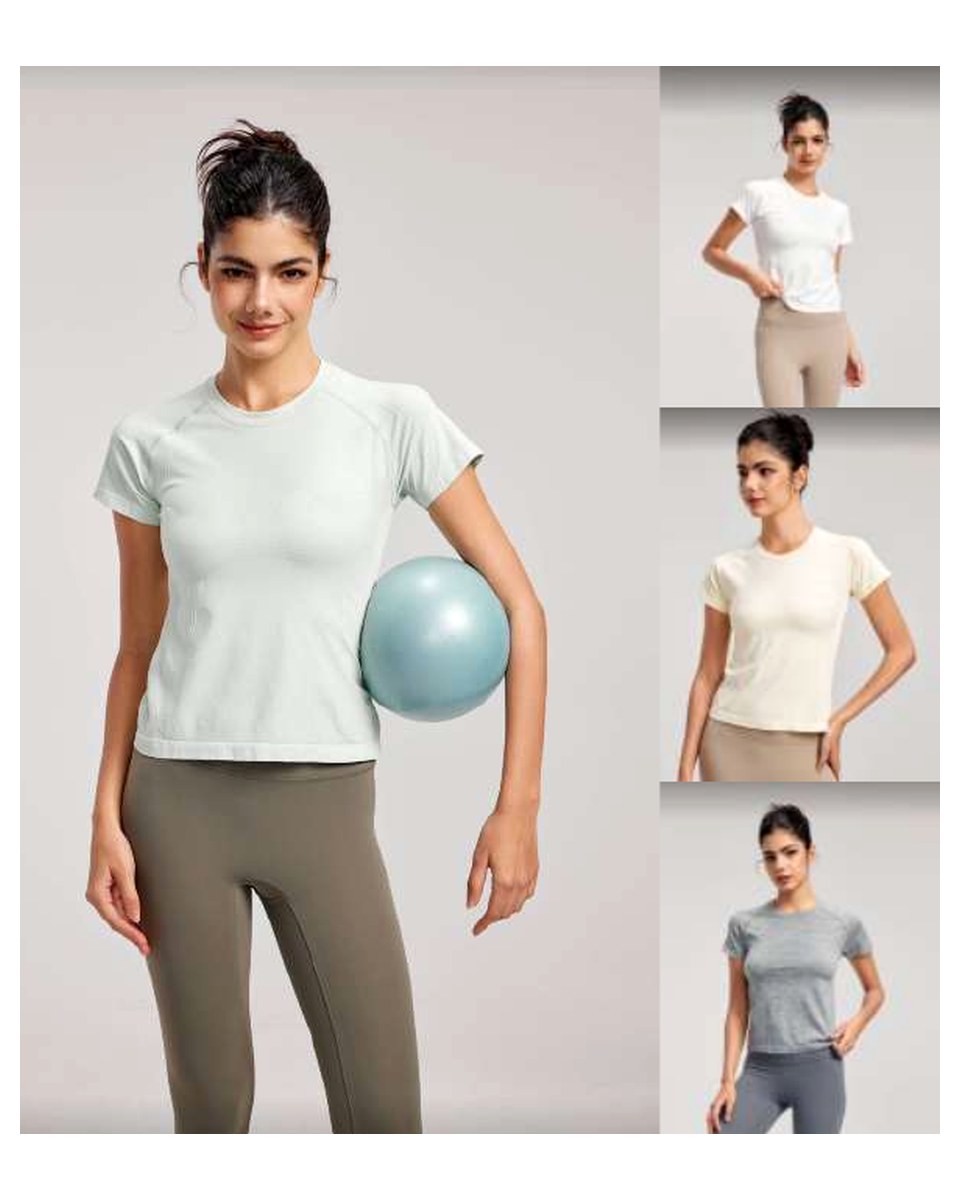
The reference above shows a short-sleeve top in several colours. It gives the team visible sleeve, neckline and body proportions to discuss. Confirm the actual selected garment and its options with the supplier; the image is not a record of material testing or of a completed studio or online order.
Start with the product's proposed role. If the top is intended for a particular session, write down the movements and fit observations that matter. If it is an optional layer or lifestyle item, explain that use separately. The same photograph should not support several different promises that have never been evaluated.
Then identify the channel information needed. A studio team may need a reliable explanation of the selected sizes, while an online team needs images and measurements that describe the actual approved product. Both should be working from the same garment identity even if they present it differently.
Keep the accepted product reference available when reviewing branding. A logo's appearance on a mock-up should be checked against the agreed garment and application scope. If the brand switches to another top, revisit the relevant artwork, images and product facts instead of carrying the previous approval across automatically.
How can studio feedback become useful supplier information?
Give each sample review a purpose. A session might help the brand decide whether to retain the selected style, clarify size guidance or investigate a specific fit question. It should not be treated as proof of broad customer demand or as a substitute for technical evidence required by a performance claim.
Record the sample, size, material reference where available, activity and specific observation. Use the sample feedback guide to organise what happened, what the brand wants to change and who decides the next action. Ask reviewers for concrete descriptions rather than an overall approval with no context.
Resolve conflicting comments within the brand before issuing supplier instructions. One reviewer may prefer a different coverage level while another accepts the reference. The team can retain the selected style for a defined audience, choose another product or request development; the factory should receive that decision and the supporting observation.
Keep product feedback separate from shop feedback. Confusion about a size explanation may require clearer product information, while a measured fit issue may need a garment decision. Combining both into a request for a better product can lead the supplier toward work that does not address the actual problem.
What must an online channel receive from the product decision?
The online team needs an identifiable approved garment, its confirmed options and the product information authorised for that destination. A catalogue photograph can start the discussion, but it should not be mistaken for the final branded item if the approved version has changed.
The channel launch guide explains how studio, gym-retail and online records can be organised. For this regional project, keep the shared product facts together and attach the relevant destination or channel version. That allows one accepted garment to be described consistently without erasing local responsibilities.
Check that the displayed selling unit matches the actual offer. If the selected item is a top, an image styled with leggings should not imply that the customer receives both. If the brand chooses a coordinated set, confirm its components and size-selection arrangement before preparing the product page and packing file.
Assign an owner to approve the final images and wording. Product selection, image approval and publication are separate decisions. The supplier can provide the agreed product information and branding references, while the brand remains responsible for reviewing how those facts are presented to its customers.
Which destination information needs separate review?
For Singapore, the Consumer Product Safety Office's CGSR overview includes apparel among general consumer goods covered by the framework. Use the official guidance to start a review of the actual product and applicable requirements. It is Singapore guidance, not one rulebook for every Southeast Asian destination.
For Malaysia, WIPO Lex's text of the Trade Descriptions Act 2011 provides background on product-description responsibilities. That entry identifies a 2011 version; the destination owner should check current applicable legislation and guidance before approving the actual claims and labels. Do not treat the linked text as a complete current shipment checklist.
The practical sourcing task is to connect approved information to the selected garment. Confirm who supplies the underlying product facts, who checks destination requirements and who authorises implementation. A supplier's acceptance of a branding file does not by itself resolve every product-information decision.
If material, construction or the selling unit changes, revisit the affected destination records. Keep the current label and product-description versions with the order allocation. This gives the supplier and receiving team a clear reference for each part of the range, with appropriate specialist review arranged where needed.
How should branding work be divided between the teams?
List the requested logo, label, hangtag and packing elements against each selected style. Identify which files are ready, which require artwork decisions and which depend on information still under review. The supplier should be able to distinguish a final file from an example used to explain the desired direction.
For each application, agree the location and evidence needed to review it on the selected garment. A cutout-back top may offer a different usable area from a short-sleeve top. The brand should identify the intended appearance without assuming that the same placement or method is suitable for both.
If local and China partners share the work, state which party performs each step and which reference governs the handover. For example, an arrangement involving local presentation materials still needs the garment identity and quantities to remain consistent. Confirm the actual service offered by each partner instead of assigning work based on location alone.
Retain the accepted branded sample or proof with the product record. When a later request changes the style, material or artwork, assess which approvals must be revisited. Clear ownership makes a hybrid route usable; simply dividing tasks between two locations does not guarantee that their outputs will match.
How can quantities be allocated without inventing demand?
Build the order from the actual style, colour, size and destination lines. Use the size, colour and quantity planning guide to distinguish confirmed requirements from the brand's stock assumptions. Keep a total for each channel as well as the overall proposal.
A small group of studio reviewers may help identify fit questions, but it does not establish the right quantity mix for an online audience. Record what each source of information represents. The brand can make a commercial judgment while being clear that a tentative allocation remains an assumption.
Avoid hiding different garments inside one range total. The cutout-back and short-sleeve tops may serve different roles and require different size or colour allocations. Confirm the supplier's actual style and variant options before treating the spreadsheet as an accepted order.
Keep later-market plans outside the confirmed allocation until their owners have resolved the relevant questions. That makes the first order easier to understand and prevents exploratory discussions from being mistaken for additional production instructions. Any change should be reviewed against the current supplier agreement.
What packing and receiving information must travel with the order?
Connect the packing checklist to the product and destination matrix. Identify the garment, selling unit, approved label version and channel allocation before deciding how the order should be grouped. The receiving team should be able to match the physical goods with the same identifiers used during approval.
For a studio, the relevant arrangement may reflect how staff check and present the selected products. For an online operation, it may reflect its actual receiving and fulfilment process. Ask the responsible team for those instructions; do not assume that every business using the same channel name handles stock identically.
Confirm any proposed packaging format, identifier or assortment with the supplier. A preferred layout is not yet proof that the process or materials are available for the project. Retain the accepted reference and state who approves the final packing information.
On receipt, record discrepancies against specific styles, variants and approved records. A report that identifies an incorrect label or allocation is easier to assess than a general complaint that the delivery does not match expectations. Keep product, packing and channel-presentation issues distinguishable so the next action addresses the actual discrepancy.
What should a supplier response resolve before the next stage?
A useful response identifies the selected products and explains the scope it can assess. It should make clear which requested details fit the proposed branding route, which need development and which require more information. The brand can then compare responses against the same product and destination plan.
Follow the order workflow to define the next decision. It may be selection of a reference, review of a physical sample, acceptance of branding or confirmation of production records. State what the current approval authorises rather than using a general agreement to proceed while important questions remain unassigned.
Ask the supplier to connect its proposal with the sample evidence and records already available. If it suggests another style, compare that option against the original product role and update the relevant files before accepting it. A different reference may affect measurements, images, artwork or allocation.
Timing, quantity conditions, material availability and commercial terms require project confirmation. A clear response does not need to promise every requested outcome. It needs to show what can be evaluated next, who provides the missing information and how the brand will decide whether to continue.
What belongs in the final Southeast Asia sourcing checklist?
Review the country and channel plan alongside the current product records. The purpose is to confirm that the selected route can carry a defined order into the next stage, with the remaining work visible to both the brand and supplier.
- Name each actual destination country and sales channel.
- Separate confirmed launch plans from possible later markets.
- Assign one clear role to every selected garment.
- Identify the exact catalogue references and confirmed options.
- Define the wear conditions behind any warm-environment question.
- Plan relevant sample observations and evidence for intended claims.
- Distinguish selected-style branding from new garment development.
- Consolidate local product feedback into one brand instruction.
- Match online images and descriptions to the approved selling unit.
- Assign destination product-information and artwork owners.
- Connect size-colour quantities, labels and packing allocations.
- State the next supplier action and the questions still open.
How can inPACE support the chosen China sourcing scope?
inPACE can discuss product, sample and production coordination for the selected activewear project. Its company information provides a published starting point for supplier review. Yinshan Garments' clothing-production experience since 1986 is manufacturing background; it does not replace the product evidence and agreement needed for the current range.
For a selected-style project, bring the exact references and identify the branding, label and packing work to be assessed. For a new fit, material or construction requirement, describe the desired outcome and the sample question. This lets the supplier discuss the appropriate scope without guessing how much of the garment remains fixed.
Send inPACE the Southeast Asia sourcing brief with the destination countries, sales channels, core products, intended use, branding files, packing arrangement and sample-validation needs. Include the decision owners and separate confirmed quantities from planning assumptions. The next discussion can then focus on the actual local and China responsibilities required by the range.
Product directions
Explore relevant activewear products
Use these product pages as practical references for your brief, then confirm materials, fit, customization, and production details through sampling.
Activewear Performance Collection
Choose existing garment directions by their role in the planned studio or online range.
View product directionCutout-Back Top Reference
Identify the selected top, coverage questions and intended branding before accepting it for a specific use.
View product directionShort-Sleeve Top Reference
Review a separate sleeve and body direction and connect its confirmed options with the destination and channel plan.
View product directionFAQ
Buyer questions
When should a Southeast Asian brand consider a China activewear supplier?
Consider the route when the brand can identify its garments, destination countries, channels and unresolved product questions. Compare local, hybrid and China proposals against that same scope. Location alone does not establish the right price, quality, development capability or amount of work that remains with the brand.
Can local buying and China supply be part of the same range?
Yes, if the responsibilities and product identities are clear. Identify which partner supplies or develops each garment and which team approves samples, branding and packing. Keep shared brand decisions connected while retaining the separate product and destination records needed for the actual order.
Does activewear for Southeast Asia need one particular fabric?
No single material choice follows from a regional destination. Define the intended activity, environment, fit and garment role, then assess suitable samples and evidence. Fibre content, an open-back design or a lightweight appearance does not by itself establish cooling, drying or other functional performance.
Can studio sample feedback decide an online size allocation?
It can inform product questions, but it is not a complete demand forecast. Record the sample and participants involved, distinguish fit observations from purchasing interest and use the brand's actual channel information when planning quantities. Keep uncertain allocations visible rather than presenting them as confirmed demand.
When does private-label branding become custom development?
A request needs development review when it changes the garment's fit, material, construction or functional details beyond the supplier's confirmed existing-style options. Logos, labels and packing may fit a selected-style route, but the actual scope and sample evidence should be agreed for the product being ordered.
Can the same product information be used in every destination?
Do not assume that it can. Appoint an owner for each actual market to confirm current applicable requirements and approve the relevant product information. Connect each approved version to the garment and allocation so the supplier can implement the correct records for each destination.
What should the first enquiry contain?
Send the destination and channel matrix, exact product references, intended use, sample questions, branding files, proposed size-colour quantities and packing needs. Name the approval owners and distinguish settled decisions from assumptions. This gives the supplier a defined scope for comparing selected-style supply with any development the range still requires.