
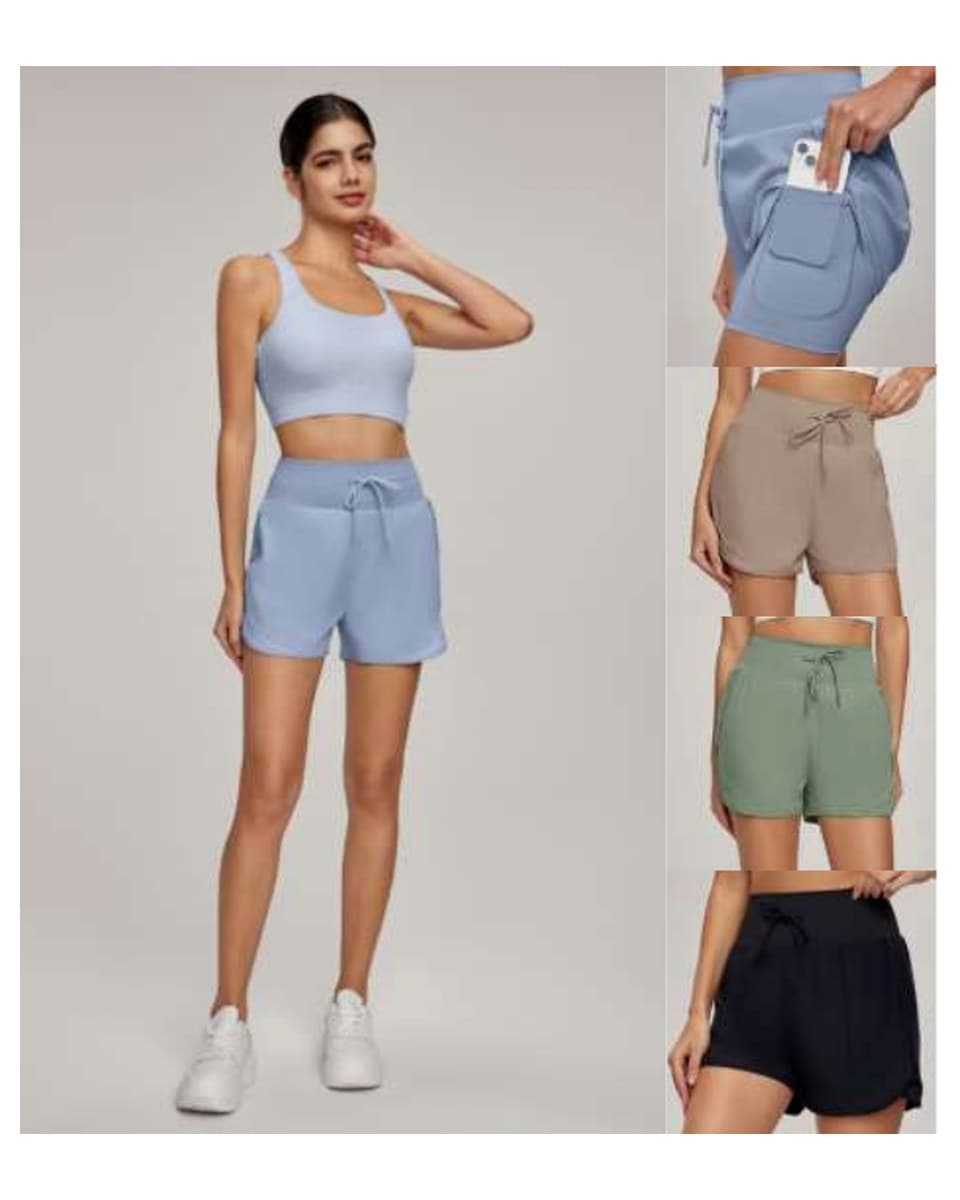
A useful sourcing discussion can begin with a surprisingly small question: who decides whether a training short's pocket is suitable? The factory can propose an opening, bag shape and attachment. A local reviewer can try the intended object during the intended activity. The buyer must turn those observations into a clear acceptance decision. If those roles remain vague, changing manufacturing country will not resolve the problem.
This guide follows an illustrative adult training-short project, not a reported customer order. The brand wants to review a drawstring waist and practical pocket, then allocate approved products to named receiving locations. Because fit and pocket decisions may require development, the main route is factory custom manufacturing. An accepted existing garment that needs only branding follows a narrower route, which should be quoted separately.
Southern Africa is a regional description. South Africa is one specific destination. Neither expression defines one customer body, climate, price expectation or clothing requirement. Record the countries and sales channels involved before asking suppliers to interpret the project. Our broader local versus China supplier comparison explains the route choices; this article concentrates on the handoffs that make one of those routes workable.
What should the brand decide locally before comparing suppliers?
Begin with the wearer and transaction you actually understand. An adult training short sold through an online shop may need a different presentation and receiving arrangement from the same garment supplied to a club. That does not automatically require a different pattern. It does require clarity about who chooses sizes, what information buyers see and how units are separated when the order arrives.
Local knowledge is most useful when it becomes an instruction someone else can use. Replace “our customers like comfortable shorts” with observations about the proposed rise, leg opening, waistband and pocket. If you have no wearer feedback yet, identify these as questions for sampling. A claim about an entire regional market cannot substitute for evidence from the audience the brand intends to serve.
Choose a small number of product decisions for the first enquiry. The Activewear Performance Collection can help identify garment directions, but a catalogue image is only a starting reference. Record whether you want to retain the visible silhouette, change the length, add a pocket function or review a different fabric. Label references as “keep”, “change” or “discuss” so that suppliers do not assume every detail is approved.
In the illustrative project, the local product owner supplies a reference short and the dimensions of the object intended for its pocket. The owner also defines the intended activity and the required coverage during movement. The factory reviews whether the reference construction can support those requests. Neither party should treat a phone visible in a photograph as proof that the pocket will retain every phone during training.
Keep a short list of unresolved commercial inputs beside the product brief. These might include the first order's size allocation, the receiving address or who approves destination information. An unresolved input is manageable when its owner and deadline are known. It becomes a sourcing problem when it quietly changes after the quote, sample or packing instructions have been accepted.
How do local, hybrid and China manufacturing arrangements compare?
Compare arrangements for the same scope. A local supplier quoting an available body with a logo and a China supplier quoting a new pattern, pocket and sample programme are answering different requests. Ask both to separate garment supply, development, branding, review support and packing. Only then can the brand decide which work it wants to keep close to its own team.
A local arrangement may make direct garment review practical if the supplier offers the relevant development and production services. A China arrangement may suit a project whose product work can be coordinated through a clear specification and sample process. A hybrid arrangement assigns local review to one party and manufacturing work to another. None of these labels establishes price, speed, technical ability or accountability by itself.
| Arrangement | Work to define before choosing it | Evidence to request | Unresolved responsibility to watch |
|---|---|---|---|
| Local supplier and local product review | Who develops, makes, brands and packs the garment | Relevant sample, defined services and an approval record | Local access without the required construction capability |
| Local reviewer with China manufacturing | Who translates wearer comments into one factory instruction | Shared sample identifiers, written decisions and escalation contact | Reviewer and buyer sending conflicting changes |
| China manufacturing coordinated directly by the brand | Who owns the specification and reviews physical samples | Development response, sample sequence and inspection scope | Expecting the factory to infer destination or channel needs |
| Existing garment with limited branding | Which garment details remain unchanged | Accepted reference plus artwork and label proof | Treating a fit or pocket change as a logo-only request |
Use the table as a discussion tool, not a country ranking. Ask prospective partners to explain a difficult detail from your own brief. For example, what would they need to know before moving a side pocket or changing the waistband? A specific response can reveal whether both parties understand the same problem. A general statement about quality does not answer that question.
If the garment needs a new fit, material or construction decision, describe those changes through custom activewear development. If the body and function are already accepted, discuss the more limited private label route. Naming the boundary early makes the quotation more useful and helps prevent unplanned sampling work from appearing later as a disagreement about what was included.
How should the training-short brief turn a pocket preference into a sample task?
The drawstring training shorts reference provides a visible waist, hem and pocket direction for discussion. It does not establish your finished measurements or validate an intended use. Start with the actual object to be carried, including its dimensions and any cover. State which side the wearer will use and whether the object must remain accessible while standing, sitting or moving.
A larger pocket is not automatically the right answer. The opening, depth, angle, bag material and attachment all affect how the pocket sits in the garment. Adding capacity may change the appearance or pull on the outer short. Moving the opening can affect access. These are development questions for a sample, rather than performance claims that can be settled from a flat drawing.
For the waist, describe how the short should sit and how the drawcord is intended to function. Record the reference size and the body or garment measurements used during review. Do not ask the factory to infer a regional fit from a country name. If the waistband feels uncomfortable, note where and during which movement; a general request to make it softer may otherwise change several materials or construction choices at once.
Agree a repeatable review sequence before the first sample arrives. For this illustrative project, the reviewer could check the unloaded garment, place the intended object in the pocket, walk, sit and perform the relevant training movements. The brand and supplier should decide what observations matter and which checks require a more formal method. This suggested sequence is a planning example, not a passed test or universal acceptance standard.
Write down the garment condition as well. Record whether the sample was new or washed, the sample size, the fabric reference and any temporary components. A substitute drawcord or unfinished pocket bag can limit what a sample tells you. Separate an appearance review from a functional acceptance decision when the sample does not yet represent the proposed production construction.
Material discussions should follow the function being reviewed. Use fabrics and trims to identify the questions about handfeel, stretch, recovery or pocket support, then request appropriate evidence for the chosen material. Fibre names alone do not determine whether the assembled garment will behave as intended. A change in fabric may require another fit or pocket review even when the drawing stays the same.
Who should convert local sample feedback into the factory's next instruction?
Appoint one person to consolidate the brand's comments. The wearer may describe discomfort, the sales team may request a different look and the receiving team may ask for a new size code. All can provide useful information, but the factory needs one reconciled decision about each affected feature. Sending three separate message threads leaves the supplier to choose which instruction takes priority.
A useful feedback entry identifies the sample, the observed issue, the requested action and the owner of the next approval. For example: “Sample B, reference size M, right pocket: the agreed object tilts outward when seated. Review opening position and bag support; retain the approved external hem shape unless a change is required.” This gives the developer a problem to investigate without pretending the buyer has already solved the construction.
Attach photographs that show the relevant area and movement, with consent from anyone pictured. Include a measurement or marked drawing when it clarifies location. Photographs help explain an observation; they do not replace the physical sample, an agreed measurement method or evidence for a performance claim. The sample feedback guide offers a fuller structure for turning comments into actionable revisions.
Distinguish accepted features from open features in every revision. If the waist is accepted but the pocket remains open, say so. Ask the supplier to flag any proposed pocket change that would also affect the waist or side seam. This prevents a focused correction from quietly replacing a detail the brand thought was already settled.
Set an escalation rule for conflicting feedback. The product owner should decide whether a request changes the intended garment, while the supplier explains technical consequences. If the decision affects quotation, materials or the delivery plan, obtain an updated agreement. A quick message saying “looks good” should not be interpreted as approval of every unresolved item in a sample record.
What separates product acceptance, inspection and receiving?
Product acceptance answers whether the proposed garment meets the agreed brief. Inspection checks the defined production scope against agreed references and criteria. Receiving checks what arrives against the order and packing information. These activities are connected, but they answer different questions. A correct carton count does not establish pocket function, and a satisfactory development sample does not confirm every production unit.
Discuss the manufacturing workflow with these distinctions in mind. Identify the approved sample and specification, the checks required during production, the inspection reporting scope and who decides what happens when a discrepancy is found. Agree the relevant criteria and method for the project. Do not assume that a factory photograph establishes the condition or acceptance of your own order.
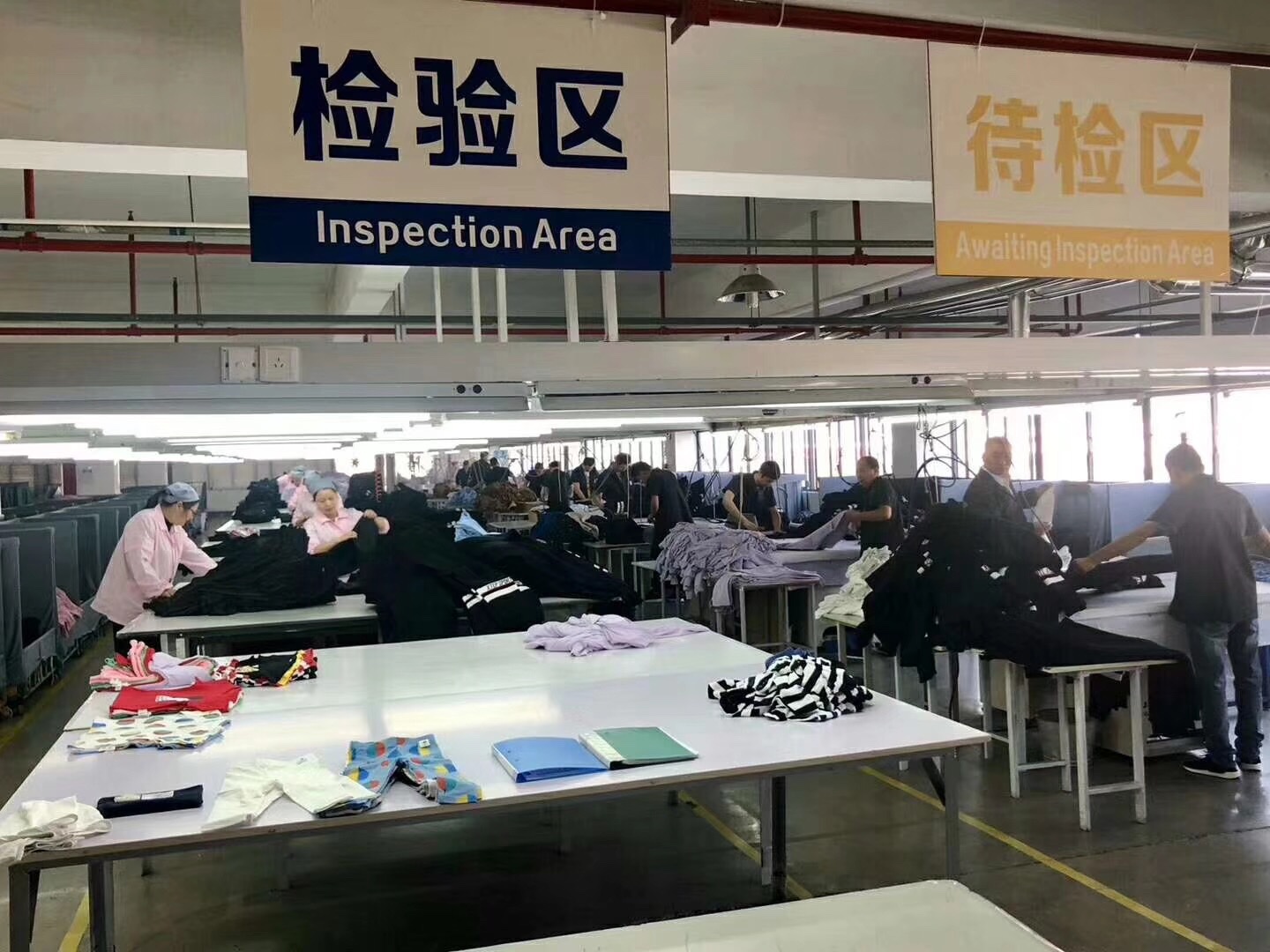
The inspection-area reference above illustrates a production-review setting. It is not an inspection report for the training-short example or evidence that an order has passed. Order-specific decisions need the actual specification, inspection scope, recorded findings and responsible approval.
For the short, the specification might identify waist and length measurements, the pocket position, the approved drawcord and the finished appearance. The exact requirements, tolerances and check method need agreement. If the buyer wants a functional assessment using a loaded pocket, describe it separately from a routine dimension check and establish which sample or production units it covers.
Ask how exceptions will be recorded. A supplier should be able to identify the affected style, colour, size, quantity or material reference when reporting a problem. The buyer needs enough information to decide whether a correction, further review or other agreed action is required. Broadly accepting a photograph of assorted garments can leave the actual affected scope unclear.
A remote factory review can help structure questions about process and communication. Keep its findings separate from a specific shipment decision. General factory capability, an approved development sample and evidence from a production inspection each support different parts of the sourcing decision; none should silently stand in for the others.
Which destination information needs a named local owner?
Name the actual destination country and sales channel on the brief. If the order serves more than one country, identify the product-information review required for each. A brand's address in South Africa does not automatically mean that every item will be sold there. Equally, a single regional collection name does not establish one set of labels, language choices or receiving instructions.
For South Africa specifically, the National Consumer Commission's import-labelling guidance directs importers of clothing and certain other goods to Section 24 of the Consumer Protection Act and its guidelines. This is a starting point for the responsible destination reviewer. It is not a complete product checklist, a confirmation for a particular order or a rule that can be extended to neighbouring countries.
Assign a person who can confirm the required product information and provide approved text before labels or packaging are produced. The factory can review placement, available space, artwork reproduction and production feasibility. Those tasks are different from deciding what the destination requires. Keep the information approval and the physical label proof linked to the same garment and revision.
If the order is split between receiving locations, clarify whether the garments themselves differ or only the outer allocation does. A colour intended for one retailer, a separate size assortment and a country-specific information requirement are three different reasons for separating units. Record the reason so that the packing team knows which combinations are permitted and which must stay distinct.
How can the packing brief preserve the brand's local decisions?
Create a line list that connects each style, colour and size to its quantity and receiving allocation. Use stable identifiers agreed by the buyer and supplier. Marketing names can change while the garment remains the same, so confirm which name or code belongs on the product, unit label, packing list and carton. Inconsistent identifiers can make a correct order difficult to receive.
The size, colour and quantity planning guide helps organise the order before packing starts. For the illustrative short, a local product review may approve the garment without settling how quantities are divided among channels. Keep that allocation open until the buyer confirms it; do not let a sample size or a photograph become an accidental bulk size plan.
Ask the receiving team how it will identify and count units. If it requires separated assortments or specific carton information, provide a clear example for the factory to review. Confirm whether a barcode is buyer-supplied and which record controls it. A barcode printed clearly is still unhelpful when its underlying product identity is wrong.
Use the activewear packaging checklist to connect unit presentation, carton information and the packing list. Review a representative packing example where appropriate and reconcile totals before release. Extra packaging should have an agreed purpose, such as product protection or receiving identification; do not add layers simply because a reference photograph contains them.
Preserve the approved packing version for repeat enquiries. A future order may use the same short but different allocations, product information or artwork. Ask the buyer to confirm what is retained and what changes. An earlier accepted order is a useful reference, not a reservation of fabric, capacity, price or delivery conditions for the next one.
How can the brand tell whether it is ready to choose a route?
Readiness is easier to assess when each missing input has a next action. A project does not have to be fully resolved before a supplier conversation, but the conversation should acknowledge what remains uncertain. The table below helps the buyer avoid requesting a firm production answer while a product or receiving decision is still open.
| Current situation | Information still needed | Useful next action | What the next decision can establish |
|---|---|---|---|
| Attractive reference, unclear wearer use | Activity, coverage and pocket purpose | Write a focused product brief | Scope for development discussion |
| Sample received, mixed local comments | One reconciled set of observations | Assign a product owner and issue a revision list | Which features remain open |
| Garment accepted, destination text unresolved | Approved information for the actual country and channel | Obtain destination review and label proof | Which artwork may proceed |
| Product and labels accepted, allocation missing | Size-colour quantities and receiving locations | Confirm the order and packing line list | How units should be prepared |
| Inspection identifies a discrepancy | Affected scope and agreed corrective action | Record the decision before release | Whether the order can move to its next stage |
A local supplier can be a useful choice when the required product work and review arrangements are clear and available. A hybrid route can be useful when the brand has a capable local reviewer who can consolidate feedback for a China manufacturing partner. Direct coordination with a China supplier can work when the buyer owns the brief and approvals. Make the choice from the proposed working arrangement, not from an assumed national advantage.
Use the development and order process to discuss where your project currently sits. Ask which input is needed for the next step and who supplies it. A supplier should not need a finished specification to identify useful questions, but a production commitment requires the relevant product, quantity and approval assumptions to be settled with the buyer.
What should a Southern African brand send in its first sourcing enquiry?
Send enough information to make the responsibility discussion concrete. A short, organised enquiry with labelled references is more useful than a large image folder with no explanation. If a detail is undecided, name it as a question and identify who will approve the answer. The purpose is to start a relevant development conversation, not to suggest that the first message is already a complete production order.
- Name each destination country and the intended sales channel.
- Identify the person responsible for the garment brief and final product decisions.
- List the core styles and mark which reference features should stay or change.
- Describe the intended wearer, activity and coverage requirements without regional assumptions.
- Provide the reference size and any existing measurement information.
- Describe the pocket's intended object, position and review priorities.
- State the material, handfeel and construction questions still open.
- Explain who will review physical samples locally and consolidate comments.
- Supply branding files and identify the owner of destination-information approval.
- Share the proposed quantities by style, colour and size, marking estimates clearly.
- Describe receiving locations, allocation needs and the proposed packing identification.
- Ask for the next development step, its scope and the conditions to be confirmed.
inPACE's role is to coordinate product, sample and production discussions around the agreed brief. The company's garment manufacturing background, including Yinshan Garments' experience since 1986, provides context for those discussions. Project-specific materials, construction, inspection work and commercial terms still need confirmation; company history does not establish an individual garment's suitability or approval.
Share your target country, channel, core product direction, local-review needs, factory-development scope and packing brief with inPACE. Include the decisions already made and the questions that require a sample, so the next conversation can assign responsibility and define a practical development step.
Product directions
Explore relevant activewear products
Use these product pages as practical references for your brief, then confirm materials, fit, customization, and production details through sampling.
Activewear Performance Collection
Select core product directions and identify the questions each garment needs to answer for the intended channel.
View product directionDrawstring Training Shorts Reference
Use the visible waist, opening and pocket details to prepare concrete sample questions before approving a style.
View product directionCustom Activewear Development
Connect local product feedback with agreed fit, material, construction and production work.
View product directionFAQ
Buyer questions
How should I compare a China activewear manufacturer for South Africa with a local supplier?
Give both suppliers the same product and service scope. Compare who develops the garment, who reviews physical samples, how changes are approved and who prepares destination information and packing. Ask for relevant evidence and clear responsibilities. Manufacturing location alone does not establish price, speed or the quality of the proposed arrangement.
Does Southern African sourcing mean the same requirements as South Africa?
No. Name the actual destination countries and sales channels. South African guidance is specific to that country and should not be treated as a regional rule. Assign responsibility for reviewing the product information and other requirements applicable to each destination before approving labels or packaging.
Can a local reviewer work with a China manufacturing partner?
Yes, where the parties agree their responsibilities. The local reviewer can collect wearer observations and check samples against the brief. One product owner should consolidate comments into a clear factory instruction, identify accepted and unresolved features, and approve changes that affect the garment or commercial scope.
What information does a factory need to develop a training-short pocket?
Provide the intended object's dimensions, preferred pocket position, relevant movements and garment reference. Discuss the opening, depth, bag material and attachment through sampling. Record the sample size and condition during review. A photograph showing an object in a pocket does not establish retention or suitability for your intended activity.
Does sample approval mean a production order has passed inspection?
No. Sample approval establishes the accepted development reference within its agreed scope. Production inspection checks the defined order against agreed criteria and records findings. Receiving then reconciles arriving units and packing information. Keep the evidence and responsible approval for each activity separate and connected to the correct order.
Who should approve labels and destination information?
The buyer should name a responsible destination reviewer to confirm the required information and approve its text. The factory can review label placement, artwork reproduction and production feasibility. Link both approvals to the same garment revision, and confirm any differences between countries, channels or receiving allocations.
Can I start with an existing style and change the pocket later?
You can discuss that sequence, but a pocket change may affect the pattern, material, fit, sampling scope and quotation. Treat it as a development request that needs review. An existing style accepted for limited branding does not automatically remain accepted after a functional or construction change.