
Direct answer. An activewear change order should link one requested change to the valid product specification, quotation, sample and production stage. It should record affected materials, fit, artwork, quantity, packing, evidence, cost direction and approval owners. Re-quote or re-sample whenever the change alters priced scope or approved product evidence.
A buyer may request a different fabric after quotation, move a logo after a sample, add a colour before the purchase order, change quantities after material planning or revise packing close to production. Each request can look small in an email while affecting several connected records. The safest response is not “noted.” It is a controlled impact review.
This guide is for B2B activewear design, product-development, merchandising and procurement teams. It explains how to manage price revisions without allowing a quotation, tech pack, sample, artwork file and production instruction to describe different products. It is a procurement workflow, not contract, legal, tax or accounting advice.
What is an activewear change order?
An activewear change order is a documented request to alter a product or commercial scope after a quotation or approval baseline exists. The change can affect a garment specification, material, pattern, construction, component, artwork, colour, quantity, labels, packing, delivery basis or approval plan.
The order should answer:
- What was the valid baseline?
- What exact detail is changing?
- Why is the change requested?
- Which styles, colours, sizes and quantities are affected?
- Which product, sample, quality, timing and price records may change?
- Who evaluates feasibility?
- Who approves product and commercial consequences?
- Which new revision becomes valid?
An informal conversation can start the process, but it should not become a production instruction by accident. “Use the darker blue” is incomplete if the record does not identify the material, shade reference, affected components, styles, artwork contrast, sample evidence and approval owner.
Which baseline should buyers lock after quotation?
Lock the exact quotation version and the product evidence it priced. A useful baseline pack includes:
- Style ID, revision and date.
- Current tech pack, measurements and bill of materials.
- Approved or reference sample identity.
- Main and secondary materials, components and colours.
- Construction, artwork and logo files.
- Size range and style-colour-size quantity matrix.
- Labels, hangtags, barcode and packing instructions.
- Sample, test and QC requirements.
- Quotation number, currency, delivery basis, validity and exclusions.
- Approval log and unresolved items.
The activewear purchase-order checklist can help keep product, quantity, commercial and packing fields visible before release. A purchase order should reference the controlled documents; it should not become a substitute for them.
Keep the supplier’s original quotation unchanged. Issue a revised quotation or change-order line instead of overwriting the earlier amount. The comparison then shows what changed rather than only the new total.
What types of changes should enter the change log?
Use consistent categories:
| Change category | Examples | Typical records affected | Main approval question |
|---|---|---|---|
| Material | Main fabric, lining, mesh, elastic, binding, thread or component | BOM, sample, care file, quotation and QC points | Does the new material preserve the approved product requirement? |
| Pattern and fit | Measurements, rise, length, neckline, strap, sleeve, panel or pocket | Pattern, measurement sheet, grading, sample and quotation | Which sizes and fit evidence must be reopened? |
| Construction | Seam route, layer, cup pocket, waistband, zip, binding or opening | Tech pack, operation plan, sample, QC and quotation | Does the change alter function, appearance or production work? |
| Artwork and branding | Logo file, size, colour, method, placement, label or hangtag | Artwork proof, sample, BOM, packing and quotation | Is the new version compatible with the material and garment zone? |
| Colour and assortment | Colourway, shade, size curve, set mix or quantity | Lab dip/colour record, BOM, order matrix and quotation | Does the new plan change material, component or setup scope? |
| Packing and logistics | Fold, bag, sticker, barcode, carton, marks or delivery basis | Packing spec, PO, carton plan, quotation and receiving instructions | Is the revised presentation and commercial boundary approved? |
Do not wait for a price effect before logging a change. A “no price change” response can still require a sample, document revision or production instruction. Conversely, a commercial price revision may occur because quantity or delivery scope changed even when the garment did not.
How should buyers assess cost, sample, timing and quality impact?
Use one impact matrix instead of separate email threads:
| Impact area | Questions to answer | Possible outcome |
|---|---|---|
| Product | Does fit, coverage, support, appearance, function or care direction change? | Accept as documented, request technical review or reject |
| Materials/components | Does the request create a new item, colour, purchase condition or substitute? | Update BOM, confirm availability and review sample need |
| Development evidence | Does existing sample or test evidence still apply? | Retain evidence, partially reopen or require a new sample/test |
| Cost | Which priced material, operation, setup, quantity or packing assumption changed? | No change, credit, added cost or full re-quotation |
| Schedule | Does the request reopen material, artwork, sample or production approval? | No effect confirmed, revised milestone or hold pending decision |
| Quality | Which QC point, tolerance, defect boundary or inspection reference changes? | Update QC plan and approval sample |
| Documents | Which quotation, tech pack, PO, artwork, packing or release record needs a revision? | Issue controlled documents before implementation |
Use qualitative direction until the supplier confirms a project-specific amount. “Potential increase,” “potential reduction,” “no quoted effect” and “unknown pending review” are safer than an invented percentage.
The activewear cost-engineering guide is appropriate when the team is deliberately changing specifications to close a target-cost gap. A change order is broader: it also covers design, quantity, artwork, packing and delivery changes that may increase, reduce or leave the price unchanged.
When is a record update enough?
A record update may be enough when the change does not alter the product, priced scope, approved evidence or production instruction. Examples might include correcting a non-material spelling error, adding an internal reference number or clarifying an owner without changing the requirement.
Even then, the team should:
- Identify the old and new text.
- Confirm no technical or commercial meaning changed.
- Record who approved the correction.
- Update the controlled file.
- Notify the people using that file.
Do not classify a colour, measurement, material code, quantity, artwork scale or pack instruction as a clerical correction without review. A small character change can identify a different physical input.
When must the supplier re-quote?
Request a re-quotation when the priced scope changes or when the previous assumptions are no longer valid. Common triggers include:
- New or substituted fabric, lining, elastic or component.
- Pattern, measurement, panel or construction change.
- Added or removed pocket, zip, cup, binding or feature.
- New artwork method, size, colour or placement.
- Added colourway or changed size-colour quantities.
- Revised labels, hangtags, barcode or packing.
- Changed delivery basis, destination or included service.
- Reopened sampling, testing or approval work.
The revised quotation should state the product revision, quantity matrix, currency, basis, included work, exclusions and validity. It should identify whether the change affects only one style or the programme.
The manufacturer quotation comparison guide remains useful when comparing several suppliers. For one supplier’s revised proposal, keep the comparison narrower: old scope, approved change, new scope and confirmed commercial effect.
When must the product be re-sampled?
Re-sample when a change may affect fit, coverage, support, movement, material behaviour, construction, component function, artwork appearance, care or packing presentation. The sample type should match the question.

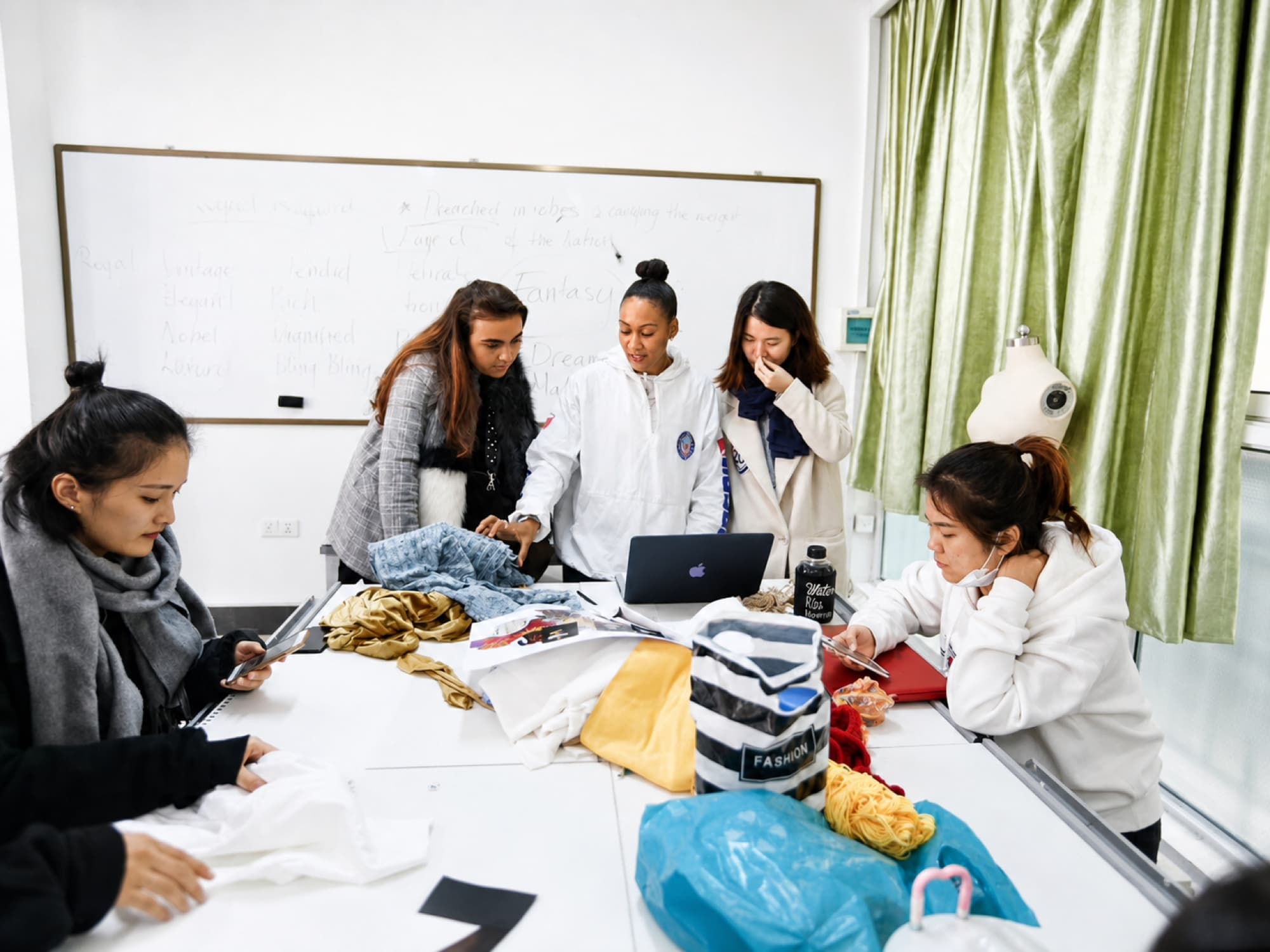
*Real inPACE development-context image showing why a change should be connected to pattern, material and sample evidence. It is not a customer order, quotation, test result or production approval.*
A changed fabric can reopen fit and coverage even when measurements remain the same. A moved pocket can affect pattern pieces, seams and movement. A new zip can affect neckline, front balance and QC. A larger logo can cross a seam or stretch zone. A different fold can change product presentation.
Use the activewear sample-feedback guide to connect each observation to one sample version. Do not apply an approval from the old version to the changed product without deciding whether the evidence remains valid.
How should material substitutions be controlled?
A supplier may propose an alternative because the original material is unavailable, fragmented by colour, commercially unsuitable for the quantity or inconsistent with the revised schedule. The buyer may request a new handfeel, weight, surface, coverage or cost direction. Either way, “similar fabric” is not enough.
Record:
- Original and proposed material codes.
- Composition record, construction, weight and usable width where confirmed.
- Colour and finish.
- Garment role and layers.
- Stretch, recovery, handfeel, surface and coverage questions.
- Logo or print compatibility.
- Care and sample implications.
- Supplier reason and commercial effect.
- Evidence and approval owner.
The fabrics and trims resource helps organise material and component questions. Exact equivalence should not be claimed from composition, a photograph or a swatch alone. Review the proposed material in the intended garment where fit or construction relationships matter.
How should pattern, fit and size changes be managed?
Pattern changes need coordinates, measurements and affected sizes. “Make the waist tighter” or “add more coverage” describes a goal but not a controlled revision. Mark the garment zone, current point, requested result, base size and grading question.
Fit changes can affect material consumption, seam positions, components, artwork and packing. A longer top may move a logo relationship. A changed sports-bra strap can alter neckline and back construction. A legging rise change can affect waistband and pocket position. A sleeve change can affect armhole and cuff.
Use the custom activewear development route when fit, pattern, fabric or construction changes. The Activewear Performance collection and Yoga Activewear collection can provide product-direction references, but a catalogue image is not a revised pattern instruction.
For each change, issue a new measurement/specification revision, identify which sizes are affected and decide whether base-size, size-set or other sample evidence must be repeated.
How should artwork and branding revisions be approved?
Use versioned artwork files and a placement record. The change request should identify:
- Artwork filename and revision.
- Method under review.
- Colours and dimensions.
- Garment panel and coordinates.
- Material and colourway.
- Relationship to seams, stretch zones and openings.
- Proof, swatch, panel or garment sample required.
- Label, hangtag and packing files affected.
Printing, embroidery and wash effects should only be discussed when relevant to the confirmed product and process route. A method change can affect appearance, handling, evidence, specialist-partner scope and quotation. Do not assume feasibility, timing or savings until the supplier reviews the actual artwork, material and placement.
The private-label activewear route is suitable when the underlying garment remains accepted and the change concerns confirmed branding or presentation. If the garment itself changes, keep branding inside the factory-custom change order.
How should colour, quantity and assortment changes be assessed?
Colour and quantity changes can affect material purchasing, components, setup, artwork, packing and production planning. Use a style-colour-size matrix rather than a programme total.
When adding a colour, identify whether main fabric, lining, elastic, thread, zip, label, logo and bag elements are colour-specific. When changing quantities, show the old and new matrix. A total may remain constant while one colour or size becomes more fragmented.
For sets, clarify whether quantities apply to complete sets or separate garments and whether mixed sizes are allowed. If top and bottom quantities diverge, the packing and SKU plan may also change.
The supplier should state which assumptions change. The buyer should record whether the assortment decision is approved, rejected or deferred. Do not treat merchandising preference as a factory error or promise that consolidation creates a fixed saving.
How should packing and delivery changes be controlled?
Packing changes can affect labels, barcodes, stickers, fold method, bags, hangtags, carton assortment, carton marks and receiving instructions. Delivery changes can affect the commercial boundary even when the garment is unchanged.
Before approval, ask:
- Which unit and carton instructions change?
- Do product information or market-facing files need review?
- Are new materials or printed components required?
- Does the new fold protect zips, cups, prints or other features?
- Does the style-colour-size pack ratio change?
- Does the quotation include the revised packing and delivery basis?
- Which warehouse or receiving owner confirms the change?
This article does not determine legal labelling, customs, tax, Incoterm or contract obligations. The buyer should obtain appropriate professional review for the relevant jurisdiction and agreement.
What changes after production release?
Production release is the point at which the buyer authorises a controlled specification and supporting records for the agreed production stage. After that point, changes require a higher escalation because materials may be committed, components prepared, patterns graded, cutting planned or work started.
Classify a post-release request:
| Status | Meaning | Buyer action |
|---|---|---|
| Not implemented | Supplier has not committed the affected work | Review impact and issue approved revision before work proceeds |
| Partially implemented | Some material, component or production activity is affected | Quantify affected units/work, decide hold/rework/segregation and approve commercial impact |
| Fully implemented | Affected work is complete or packed | Evaluate disposition, replacement, acceptance or later-order change |
| Unknown | Implementation evidence is incomplete | Place an appropriate hold on affected scope until status is confirmed |
Do not ask the supplier to implement first and document later. If an urgent decision is necessary, the authorised owner should record the temporary instruction, affected scope, evidence, commercial boundary and deadline for formal documents.
The manufacturing and QC overview helps connect approved specifications with production and inspection records. A later version should not silently replace the reference used for work already completed.
Who proposes, evaluates and approves a change?
Assign roles even in a small team:
- Requester: explains the business or product reason.
- Product development: controls specification, pattern, material and sample implications.
- Design/brand: approves appearance, colour and artwork.
- Merchandising: approves assortment, channel and range effects.
- Procurement: controls quotation, quantity and supplier response.
- Quality: defines evidence, QC changes and disposition.
- Supplier/manufacturing partner: confirms feasibility, implementation status and revised scope.
- Final owner: accepts combined product, cost and schedule consequences.
One person may hold several roles, but no change should be approved only by the person who requested it when other controlled requirements are affected.
What should an activewear change-order log contain?
Use one register:
- Change ID, date and requester.
- Style, colour, size and quantity affected.
- Baseline quotation, specification and sample version.
- Exact old and new requirement.
- Reason and priority.
- Material, product, sample, quality, cost, schedule and document impact.
- Supplier response and implementation status.
- Re-quotation and sample/test references.
- Approval owners and decision.
- Effective revision and release date.
- Rejected alternatives and conditions.
- Closure evidence.
Keep attachments versioned. Avoid approvals that refer only to “the latest file.” The file name, revision and date should make the approved source clear.
How should buyers compare the original and revised commercial position?
Compare the change as a delta, not as a replacement total. The buyer should be able to place the valid quotation beside the revised proposal and trace every commercial movement to an approved scope change. That makes it easier to separate a genuine change-order effect from an unrelated correction, expired assumption or new commercial condition.
Build the comparison at style level, then show programme totals only after the affected lines are clear. A useful reconciliation includes:
- Original style, quantity matrix and unit quotation.
- Original one-time, sample, artwork, packing or other stated charges.
- Change ID and the exact requirement that moved.
- Removed material, operation or service where a credit may apply.
- Added material, operation, development, component or packing scope.
- Quantity or assortment basis used for the revised calculation.
- Revised unit quotation and separate stated charges.
- Currency, delivery basis, validity and exclusions.
- Net programme effect and approval status.
Do not accept a revised total that cannot be mapped back to affected lines. At the same time, do not assume that every removed feature produces a simple one-for-one credit. Material commitments, work already completed, supplier minimum purchase conditions, development already performed and the production stage can change the commercial result. Those conditions should be disclosed and evaluated for the actual order rather than converted into a generic formula.
Check that the revised quotation and product records use the same quantity matrix. A common control failure occurs when the tech pack reflects the new feature, the quotation reflects an earlier quantity, and the purchase order contains a third assortment. The documents may each look internally complete while describing different commercial scopes.
The approval record should state whether the decision covers:
- The technical change only.
- The revised sample or evidence plan.
- The revised price and other stated charges.
- The milestone or delivery consequence.
- The disposition of committed materials or work.
- The effective documents released to the supplier.
If any one of these remains open, mark it as open. “Design approved” should not be interpreted as commercial approval, and “price accepted” should not authorise an unspecified construction change. A clean reconciliation gives each owner the information needed to approve their part without accidentally approving the rest.
Buyer checklist before releasing a revised order
- Confirm the original quotation and product baseline.
- Describe one change per controlled record where practical.
- Identify every affected style, colour, size and quantity.
- Separate confirmed facts from assumptions and proposals.
- Ask the supplier for product, material, sample, cost, schedule, quality and document impact.
- Re-quote when priced scope changes.
- Re-sample when approved product evidence may no longer apply.
- Update artwork, BOM, tech pack, measurements, PO and packing files as affected.
- Confirm implementation status before issuing a post-release decision.
- Assign design, product, merchandising, procurement, quality and supplier owners.
- Preserve the old version and record why the new version became valid.
- Do not release production while the quotation and specification disagree.
How can inPACE support a change-impact review?
inPACE can review the approved quotation and product baseline, discuss a proposed material, fit, coverage, support, structure, colour, branding or packing change, and help identify which documents and sample evidence should be reopened. Where appropriate, inPACE can coordinate affected work across multiple partner factories and connect the approved revision with production planning, QC and packing.
That support is informed by more than 30 years of garment-production experience. It is not a promise that every change is feasible, cost-neutral or schedule-neutral, and it does not provide legal or contractual advice. Actual consequences depend on the product, production stage, material/component status, quantities, evidence and agreed commercial terms.
Use the order workflow to connect the revised brief with sampling and production stages. When ready, send the approved quotation version, requested change, affected products, quantities and approval stage for a change-impact review.
Product directions
Explore relevant activewear products
Use these product pages as practical references for your brief, then confirm materials, fit, customization, and production details through sampling.
Custom Activewear Development
Use factory-custom development when a change alters fit, material, pattern, construction, components or sample evidence.
View product directionOrder Workflow
Connect revised briefs and approvals to the correct sampling, production, QC and packing stage.
View product directionManufacturing and QC
Keep the effective specification, production instruction and inspection reference aligned after an approved change.
View product directionFAQ
Buyer questions
What is an activewear change order?
It is a controlled request to change a product or commercial scope after a quotation or approval baseline exists. It identifies the old and new requirement, affected styles and quantities, impacts, evidence, approvals and effective revision.
When should an activewear supplier issue a revised quotation?
A revised quotation is appropriate when material, pattern, construction, components, artwork, colours, quantities, packing, delivery basis or approval work changes the priced scope or invalidates assumptions in the earlier proposal.
Does every activewear change require a new sample?
No. Re-sample when the change may affect fit, coverage, support, movement, material behaviour, construction, component function, artwork appearance, care or packing presentation. A purely administrative correction may only need a controlled record update.
Can a buyer approve a change only by email?
An email can record approval if it identifies the exact change, versions, affected scope and authorised owner, but the controlled specification, quotation, artwork, PO or packing records should also be updated before implementation.
What should happen when a fabric is substituted?
Record the original and proposed materials, product role, construction, colour, finish, fit/coverage questions, care and branding implications, supplier reason and commercial effect. Decide which garment sample or other evidence must be reopened.
How should a post-production-release change be handled?
First confirm whether affected work is not implemented, partial, complete or unknown. Then decide the hold, rework, segregation, acceptance, replacement or later-order route and approve the documented product and commercial impact.
Who should approve an activewear price revision?
Procurement should verify the revised commercial scope, while product, design, merchandising and quality owners approve the requirements they control. The final business owner accepts the combined product, cost and schedule consequence.
What should a buyer send inPACE for a change-impact review?
Send the valid quotation, specification and sample version; exact requested change; affected styles, colours, sizes and quantities; production stage; revised artwork or packing files; known constraints; and named approval owners.