
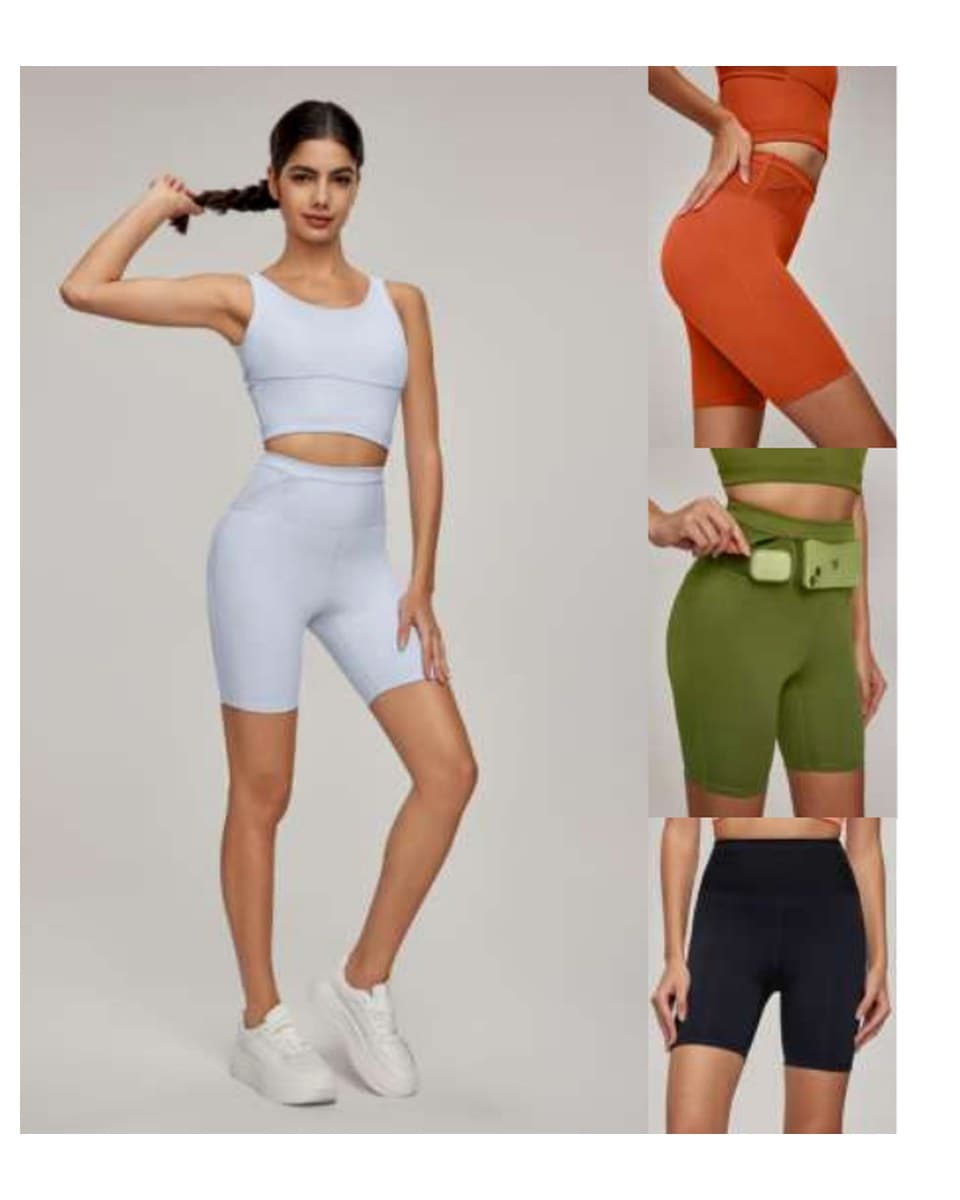
A biker-short photograph can communicate a close-fitting silhouette quickly. It cannot settle where the hem will sit on the intended wearer, whether a particular phone fits in a pocket, or which garment version the supplier is being asked to quote. Those decisions need a more specific brief than a collection of similar-looking images.
For a brand choosing existing products, the wholesale activewear sourcing route starts with confirmed style references and then addresses branding, labels and packing. The buyer's first task is to separate the features already present in a selected short from changes that would require another style or a development project.
What should an activewear biker shorts wholesale supplier confirm about the product?
State the intended use in ordinary language. A fitted short for a gym range, a studio capsule or everyday activewear can share a visual outline while serving different wearing needs. Explain the activity, customer and sales channel so the supplier knows which fit, coverage and carrying questions matter to this enquiry.
Also clarify the meaning of biker shorts in the brief. A product name describing an activewear silhouette does not establish a padded cycling construction. If the buyer needs a particular cycling feature, identify it directly and request suitable product information. Do not let the name carry a technical requirement that nobody has confirmed.
Give each candidate its own product code and version. Retain the original reference alongside any annotated image so the supplier can see both what was selected and what the buyer is asking about. A note such as “same shape, different pocket” needs further explanation: the proposed pocket change may alter the scope substantially.
Keep the commercial unit visible as well. A short photographed with a top may still be quoted as an individual garment. Identify whether the enquiry concerns shorts alone or a coordinated offer with separately defined components. This prevents a styling photograph from creating an unintended assumption about what the order includes.
Which existing references help structure the comparison?
The DWS115003 Pocket Biker Short provides an identified starting point for a pocket-focused enquiry. Request the current garment details and sample rather than assuming that a visible pocket will suit every item a wearer might carry. The product identity makes the question traceable; the review supplies the answer.
The DWS115091 High-Waist Sculpt Biker Short is a separate catalogue direction. Use its code when discussing waist position, fit and the intended appearance. A descriptive product name should remain an identifier, not a substitute for evidence that the garment creates a particular body-shaping or support result.
For a graphic direction, the YA-14 Graphic Bike Short helps distinguish an artwork-led reference from a plain-colour option. Confirm which existing colour or print version is being discussed. A new print layout and a small logo application involve different artwork questions, even if both appear under a general branding request.
The hero image comes from the DWS115112 Waist-Bag Sport Short reference. It shows a fitted-short outline in several colour views and a waist-bag detail in the green view. That detail should be identified separately from a side pocket. The image does not establish the carrying capacity, order contents or current availability of any combination.
Use a comparison record to decide why a candidate belongs in the range:
| Reference direction | Buyer decision | Evidence to request | Keep separate in the order |
|---|---|---|---|
| Pocket biker short | Whether the existing carrying arrangement suits the intended item | Current pocket details and a relevant loaded sample review | Exact style, size and pocket configuration |
| High-waist biker short | Whether waist and leg proportions suit the intended wearer | Measurement reference and fit comments | Accepted size guidance and garment version |
| Graphic bike short | Whether the graphic direction fits the brand's assortment | Identified print version and artwork approval scope | Garment approval and artwork approval |
| Waist-bag short reference | Whether this carrying arrangement is actually required | Confirmation of the bag detail, contents and wearing review | Bag arrangement versus other pockets or accessories |
Select the references that answer a real assortment need. Adding several similar silhouettes without a defined difference can multiply colour and size lines while leaving the buyer unsure which product to reorder. A clear role for each selected style makes both the launch and later review easier to interpret.
How should you specify length and hem position?
Use a measurement reference before relying on words such as short, mid-thigh or long. Inseam describes an inside-leg measurement, but the exact measurement points and method still need agreement. State the sample size and units, and distinguish the catalogue's information from a measurement taken from the actual reviewed garment.
Review where the hem sits on the intended wearer as a separate observation. A measurement and a wearing photograph answer different questions. The same nominal length may appear different with a changed waist position, body proportion or garment fit. Keep the relevant sample and wearer context with the comment rather than treating one image as universal size guidance.
Consider movement during the review. Record whether the hem position changes during the activities relevant to the brief and whether the wearer needs to adjust it. Describe the observation specifically. A statement about one reviewed sample in one activity is more useful than an unsupported promise that the short will never move.
Check the leg opening alongside length. A buyer concerned about pressure at the hem may need to discuss the existing opening and fit, rather than automatically asking for more length. Give the supplier the actual concern and ask which confirmed catalogue option addresses it. This can reveal whether another existing reference is appropriate.
When the selected style requires a new inseam or different opening construction, move that requirement into a defined development discussion. The workout shorts manufacturer guide covers the broader product work. Keep the wholesale selection record clear about the point where the buyer has requested a changed garment.
How do you review the waistband without relying on its name?
Start with the actual waist position, measurement information and visible construction of the selected short. Ask which details belong to the existing version and which are proposed options. A high-waist description identifies a direction, but it does not tell the buyer how a particular size will feel during the intended activity.
Review the sample in the relevant movements and positions. Record where the waist sits, whether adjustment is needed and where any discomfort is noticed. Connect the comments to the sample size and the buyer's intended fit. A vague request for a firmer waist leaves several possible interpretations, including changes the wholesale reference may not cover.
Separate appearance from performance language. A wide waistband, curved seam or shaping product name can be described visually. Claims about support, compression or a body-changing effect require appropriate evidence for the actual product and intended claim. Keep the article, product brief and eventual consumer description consistent with what has been established.
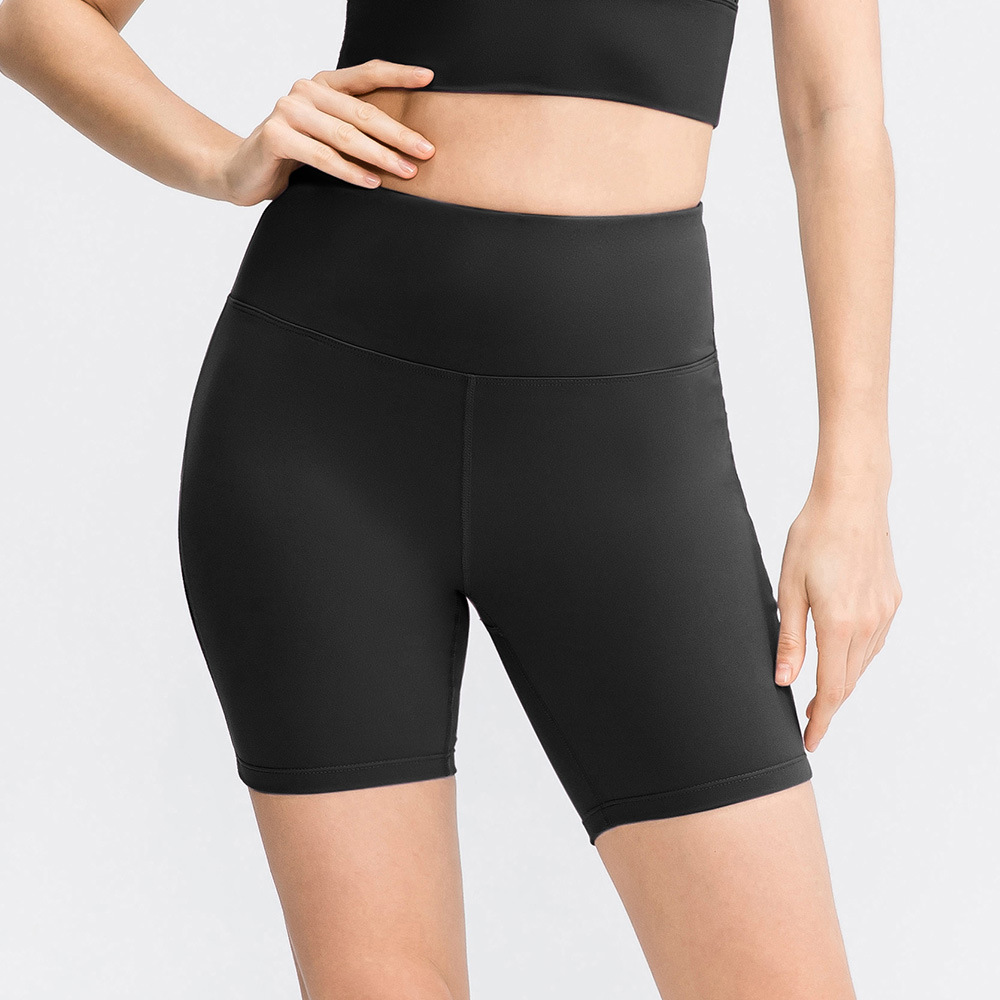
This catalogue crop helps a buyer point to the waist, panel arrangement and leg hem when explaining a fit question. It does not establish pocket dimensions, a support level or a tested wearing result, and it is not presented as an approved sample for the reader's order.
Review the waist and hem together before selecting the size information for the range. Choosing a size solely to change waist feel can also alter the fit elsewhere. Where the existing proportions do not suit the intended wearer, ask about another confirmed reference or identify the specific development required.
What does a useful pocket review actually record?
Begin with what the wearer needs to carry. Identify the item and its relevant dimensions, including a case or other attachment where applicable. A request for a phone pocket is incomplete when nobody knows which phone is being discussed. Keep the carrying requirement specific enough for a sample reviewer to reproduce.
Identify the actual pocket: its location, opening, depth and any closure that is confirmed on the selected garment. A panel line in a photograph does not by itself prove a pocket opening. Likewise, a waist bag and a side pocket should remain distinct configurations in the comparison and quotation.
Review loading, access and movement as separate questions. An item may fit through the opening while being inconvenient to remove, or may fit when standing while affecting the wearing experience during the intended activity. Record what was observed and which combination of garment size and item was used. Avoid turning a brief fit check into a broader security claim.
| Review point | Record to keep | Decision it supports |
|---|---|---|
| Item identity | Item dimensions and relevant case or attachment | Whether the requirement is reproducible |
| Pocket identity | Location, opening and confirmed construction | Whether the reviewed feature matches the order |
| Loading and removal | Specific observations on the actual sample | Whether access suits the intended use |
| Wearing with the item | Activity, sample size and observed behaviour | Whether the loaded arrangement needs further review |
| Requested change | Clear description of the unmet requirement | Whether another existing style or development is needed |
Do not resolve an unsuitable pocket by silently adding a zipper, increasing its depth or moving it across a seam in the artwork file. Those changes need the supplier's review and may require custom activewear development. Preserve the accepted existing configuration if the buyer instead chooses another style that already meets the need.
How should logo and graphic decisions relate to the short?
Mark the proposed logo on the identified garment view, then add dimensions and placement references. A location near a side panel, pocket opening or leg hem needs enough information for the supplier to understand the intended relationship. Avoid using an arrow alone when its meaning could change between sizes or photographs.
The logo methods for stretch activewear guide helps connect the artwork to the actual material and application area. Confirm the proposed method and review the relevant proof or sample. Approval of the logo file does not automatically approve its appearance on every garment colour or placement.
Keep decorative artwork separate from functional construction. A print line can visually suggest a panel, but it does not change where the garment is sewn or where an existing pocket opens. For a graphic reference, identify the actual print version and discuss how the logo should sit within it. If the buyer wants a new overall layout, define that scope explicitly.
Use the private-label activewear route to coordinate labels, hangtags and packing with the garment artwork. Retain one final file version for each approved application, including any colour-specific variation. Ask the reviewer to identify precisely which sample or proof has been accepted.
Do not let branding obscure information needed at receiving. The buyer may choose a marketing name for the short while still retaining the supplier style code in the order record. Link the two identities so a branded hangtag, garment label and packing list can all be traced to the same product.
How do you build colour and size quantities for existing styles?
Start with the selected styles and their confirmed options. Keep a separate quantity line for each style, colour and size. Similar product names or matching retail colour names should not merge distinct garments into one line. The supplier needs to see which physical product each quantity describes.
The size-colour quantity planning guide supports this allocation work. Use the brand's actual channel information, available customer evidence and stock plan to decide the proposed mix. A catalogue photograph showing four colours does not mean the buyer must order all four or that any particular ratio is appropriate.
If the enquiry uses size packs, define the number of garments in each pack and the sizes inside it. State whether the pack is a numerical ordering arrangement, a physically packed unit, or both. Retain individual garment totals so the buyer can reconcile the quotation and receiving records without reverse-engineering a pack label.
Keep colour review connected to the selected short and material. A black sample cannot establish the appearance or coverage of every lighter colour. Identify the sample or evidence needed for each relevant concern. Avoid extending one accepted fit or appearance observation beyond the combination that was actually reviewed.
When a requested option is unavailable, record the proposed substitution as a change. The buyer should know whether it affects only colour, the garment reference, the size mix or the launch assortment. Recalculate the affected totals and resolve the product decision before allowing the substitute to enter the final packing schedule.
What should labels and packaging make clear?
Prepare garment information for the actual selected product, including the approved composition, care information and size identification. Assign a responsible reviewer for destination and channel requirements. Confirm the facts before copying content from another short whose appearance happens to be similar.
Agree the label location and attachment through the relevant garment reference. A placement that is easy to read on a flat image may interact differently with the waist or inside seams during wear. Keep the accepted location and content version identifiable, especially when several shortlisted styles use different waist constructions.
The activewear packaging checklist connects folding, bags, hangtags and carton records. For biker shorts, the outside identifier should let receiving distinguish the style, colour and size without guessing from a folded outline. If a waist-bag arrangement or another component is included, define the agreed contents explicitly.
Review a packed reference where packing matters to the offer. Confirm that the garment and its identifier remain correctly associated through handling. If a top appears in the brand's photography but is not included in the short's selling unit, keep the consumer-facing contents description accurate as well.
At receiving, compare actual garments with the accepted order lines and packing list. Record a wrong style, wrong size, missing component and damaged pack as distinct observations. Specific identifiers and relevant photographs make the follow-up clearer than a general statement that the shipment does not match the catalogue.
What needs to be settled before comparing quotations?
Give the supplier the identified styles, quantities and intended branding scope. Ask the quotation to state the commercial unit and the work included. Garments, logo applications, labels and packing should correspond to the same version of the brief so the buyer can compare like-for-like proposals.
List unresolved sample questions separately. A quotation may be useful for planning while a pocket review or fit decision remains open, but the buyer should be able to see that limitation. Record which answers are needed before accepting the final garment and which person is responsible for providing them.
Confirm current project conditions directly, including the selected options and the steps that determine timing. Neither an online catalogue nor an earlier quotation establishes a live inventory position. If the proposal changes, identify the affected style, quantity or branding line and assess the revised scope before accepting it.
For a range with several short styles, retain the reason for each selection alongside the commercial comparison. A lower figure for a different product does not answer whether that product meets the original length or carrying requirement. The accepted brief provides the basis for deciding whether an alternative is useful.
How can reorder records preserve the accepted short?
Keep the style identity, actual sample reference, size information, colour approval and final artwork together. The activewear repeat-order guide explains how to use that record when requesting another order. For a biker short, retain the accepted length and pocket configuration as well as the broader product name.
Record customer feedback in terms that can be investigated. A report about an item moving in a pocket needs the relevant garment size, item and use context. A comment about the hem needs the reviewed fit and activity. Avoid treating one vague observation as a reason to change every colour or size without understanding what happened.
Separate replenishment from development in the new request. Increasing the quantity of an accepted style is different from asking for a longer inseam or another pocket arrangement. Identify the proposed changes and request confirmation of their implications. A repeat style code should not conceal a new construction brief.
Confirm the current availability of the selected options and ask whether any product details have changed. Reuse prior approvals only within their applicable scope. If the supplier proposes an alternative, compare it with the retained garment information before using the old product description or consumer images for the new order.
How can inPACE support a focused existing-style enquiry?
The company introduction explains inPACE's connection with Yinshan Garments and garment experience dating to 1986. This provides background for the supplier conversation. Acceptance of a particular short should still be based on its identified reference, actual sample information and agreed order details.
A focused enquiry can begin with one or two relevant catalogue codes and the questions that matter to the range. The supplier can then discuss the selected options and the proposed logo, labels, hangtags and packing. Those brand details should remain tied to the actual garments being quoted.
If the buyer needs a different inseam, liner, pocket or waist construction, identify that requirement early. It creates a separate development question with its own sample work. Clear scope helps the buyer preserve suitable existing references while giving unresolved product requirements the attention they need.
What should you include in a biker shorts sourcing brief?
Use this checklist to turn an image-led enquiry into a product discussion:
- Intended activity, customer, destination and sales channel.
- Existing style codes and the specific garment versions being compared.
- Commercial unit and whether any photographed companion item is included.
- Length reference, measurement method, sample size and desired hem position.
- Waist and leg-opening fit questions from the relevant sample review.
- Carrying item, actual pocket identity and any loaded-review observations.
- Confirmed colour and size options with quantities for each order line.
- Proposed logo location, dimensions, method and final artwork version.
- Approved garment information, label location and responsible reviewer.
- Folding, pack identification and any required component contents.
- Open approval questions and the evidence needed to resolve them.
- Reorder reference and requested next step for the supplier.
Send your biker shorts brief to inPACE with the selected references and the length, waist and carrying questions that matter to your range. This gives the supplier a clear basis for reviewing existing options and the proposed branding and packing work.
Product directions
Explore relevant activewear products
Use these product pages as practical references for your brief, then confirm materials, fit, customization, and production details through sampling.
Pocket Biker Short Reference
Use DWS115003 to identify the existing style and request the actual pocket, length and fit information for review.
View product directionHigh-Waist Biker Short Reference
Keep DWS115091 separate in the comparison and review its confirmed measurements and sample fit for the intended wearer.
View product directionGraphic Bike Short Reference
Use YA-14 as a distinct graphic direction and confirm which existing options and artwork decisions apply to the order.
View product directionFAQ
Buyer questions
What should an activewear biker shorts wholesale supplier confirm first?
Confirm the existing style, intended use, measured length, waistband and carrying features. Then identify the required colour-size quantities and branding scope. Keep the commercial unit clear, especially when the reference photograph includes a top or accessory that may not be part of the short's order.
Are activewear biker shorts necessarily padded cycling shorts?
No. A biker-short name can describe an activewear silhouette without establishing a padded cycling construction. State the intended activity and any required cycling features directly. Ask for product information and relevant sample evidence rather than assuming those features from a name or photograph.
How should a buyer specify the length?
Identify the measurement, units, method and sample size, then separately describe the desired hem position on the intended wearer. Review movement where relevant. If the existing reference requires a new inseam or leg-opening construction, define that change through a development discussion.
Does a visible pocket prove that it will hold a phone during exercise?
No. Identify the phone or other item, including its case, and review the actual pocket on the selected garment. Check loading, access and the relevant movement separately. Record the sample size and observations without extending a limited review into an unsupported security claim.
Can a waist bag be treated as the same feature as a side pocket?
They should remain separate configurations in the brief. Identify the actual arrangement and confirm its contents, attachment and relevant wearing questions. A photograph showing a bag detail does not establish that every pictured colour or quoted short includes the same feature.
Which changes move the enquiry beyond an existing-style order?
A new inseam, liner, pocket structure or waistband construction requires a development discussion. Identify the unmet requirement and the affected garment. Another confirmed catalogue style may meet the need, but a changed construction should not be hidden inside a general branding request.
What should the buyer keep for a repeat order?
Retain the accepted style and sample, length and size information, colour approvals, pocket configuration, artwork, labels and packing version. State changes in the new request and confirm current options. Use the retained record to assess any proposed substitute before treating it as the same product.