Yoga Wear
One-Shoulder Knot Ruched Yoga Top Manufacturer
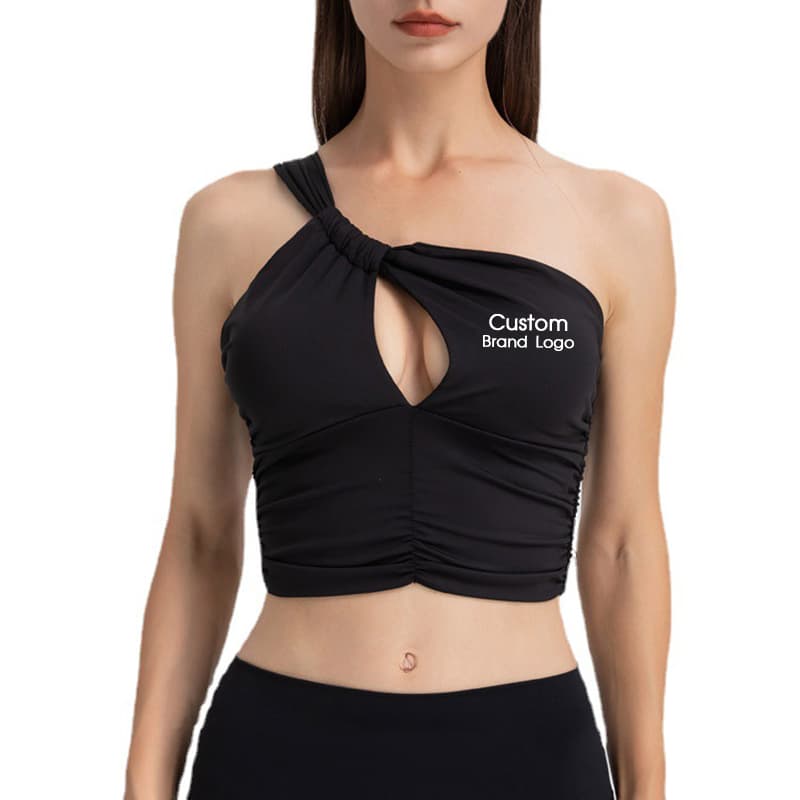
A one-shoulder knot ruched yoga top for private-label yoga, Pilates, workout, gym wear, and fashion-activewear collections. The reference combines an asymmetric shoulder, gathered knot detail, front cutout, ruched body, and cropped fit. Brands can review fabric, lining, coverage, shoulder construction, fit, color, logo, labels, sample approval, QC, and export packing with an activewear manufacturer before a wholesale light-customization or factory-custom production route is confirmed.
Product Features
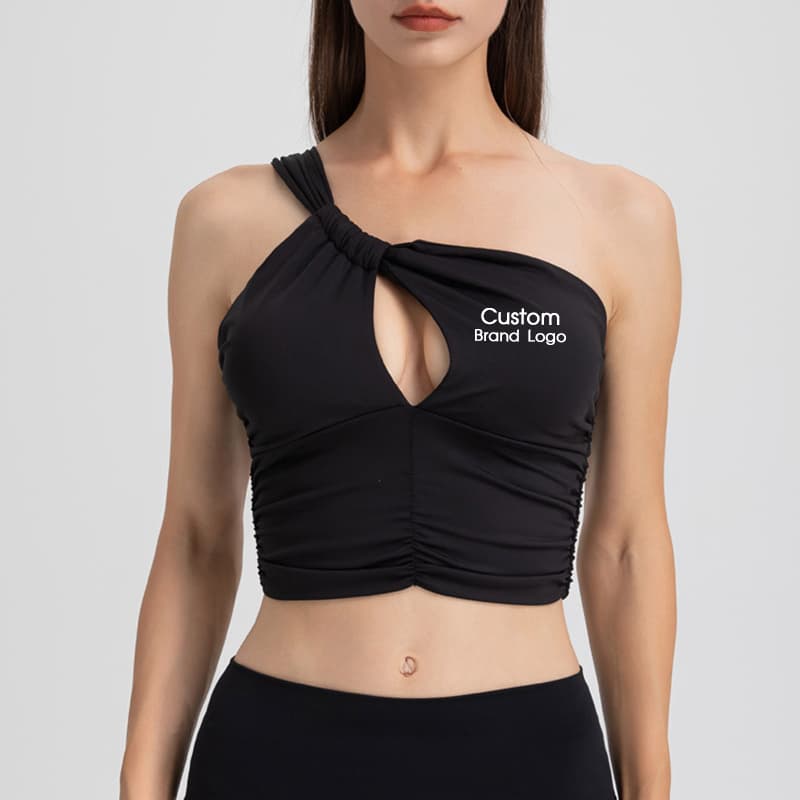
Asymmetric one-shoulder neckline with a gathered knot detail at the upper front.
Front cutout and ruched body construction for a fashion-led yoga and workout top direction.
Close cropped silhouette designed to coordinate with high-rise leggings, shorts, or skirts.
Front, back, and lower-body areas can be reviewed for buyer-selected logo placement after material selection.
Lining, coverage, strap tension, gathering retention, and support direction require sample confirmation.
Use Scenarios
Yoga and Pilates fashion capsules
Boutique activewear and coordinated-set assortments
Gym wear and workout apparel with a design-led top layer
Online private-label launches and seasonal color stories
Athleisure, travel, and studio-to-street product programs
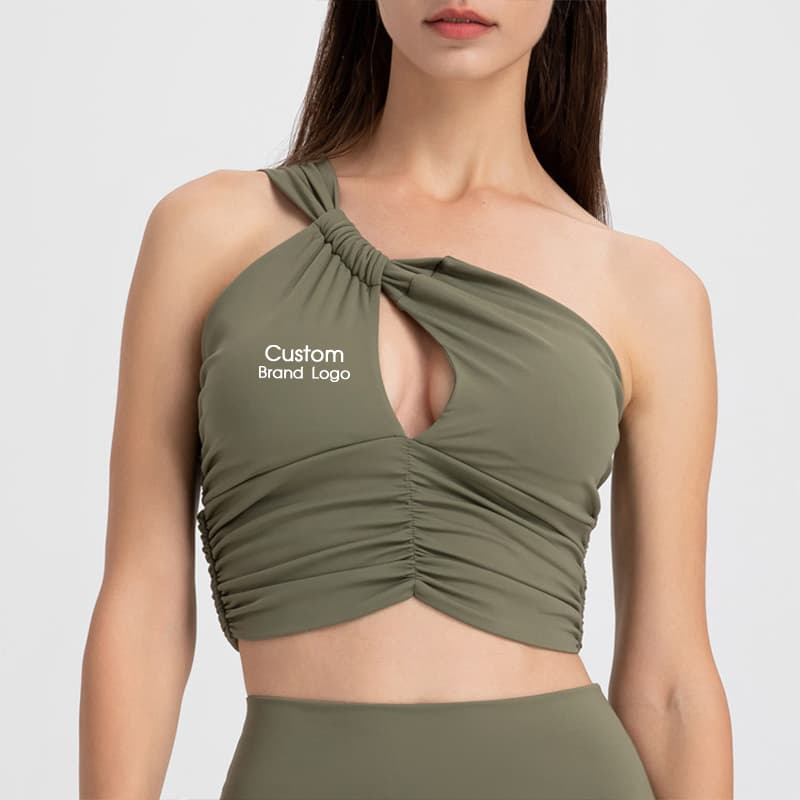
An asymmetric yoga top needs a controlled factory brief
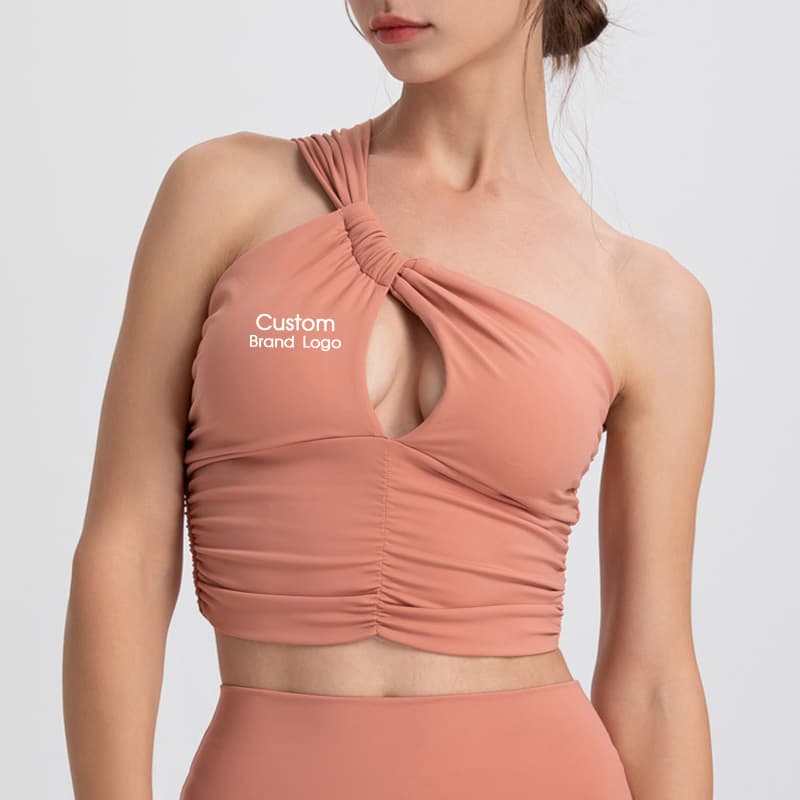
A one-shoulder knot ruched yoga top can bring a distinct fashion-activewear direction to a yoga wear, workout apparel, or boutique collection. The visible product combines an asymmetric shoulder, gathered knot detail, front cutout, ruched body, cropped hem, and close body fit. That combination can make the top a useful hero piece beside high-rise leggings, a skirt, or biker shorts. For a B2B buyer, though, the same design creates a series of production decisions that should be documented before a manufacturer is asked for price, sample, or bulk planning.
The supplied images show one style direction in several colors. They do not prove a specific fabric composition, support level, lining route, test result, stock status, MOQ, price, or delivery date. The buyer and supplier should decide which visible details are essential, what the intended wearer and activity require, and which parts of the garment must be checked on a physical sample. That is the difference between using a reference as inspiration and using it as a workable factory instruction.
This page is designed for brands, studios, boutiques, online sellers, and wholesale buyers who need to source a one-shoulder yoga top from an activewear supplier or custom activewear manufacturer. inPACE can help structure the discussion around fabric, fit, construction, branding, sample approval, quality checks, labels, and packing. The final route always depends on the selected garment, material, color plan, artwork, quantity direction, and approval record.
Start by naming the role of the top in the collection
A fashion-led yoga top should not be treated as a generic basic. A studio may want an asymmetric top as a limited member-merchandise piece that coordinates with one core legging. A boutique may use it to create a seasonal color story. An ecommerce brand might make it the lead image in a capsule and need logo placement, size photography, barcode, folding, and product-copy approvals to be planned early. Each role influences the fit, coverage, materials, packaging, and sample questions.
A buyer brief should separate what is fixed from what is open:
- Collection role: Is this a hero style, a seasonal fashion item, a coordinated-set top, or a repeatable core direction?
- Intended use: Describe yoga, Pilates, mobility, light gym work, lifestyle wear, travel, or studio-to-street use. Do not use the category name as a substitute for a support or performance specification.
- Asymmetric shoulder: Confirm whether the shoulder width, knot position, upper coverage, and tension must match the reference or are subject to development advice.
- Front detail: Define the cutout shape, gathering depth, body coverage, neckline line, and whether the center ruching is essential to the visual identity.
- Inner construction: State whether lining, a shelf, cup pockets, pads, or an unlined route is required. Do not let a photograph decide this silently.
- Commercial plan: Provide the target customer, price position, quantity by color and size, logo files, label package, packing requirements, destination, and target timing.
These details let a supplier respond to the same product scope that the buyer intends to sell. The activewear manufacturer quote guide is useful when a buyer needs to compare multiple proposals without comparing different fabrics, constructions, branding packages, or sample expectations.
Fabric, lining, and the gathered construction
The knot and ruched body make material choice especially important. A fabric that looks smooth in a flat swatch may gather differently when it is sewn through a knot and stretched around the body. A lining choice can change the drape, coverage, seam weight, and cutout behavior. A new material can change the shoulder tension and the way the cropped hem sits with a high-rise bottom. These relationships should be checked together on the actual sample.
A buyer can state a desired material direction such as a matte active knit, a soft handfeel, a firmer body, a stretchier feel, a particular coverage question, or a price range. The manufacturer can then propose development materials. Exact fibre content, GSM, color match, opacity, recovery, lining, and wash behavior must be confirmed for the selected route; they should not be declared from an image.
| Development area | What to review before approval |
|---|---|
| Main fabric | Composition, weight, surface, handfeel, stretch, recovery, color, coverage, and price direction |
| Knot detail | How the knot is formed, secured, finished, and positioned after stretch and movement |
| Ruched body | Gathering depth, stitch route, drape, recovery, center alignment, and seam tension |
| Cutout and lining | Cutout shape, coverage, lining or cup route, inside seam finish, and comfort at the body |
| Shoulder construction | Strap or shoulder width, tension, extension, coverage, and stability across the requested size range |
The table creates product questions rather than unsupported claims. It is not appropriate to call the style high support, sweat-proof, squat-proof, breathable, antimicrobial, UV protective, or made from a fixed percentage without approved material specifications and relevant evidence. If a buyer needs a particular performance claim, it should be included in the material and testing discussion, not copied into catalog text because the product is activewear.
Fit development and size grading for an asymmetric silhouette
An asymmetrical top needs a sample review that is more specific than checking a general chest measurement. The shoulder line, upper coverage, knot position, front cutout, center gathering, armhole, back coverage, hem opening, and cropped length influence one another. Moving the knot can affect the cutout. Changing the lining can change the drape. Adjusting shoulder tension can affect the neckline. A clear sample record keeps those changes connected.
Use the buyer size chart or fit block to establish the base size. Then record the garment measurements and questions that the sample must answer. A useful comment may say raise the cutout, widen the shoulder, reduce the gathering, lengthen the body, change the back coverage, or review a new lining route. Statements such as make it more flattering or make it more supportive are not factory-ready instructions unless they identify the garment area and the change to be tested.
A size-set review matters because a knot and gathered front can sit differently across sizes. The team should check how the shoulder, cutout, ruching, and hem relate to the same intended fit direction throughout the requested range. The activewear sample-to-bulk production guide gives brands a practical sequence for keeping measurements, sample comments, artwork, labels, and packing decisions tied to the correct style version.
Choose the route: light customization or deeper custom production
When the buyer accepts the existing silhouette and construction direction, the project may start with wholesale or light customization. That can include a logo, label, hangtag, color direction, size plan, barcode, folding method, and packaging. It is a useful route for boutique programs, studio merchandise, early activewear launches, and brands testing a differentiated top without changing every technical feature. Product availability, materials, colors, logo method, quantities, and timing still need a project-specific review.
When the buyer wants to change the fabric, shoulder geometry, knot method, cutout, ruched pattern, lining, body length, fit block, coverage, or grading, the garment needs factory-custom development and sample evidence. The wholesale versus custom activewear guide explains why an existing-style branding request should not be treated as the same scope as a revised pattern and material project.
inPACE can discuss both routes with buyers: a lower-complexity branding path for an established product direction, and a deeper development path for a changed garment. It can coordinate samples, fabric and fit questions, logo compatibility, labels, QC points, packing, and production planning across cooperating factories. That experience helps keep the design brief connected to manufacturing questions without promising a fixed commercial outcome before the relevant inputs are confirmed.
Branding, packing, QC, and an RFQ a supplier can use
The asymmetric front provides visible logo zones, but the application method must suit the chosen fabric, color, artwork scale, and intended use. A logo mockup should be checked on the sample for its actual placement and appearance. The same applies to inner labels, care labels, hangtags, size stickers, product barcodes, individual bags, fold direction, and carton marks.
Before production, the buyer can name QC priorities: approved color, knot formation, symmetry or intentional asymmetry, cutout size, gathering density, shoulder tension, seam finish, logo location, size labeling, and packing presentation. These are not assumptions about final quality; they are the checks that make an approved specification useful to a factory team.
For an RFQ, send the product reference, intended customer and use, fit questions, material and lining direction, color plan, buyer size chart, logo artwork, labels, packing needs, destination market, quantity by color and size, and target arrival window. Link the request to custom activewear development if the top needs construction changes, or use the Yoga Wear collection to identify related product roles. A complete buyer brief lets the supplier explain what can be discussed from the reference, what requires a sample, and what must remain open until the approved product version is ready for production.
Specifications
- Product Type
- One-shoulder knot ruched yoga top
- Fit Direction
- Close-fit cropped top with an asymmetric shoulder, gathered upper detail, front cutout, and ruched body
- Construction Review
- Knot position, shoulder tension, cutout shape, gathering density, body length, lining, and seam finish are sample-review items
- Size Range
- Buyer size chart or custom grading
- MOQ
- Discuss by fabric, lining, color, size ratio, logo method, and order plan
- Branding
- Heat transfer, silicone print, inner label, care label, hangtag, barcode, and packaging options
- Packing
- Shape-protective folding, size sticker, individual poly bag, carton mark, and export packing options
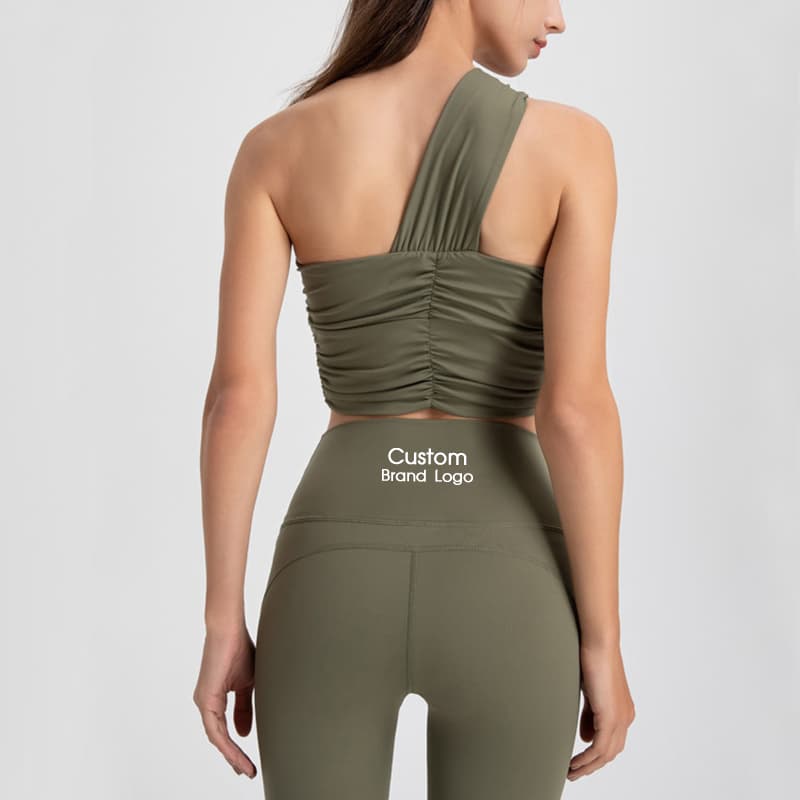
Fabric Information
- Main Fabric Direction
- Buyer-selected stretch active knit; exact fibre content and weight are confirmed before quotation and sampling
- Lining and Coverage
- Lining route, cup pocket, pad option, coverage target, and inner seam finish are defined from the buyer brief and sample review
- Gathering Behaviour
- Knot formation, ruched-panel recovery, seam tension, drape, and stretch behaviour should be reviewed on the approved material
- Color Development
- Buyer-selected core and seasonal colors with lab-dip and bulk color review where required
- Performance Claims
- Any claim about support, breathability, moisture management, colorfastness, opacity, or durability depends on approved materials and an agreed test plan
Customization Options
Main fabric, lining, cup route, GSM, handfeel, coverage, color, and stretch-recovery direction
Shoulder width, knot position, cutout geometry, gathering density, body length, hem, back coverage, and seam finish
Buyer colorways, logo method, logo position, artwork scale, inner label, care label, and hangtag
Buyer size chart, grading, fit sample, shoulder-tension review, size-set review, and measurement tolerance discussion
Matching leggings, biker shorts, skirts, or coordinated-set development direction
Barcode, folding, poly bag, carton mark, inspection checkpoints, and export-packing requirements