Sports Bras & Leggings
One-Shoulder Keyhole-Back Sports Bra Manufacturer
An asymmetric one-shoulder keyhole-back sports bra developed as a private-label reference for yoga, Pilates, studio, active-fashion, and athleisure collections. The cropped silhouette combines a single-shoulder neckline with a split-strap keyhole detail at the back. Buyers can review fabric, lining, cup-pad direction, fit, color, logo, grading, labels, sampling, quality control, and export packing before choosing wholesale light customization or factory-custom development.
Product Features
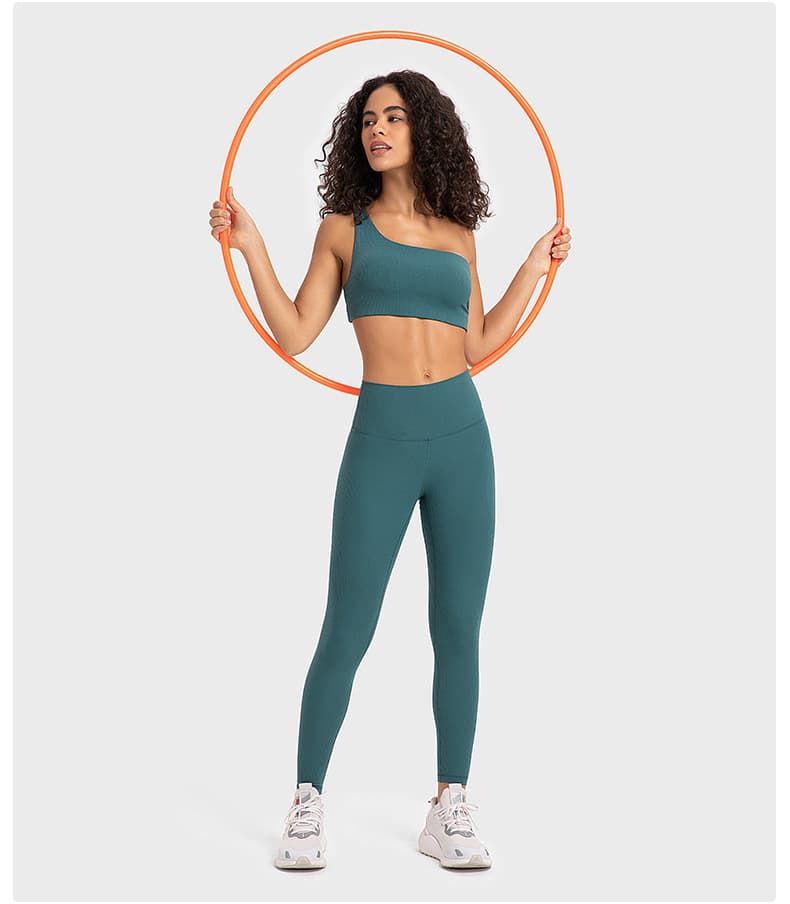
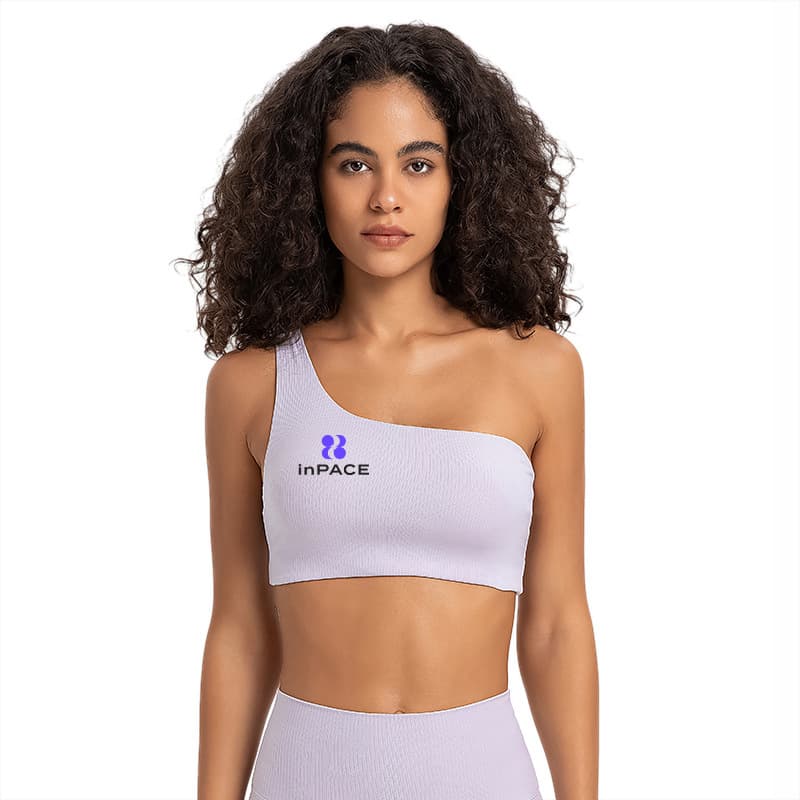
Asymmetric one-shoulder neckline with a clean cropped activewear silhouette.
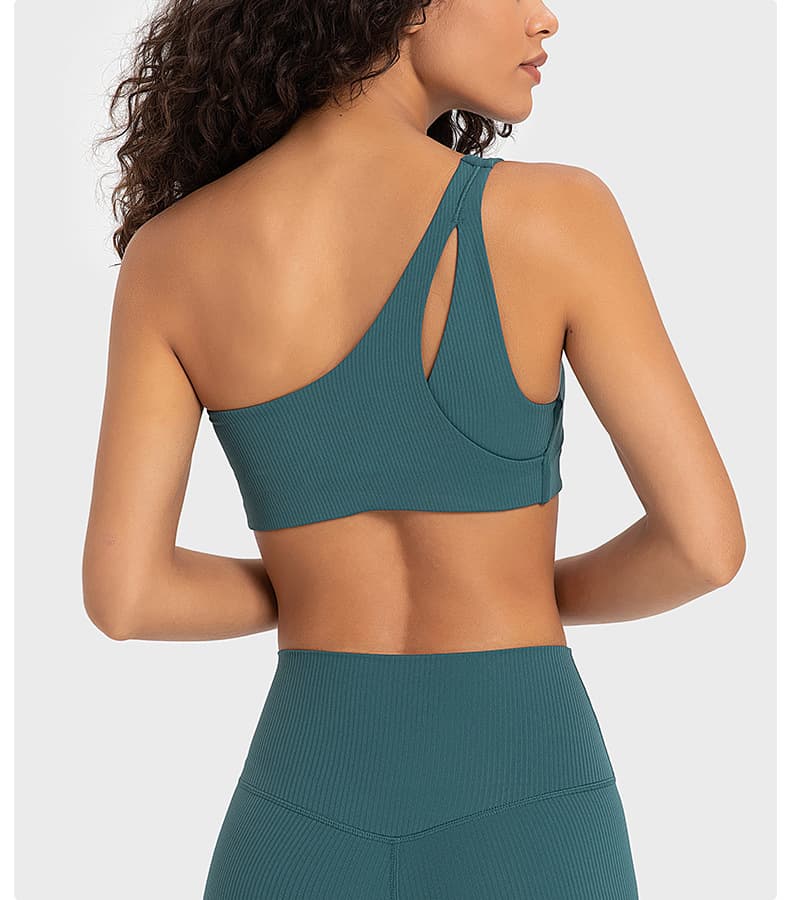
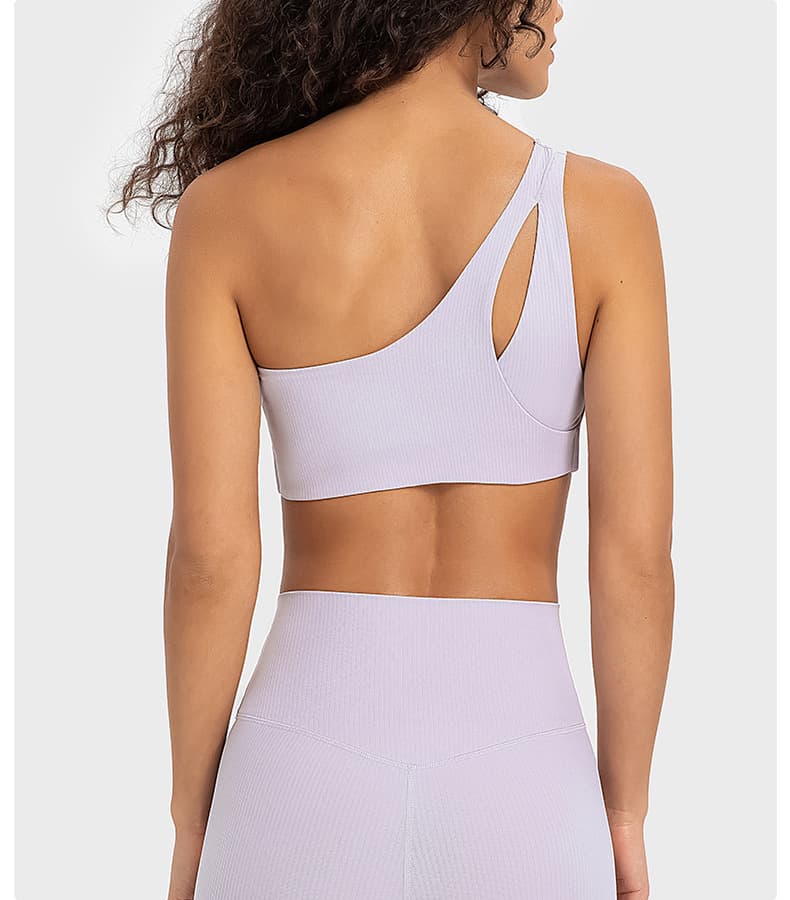
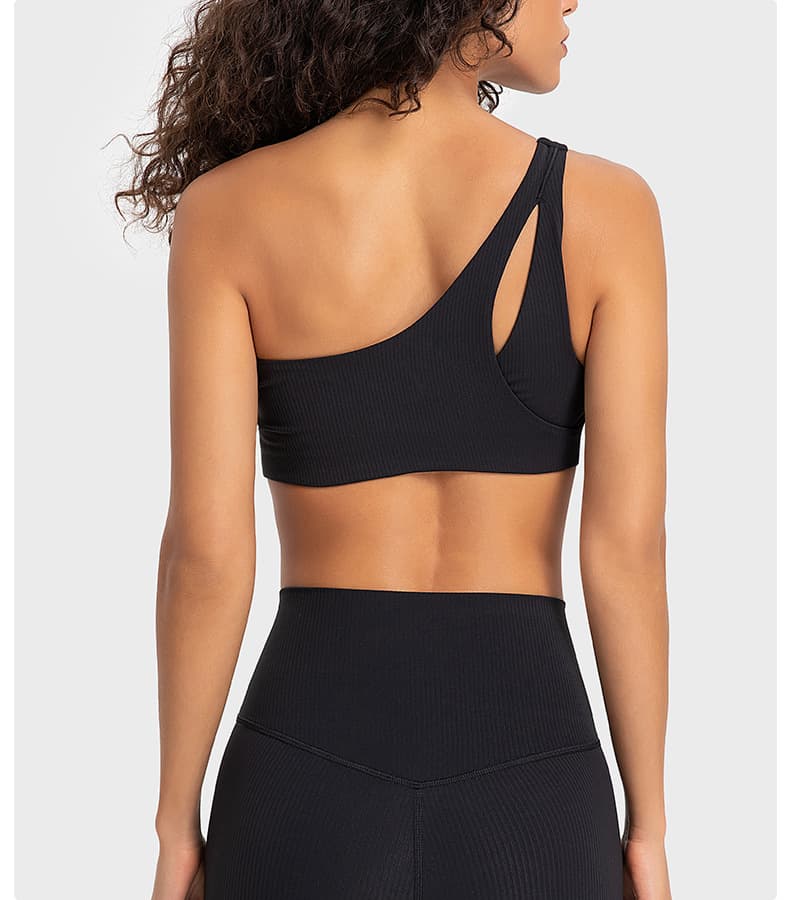
Split shoulder construction creates a visible keyhole detail across the upper back.
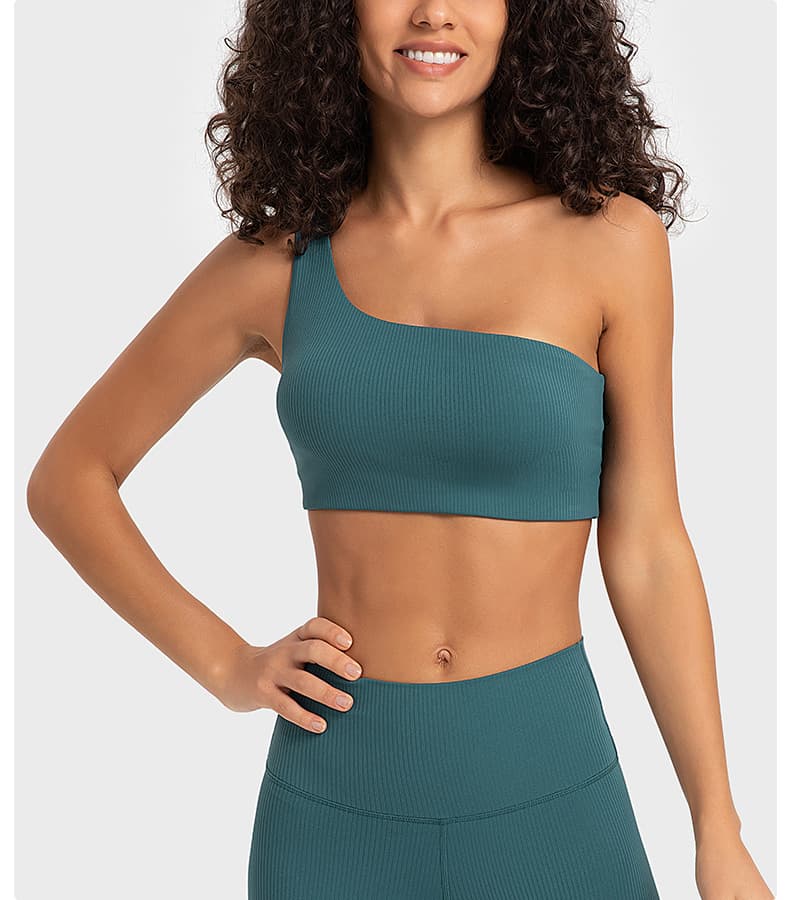
Front, back, and studio references show one construction direction in multiple colors rather than separate products or stock commitments.
Body length, neckline coverage, shoulder tension, back opening, lining, and cup-pad route remain sample-review items.
Buyer-selected branding, grading, labels, hangtags, barcode preparation, and retail or export packing can be discussed by project.
Use Scenarios
Yoga, Pilates, mobility, and studio collections where the buyer approves the intended activity and fit
Fashion-activewear and athleisure capsules built around an asymmetric statement top
Boutique, online, and private-label sports bra assortments
Coordinated sets with buyer-selected leggings, shorts, skirts, or warm-up layers
Seasonal color programs, brand launches, and repeat-order planning based on an approved specification
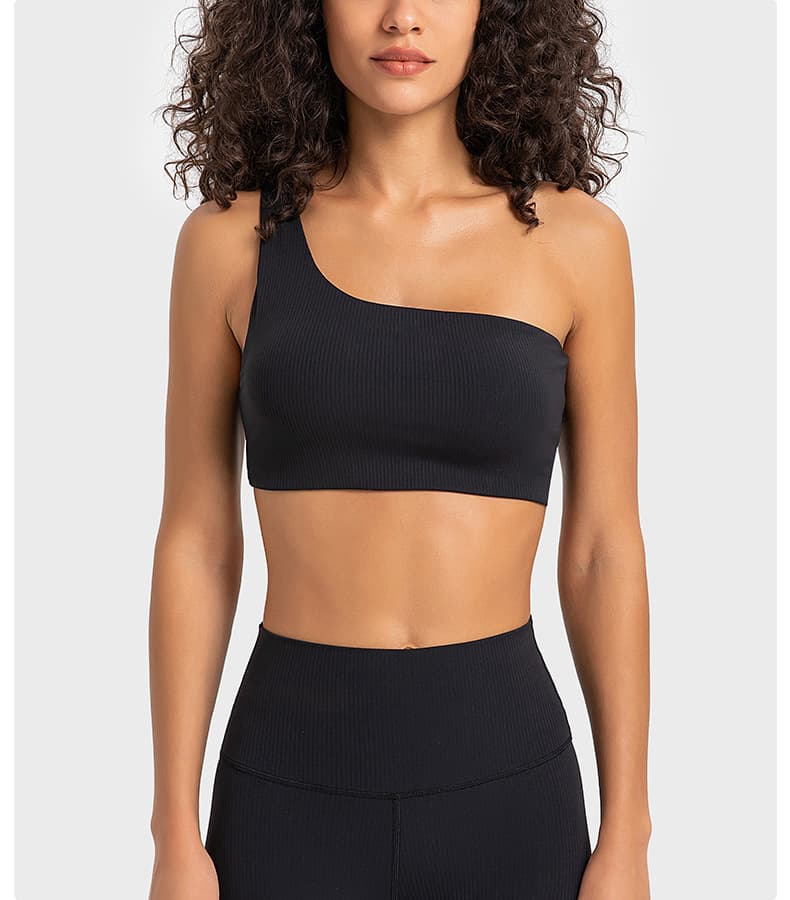
An asymmetric sports bra begins with a commercial brief
A one-shoulder keyhole-back sports bra can give an activewear collection a clear visual signature without relying on heavy decoration. The supplied reference combines an asymmetric neckline, a single shoulder direction, a cropped close-fitting body, and a split strap at the back that creates a narrow keyhole opening. Those visible elements can support a fashion-activewear capsule, a studio collection, or a coordinated set. For a B2B buyer, however, the design is not complete until the intended wearer, activity, fabric, coverage, inner construction, fit block, branding, size plan, quality requirements, and packing route have been defined.
This page is a product-development reference for brands, boutiques, studios, wholesalers, and online activewear sellers. It is not evidence of a fixed fibre composition, GSM, support level, functional test result, available inventory, MOQ, delivery date, certification, or price. The images show the silhouette and color direction that can start a sourcing conversation. The final sports bra specification must be built from the buyer's brief, the selected material, the approved sample, and the agreed order plan.
That distinction matters because an asymmetric sports bra can be sourced in more than one way. A buyer who accepts the existing shape may need a lower-complexity wholesale or light-customization route covering logo, labels, color selection, size ratio, hangtag, barcode, and packing. A buyer who changes the shoulder geometry, back opening, lining, cup system, fabric platform, fit block, or grading needs factory-custom development. The wholesale versus custom activewear guide explains why these two routes should not be compared as though they include the same work.
What the visible construction tells a buyer
The front view shows a one-shoulder neckline rather than a symmetrical two-strap frame. At the back, the shoulder section divides and leaves a keyhole-shaped opening near the upper back. The body is cropped and close to the torso. These are observable design directions, but the photographs do not establish the internal build or the final wearing performance.
Before requesting a quotation, the buyer should decide which parts of this structure are essential:
- One-shoulder geometry: Confirm the preferred shoulder width, neckline line, upper-chest coverage, underarm position, and the side on which the shoulder sits.
- Keyhole-back shape: Define the opening height, width, position, split-strap spacing, edge finish, and how the opening should appear at rest and during the intended movement.
- Body proportion: State the desired body length, hem opening, overlap or gap with the intended waistband, and the relationship to matching bottoms.
- Inner construction: Specify whether the project needs lining, a shelf layer, cup pockets, removable pads, fixed pads, or no pads. The image cannot answer that question.
- Fit and activity intent: Name the target wearer and intended use, such as yoga, Pilates, mobility, studio training, lifestyle wear, or a fashion-led active range. Do not substitute the product category for an unverified support claim.
- Commercial presentation: Provide logo artwork, label requirements, hangtag, barcode, packing, destination market, sales channel, and quantity by color and size.
These decisions give an activewear manufacturer a useful scope. They also help the buyer compare proposals fairly. One supplier may quote an existing material and standard fit, while another may include new fabric sourcing, custom grading, pad development, additional samples, or more complex packing. The activewear manufacturer quote guide can help a sourcing team compare the actual scope behind each quotation.
Fabric, lining, and cup pads must remain confirmed choices
The reference images suggest a stretch activewear surface, and some color views appear to have a fine texture. Photography cannot confirm whether the final project uses a knitted rib, another textured construction, or a smooth material route. It also cannot confirm composition, weight, opacity, handfeel, recovery, colorfastness, or performance after washing. inPACE therefore treats fabric as a buyer-selected and sample-approved part of development rather than a fixed catalog fact.
A buyer can describe the target material in practical terms: smooth or textured surface, matte or more lustrous appearance, softer or firmer handfeel, lighter or denser coverage, climate, intended activity, target retail position, and cost direction. Material options can then be compared through swatches and sewn samples. Exact fibre content and GSM should be recorded only after the selected fabric is identified.
Lining and cup construction deserve the same discipline. A buyer may want a full inner layer, a partial shelf, cup pockets, removable pads, fixed pads, or no pads. Each route affects pattern shape, seam bulk, coverage, washing instructions, packing, and cost. Pad shape and thickness can also change the appearance of the neckline and the balance of an asymmetric garment. No pad route should be described as standard unless it has been confirmed for the project, and no support level should be claimed from the product photograph.
| Development question | Evidence required before approval |
|---|---|
| Main material | Identified fabric, composition, weight, color, handfeel, coverage, recovery, and price direction |
| Lining | Selected lining material, coverage area, edge finish, seam behavior, and compatibility with the outer fabric |
| Cup-pad route | Confirmed pocket or fixed construction, pad shape, thickness, size logic, placement, and wash-care direction |
| Shoulder and neckline | Sample check for position, tension, extension, comfort, coverage, and recovery |
| Back keyhole | Sample check for shape, edge stability, strap spacing, seam finish, and appearance through movement |
| Claims | Relevant test method and result tied to the approved fabric and final construction |
This is why the page does not call the product high support, medium support, moisture wicking, breathable, antibacterial, UV protective, sweat proof, or made from a stated fibre percentage. These may be possible development goals, but only an approved specification and appropriate evidence can support them.
Fit development for the one-shoulder and keyhole back
Asymmetry makes fit review more specific. A symmetrical bra can be checked against paired strap positions, while this style places different demands on the shoulder side and the open side. Changing the shoulder tension can move the neckline. Changing the neckline can change upper coverage. Changing the keyhole dimensions can affect back stability and the visible balance of the split strap. Lining or pad decisions can also alter the way the outer shell sits.
Start from the buyer's size chart or fit block and identify a base size for the first sample. Record body length, chest width, hem opening, neckline position, shoulder width, armhole depth, keyhole height and width, split-strap spacing, and relevant internal measurements. Fit comments should describe a measurable or observable change. For example: raise the open-side neckline, widen the shoulder panel, reduce the keyhole width, move the split upward, lengthen the body, or review a different lining route. Comments such as make it more supportive or make it fit better are not production-ready until they identify the area and the change to test.
A size-set review is important because the relationship between the shoulder, keyhole, neckline, and body length may shift through the requested range. The buyer and supplier should agree the base-size approval, grading approach, tolerance discussion, and which sizes require physical review. inPACE's sample-to-bulk production guide provides a useful framework for connecting fit approval with material, color, artwork, labeling, and packing approval.
Wholesale light customization versus factory-custom development
A light-customization project begins with the existing style direction. The buyer may select an available material or review a practical fabric option, choose a color direction, approve a logo placement, provide labels and hangtag artwork, set the size ratio, and define packing. This route can suit a boutique capsule, studio merchandise program, early private-label launch, or seasonal test. It should still be quoted against a confirmed brief. A reference color is not a promise of inventory, and a logo mockup is not artwork approval.
Factory-custom development begins when the garment itself changes. A new fabric platform, custom color matching, revised neckline, changed shoulder width, different keyhole geometry, new lining, different cup-pad system, modified body length, buyer-specific fit block, extended size range, or new grading logic can require pattern work and additional sampling. The quotation should make those development steps visible rather than hiding them inside a generic unit-price comparison.
inPACE can help a buyer organise either route. For deeper changes, begin with custom activewear development. For adjacent product references and coordinated assortment planning, browse the Sports Bras & Leggings collection. The purpose of these links is to help the buyer place this top within a range, not to imply that every referenced color, material, or matching bottom is currently available.
Branding and coordinated collection planning
The clean front and back surfaces provide possible logo zones, but the application method should suit the approved fabric, color, artwork scale, and placement. Heat transfer, silicone print, or another decoration route can be discussed after compatibility review. A logo should be checked on the actual sample for position, appearance, adhesion direction, and interaction with stretch. Inner labels and care labels also need enough space and should not interfere with the keyhole or shoulder finish.
For a coordinated set, send the intended legging, short, or skirt reference with the sports bra brief. Confirm whether the buyer wants an exact color match, a tonal pairing, or a contrast story. Material matching should be reviewed rather than assumed: two garments can use different constructions that react differently to dye or light. The size ratio for tops and bottoms may also differ, so set planning should not force a single ratio without sales or fit evidence.
The supplied lilac, teal, and black visuals show color possibilities for one style. They do not establish stock status. A buyer-selected color program may require a swatch, lab dip, or other color approval depending on the material and order route. Bulk color review, logo color, labels, hangtags, and packaging should all refer to the same approved color record.
QC should follow the approved sample and specification
Quality control is most useful when the buyer defines what must be checked. For this style, the QC plan may include material identity, approved color, garment measurements, neckline position, shoulder width, keyhole dimensions, split-strap spacing, seam appearance, hem opening, lining or cup-pocket construction, pad placement where applicable, logo position, label content, size marking, and packing presentation. Tolerances and inspection level should be discussed as part of the order rather than invented on a catalog page.
Visual checks should distinguish intentional asymmetry from manufacturing variation. The one-shoulder line is deliberately uneven, but its approved position should be repeatable. The back keyhole is a design opening, but its shape and edge finish should follow the approved sample. Any pad, lining, or seam route should be checked against the correct product revision. Records should identify the approved sample, material, color, size, artwork version, and packing instruction so that one decision is not mistakenly applied to another version.
Pre-production confirmation can bring these records together. During production and final inspection, the same checkpoints can be used again. If a claim, certification, or regulated label is required for the destination market, the buyer should provide the exact requirement and agree the evidence route before production. This draft does not promise any certification or market compliance outcome.
Labels, packing, and repeat-order control
Retail and export presentation can include a brand label, care label, size marking, hangtag, barcode, size sticker, folding instruction, individual poly bag, carton quantity, and carton mark. The final package depends on the sales channel, destination, sustainability policy, warehouse process, and customer requirements. A marketplace program may prioritise barcode accuracy and individual unit identification. A boutique may prioritise hangtag presentation and neat folding. A distributor may need carton-level information and a defined size assortment.
Packing approval should be connected to the garment specification. A changed pad route may alter folding. A textured surface may need a different protection discussion. A new logo position may change how the product should face in a clear or printed bag. Repeat orders should refer to the approved material code, color reference, measurements, artwork, labels, packaging, and QC record rather than only to a photograph or product name.
Send a buyer-ready RFQ
A useful RFQ for this one-shoulder keyhole-back sports bra should include the intended customer, use scenario, destination market, target retail or cost direction, requested quantity by color and size, buyer size chart, desired fabric surface and handfeel, coverage expectations, lining and cup-pad preference, color plan, logo artwork, label and hangtag files, barcode requirements, packing instructions, sample needs, and target arrival window. If an item remains open, mark it as a question for development instead of guessing.
Also state whether the existing silhouette is acceptable or which construction points must change. Identify the preferred shoulder side, neckline coverage, body length, keyhole dimensions, and matching bottom direction. This lets inPACE explain whether the project is closer to wholesale light customization or factory-custom development, what must be sampled, and which details remain conditional until approval.
A complete RFQ does not guarantee a fixed MOQ, price, lead time, performance result, certification, or production capacity. It creates the common brief needed to discuss those items responsibly. The result should be a commercially useful activewear product specification that a buyer, supplier, factory, and QC team can all review against the same approved evidence.
Specifications
- Product Type
- One-shoulder keyhole-back sports bra
- Design Structure
- Asymmetric single-shoulder front with a split-strap keyhole direction at the upper back
- Fit Direction
- Close-fit cropped silhouette; final body length, coverage, and opening measurements are set against the buyer fit block
- Inner Construction
- Lining, shelf, cup pocket, removable pad, fixed pad, or no-pad route must be confirmed before quotation
- Size Range
- Buyer size chart or custom grading
- MOQ
- Discuss by fabric, color count, size ratio, logo method, construction, and order plan
- Lead Time
- Confirm after fabric, sample, artwork, quantity, approval, and packing review
- Branding
- Buyer-selected logo method, inner label, care label, hangtag, size marking, and barcode options
- Packing
- Folding instruction, individual poly bag, size sticker, barcode, carton mark, and export carton options
Fabric Information
- Main Fabric
- Buyer-selected stretch active knit; exact construction and fibre composition are confirmed before quotation and sampling
- Weight and Coverage
- GSM, opacity, handfeel, and coverage are selected for the intended use, climate, retail position, and target cost
- Lining and Cup Direction
- Lining material, cup-pocket construction, pad shape, pad thickness, or a no-pad route require buyer confirmation and sample review
- Stretch and Recovery
- Extension, recovery, neckline retention, shoulder tension, and keyhole stability should be reviewed on the approved sample
- Color Development
- Buyer-selected color program with swatch or lab-dip review and bulk color approval where required
- Performance Claims
- Support, breathability, moisture management, colorfastness, and other performance claims depend on the approved material, construction, and agreed test plan
Customization Options
Fabric construction, composition, GSM, surface, handfeel, coverage, and stretch-recovery direction
One-shoulder width, neckline line, armhole, back keyhole shape, split-strap spacing, body length, and hem opening
Lining, internal shelf, cup pocket, removable-pad, fixed-pad, or no-pad construction after feasibility review
Buyer colorway, logo method, logo size, logo placement, inner label, care label, hangtag, and size marking
Buyer size chart, base-size fit sample, grading, size-set review, and measurement tolerance discussion
Matching bottom development, barcode, fold method, individual bag, carton mark, inspection standard, and export packing