What should a brand decide before asking a yoga jacket manufacturer for a sample?
A yoga jacket is often treated as a simple extra layer, but it connects several product decisions that can pull in different directions. A studio warm-up piece may prioritise soft layering and a clean logo zone. An outdoor cover-up may need a stated sun-protection target, hood coverage, ventilation, pocket access, and a lighter pack profile. A training layer may put more attention on the zipper, sleeve movement, neckline, hem stability, and how the jacket sits over a bra or tank. A useful brief makes those priorities visible before a manufacturer is asked to quote or sample the style.
Start by choosing the production route. A catalogue-informed project can begin with an existing jacket direction when the silhouette and construction are already close to the intended garment and the main discussion is colour, logo, labels, or packing. Factory-custom development is the better route when the brand needs a new fit, material, hood, collar, vent, pocket, zipper length, panel map, logo area, or sample plan. A product image can explain a direction, but it does not confirm that its material, colour, protection level, trim, or production conditions apply to another project.
The Yoga Wear Manufacturer solution helps a buyer place the jacket within a yoga or studio collection. Use the Yoga Activewear Catalog to select a product reference, then state what should remain, change, or be physically reviewed. This gives the factory an actionable product question instead of a request to copy an image.
Which decisions belong in a yoga jacket brief?
The first brief does not need every value to be final. It needs a clear record of what the buyer knows, what is proposed, and what the first sample must prove. The table below keeps a sun-protection or layering concept connected to a specific garment rather than turning a general feature word into a production instruction.
| Brief field | What the buyer can define | Why the factory needs it | Useful next question |
|---|---|---|---|
| Product role | Studio warm-up, outdoor cover-up, travel layer, or training shell | The intended role changes fit, pocket, fabric, and packing priorities | What should this jacket do beside the base outfit? |
| Sun-protection target | The use context and any market, test, or label requirement | UPF is a target to be reviewed, not an automatic claim from a fabric name | Does the project require a defined protection standard or only a coverage direction? |
| Hood or collar | Hood depth, face and neck coverage, ponytail opening, stand collar, or no hood | Head and neck coverage changes pattern, zipper, and layering relationships | Which coverage area must the sample make visible? |
| Zipper and opening | Full zip, partial zip, zipper length, pull direction, guard, or opening height | The closure affects neckline comfort, logo space, access, and construction | Which opening relationship must be tested on the garment? |
| Fabric and vents | Surface, handfeel, stretch, weight, mesh or vent zones, and opacity questions | A swatch cannot prove the jacket's drape, airflow, or layering behaviour by itself | Which material relationship needs a physical sample? |
| Fit and length | Intended ease, body length, sleeve length, cuff, hem, and reviewed size | A jacket can look correct while moving differently over a bra, tank, or skirt | Which movement and garment areas should be observed? |
| Branding and packing | Logo area, label set, hangtag, folding, bag, carton, and destination notes | Branding and receiving details can change sample scope and production coordination | Which branded details belong in the first sample, and which remain open? |
| Sample purpose | Development, fit, fabric and trim review, decoration check, or later approval | One sample should answer a named decision, not silently approve every later choice | What exact evidence does the next sample need to provide? |
The value of the table is not to make a buyer guess at technical answers. It helps the manufacturer identify what can be advised, what needs a sample, and what needs an explicit confirmation later. A clear brief is more useful than a long list of generic performance adjectives.
How should a brand define a UPF or coverage goal without making an unsupported claim?
Use the word UPF carefully. A buyer may ask for a sun-protection direction because the jacket will be used outdoors, during travel, between studio sessions, or as a light layer for a specific market. That request is a product and compliance question, not proof that any pictured fabric or completed garment has a stated rating. The brief should say whether the brand needs coverage, a material route to review, a test requirement, a label claim, or a particular target that must be confirmed through its own project process.
Coverage and UPF are related but not identical decisions. Hood shape, collar height, sleeve length, thumbhole position, hem length, panel openings, and mesh placement all change which parts of the body the garment covers. Fabric surface, weight, stretch, colour, construction, and the relevant testing or label requirements can affect whether a protection claim is appropriate. The sample should therefore prove the selected product relationship, not create a universal sun-protection promise.
A good buyer note can say: “The jacket is intended as an outdoor yoga and travel layer. Please review a fabric and coverage direction that supports the requested use. The first sample should show the hood, collar, sleeve, body length, ventilation zones, and zipper relationship. Any UPF, testing, or labelling requirement remains subject to project confirmation.” That note gives the factory a real review path without asking it to certify an unconfirmed result.
What hood, collar, and zipper choices change the sample route?
A hood is not only a visual detail. It changes neckline balance, back-neck construction, face and neck coverage, how the jacket layers over a bra or tank, and the way the zipper meets the collar. A buyer should identify whether the hood is mainly for styling, light coverage, a ponytail opening, a drawcord consideration, or another defined use. The product brief should also state whether the hood needs to sit flat under a bag, fold into the collar, or remain separate from the first sample scope.
The same applies to the front opening. A full zipper can affect the garment's centre-front stability, collar shape, guard, pull direction, and logo area. A half zip can change the neck opening and how the layer is put on or removed. A zipper is also connected to tape, puller, backing, seam, binding, and nearby panel decisions. Rather than writing “add a better zip,” identify the opening length, intended use, jacket version, material and colour context, and the particular observation the sample must support.
For a deeper closure record, use the activewear zipper and hardware brief. It helps teams distinguish a visible zipper direction from the specific construction, component, and sample evidence that need review before the feature is carried into a production file.
Decide the product role before selecting every trim
A travel-oriented shell may need a collar, pocket, and folding discussion. A yoga warm-up layer may need a softer neck, lighter fabric, and easier movement over a studio base. An outdoor layer may need a more detailed hood and coverage brief. These are not automatically different quality levels. They are different product roles, so the brief should identify the role before the team treats one zipper, hood, or trim choice as universally correct.
How do fabric, ventilation, and layering work together?
A yoga jacket has to be considered as a garment system. The body fabric, any contrast or mesh zone, zipper tape, seam finish, binding, cuff, waistband or hem, and pocket construction can affect the look and the movement question that the sample needs to answer. A light material may suit a cover-up direction but need a different treatment around a pocket, collar, or zipper. A more structured material may create another body-length or hem question. The right choice depends on the actual product, not on a general material label.
Use fabric language that the buyer can verify on a sample. Useful starting points include the desired handfeel, weight direction, stretch relationship, recovery question, surface preference, intended coverage, lining needs, and whether ventilation is a functional target or a visual panel direction. If a mesh or perforated zone is proposed, describe its location and why it is being considered. The fabrics and trims resource can help a brand organise those questions, while the final material selection remains subject to the project brief and approved sample.
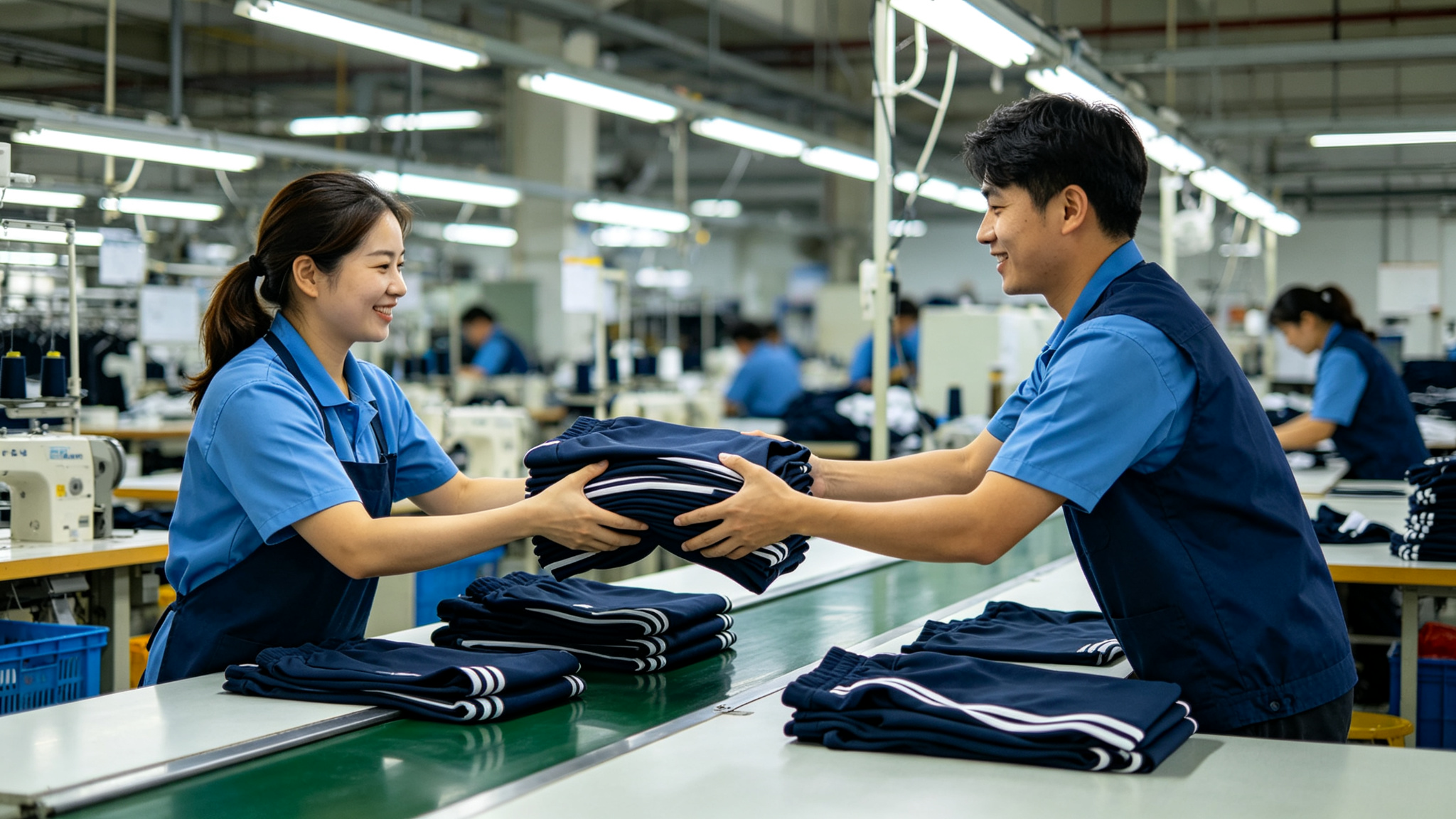
The image is a production-context reference. It does not prove a specific jacket fabric, construction, factory assignment, or approved production condition. Its relevance is the handoff: the selected material, pattern, zipper, branding, packing, and approval notes need to remain connected as a product moves from sample discussion to production coordination.
Layer over the intended base garment
A jacket sample should be reviewed with the base garment relationship in mind. A collar can sit differently above a tank than above a high-neck top. A hem can meet a high-rise legging, skirt, or short at different visual and movement points. A sleeve and cuff can be affected by the armhole, the layer underneath, and the intended activity. This does not require a broad wear-test claim. It means the buyer should name the base product, the reviewed size, the relevant movement, and the jacket areas that need observation.
The activewear sample plan guide is useful when the team needs to keep fabric, fit, trim, decoration, and later production questions in separate, traceable stages. A sample becomes more useful when it has one stated decision purpose.
What should be checked in a yoga jacket fit sample?
Fit is more than whether the front photo looks balanced. A buyer can ask to review the shoulder line, armhole, sleeve reach, cuff, hood or collar position, chest and waist ease, body length, hem stability, pocket access, zipper behaviour, and the relationship to the specified base layer. The brief should identify the sample version and reviewed size, so the feedback remains attached to the actual garment.
Use clear observations. “Check whether the collar remains comfortable over the selected tank during overhead reach” is actionable. “Make it more active” is not. “Review the pocket opening while the jacket is worn over the designated base layer” is actionable. “Make the pocket better” is not. The factory can then decide whether the next action is a pattern discussion, fabric change, zipper adjustment, pocket revision, another sample, or a formal approval step.
Avoid converting a fit observation into a guarantee. One sample can help a brand review the defined garment, material, construction, size, and use context. It does not automatically validate every colourway, size, fabric, production batch, or later feature change. Record what the sample proved and which decisions remain open.
How do Supplier, Manufacturer, and Factory responsibilities differ for this jacket?
The terms describe different buyer decisions. A supplier comparison asks whether the proposed route, communication, sample record, production coordination, QC, and packing discussion are clear enough to compare. A manufacturer discussion turns the jacket brief into a product-development plan: fabric and fit direction, hood or collar, zipper, vent, pocket, logo area, and sample evidence. A factory discussion begins once the relevant specifications are confirmed and focuses on production implementation, component handoff, sewing, QC attention points, packing, and the records needed before bulk approval.
Keeping the terms distinct prevents a common sourcing mistake. A buyer should not assume that a catalogue reference automatically resolves a custom jacket, and a factory should not treat an early product image as a complete production file. When the project needs a changed fabric, fit, construction, coverage direction, colour, feature, decoration, or sample route, it belongs in a controlled manufacturing discussion. The custom activewear development route is the appropriate commercial entry point for that work.
How can inPACE support a yoga jacket development decision?
inPACE can begin with a brand brief, reference image, existing sample, or tech pack and help structure the decisions that affect a yoga jacket: intended role, fabric direction, fit, hood or collar, zipper, pocket, ventilation, logo area, sample purpose, and packing context. The programme is built on more than 30 years of garment-production experience, used here as a background for manufacturing judgement and coordination rather than a guarantee of capacity, timing, price, certification, or a particular technical result.
Where the confirmed product requires it, inPACE can coordinate an appropriate production route through multiple partner factories. The assignment depends on the approved product, material, construction, decoration, quantity direction, and project scope. That coordination does not mean every factory is owned by inPACE or that a fixed production route is available for every enquiry. It means the discussion can connect a clear product brief to the relevant sample, production, QC, and packing decisions.
For projects that include an applicable decoration or finish question, the team can also discuss sample support for printing, embroidery, or washing. General planning commonly allows about 5–10 days for samples and 25–50 days for production after scope and approvals are confirmed. These are planning ranges, not fixed commitments. Complexity, material availability, colourways, components, decoration, labels, packing, quantity direction, and revisions can change the applicable plan.
What should a buyer prepare before a yoga jacket sample discussion?
Use this checklist to prepare a specific factory conversation. It is designed to expose open decisions, not force a brand to pretend that every detail is already approved.
- Name the product role, customer context, and intended use of the jacket.
- State whether the project begins from a catalogue reference or requires a factory-custom garment.
- Attach the current reference image, garment, sketch, tech pack, or product link and identify what should stay, change, or be reviewed.
- Describe the requested sun-protection or coverage direction and flag any test or label requirement for project confirmation.
- Identify the hood, collar, zipper, pocket, vent, cuff, hem, and logo areas that matter to the first sample.
- State the body fabric, contrast or mesh direction, lining, trim, and component questions that the sample must make visible.
- Name the intended fit, reviewed size, base garment, and movement or layering observations that need review.
- Identify colour, logo artwork, label, hangtag, folding, bag, carton, and destination information that is available.
- Separate confirmed details from proposals, substitutes, and open questions.
- Give the sample a named purpose, such as fit, fabric and vent review, zipper review, decoration review, or later pre-production evidence.
- Record who will review the sample, what evidence they need, and what happens if a decision remains open.
- Provide quantity direction and timing context without treating either as a fixed commercial commitment.
This record gives a manufacturer enough context to recommend a meaningful next step. It also makes supplier comparisons more useful because each response can be measured against the same product, material, fit, component, branding, and sample assumptions.
What happens after the jacket sample is approved for its stated purpose?
An approval should be limited to what was actually reviewed. A fit sample may settle body length and collar relationship while leaving material, zipper, logo, labels, or packing open. A material sample may clarify surface and ventilation direction while leaving grading and pre-production checks open. Before bulk discussion, the buyer and factory should keep the approved product reference, material and colour direction, relevant components, branding files, labels, packing instructions, size and quantity direction, QC attention points, and remaining decisions in a connected record.
The manufacturing workflow can help a buyer understand the handoff from approved product information to production coordination, QC, packing, and export preparation. It does not replace a project-specific production plan. The practical next step is to send a jacket brief that makes the current decision visible, then ask which evidence, assumptions, and approvals are required before the next stage.
Start a yoga jacket manufacturing discussion
Send the reference style, intended use, coverage or UPF target, hood or collar direction, zipper and pocket notes, fabric and ventilation questions, fit and layering priorities, branding and packing details, quantity direction, and the purpose of the next sample. Share a custom yoga jacket brief when the project needs a clear development and factory-production discussion rather than a generic jacket quotation.
Product directions
Explore relevant activewear products
Use these product pages as practical references for your brief, then confirm materials, fit, customization, and production details through sampling.
Yoga Activewear Catalog
Use the catalog to identify a light layer, its role beside base styles, and the product reference that should anchor a custom jacket brief.
View product directionHooded Sun Protection Yoga Jacket
Use this hooded layer reference to discuss hood coverage, zipper route, cuff detail, ventilation, pocket placement, logo area, and the sample evidence needed for the intended project.
View product directionLightweight Stand-Collar Wind Jacket
Use this outer-layer reference to define collar height, body length, sleeve volume, back coverage, packing context, and the features that need confirmation in a sample.
View product directionFAQ
Buyer questions
What should a yoga jacket manufacturer receive before sampling?
Send the product role, intended use, reference image, sample, sketch, or tech pack; coverage or UPF target; hood or collar, zipper, pocket, ventilation, fabric, fit, layering, branding, packing, quantity-direction, and sample-purpose notes. Mark which details are approved, proposed, substituted, or open so the factory can identify the next evidence needed.
Can a brand ask for UPF yoga jackets without claiming a rating too early?
Yes. A brand can state a sun-protection or UPF target and ask the manufacturer to review the material, coverage, construction, test, and label requirements that apply to the actual project. A product image, fabric name, or early sample should not be treated as proof of a final rating or market claim without the relevant confirmation.
Should a yoga jacket start from a catalogue reference or factory-custom development?
Start from a catalogue-informed direction when the existing silhouette and construction are already close and the main decisions are branding, labels, packing, or limited colour direction. Use factory-custom development when the project needs a new fit, fabric, hood, collar, zipper, pocket, ventilation zone, panel layout, colour relationship, feature, or controlled sample plan.
What should be checked on a yoga jacket fit sample?
Check the stated jacket version and reviewed size against the intended base layer and use. Useful observations can include shoulder and armhole relationship, sleeve reach and cuff, hood or collar position, neckline and zipper behaviour, chest and waist ease, body length, hem, pocket access, ventilation placement, logo area, and the named layering or movement question.
How do fabric and ventilation decisions affect a yoga jacket?
Body fabric, mesh or vent zones, lining, zipper tape, seams, binding, cuffs, hem, and pockets can change the jacket's surface, drape, stretch, coverage, and layering relationship. Review the selected materials and components on the actual garment sample. A swatch or image is a starting reference, not approval of the final jacket.
How can inPACE support custom yoga jacket development?
inPACE can begin with a brief, reference, sample, or tech pack and discuss jacket role, fabric and fit direction, hood or collar, zipper, pocket, ventilation, branding, sample evidence, QC, and packing. It can coordinate an appropriate route through partner factories subject to the confirmed product, materials, construction, decoration, quantity direction, and scope.
How long do yoga jacket samples and production normally take?
For inPACE projects, general planning commonly allows about 5–10 days for samples and about 25–50 days for production after scope and approvals are confirmed. These are planning ranges, not fixed commitments. Product complexity, materials, colours, components, decoration, labels, packing, quantity direction, and revisions can change the applicable plan.