

What should an activewear zipper and hardware brief define before sampling?
An activewear zipper and hardware brief should identify the garment version, closure or component, its location, intended use, material and construction context, visual direction, sample purpose, and the decision that the physical piece needs to support. It gives a brand and factory a shared way to review a component relationship without treating one zipper, puller, pocket, colour, or sample as approval for every size, material, colourway, or production version.
The buyer question is rarely just “can this garment have a zipper?” A more useful question is “what must this particular closure or component do in this particular garment, and what evidence should the sample provide?” A half-zip training layer may need a review of its neckline, zipper length, tape visibility, pull direction, guard or facing, nearby panels, seam position, and how the garment is intended to be used. A pocket zipper may need a different discussion about opening location, access, lining, pull, garment stretch, and the boundary between a visual reference and an approved production detail.
This is a Factory custom manufacturing topic when the buyer needs a new closure location, zipper length, pocket construction, puller, material relationship, panel arrangement, fit interaction, or controlled component-sample plan. A catalogue-informed garment can begin from an existing direction when the requested change is limited and suitable for review, but an established silhouette does not prove that a changed closure, component, material, or construction has already been approved.
Why is a zipper brief different from a tech pack or a fit comment?
A tech pack can hold the product specification: style reference, measurements, construction, artwork, components, and notes. A fit comment records what a physical sample showed and what needs to change after review. The zipper and hardware brief sits between those records. It makes the current component question explicit before a sample is expected to resolve it.
For example, a buyer may know that a training layer needs a front zip but still need to decide the visible length, the point where the zip finishes relative to the neckline, whether the tape should be exposed or covered, how the pull reads with the brand direction, and whether a particular body material or lining must be present in the sample. Those details may eventually appear in a tech pack, but the early brief identifies which are proposed, which are approved, and which need physical evidence. It also stops a later fit comment from being forced to reconstruct the original component intent from unlabelled images or chat messages.
Use the activewear tech pack checklist to keep the approved specification organized. Use a hardware brief when the team needs to define the narrower component question that the next sample is meant to answer. After the physical review, the activewear sample feedback guide can record the observation, action, owner, and next decision.
Which projects need a factory-custom component review?
Start by separating a catalogue reference from a changed product. A brand may begin with an existing performance top and ask whether an established closure direction is a suitable starting point. That can be useful for a wholesale or light-branding conversation when the garment, material, construction, and component arrangement remain close to the selected reference. The buyer should still confirm the actual product, colour, branding, labels, packing, quantity direction, and project conditions.
Move into a Factory custom manufacturing review when the brief introduces a new neckline or opening, altered zip length, different tape visibility, a changed puller, a pocket with a new access direction, a new lining or facing, changed panel positions, a different body material, a new binding or elastic relationship, or another construction feature that changes the component evidence required. The route is not determined by a single word such as “zipper.” It depends on whether the supplier is being asked to reproduce an established direction or develop and review a changed garment relationship.
For a close-fit reference such as the Zip-Neck Sculpt Set, a buyer can use the product page to name the neckline, front opening, body, sleeve, panel, and logo-area context. If the project changes the closure length, materials, fit, component, construction, or sample purpose, the factory-custom brief should make that changed scope visible before the team treats the reference as an instruction.
What information belongs in a zipper and hardware sample brief?
The following table helps a brand connect the component to the actual garment and the next buyer decision. It is a planning record, not a universal quality standard, a compliance statement, or proof that a component will perform the same way in every future material, size, colourway, or production version.
| Brief field | What the buyer can record | Why the sample needs it | Useful next question |
|---|---|---|---|
| Garment and sample version | Style code, garment type, current version, reviewed size, and colourway if relevant | A component observation must stay attached to the actual garment | Which version does this comment apply to? |
| Component and location | Front zip, pocket zip, puller, stopper, snap, drawcord part, hardware, or another named item; show its exact garment area | “Add hardware” does not explain the relationship to the opening, panel, seam, or garment use | What is this component intended to help the wearer or product do? |
| Opening and construction context | Neckline, pocket opening, facing, guard, lining, binding, seam, panel, elastic, or reinforcement that meets the component | A closure is affected by the areas connected to it, not only by its visible finish | Which adjoining garment details must appear in the review sample? |
| Material and colour context | Body material, lining, tape or binding direction, component finish or colour reference, and items still proposed | Material thickness, stretch, layers, and colour relationship can change the physical question | Is the review about a component, a material relationship, or both? |
| Intended use | The named activity, access, layering, coverage, or movement context relevant to the component | A standing image may not answer an opening or pocket-use question | Which ordinary movement or access sequence should the sample clarify? |
| Evidence and visual reference | Marked sketch, tech-pack page, reference photo, component image, location callout, and version date | The factory needs to know which visual instruction is current | Is the reference showing an approved detail or a direction to review? |
| Sample purpose | Development, component, fit, material, decoration, size-set, or later pre-production question | One physical sample should not silently carry every approval task | What exact decision should this sample allow the team to make? |
| Approval boundary | Points approved for the named purpose, points requiring revision, and items still open | A single component review should not release the whole garment or order | Which material, size, colour, branding, packing, or production point needs later evidence? |
The table is useful because it names uncertainty clearly. A buyer does not need to supply every final component selection before an initial discussion. It is better to record “front-opening tape direction under review” or “pocket puller reference to be confirmed” than to allow a placeholder to become an unintended production instruction. The factory can then review the real product decision rather than infer a complete specification from one reference image.
How do fabric, stretch, lining, and seams change the component question?
A zipper or hardware item is part of a physical garment system. A body material, lining, elastic, binding, guard, facing, seam allowance, panel, pocket bag, reinforcement, or nearby logo location can change what the sample needs to show. A component that appears suitable on a flat swatch or an unlined reference may raise a different question once it is placed into a stretch garment, near a curved neckline, beside a seam, or at a pocket opening.
The brief should state which materials and connected garment areas must appear in the sample, which are substitute development directions, and which remain open. This does not require a buyer to claim a tested result. It allows the team to see whether the next task is a material review, a pattern or construction discussion, a component adjustment, another sample, or a later approval record.
Use the fabrics and trims overview to start a material and component conversation. The activewear seam construction guide can help the buyer name the seam and panel context around the relevant closure or opening. These references support a brief; they do not substitute for the project-specific evidence that the sample still needs to provide.
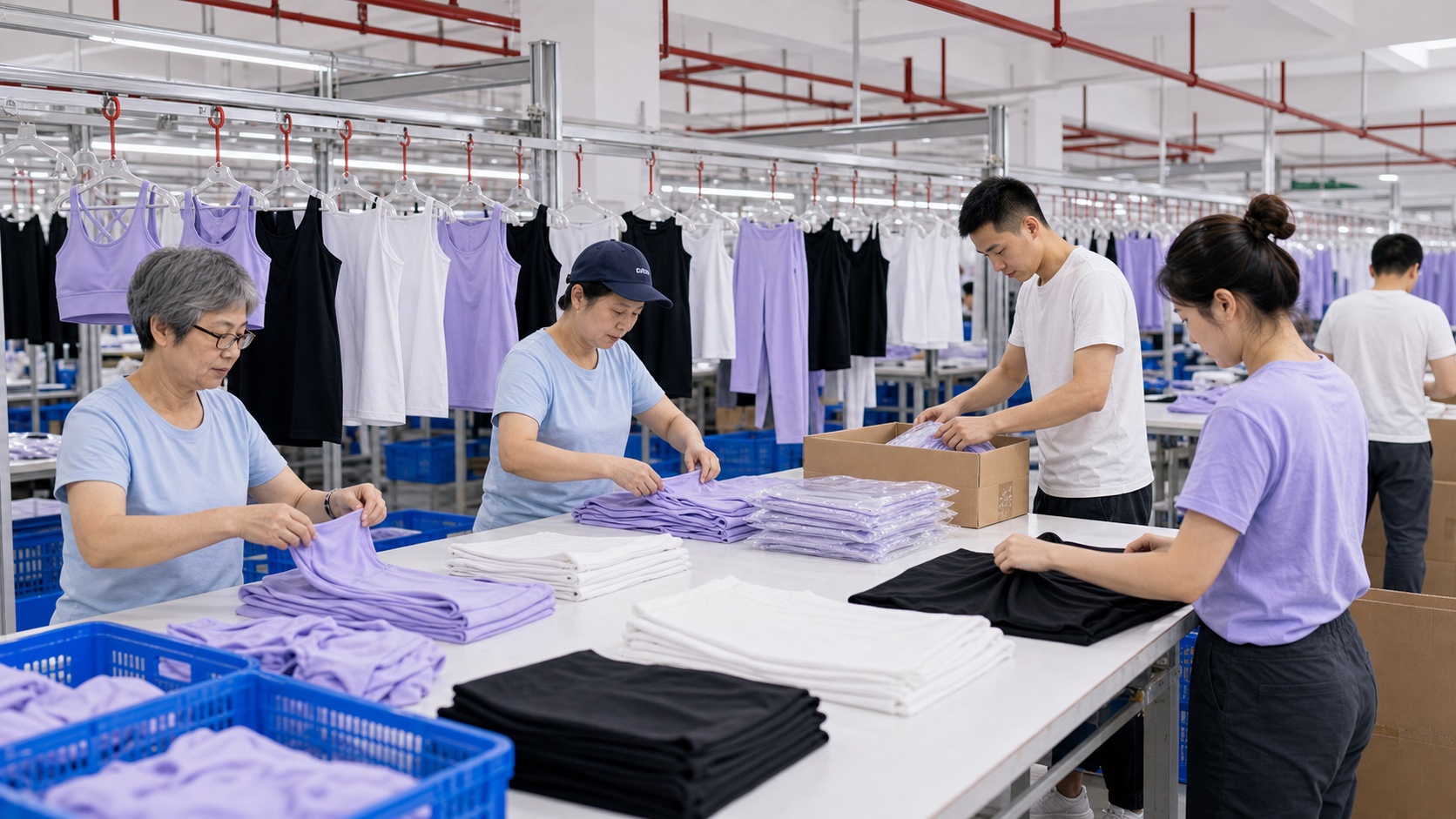
The image is a reminder that component decisions travel with the garment. The version, material, opening, seam, trim, evidence, and next action should remain connected before the team decides whether to revise a detail, approve a narrow point, or request another physical piece.
What should a brand check on the physical sample?
Check the specific relationship named in the brief. For a front closure, that may include the opening length, neckline relationship, tape visibility, pull direction, guard or facing, nearby seam and panel position, hand feel at the named area, and the intended ordinary movement or layering context. For a pocket component, the question may involve access direction, opening location, lining relationship, pull placement, bulk at a seam, and whether the sample makes the intended product use visible.
Do not turn this review into an unsupported universal performance or test claim. A physical sample can help the team observe the stated garment relationship under the stated conditions. It does not automatically prove a component will behave identically across all bodies, materials, sizes, colourways, production runs, or use situations. Record what was observed and what decision is next instead of describing one review as a blanket guarantee.
If the team also needs to assess sizing or a broader garment relationship, keep that work distinct. The activewear sample types guide explains why a development, component, fit, material, decoration, size-set, packing, or pre-production sample can support different decisions. A component sample may answer a narrow zipper question while leaving grading, final material, colour, branding, label, packing, and production-release questions open.
How should visual direction and branding be handled near hardware?
Name the visible component direction without assuming that an image is a final production instruction. A buyer can record the component location, visual reference, intended colour relationship, whether the tape is meant to be visible or covered, the preferred pull direction, and the garment area that needs review. The same record should say whether the body material, logo, print, embroidery, label, or other brand detail is approved, proposed, substituted, or outside the current sample purpose.
This distinction matters because a change that looks small in a sketch can alter the physical sample question. A logo near a front opening, a print across a panel, a contrast binding at a neckline, or a different material beside a pocket can require a separate visual or construction review. Keep the active sample focused on the question it is supposed to answer. If the buyer changes the garment's fit, fabric, panel, construction, colour relationship, feature, branding, or component plan, mark the changed input before asking the factory to interpret the next version.
Keep a print-placement review separate when artwork needs its own named garment area and physical evidence. A zipper brief should not silently approve print placement, and a print-placement sample should not silently approve a changed closure or pocket construction.
How should the team record feedback after a component review?
Record feedback against the exact garment and sample. Include the style and version, reviewed size, relevant material and colourway, component and location, reference file or marked photo, observed relationship, requested action, owner, decision status, and the next evidence required. A message such as “make the zipper cleaner” becomes more actionable when it identifies the opening, tape or pull area, current sample, intended appearance or use, observation, and whether the team needs another physical review.
Separate the observation from the solution. An observation may identify an issue at a neckline, opening, pocket, seam, panel, or pull direction. The factory can then review whether the next action concerns a component choice, material, construction, pattern, measurement, or new sample. This is more reliable than expecting a production team to combine feedback from different sample versions, sizes, or visual references.
The activewear sample feedback guide provides the record structure for turning a physical observation into a clear revision request. The zipper and hardware brief comes earlier: it defines the component context and sample question that make later feedback comparable.
When can a component decision move toward production planning?
Move forward only after the current component decision has been recorded at the right boundary. A brand may approve a visible closure direction for a stated sample purpose while still needing to review a changed material, another size, a colourway, artwork, labels, packing, a revised pocket, or a pre-production reference. Make remaining work explicit rather than using one broad “approved” status.
If the product, materials, construction, components, branding, and production instructions are converging, the activewear sample-to-bulk production guide explains how controlled records can support a production discussion. For inPACE projects, general planning commonly allows about 5–10 days for sampling and 25–50 days for production after relevant approvals and project conditions are confirmed. These are planning ranges, not fixed commitments. Product complexity, material availability, colourways, printing, embroidery, washing, labels, packing, quantities, component scope, and revision requests can change the applicable route and timing.
What should a buyer prepare before requesting an activewear hardware sample?
Use this checklist before asking a factory to prepare or review a zipper and hardware sample:
- Identify the style code, garment category, current sample version, and intended product role.
- State whether the request begins from a catalogue direction or needs Factory custom manufacturing, and name the route reason.
- Name the reviewed size, colourway if relevant, and the current measurement or product reference.
- Identify each closure, puller, pocket component, snap, stopper, drawcord part, or hardware item that the sample must clarify.
- Mark the exact location on the garment and identify the connected neckline, opening, panel, seam, lining, binding, elastic, or pocket area.
- Describe the intended access, layering, coverage, movement, or use context for the named component.
- Attach the current sketch, tech-pack page, reference image, component reference, marked photo, or physical garment that identifies the version.
- State the material, lining, tape, trim, colour, and finish directions that must be present, proposed, substituted, or left open.
- Keep the component question separate from fit, grading, print placement, labels, packing, and production-release questions unless the sample is deliberately assigned to prove them.
- Record the evidence the team needs: a visual relationship, access observation, construction question, material interaction, revision decision, or next-sample decision.
- Give each observation an owner, decision status, and dated next action.
- Ask the factory to identify any assumption that needs confirmation before another sample or quotation discussion.
This checklist gives the factory a concrete product question without asking the buyer to promise an unverified result, accept a fixed commercial term, or treat a product image as a complete production specification.
How can inPACE Sports support a controlled zipper and hardware review?
inPACE Sports can review a buyer's product reference, intended component and location, current garment version, relevant fit or access question, material and trim direction, construction context, branding and packing points, quantity direction, sample purpose, and unresolved decisions to discuss an appropriate Factory custom manufacturing route. Ningbo Yinshan Garments Factory can connect the applicable product-development, sampling, material and trim, sewing, QC, packing, and production discussions to the actual brief.
Use the product directions above to decide whether the request can begin from an established garment direction or needs deeper development evidence. When the buyer changes a zipper, puller, pocket, opening, material, construction, component relationship, colour, feature, or sample plan, the factory should review that changed brief so the evidence and approval boundary match the real product scope.
How should a buyer start an activewear zipper and hardware discussion?
Send the style reference, current sample version, reviewed size, component and location, opening or construction context, intended use, material and colour direction, visual evidence, sample purpose, open items, and the exact next decision. Share an activewear zipper and hardware brief when the team needs a controlled product review rather than an untracked request to “add a zip.”
Product directions
Explore relevant activewear products
Use these product pages as practical references for your brief, then confirm materials, fit, customization, and production details through sampling.
Activewear Performance Collection
Use an established performance-garment direction to identify the layer, pocket, neckline, closure, and branding decisions that a hardware brief needs to make visible.
View product directionZip-Neck Sculpt Set
Use this zip-neck reference to name the closure length, pull direction, neckline relationship, panel, sleeve, and movement questions that need a physical sample review.
View product directionCustom Activewear Development
Use the factory-custom route when a closure, pocket, puller, material, construction, or component relationship needs development evidence rather than a catalogue-only change.
View product directionFAQ
Buyer questions
What is an activewear zipper and hardware brief?
It is a product-development record that identifies the garment version, reviewed size, named closure or component, exact location, material and construction context, intended use, sample purpose, evidence, approval boundary, and next decision. It helps a brand and factory review a specific component question without treating one sample as approval for every variation.
What should a zipper sample brief include?
Include the style and version, reviewed size, component and location, opening and seam context, body material and lining direction, tape or finish reference, intended use, marked visual evidence, sample purpose, open items, requested action, owner, and next evidence needed. Mark each important input as approved, proposed, substituted, or open.
Is a zipper brief the same as a tech pack?
No. A tech pack can hold the broader product specification. A zipper and hardware brief defines the current component question that a physical sample needs to answer. It helps the buyer and factory identify what must be reviewed before the detail is recorded as part of an approved specification.
Does one component sample approve every size and colourway?
No. A component sample can support a defined decision for the stated garment version and conditions, but it does not automatically approve another size, material, colourway, construction, branding detail, packing requirement, or production version. Record the approval boundary and any later evidence that remains necessary.
What should be checked on an activewear zipper sample?
Check the relationships named in the brief, such as component location, opening length, neckline or pocket context, tape visibility, pull direction, nearby seam or panel, lining or binding relationship, material context, intended access, and ordinary movement or layering question. The appropriate checks depend on the actual garment and sample purpose.
How should hardware feedback be recorded?
Record feedback against the exact garment version, reviewed size, material and colourway, named component and location, marked evidence, observation, requested action, owner, status, and next proof needed. Separate the observed product issue from the proposed manufacturing solution.
How long do activewear samples and production normally take?
For inPACE projects, general planning commonly allows about 5–10 days for sampling and about 25–50 days for production after relevant approvals and project conditions are confirmed. These are planning ranges, not fixed commitments; product complexity, materials, colours, components, processes, packing, quantities, and revisions can change timing.