

A workout long-sleeve manufacturer should turn sleeve reach, cuff behaviour, underarm movement, body length, ventilation zones and layering role into one sample brief. Brands can begin from an existing reference for light customisation, but a changed fit, fabric, panel layout or construction belongs in factory-custom development. Approve the actual garment and its evidence before bulk planning.
A long-sleeve training top often looks simple on a line plan. In use, it sits at the intersection of movement, temperature, coverage, branding and range architecture. The sleeve may need to stay in place during overhead reach without binding at the underarm. The cuff may need to work with a watch, glove or thumbhole direction. A mesh panel may be a visual feature, a ventilation question, or both. The body length must relate to leggings, shorts, a jacket or a training vest.
That is why a buyer gets more value from a product brief than from a generic request for “workout long sleeves.” The brief makes the intended user, product role, fit, material direction, construction, logo zone, sample purpose and approval evidence visible. It gives the manufacturer a defined decision to develop rather than an image to imitate.
When should a brand use a workout long-sleeve manufacturer rather than a catalogue route?
Start by identifying what must change. A catalogue-informed or light-custom project may be suitable where an existing long-sleeve silhouette already fits the intended product role and the buyer mainly needs a selected colour direction, logo, labels, hangtags or packing. In that route, the brand should still confirm the available product direction, material, size range, branding method and commercial scope before treating it as a programme.
Factory-custom manufacturing is more appropriate when the buyer needs a new sleeve length, cuff, thumbhole, raglan or set-in sleeve shape, underarm panel, ventilation construction, body length, neckline, fabric, grading direction, logo location or sample plan. These changes interact. A revised armhole can change sleeve reach. A changed mesh zone can affect seam placement and logo space. A different fabric can change drape, coverage, recovery and the way a cuff behaves.
The Gym Wear Manufacturer solution is the commercial entry point for a product-development discussion. A product reference such as the Raglan Training Layer can help a buyer point to a general role, but it does not confirm the fabric, measurements, colour, construction, stock, capacity or specification of a future project.
What product role should a long-sleeve top serve in a workout range?
Before defining every seam, decide why the long-sleeve exists. The same category can serve very different roles:
- A warm-up layer may need comfortable coverage, easy on-and-off behaviour and space for a team or studio logo.
- A base layer may need a closer fit, controlled neckline, sleeve stability and a defined relationship to a jacket or vest.
- A training top may need movement at the shoulder and underarm, a considered ventilation direction and a clear sweat-zone review plan.
- A travel or staff layer may need a more relaxed body, branding visibility, easy care discussion and a simple packing presentation.
- A retail collection piece may need a distinct surface, panel map, colour role and fit evidence that works beside the rest of the range.
These are product roles, not quality levels. A relaxed warm-up top is not a failed compression top, and a fitted base layer is not automatically the right answer for every gym programme. State the user, activity, expected base layer and adjacent product before asking a factory to develop the garment.
Which sleeve, cuff and underarm decisions belong in the first brief?
The sleeve system starts at the shoulder rather than the wrist. Shoulder width, armhole shape, sleeve cap or raglan route, bicep ease, elbow articulation, wrist opening and cuff construction influence each other. A brief should show which observations matter in movement instead of using broad words such as “better fit.”
| Brief area | What the buyer can define | What the manufacturer should review | Sample evidence to request |
|---|---|---|---|
| Sleeve length | Full-length target, 7/8 direction, wrist coverage, or a reference garment. | Relationship to shoulder, cuff, intended reach and grade direction. | Base-size measurement and overhead-reach observation. |
| Sleeve route | Raglan, set-in, dropped shoulder or another reference direction. | Armhole, shoulder seam, panel map, logo zone, construction and mobility trade-offs. | Front, side and back fit observations in named movements. |
| Bicep and elbow | Intended ease, shape, articulation or a close-to-body direction. | Fabric stretch, seam route, sleeve taper and comfort in bending. | Elbow-bend and pull-over observation on the selected size. |
| Cuff | Open hem, self-fabric cuff, binding, elastic direction, thumbhole or other detail. | Wrist opening, recovery, seam bulk, watch or glove relationship and finishing. | Put-on, wrist-reach and post-wear return observation. |
| Underarm | Gusset, panel, mesh direction or a simple seam route. | Range of motion, seam placement, ventilation intent and construction compatibility. | Arm lift, reach-forward and rotation evidence with open comments. |
| Neckline and body | Crew, mock neck, quarter zip, body length, hem or side-slit direction. | Layering relationship, pull-over route, logo space and pattern balance. | Review with the named base garment and lower-body product. |
The table does not require a buyer to solve pattern engineering. It helps the buyer distinguish a confirmed request from a question for sampling. “Check cuff return after a stated training movement” is more useful than “make the sleeve premium.” “Review whether the underarm seam restricts reach over the selected base layer” is more useful than “add flexibility.”
How should ventilation be planned without making unsupported performance claims?
Ventilation is a product and construction question. It may involve a mesh panel, perforated knit, eyelet construction, a looser body, a changed sleeve route, a back yoke, a side panel, an opening, or a chosen fabric surface. It should not be treated as proof that the finished garment will deliver a universal cooling, moisture-management or athletic-performance result.
Start with the wearer and the intended zone. Does the buyer want a visual contrast panel at the underarm? Does the garment need a lighter surface at the upper back? Is the objective coverage with less bulk under a jacket? Is the project trying to make the sleeve feel less restrictive during a particular movement? Each question produces a different sample brief.
Describe the proposed zone, its relationship to seams, its colour or branding role, and what must be reviewed. If a mesh or perforated construction is proposed, identify whether it is a body panel, underarm gusset, yoke, side panel or cuff detail. Check its handfeel, transparency, recovery, seam behaviour, nearby logo method and the actual use position on the sample.
This image supports a construction discussion only. It does not verify the specific fibre, fabric weight, ventilation result, colour, durability, testing or availability of a future workout long sleeve. Those must be reviewed on the selected material and approved sample.
The fabric and trim review can help a buyer structure questions about handfeel, stretch, recovery, opacity, surface, seams and logo compatibility. The final material and any performance or label claim remain subject to the project’s confirmed scope and evidence.
Why do body length and layering need their own approval points?
Long sleeves are often photographed alone, then worn as part of a system. A hem can meet high-rise leggings, shorts, joggers or a skirt at different points. A collar can sit differently under a jacket than over a tank. A close sleeve can feel different over a bra than over a short-sleeve base. The buyer should name the intended pairing rather than expect the factory to infer it from a flat image.
Ask what happens at the top of the lower-body garment during stretch, reach and bend. Does the wearer need the hem to remain below the waistband, sit at it, overlap it, or layer cleanly under another piece? Is a side slit, curved hem, straight hem or bonded-looking reference being considered? Does the garment need to be tucked, left loose or worn with a vest? These questions help the pattern and sample plan reflect actual range use.
Layering also affects branding. A chest logo may be partly covered by a jacket. A sleeve logo may conflict with a cuff detail or panel seam. A back-neck label, transfer, reflective detail or print placement can change how the garment feels or moves. The logo methods for stretch activewear is a useful adjacent guide when the brand needs to align a logo method with a selected fabric and placement rather than treating artwork as an afterthought.
What fabric and construction details should be confirmed on the sample?
The fabric request should be specific enough to test, even when the final material is not yet chosen. A buyer can state a handfeel direction, surface preference, weight range, stretch relationship, recovery question, coverage requirement, inside finish, colour direction, intended layering and any panel contrast. The manufacturer can then identify what must be confirmed on the actual material and garment.
Do not assume that the word “technical,” “breathable,” “compression,” “soft,” “quick-dry,” or “premium” is a fabric specification. Each can mean different things to different teams. A useful brief says what the wearer should experience or what the sample should demonstrate. For example: “Review whether the selected underarm construction remains comfortable during overhead reach and whether the body surface gives the intended layerable hand.” This gives the material and pattern discussion a physical boundary.
| Material and construction point | Buyer decision | Why it changes the long-sleeve sample |
|---|---|---|
| Body fabric | Hand, surface, weight, stretch and coverage direction. | Changes sleeve taper, body drape, seam behaviour and layer interaction. |
| Panel or mesh | Location, contrast, visibility and purpose. | Can change seams, transparency, logo space and construction sequence. |
| Cuff material | Self fabric, rib, binding or another stated direction. | Changes wrist recovery, bulk and how the sleeve finishes in use. |
| Seam route | Raglan, shoulder seam, underarm panel, flat seam or other direction. | Affects fit, movement, panel matching and QC attention points. |
| Neck finish | Crew, mock neck, zip, binding or collar direction. | Affects pull-over, base-layer relationship and logo or label placement. |
| Decoration | Print, embroidery, transfer, label or reflective direction. | Needs review against stretch, surface, panel edges and care requirements. |
The proposed specification can change after evidence. A sample may show that a different sleeve taper, underarm panel, seam route or fabric construction gives a clearer result. The goal is not to defend the first idea. It is to record what the sample proves, what changes, and who approves the next version.
How should sampling be staged for a custom workout long sleeve?
Give every sample one stated purpose. A development sample can confirm the interpretation of the reference, silhouette and panel map. A fit sample can focus on base size, sleeve reach, cuff, shoulder, underarm, body length and layering. A material or trim sample can review the actual body fabric, mesh, cuff, neck finish, seams and decoration route. A later approval sample can confirm which product facts are ready to transfer into production instructions.
The activewear sample plan helps buyers keep these stages separate. A fit sample does not automatically approve every colourway, component, label, logo, packing instruction or bulk-production setting. A material swatch does not prove the garment fit. A clear approval record should state the sample version, material and component references, reviewed size, observations, requested changes, owner and next decision.
For applicable projects, inPACE can coordinate sampling support that includes printing, embroidery or wash-effect discussions. General planning commonly allows about 5–10 days for samples and 25–50 days for production after scope and approvals are confirmed. Those are planning ranges, not fixed commitments. Material availability, colourways, component choices, construction, decoration, labels, packing, quantity direction, revision rounds and factory planning all affect the actual route.
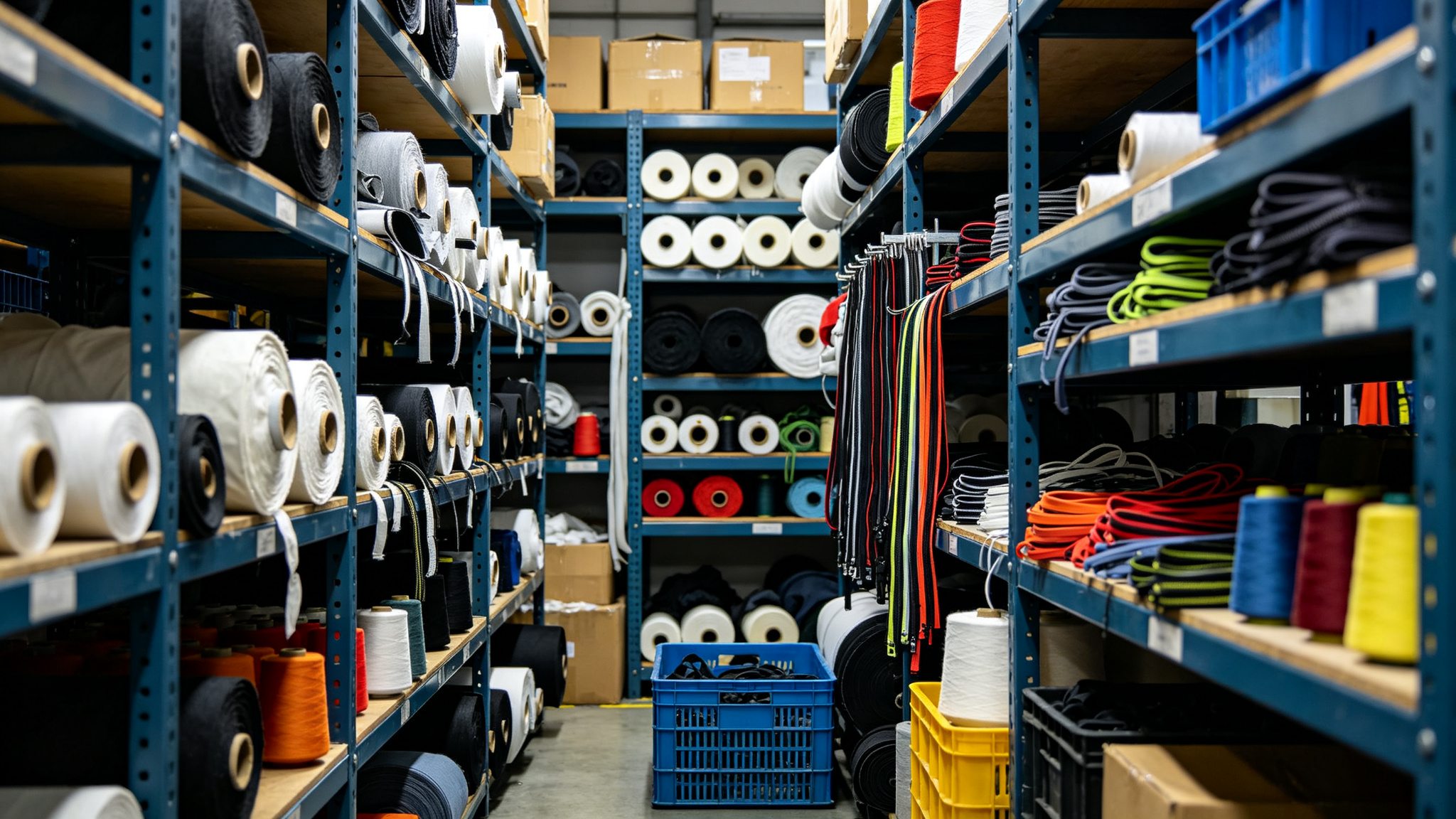
This factory-context image shows material and component selection only. It does not prove an approved fabric, trim, factory assignment, product specification or production condition for a specific long-sleeve project.
How should a brand keep long-sleeve approvals usable across handoffs?
A long-sleeve project often changes hands between a founder, designer, fit reviewer, sourcing contact, manufacturer, factory team, and channel owner. The handoff becomes fragile when an approval is recorded only as a general email comment or an unlabelled photo. Create one version record for each sample. It should name the product role, sample number, base size, material and component references, colour, sleeve route, cuff construction, panel map, logo position, reviewer, observed movement, decision, and the items still open.
Keep visual approval separate from construction approval. A team may approve a black-and-white rendering of a thumbhole placement without approving the cuff tension, seam bulk, fabric recovery, or use with a watch or glove. It may approve a mesh colour contrast without approving the mesh handfeel, opacity, seam route, or behaviour during overhead reach. A factory can only treat a decision as production-ready when the approved record identifies the selected material and version, not merely the desired appearance.
The same record should explain what happens if a detail changes. A new fabric can affect sleeve length, cuff return, panel alignment, logo compatibility, and body drape. A revised armhole can change reach and underarm comfort. A changed body length can alter layering with leggings, shorts, a jacket, or a vest. If any of those variables move, identify whether the earlier approval still applies or whether the next sample needs a focused review. The activewear sample feedback guide provides a useful format for keeping observations tied to the exact sample, material, and revision.
This discipline also improves production handoff. QC can check the approved size, material, seam route, cuff, panel, logo, labels, and packing instructions against the named source of truth. It does not turn an early development photo into a bulk-production standard. It makes open decisions visible before materials, cutting, sewing, decoration, inspection, and packing are coordinated.
How do Supplier, Manufacturer and Factory roles work together?
The terms answer different buyer questions.
- The supplier comparison asks whether the product direction, sample path, material discussion, commercial assumptions, QC and packing communication are clear enough to compare.
- The manufacturer discussion turns the long-sleeve brief into a garment-development plan: sleeve and cuff, fit, fabric, panel, seam, neckline, logo zone, sample evidence and approval points.
- The factory discussion implements approved specifications through material handling, cutting, sewing, decoration, QC, packing and production coordination.
For a workout long-sleeve, the strongest brief connects the three roles. A supplier should not be asked to guess a movement requirement from a product image. A manufacturer should not treat “ventilation” as a complete panel map. A factory should not interpret an early reference as a final production file. Each party works better when the product role, material direction, fit question, sample evidence and approval boundary are written down.
How can inPACE support a workout long-sleeve development decision?
inPACE Sports can begin with a brand brief, reference image, existing sample or tech pack and help structure the decisions that affect a workout long sleeve: product role, sleeve and cuff, underarm movement, fabric and panel direction, body length, layering, branding, sample purpose and packing context. Fabric, stretch, recovery, coverage, support, structure and fit can be discussed as product directions. Final materials, fit, scope and timing are confirmed through the selected material, project process and approved sample.
The programme is built on more than 30 years of garment-production experience through Yinshan Garments. That experience informs manufacturing judgement and coordination. It is not a claim that inPACE itself has operated for that period, and it is not a guarantee of capacity, price, certification, delivery or technical result. Where the confirmed product requires it, inPACE can coordinate an appropriate production path through multiple partner factories. The assigned path depends on the approved product, material, construction, decoration, quantity direction and scope.
Once the required product details are approved, the activewear manufacturing workflow is the relevant next discussion for QC, packing and export preparation. It remains project-specific: an approved long-sleeve sample is evidence for its stated version, not an automatic approval of every later variation.
Three relevant product and service paths
Raglan Training Layer
Product-reference route. The Raglan Training Layer can help a buyer discuss sleeve routing, layer role and visible product direction. Treat it as a reference point, not proof of a future material, fit, colour or commercial condition.
Custom Activewear Development
Factory-custom route. Use the custom activewear development route when the product needs a new silhouette, sleeve, cuff, material, panel, fit, construction or sample plan.
Fabrics and Trims Review
Material and component route. Use the fabric and trim review to prepare the fabric, mesh, cuff, seam and logo questions that need validation on the actual long-sleeve sample.
What should a buyer send before requesting a workout long-sleeve sample?
- Product role, intended wearer, activity and adjacent garments in the range.
- Reference image, existing garment, sketch or tech pack, with a note stating what must stay, change or be evaluated.
- Sleeve route, target length, cuff, thumbhole, underarm, elbow, neckline, body length and hem questions.
- Desired fabric hand, surface, stretch, recovery, coverage, panel or ventilation direction, with any reference swatch available.
- Fit intent, base size, size range, lower-body or base-layer pairing, and named movements to observe.
- Branding artwork, placement, labels, hangtags, bag, carton and market information that are ready for review.
- Sample purpose, reviewer, evidence required, decision owner, target timing context and quantity direction.
- A clear list of confirmed decisions, proposed alternatives and open questions.
This information lets a manufacturer recommend a meaningful next step. It also makes supplier responses easier to compare because each response is addressing the same product, material, fit, branding and sample assumptions.
Start with a long-sleeve product brief
Send inPACE Sports the product role, reference, sleeve and cuff direction, underarm and ventilation questions, fabric and panel direction, body length and layering relationship, fit and movement observations, branding requirements, sample purpose, quantity direction and delivery market. We can discuss whether a reference-led customisation, a controlled small-batch development or factory-custom manufacturing path fits the project. Request an activewear manufacturing quote when you are ready to turn the long-sleeve idea into a sample-ready brief.
FAQ
Buyer questions
What is the most important measurement for a workout long sleeve?
There is no single universal measurement. Sleeve length must be reviewed with shoulder and armhole shape, cuff opening, body fit, intended movement and the wearer’s base layer. The first sample should identify the reviewed size and the movement observations that matter, such as overhead reach, arm rotation or bend.
Should a workout long sleeve use raglan or set-in sleeves?
Either may be appropriate. The choice depends on the intended fit, shoulder line, panel design, underarm movement, logo placement, construction route and product role. Use a reference plus a sample review rather than assuming one sleeve type is automatically better for every training top.
Can mesh panels be added for ventilation?
Mesh or perforated panels can be considered, but their placement, seam relationship, transparency, stretch, recovery, logo compatibility and actual sample behaviour must be reviewed. A mesh direction is not a universal performance claim and should be approved on the chosen construction.
How should a cuff or thumbhole be specified?
State the intended wrist coverage, opening, thumbhole direction if relevant, fabric or binding preference, nearby logo or seam, and the movement or wear observation the sample should demonstrate. Check fit, comfort, recovery and construction on the approved sample before bulk planning.
Can a long-sleeve workout top begin from an existing product style?
Yes, where an existing silhouette fits the product role and the project mainly concerns colour, logo, labels or packing. If the brand needs changed fabric, sleeve, cuff, fit, panel layout, neckline, construction or sample evidence, use a factory-custom development route.
What should be approved before production discussion?
Approve only what the relevant sample has demonstrated: its style version, selected material and components, measurements, fit observations, construction notes, branding details, QC points and remaining decisions. Keep packing and quantity direction in the same controlled product record.
Does a workout long sleeve have a fixed sample or production time?
No. Sample and production planning depend on scope, materials, components, construction, decoration, labels, packing, quantity direction, revision rounds and factory scheduling. Planning ranges can guide an early discussion, but the project must be confirmed before timing is treated as applicable.