When is a workout clothing manufacturer the right partner for a training collection?
A workout clothing manufacturer helps a training brand turn a training idea into a sample-ready system of core tops, bottoms, layers, and supporting roles. Define the wearer, movement context, fabric and fit direction, branding, sample questions, and record before requesting development. That makes it clear whether an unchanged catalogue reference can be lightly customised or a factory-custom collection needs development.
Training brands often begin with a mood board containing leggings, shorts, bra tops, tees, jackets, and a few campaign images. The board can communicate a point of view, but it does not tell a manufacturer which garments are essential, what each needs to prove, or which versions should be sampled first. A useful collection brief replaces a list of attractive items with a small operating system: product roles, shared decisions, open questions, owners, and an evidence path toward bulk planning.
If an existing silhouette already works, the buyer may start with a catalogue reference and focus on colour, logo, labels, hangtags, packing, and a quantity plan. That is a light-customisation conversation. If the project changes fit, fabric, construction, pocket, liner, support relationship, panel layout, colour system, functional feature, or the sample evidence required, it should be treated as factory-custom development. The Activewear Performance Collection can help name a starting direction; it does not confirm materials, availability, construction, or production conditions for a new project.
What should be in the first workout clothing collection?
The first collection does not need to cover every training occasion. It needs enough product roles to make the brand proposition legible while keeping development decisions controllable. A training brand might establish a core close-fit top, a core bottom, an alternative bottom or short, and a light layer. A fifth style is justified when it has a specific customer, training, merchandising, or channel role—not just because another reference image looks useful.
Define the role before the silhouette. A studio-to-gym customer may need a coordinated top and legging as the visual foundation, a short for warmer sessions, and a layer for arrival or recovery. A strength-training direction may give more attention to a tee, short, pocket need, or movement allowance. A brand selling through coaches, gyms, or online channels may also need a product that makes the range easier to explain at the entry price or as an outfit. These are commercial and wearer questions; the factory should not have to infer them from a general request for “workout wear.”
| Collection role | Questions for the brand | What the first review should establish |
|---|---|---|
| Core top | Is it a bra-led, close-fit, tee, tank, or long-sleeve product? What coverage, length, logo zone, and companion bottom matter? | Whether the role, silhouette, fit direction, material direction, and sample objective are clear enough to proceed |
| Core bottom | Is the main product a legging, flare, straight training bottom, or another shape? What waistband, rise, seam, pocket, and coverage questions exist? | Whether the style performs its collection role with the named top in the reviewed size and use context |
| Alternative bottom or short | Is it seasonal, a movement-specific option, an entry product, or a coordinated outfit option? | Whether it adds a distinct job rather than duplicating the core bottom without a customer reason |
| Light layer | Is it for warm-up, outdoor arrival, recovery, travel, or brand presentation? | Whether volume, opening, sleeve, material, and logo relationship work with the named core pieces |
| Supporting style | Is a fifth SKU needed for a channel, bundle, or specific training need? | Whether its decisions can share a controlled sample route without creating an unfocused range |
This is a planning table, not a claim that any single product role, fabric, or construction is suitable for every athlete. Final product decisions depend on the actual customer, material, pattern, components, reviewed sizes, samples, and approvals.
How should a brand choose between catalogue-based and factory-custom workout clothing?
Start catalogue-led when the reference product already satisfies the intended role. The buyer can identify the exact style and clarify what is retained: silhouette, construction direction, and product role. Then the discussion can focus on logo placement, labels, packaging, colour direction, and the requirements of the planned channel. The useful question is not “can this be branded?” but “which aspects of this named base product remain unchanged, and which still need validation?”
Move to a custom brief when the collection depends on a different garment. A changed rise, inseam, pocket, liner, neckline, body length, sleeve, panel, fabric feel, stretch response, component, colour blocking, logo zone, or feature may affect pattern work, sourcing, sample purpose, and production planning. Asking for these changes under a generic catalogue request can hide the decisions that drive the real development route.
For a concrete product reference, the Zip-Neck Sculpt Set can help a buyer point to a close-fit proportion, neckline, zipper, panel, and coordinated-set direction. It is a reference for a brief, not evidence that the pictured colour, material, detail, logo method, or product specification automatically applies to another collection.
Which product decisions should be shared across the core styles?
A workout collection becomes easier to develop when shared choices are recorded once and product-specific choices are recorded beside them. A brand can choose a common colour family, size framework, brand-label approach, packing hierarchy, and a small group of material directions while keeping the pattern, fit, support, seam, pocket, and movement questions distinct for each style. “Shared” should not mean “identical.” A legging, tee, bra-led top, and layer can require different materials or construction even when they appear as one visual range.
The same applies to product fit. A buyer can state the intended silhouette family—close, regular, relaxed, cropped, full length, or layered—but should still identify the questions for each garment. For example, the core bottom may need a waistband and rise review, the top may need a coverage and body-length review, the short may need an inseam or liner discussion, and the layer may need a volume and opening review. This produces a better sample sequence than requesting all styles as generic “size M samples.”
Use the custom activewear development route when those cross-style decisions need a new fit, fabric, construction, component, colour, or functional feature to be developed. It makes clear that the supplier is being asked to coordinate a development process, not simply collect a logo file.
How do fabric and fit choices affect a workout collection brief?
Fabric and fit are collection decisions only when they connect to a product role. A swatch may communicate surface, weight, handfeel, stretch direction, or colour response. It cannot by itself prove opacity, recovery, comfort, support, finished fit, logo performance, or production suitability. Each proposed body material, lining, mesh, elastic, zipper, pocket, binding, and trim should be recorded with the style and question it supports.
For example, a brand may ask for a soft, close-fit direction for a core legging, a lighter tee direction for training, and a layer with a different structure. Those are valid development directions. They should not be converted into universal material claims. The manufacturer needs to know the movement context, desired silhouette, coverage concerns, areas of friction or stretch, and the evidence the buyer wants from the sample.
The fabrics and trims overview is a useful way to frame material and component questions before sampling. It does not establish that a named fibre, fabric image, or texture is approved for every workout product. Confirm the selected material and fit against the relevant physical sample, reviewed size, and written approval record.
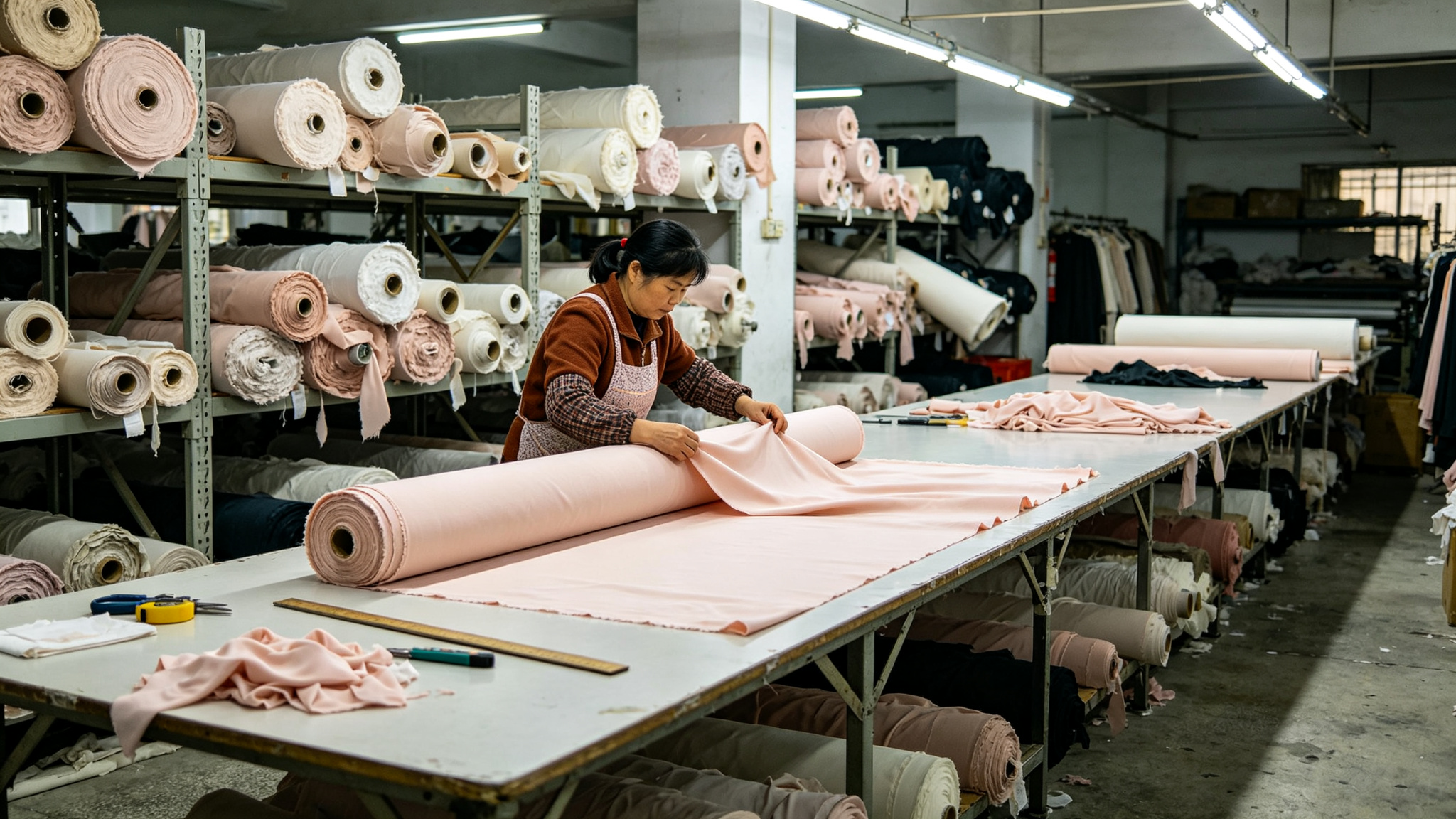
This material-planning reference illustrates why a collection brief needs a versioned fabric record. For each style, keep the current material direction, colour reference, components, construction question, sample observation, requested action, and approval owner together. A factory should not infer a final material or construction from an inspiration image, a previous style, or a folder of unmarked swatches.
What should be sampled first in a workout range?
Sample the styles that answer the decisions with the most downstream effect. A core top and core bottom often deserve early attention because they establish the fit language, material direction, branding scale, and visual relationship that other styles need to follow. If the layer has a distinct construction or the short has a specific pocket, liner, or movement question, it may become an early sample too. The sequence should follow uncertainty, not the order of images in a mood board.
A first sample should have one or two named purposes. It might test product interpretation, a fit relationship in a reviewed size, fabric direction, a component, logo placement, or how two core pieces work together. It should not silently approve every future size, colour, material, and feature. A later pre-production reference can bring confirmed decisions together for the production discussion.
The activewear sample plan guide helps distinguish a development question from a broader production-approval question. For inPACE projects, planning commonly allows about 5–10 days for samples and 25–50 days for production after relevant scope and approvals are confirmed. Those are planning ranges, not fixed commitments: materials, colours, components, printing, embroidery, wash effects, branding, packing, quantities, revisions, and the approved route can all affect timing.
How do supplier, manufacturer, and factory roles differ for a workout collection?
The terms overlap in everyday sourcing language, but they solve different buyer risks. A supplier discussion is about comparable scope, communication, branding, packing, quantities, and coordination. A manufacturer discussion is about product roles, patterns, fabric and fit direction, construction, sampling, and revisions. A factory discussion is about implementing approved information through production planning, QC, packing, and delivery preparation.
| Buyer decision | Supplier role | Manufacturer role | Factory role |
|---|---|---|---|
| Select the route | Clarify which references, quantity direction, branding, and open points belong in the request | Identify whether unchanged references, light customisation, or new development best fits the brief | Prepare to use the approved route rather than guess from a mood board |
| Define core styles | Keep style versions, product roles, and commercial assumptions comparable | Translate product roles into fit, material, construction, and sample decisions | Use controlled style information when the range moves into production preparation |
| Review samples | Track comments, owner, version, and next action across the range | Convert observations into a revised or confirmed product direction | Carry agreed evidence into pre-production, QC, and packing checks where relevant |
| Prepare delivery | Collect labels, packing, channel, carton, and receiving information | Confirm branded product details against the approved sample record | Coordinate QC, packing, and delivery preparation from the current approved record |
inPACE can coordinate an appropriate production route through multiple partner factories. Exact allocation depends on product type, materials, construction, decoration, quantity direction, and confirmed scope; it does not represent a fixed capacity or timing promise. More than 30 years of garment-production experience informs the way product development, sampling, production coordination, QC, and packing questions are organised around a buyer brief.
How can custom design support keep the range focused?
Custom design support has value when it makes a reference usable. A campaign photo may communicate proportions, a pocket idea, an energy, or a colour relationship. It does not set measurements, pattern logic, component choice, graded fit, decoration method, or approval criteria. A good development discussion marks what the reference is meant to communicate and what needs feedback: product role, silhouette, fit, material, logo area, or sample question.
inPACE can support a B2B buyer starting from a product URL, a physical sample, marked image, sketch, or tech pack. The discussion can identify the core collection architecture, recommend a path for fabric and fit questions, and connect custom details to a sample review. The buyer should retain ownership of the target customer, required features, brand position, size strategy, and final decisions. This avoids a common failure where design language is agreed but the actual product evidence remains undefined.
For a training collection that needs a distinct top, bottom, or set direction, the Gym Wear Manufacturer solution provides the B2B route to discuss development. It is not a substitute for the collection brief, physical sample evidence, or project-specific confirmation of materials, fit, pricing, quantities, and timing.
How should logo, labels, and packing fit into the collection plan?
Branding is a product decision, not a final decorative step. A logo can behave differently on a close-fit bottom, a stretch top, a loose tee, and a light layer because the surfaces, seams, stretch zones, colours, and garment movement differ. Record the artwork version, placement, size, colour relationship, garment zone, and physical evidence required for each style. The logo application guide can help a buyer connect branding choices to a real material and product zone.
Labels, care information supplied by the buyer, hangtags, bags, fold direction, coordinated-set grouping, barcode fields, carton marks, and destination requirements should be planned beside the style record. A gym partnership, direct-to-consumer launch, retailer, studio, or wholesale buyer may need different presentation and receiving information. These requirements should be visible before a sample is treated as complete, not appended after the product decisions have moved toward production.
When a project includes printing, embroidery, or wash effects, include those needs in the scope from the start. Sample fees are generally quoted at 1.5–3 times the corresponding bulk unit quotation. For one style, the stated refund schedule is 10% at 100 units, 30% at 300, 50% at 500, and 100% at 1,000; actual sample fees, refund eligibility, quantities, and conditions must be confirmed in writing for the specific project.
How can inPACE support a workout clothing manufacturing brief?
inPACE Sports works with B2B brands, gyms, studios, clubs, wholesalers, and online retailers that need a controlled product route. A workout collection can begin from catalogue references, a product brief, marked images, existing samples, or a tech pack. The team can support custom-development discussion, fabric and fit direction, sample planning, and the relationship between product decisions, branding, QC, and packing.
When the project requires a changed fit, material, construction, component, colour, or functional detail, inPACE can coordinate a suitable partner-factory route and carry confirmed information from sampling into production, QC, and packing planning. Exact materials, fit, decoration, sample route, timing, prices, quantities, capacity, and order conditions remain project-specific and need confirmation through the development and approval process.
What should a buyer send before asking for a workout collection quotation or sample review?
Use this buyer-ready checklist:
- Name the collection customer, training setting, channel, and the commercial job of each proposed SKU.
- Share a product URL, sketch, marked image, existing sample, or tech-pack version for each reference.
- Identify the core top, core bottom, alternative bottom or short, layer, and any supporting style that is genuinely needed.
- Mark which features stay, which features change, and which decisions need manufacturer advice.
- State the intended fit direction, reviewed size, size range, companion styles, and movement context for every core product.
- Separate known from open material, lining, mesh, elastic, zipper, pocket, binding, and trim decisions.
- Provide the current colour direction, logo artwork and placement, labels, hangtags, packaging, channel, and destination requirements.
- Share a preliminary style-colour-size quantity direction, marking estimates as estimates rather than approvals.
- State the sample sequence, what each sample must prove, the decision owner, and the next evidence required.
- Include printing, embroidery, wash effects, or other decoration needs in the initial scope if they are relevant.
A useful brief does not require every decision to be final. It makes open questions visible so a workout clothing manufacturer can recommend a controlled collection and sample route instead of guessing from a broad activewear mood board. Share a workout collection brief when the product roles, references, and highest-priority sample questions are ready for review.
Product directions
Explore relevant activewear products
Use these product pages as practical references for your brief, then confirm materials, fit, customization, and production details through sampling.
Activewear Performance Collection
Use training, close-fit, short, and layer references to name the core collection roles before deciding what needs new development.
View product directionZip-Neck Sculpt Set
Use the neckline, zipper, panel, close-fit, colour, and logo direction as a concrete reference for a workout collection brief.
View product directionCustom Activewear Development
Choose factory-custom development when the collection needs a new fit, fabric, construction, component, colour, feature, or controlled sample route.
View product directionFAQ
Buyer questions
What should a workout clothing manufacturer help a brand define first?
First define the collection customer, training setting, channel, and the job of each core SKU. Then identify whether an existing product direction is suitable or the range needs custom development. A usable brief names the core top, bottom, layer, references, fabric and fit questions, branding, sample purpose, and decisions that remain open.
How many styles should be in a first workout collection?
There is no universal number. Start with the smallest set of styles that gives the brand a clear customer proposition and product roles, such as a core top, core bottom, alternative bottom or short, and a layer. Add another style only when it has a defined customer, training, channel, or merchandising purpose and a manageable development route.
When does workout clothing need factory-custom development?
A factory-custom route is appropriate when the brief changes the product itself, such as fit, fabric, construction, pocket, liner, support relationship, neckline, body length, panel, component, colour system, feature, or sample plan. If the base style remains suitable and the main work is logo, labels, hangtags, and packing, a light-customisation discussion may be more appropriate after review.
What should be sampled first in a training range?
Sample the styles that answer the highest-impact questions first. A core top and core bottom often establish the collection’s fit, material, branding, and visual relationship. A layer or short may need early attention when it has a distinct construction, pocket, liner, movement, or component question. Each sample should answer named next decisions rather than silently approve every variation.
Can inPACE give fabric and fit direction for workout clothing?
inPACE can support a buyer’s fabric and fit discussion by reviewing the product role, training context, material direction, silhouette, construction, component questions, and sample objective. Final material and fit decisions should be confirmed against the relevant physical sample, reviewed size, and written approval record rather than a generic fabric name or reference photograph.
How long do workout clothing samples and production usually take?
For inPACE projects, planning commonly allows about 5–10 days for samples and 25–50 days for production after relevant scope and approvals are confirmed. These are planning ranges, not fixed commitments. The styles, materials, colours, components, branding, packing, quantities, revisions, and approved route can change the timing that applies.
How are workout clothing sample fees and refunds discussed?
Samples are generally quoted at 1.5–3 times the corresponding bulk unit quotation. For one style, the stated refund schedule is 10% at 100 units, 30% at 300, 50% at 500, and 100% at 1,000. Actual sample fees, refund eligibility, quantities, and project conditions must be confirmed in writing for the specific project.