
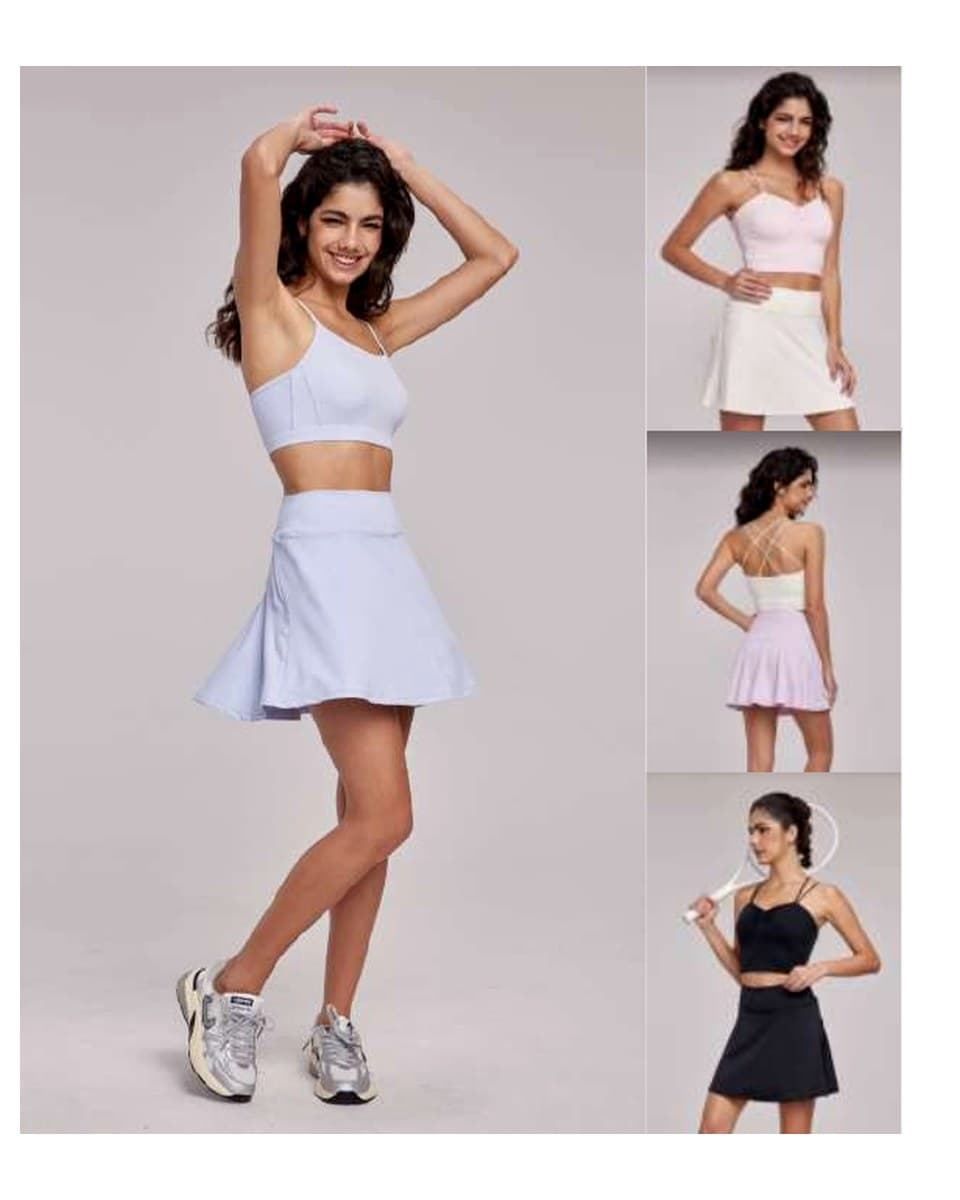
How should a brand plan white yoga and workout wear?
White yoga and workout wear should begin with a physical white reference, a named garment role, and one focused sample question. Define the body fabric, coverage expectation, lining or internal construction, companion colours, logo method, labels, packing, and approval owner before treating a white mood board as a product brief. An existing catalogue silhouette can support a private-label conversation; a new fit, material, lining, construction, or controlled sample plan needs factory-custom development.
White can make a yoga, Pilates, gym, travel, tennis-inspired, or studio-to-street programme look calm and concise. For a buyer, “white” is not a complete production specification. It can appear cool, warm, bright, creamy, translucent, matte, or glossy according to the physical reference, fibre, knit, surface, stretch, lining, light, and neighbouring components. A catalogue image can help identify a top, bra, skirt, short, or layer. It cannot confirm the exact white, opacity, material, logo method, availability, price, MOQ, or production timing.
The useful buyer question is not whether white is universally easy to make. It is which white relationship matters for the proposed garment and what evidence a first sample must provide. A close-fit bra top, a light woven layer, a skirt with an inner short, and a fitted legging can all require different fabric, coverage, construction, branding, and packing checks. Stating those differences lets a factory respond to a real development question rather than infer requirements from a screen image.
The activewear design trends guide explains how a visual direction becomes product roles, material choices, samples, and a B2B route. This guide focuses on the specific controls a white yoga and workout wear programme needs before it is expanded across a collection.
Why is a physical white reference necessary for a minimal collection?
White is often treated as if it needs no definition. In practice, a bright cool white, a warm white, a cream-leaning white, and a soft off-white may communicate different brand directions. The difference can become more visible next to a black logo, a grey binding, a pale lining, a zipper tape, a care label, or a carton mark. A colour name aligns the general idea; a physical swatch, recognised standard, labelled working cut, or prior approved sample gives the buyer and factory a point that can be reviewed.
The reference should state where it applies. A body fabric can look different from a rib, mesh, lining, elastic, binding, thread, zipper tape, woven label, print, embroidery, hangtag, poly bag, or carton label. A tight stretch area may present the same reference differently from a loose outer layer. The brief should identify components that need a close match and components that may use a deliberate contrast. This prevents a request for “all white” from hiding several different production decisions.
It also helps to define the nearby directions that are not acceptable. A buyer may want a clean cool white body with a charcoal mark, but not a cream body with a bluish white label. Another buyer may prefer warm white packaging beside a bright white garment. Neither choice is universal. A written record keeps the material, component, and presentation decisions visible when the first sample is reviewed.
Which product role should white hold in a yoga or workout range?
White can be a hero body colour, a supporting layer, a controlled contrast, or a presentation element. A yoga range might use a white bra top or skirt as a visible focal point beside darker leggings. A workout collection may use white only on a light jacket, logo, mesh panel, label, or packing system. A small programme can be easier to sample when the buyer assigns each role before attempting a broad all-white set.
| White role | Useful application | What to define | First review question |
|---|---|---|---|
| Hero body colour | Bra top, tee, skirt, short, legging, or light layer | Physical white, garment purpose, companion items, coverage direction, and logo contrast | Does the proposed body material show the intended white and garment coverage in the review context? |
| Supporting product | One studio top, outer layer, or limited coordinated item | Whether it is a launch item, a seasonal layer, or a repeat-oriented core | Does it support the darker or neutral core without becoming an undefined second colour system? |
| Controlled contrast | Binding, mesh, panel, logo ground, label, or small print | Component material, placement, scale, and match-versus-contrast rule | Is the white detail legible and intentional at actual garment scale? |
| Presentation element | Hangtag, bag insert, barcode label, carton mark, or care label | Which proof owns the printed white and what is separate from garment approval | Does the presentation support the collection without being treated as fabric approval? |
The Yoga Activewear Catalog is a practical place to select product families before the final white is confirmed. The A-Line Tennis Skirt can help a buyer describe a lower-body silhouette, inner-layer relationship, waistband, logo area, and a white set’s presentation needs. The Ribbed Cotton Built-In Bra Top can help name a close-fit top, surface, neckline, strap relationship, logo zone, and the specific white-and-companion-colour question that a sample should answer. These references are not proof that a pictured colour or material is available for another project.
How do material, coverage, and lining affect white activewear?
White needs material-specific review because density, texture, stretch, surface sheen, lighting, and construction can change its visible effect. No fibre is universally right for a white garment. The buyer should choose the fabric direction from intended use, handfeel, movement, garment construction, coverage expectation, logo method, and project constraints, then review the actual material and components together.
| Review point | Why it matters for white garments | What the sample should show |
|---|---|---|
| Body fabric | Surface, density, stretch, and light affect the apparent white and garment coverage | Physical reference, handfeel, intended movement, and relevant stretch areas |
| Lining or internal construction | It can change edges, support context, internal contrast, and visible body effect | Placement, interaction with the body fabric, and the specific part that needs approval |
| Mesh, rib, panels, and seams | Different constructions can change texture, depth, or contrast | Panel layout, seam relationship, and whether a shift is intentional or needs adjustment |
| Elastic, binding, zipper tape, and thread | Small components may make the body look warmer, cooler, cleaner, or more graphic | Component materials, intended match level, and real production placement |
| Logo or print | Artwork, method, background, and scale determine legibility | Correct artwork, placement, method, contrast, and approval owner |
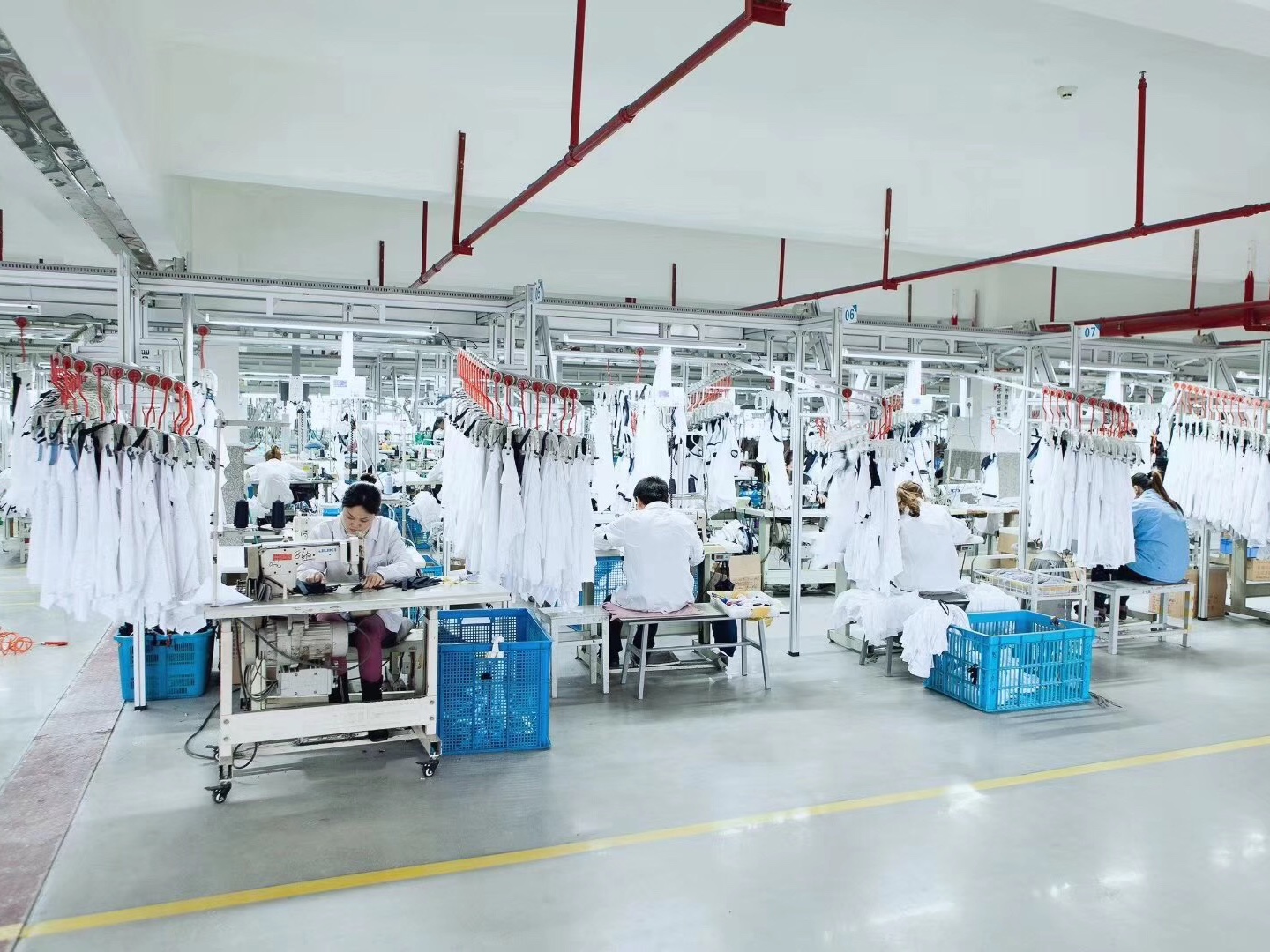
This production view supports a simple sourcing point: a sample must test the agreed garment and component relationship, not just a colour on a screen. A buyer can ask the first sample to show one relevant question, such as how the selected white reads on a close-fit top, whether a lining affects the body appearance, whether a component creates unintended contrast, or whether a logo remains clear on the selected surface. The fabrics and trims resource can help prepare the material vocabulary before that review.
How should white work with black, grey, and branded colour accents?
White can make a black logo feel sharper, allow a grey component to read more softly, or let a brand colour become a controlled point of focus. These relationships need a hierarchy. Define which colour is the body, which is a product companion, which is used for a logo or trim, and which belongs only to labels or packing. Without that hierarchy, a light garment and a collection of small components can appear unrelated even when each piece looks reasonable alone.
A white top with black branding might require a legibility discussion. A white skirt with a grey inner layer might need an approval boundary between the outer silhouette and the internal garment. A white jacket beside a brighter logo or packing colour may need a presentation proof as well as a garment sample. These are practical comparisons rather than rules about which colours “always work.” The activewear colour approval guide is the appropriate adjacent resource for recording the actual body, component, logo, label, and sample decision.
Keep printed presentation separate from body-fabric approval. A white hangtag, tissue, bag insert, or carton mark can support a minimal brand system but does not prove how white behaves on a stretch knit, rib, mesh, or woven layer. Record artwork version, print method, label copy, packing requirement, and proof owner alongside the garment approvals. This makes a late change easier to identify without reopening every material choice.
When should a white programme use private label or factory-custom development?
A catalogue-informed private-label route can suit a selected silhouette that mainly needs an agreed white direction, logo, labels, hangtags, packing, and quantity context. The private-label activewear service can help organise those brand-presentation inputs. Actual product, material, white reference, application method, packing, and commercial terms still need project confirmation.
Factory-custom development is more appropriate when the buyer needs a new fit, fabric, lining, support context, panel layout, construction, trim relationship, special white development, or a controlled sample sequence. A request to change the skirt’s inner layer, add a new lining, alter a close-fit top’s construction, change a mesh relationship, or create a specific white logo ground asks for more than presentation on an existing reference. The custom activewear development route is the correct place to start that deeper product discussion.
State the route boundary in the brief. Name what the catalogue image helps describe, what needs to change, what remains open, and what the first sample must show. That clarity lets the factory identify a feasible next review instead of making unsupported assumptions about a light-colour garment.
How can a white collection stay coherent across garments and packing?
A minimal collection does not require every part to use an identical white. It requires the buyer to decide what must visually relate, what can use contrast, and where the customer should recognise the collection. A white bra top, skirt, short, light jacket, woven label, hangtag, bag insert, barcode sticker, and carton mark may belong to one range even though they rely on different fabrics, components, and print methods. The brief should state those relationships instead of leaving them to be inferred from a mood board.
Create a short hierarchy record with three connected lists. First, identify the garment roles: the white hero item, darker or neutral core pieces, and any support layer. Second, list the component roles: body fabric, lining, mesh, elastic, binding, thread, zipper tape, logo, and print. Third, list presentation roles: labels, hangtags, bags, inserts, barcodes, and carton marks. For each list, say whether the element should match closely, be a controlled contrast, or only needs to support the wider product story.
This becomes valuable when one small component changes the way the body reads. A warm-white binding can make a cool-white top look warmer. A grey logo can look understated on one surface and weak on another. A black care label may make a white bra top feel more graphic, while the same contrast on an outer carton remains purely functional. These outcomes do not mean a component is wrong. They mean the buyer must review it against the physical reference, material, placement, scale, and role in the collection.
Keep garment and presentation approvals separate. A white hangtag proof may confirm print layout, label copy, and brand hierarchy, but it does not establish the body fabric, lining, opacity, or construction of a white garment. Record the correct artwork version, print method, label copy, packing instruction, and proof owner beside the sample decision. This prevents a late packaging change from being treated as an unrecorded garment-colour approval.
The same hierarchy can help a later replenishment or extension discussion. Retain the physical reference, selected product link, material direction, component notes, artwork version, logo method, packing requirements, and approved sample comments. The record does not guarantee that later materials, components, prices, quantities, or schedules will be unchanged. It gives the buyer and supplier a clear starting point for confirming what can be reused and what needs a new review.
The activewear manufacturing workflow places these decisions beside sampling, production, QC, packing, and export preparation. The activewear sample-to-bulk production guide helps a buyer carry approved details into a production package without suggesting that a photo or a past sample automatically approves a new project.
How should a buyer compare a white sample before approving more styles?
Review a white sample in the conditions that matter to the proposed product rather than approving it from one image. Place the intended body material next to the physical white reference and the planned companion colours. Compare the garment with its lining, mesh, elastic, binding, thread, logo, label, and relevant packing proof. Then view it beside the styles it will sit with in the capsule. The goal is to identify the observation that changes the next decision, not to declare every future garment approved at once.
For a close-fit top, a buyer may need to focus on the body surface, coverage question, neckline, strap relationship, logo ground, and contrast at construction lines. For a skirt or short, the review may need to focus on the outer silhouette, inner-layer relationship, waistband, pocket, seam, and whether a branded component remains appropriately controlled. For a light layer, the team may be looking at shell appearance, zipper tape, lining, cuffs, label, folding direction, and how the white layer works over its core products. Different product roles need different evidence.
A useful review records a decision in plain language. It might say: “continue with this white on the selected skirt outer fabric,” “review a revised binding relationship,” “confirm the logo proof before approving the bra top,” or “test the jacket shell and lining together before extending the range.” This is stronger than a vague request to make the product look clean or premium because it tells the factory, buyer, and approval owner what evidence matters.
If a change is required, specify whether it concerns the physical reference, body material, lining, component, artwork, logo method, placement, or construction. A controlled note prevents a small colour observation from becoming an unbounded redesign. The next step may be a component proof, a revised material or colour sample, another garment sample, or a factory-custom discussion. The selected path depends on the actual change, not on the word “white.”
How should white programmes prepare for cleanliness and packing review?
White garments can make handling, folding, labels, bags, carton marks, and receiving requirements more visible to a buyer. That does not justify a broad claim that any given packing method prevents every issue. It means the buyer should include the desired presentation and handling questions in the brief, then confirm the appropriate materials and steps for the project.
Name the garment finish and packing context together. A buyer can identify the expected fold, whether a hanger or bag is considered, the label and size-sticker position, insert requirements, barcode data, carton marks, destination market, and any special receiving instructions. The factory can then discuss the connected sampling, packing, and production decisions in project context. This is especially helpful when a white garment is part of a brand’s first minimal capsule and needs its product and presentation systems reviewed together.
The private-label activewear service offers a useful reference for logo, label, hangtag, and packing inputs when the garment direction is already selected. When the physical garment itself needs to change, those presentation details should remain connected to, but not replace, the factory-custom product and sample brief.
What should a white yoga and workout sample prove?
The first sample should answer one written question. It may prove how a specified white looks on an intended body fabric, whether an internal layer changes the result, whether a logo contrast is appropriate, whether a binding relationship is deliberate, or whether the garment works beside its companion products. Set the review condition and approval owner before the sample is sent, then record the result as a specific continue, revise, or investigate decision.
inPACE can coordinate sampling support that may include printing, embroidery, wash effects, and other project-appropriate steps. As a usual planning guide, samples often take 5–10 days and production often takes 25–50 days after scope and approvals are confirmed. Actual timing depends on style complexity, material availability, colourways, decoration, labels, packing, quantities, revisions, and production scheduling, so it must be confirmed for the project.
Keep the physical white reference, fabric direction, component notes, artwork version, sample comments, and approval outcome together. This record does not guarantee later material, price, MOQ, or production conditions. It gives the buyer and factory a traceable starting point for a revised sample or bulk-production discussion.
What should a buyer include in a white activewear brief?
- Name the customer, activity, channel, product role, and collection role for each white garment.
- Provide a physical white reference, recognised standard, labelled working cut, or prior approved sample.
- Identify the black, grey, neutral, or brand-colour companions that must be reviewed beside it.
- Link a selected catalogue product or provide sketches, samples, or technical information for custom development.
- Define body fabric, lining, mesh, rib, elastic, binding, zipper, thread, print, and label relationships.
- State the relevant handfeel, stretch, coverage, surface, or construction question without assuming a universal material outcome.
- Mark which components need a close match and which use a controlled contrast.
- Provide the correct logo or artwork file, method, placement, scale, and background relationship.
- Separate garment approval from labels, hangtags, bags, inserts, barcodes, and carton marks.
- Include sizes, preliminary colour allocation, quantity context, destination market, and packing requirements.
- Name the one decision the first sample must answer and the person who approves it.
- Record open points and revision boundaries before a bulk-production discussion begins.
The activewear fabric selection guide can help prepare a product-specific material discussion. It cannot substitute for an actual sample or establish fixed price, MOQ, inventory, timing, certification, or performance claims.
How do sample charges and refunds work for one white activewear style?
As a general guideline, the sample charge is 1.5–3 times the corresponding bulk unit quotation, depending on the product and development scope. For one style, the stated refund schedule is 10% at 100 units, 30% at 300 units, 50% at 500 units, and 100% at 1,000 units. Confirm the quotation, sample scope, and applicable order conditions in writing because material, colour development, decoration, components, revisions, and construction can change what is included.
Ready to develop white yoga and workout wear?
Send inPACE Sports the white reference, garment direction, material and coverage needs, lining or component notes, companion colours, logo and packing requirements, size and quantity context, and the exact question the first sample should answer. Send a white activewear brief to discuss whether private-label presentation or factory-custom development fits the project.
Product directions
Explore relevant activewear products
Use these product pages as practical references for your brief, then confirm materials, fit, customization, and production details through sampling.
Yoga Activewear Catalog
Use the catalog to select a white top, bra, skirt, short, bottom, or layer reference before confirming the material, coverage, branding, and sample-review question.
View product directionA-Line Tennis Skirt
Use this skirt reference to discuss a white lower-body role, inner-layer relationship, waistband, logo area, packing, and the evidence needed from a first sample.
View product directionRibbed Cotton Built-In Bra Top
Use this top reference to define the body surface, neck and strap relationship, logo contrast, companion layer, and the sample boundary for a white programme.
View product directionFAQ
Buyer questions
What does a white yoga and workout wear programme need first?
A white yoga and workout wear programme needs a physical white reference, named product roles, material and component direction, branding and packing requirements, and one focused sample question. A colour name or catalogue image does not by itself approve body fabric, lining, components, construction, or commercial conditions.
Does white activewear need a special fabric?
The right fabric depends on the product, intended use, handfeel, stretch, coverage expectation, construction, logo method, and project constraints. No fibre is universally best. Review the intended white reference on the proposed material and components before approving a garment direction.
Can a catalogue style be used for white private-label activewear?
A catalogue-informed private-label discussion can suit a selected silhouette that mainly needs white direction, logo, labels, hangtags, packing, and quantity review. Actual product, material, colour, branding method, packing, and commercial conditions require project-specific confirmation.
When does white yoga wear need factory-custom development?
Use factory-custom development when the project needs a new fit, fabric, lining, panel, construction, artwork, trim relationship, special white development, or controlled sample plan. Share the product roles, references, material direction, components, branding, sizes, and first sample question.
How should a brand review white with black or grey?
Assign each colour a body, companion, component, logo, or presentation role, provide physical references, and review the relationship on the actual body fabric, lining, mesh, elastic, binding, logo method, labels, and packing. A digital palette does not replace an approval record or project sample.
How long do white activewear samples and production take?
As a usual planning guide, samples often take 5–10 days and production often takes 25–50 days after scope and approvals are confirmed. Timing depends on style complexity, material availability, colourways, decoration, labels, packing, quantities, revisions, and production scheduling, so it must be confirmed for the project.
How does inPACE handle sample fees for one white activewear style?
The general guideline is a sample charge of 1.5–3 times the corresponding bulk unit quotation, depending on the product and development scope. For one style, the stated refund schedule is 10% at 100 units, 30% at 300 units, 50% at 500 units, and 100% at 1,000 units. Confirm the quotation and applicable order conditions in writing.