

Answer first
What should a fitness brand decide before developing HYROX training apparel?
Before sampling, decide who the product is for, what training session it needs to support, which garments form the first range, how the collection should be positioned commercially, and what evidence will be needed to approve it. A technical fabric name, a retail reference, or a logo file is only one part of that picture. The useful B2B brief connects athlete need and commercial intent so that a functional fitness apparel manufacturer can recommend a development route with clear assumptions.
This is not about turning every gym garment into a specialist product. It is about identifying the point where the brand's promise requires more attention to running stability, repeated movement, sweat, friction, recovery, coverage, or product presentation. Start with the earlier HYROX training apparel buyer guide for the production brief fundamentals, then use the hybrid race apparel development guide to shape garment roles, materials, fit, and tests.
Decision chart
Six decisions that make a product brief commercially useful
A brand does not need every answer before the first factory conversation. It does need to separate decisions it owns from questions it wants the supplier to review. The following chart keeps product, brand, and production decisions connected.
| Decision | Buyer question | Why it matters |
|---|---|---|
| Target athlete | Who is the first customer and where do they train? | Defines fit direction, coverage, support, climate needs, product language, and the first SKU priorities. |
| Price architecture | What is the intended retail position and margin route? | Keeps fabric, construction, trims, logo method, packaging, and assortment ambition aligned with the brand's commercial model. |
| Core assortment | Which few garments solve the customer session? | Prevents a launch from becoming many similar styles with no clear product role or replenishment logic. |
| Sample evidence | Which movements and comments prove the product is ready? | Turns broad performance claims into a focused fit, comfort, construction, and wash-review decision. |
| Private-label system | How should the product carry the brand? | Brings logo, labels, size presentation, hangtags, packing, and receiving requirements into the production brief. |
| Replenishment plan | Which styles need repeatable materials and records? | Supports more consistent color, fit, branding, quantity, and timing discussions after the initial launch. |
Customer and position
Start with the athlete and the brand's product promise
“For hybrid training” is a useful direction, but it is not yet a market position. One brand may serve established gym members adding run-and-functional-fitness sessions. Another may focus on running-oriented athletes who want stable shorts and light tops. A third may build a premium coordinated set around a women's training community. Their garment priorities, fit expectations, color range, product storytelling, price direction, and replenishment needs can be very different.
Describe the athlete in simple operational terms: where they train, how often, which movements they repeat, whether they choose close or relaxed fits, which climate they experience, and where they buy. This gives the manufacturer context for fabric handfeel, garment weight, coverage, size range, label direction, packing, and sampling. It also makes it easier to decide when a standard custom gym wear manufacturing route is sufficient and when a more specific hybrid-racing review is appropriate.
Assortment planning
Build a first collection around clear garment roles
A narrow first collection is often stronger than a broad range built from similar silhouettes. Each style should have a defined role: a core entry piece, a run-and-training bottom, an alternative coverage option, a women's support product, or a light layer with a seasonal purpose. The brand can use the performance activewear product range as a reference point, then turn selected silhouettes into a customer-specific brief.
| Garment | Commercial role | Development focus |
|---|---|---|
| Technical tee or tank | Entry and repeat core | Light feel, sweat management, arm movement, hem behavior, print or logo comfort |
| Training short | Run-and-functional-training anchor | Rise, waistband stability, pocket bounce, liner choice, inseam, drawcord, coverage |
| Legging or compression bottom | Coverage and stable-fit route | Opacity, recovery, heat, seam placement, waistband comfort, compression direction |
| Sports bra or fitted support top | Women's range support piece | Support, straps, lining, neckline, arm movement, coverage, logo location |
| Light layer | Warm-up, travel, or seasonal add-on | Packability, ventilation, sleeve construction, layering role, trim and zipper direction |
The goal is not to prescribe this exact lineup for every buyer. Use it to ask better questions: which product will be replenished? Which one builds recognition? Which one needs its own fabric or construction route? Which style can share materials, colors, or branded details without making the collection repetitive? A concise answer makes private label hybrid racing clothing easier to sample, price, approve, and introduce to the market.
Price and product decisions
Set a price direction before finalizing fabric and private-label details
Price direction is a product decision, not a final conversation after every design detail is set. A target customer and retail position influence what the collection can reasonably ask of fabric, panels, construction, branding, packaging, and color count. They also help clarify whether a hero product deserves a differentiated material or whether a stable shared fabric system makes the first launch more manageable.
Give a supplier the commercial frame without asking for a false certainty. State the product category, intended retail direction, expected quantity, colorways, size range, destination market, logo and label intent, packaging needs, and timeline. The factory can then explain which variables affect the quote and sample path. This is more useful than comparing generic numbers that assume different fabrics, logo methods, labels, packing, or production conditions.
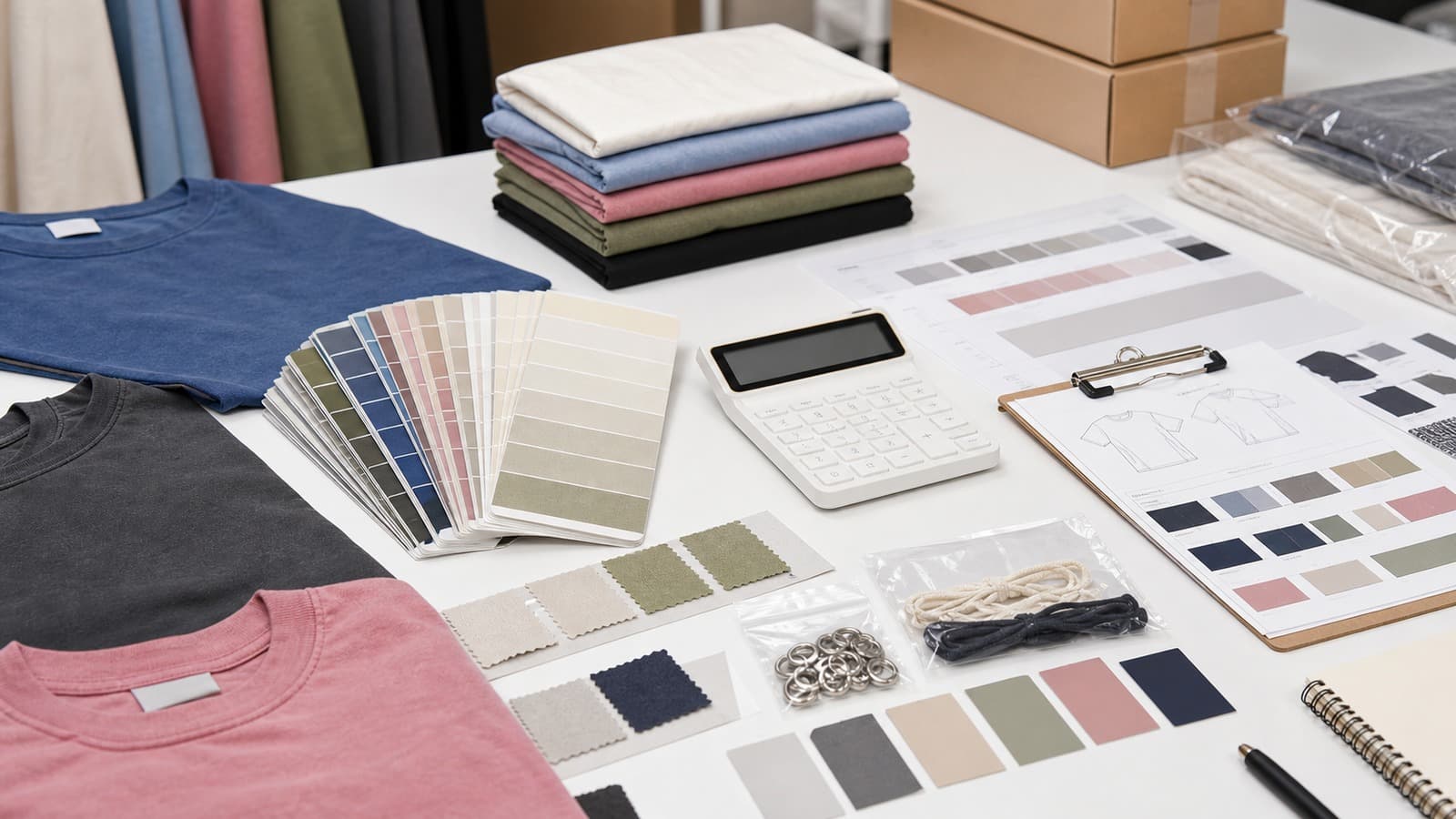
Planning framework
Use a repeatable framework from concept to replenishment
A product-development route becomes easier to manage when every decision has a place. The brand sets the customer and collection direction; the manufacturer reviews technical and production implications; the sample provides evidence; and the final reference protects the next order from rework. This is a practical approach to fitness apparel product development that keeps business needs visible throughout technical decisions.
Position the customer
Describe the athlete, training setting, climate, channel, and product promise before asking the factory to recommend a generic performance fabric.
Build a compact system
Give each garment one clear job in the session and decide which pieces are core, optional, seasonal, or relevant for a later drop.
Set the commercial frame
Align target retail direction, color count, size range, packaging, logo method, quantity, and market requirements with the collection ambition.
Record repeat decisions
Keep the approved fabric, fit, construction, artwork, labels, packing, and sample comments in a usable production reference for replenishment.
Sample approval
Treat the sample as evidence, not just a presentation piece
The sample should be tested in the session it is designed to support. A product can look correct on a table while revealing a waistband issue during lunges, a hem issue while running, a rubbing logo in floor work, or a recovery issue after wear and washing. A clear test plan gives the team actionable information before bulk planning and avoids turning late concerns into vague requests for a product to feel “more technical.”
Private label and repeat orders
Make brand details and replenishment part of the first brief
A collection becomes recognizably yours through more than silhouette and color. The logo method, artwork file, placement, neck or care labels, size system, hangtag, poly bag, folding direction, carton mark, and warehouse requirements should be discussed alongside the garment. A large transfer can feel different from a small mark; a label can affect comfort; packing can affect the handover to e-commerce, retail, or a distributor. Use the custom activewear route to prepare these details for a manufacturer review.
For repeatable items, document what has been approved: material reference, color standard, measurements and fit, construction, artwork, label positions, packing route, size range, order quantity assumptions, and post-sample notes. This helps a brand decide which styles deserve replenishment, what needs to stay stable, and which seasonal additions can change without weakening the core. It also gives a custom workout apparel factory a more accurate reference for discussing future production.
Trademark clarity
HYROX is a registered trademark of its respective owner. It is referenced here only to describe a popular hybrid-training and race-preparation context. inPACE is not affiliated with or endorsed by HYROX.
Next step
Turn your collection idea into a factory-ready conversation
Start with the customer, select a focused garment system, state the commercial frame, and record what the sample must prove. This gives inPACE the context to review a suitable product-development route for functional fitness and hybrid training apparel, including materials, fit, private-label details, sampling, and bulk-production assumptions.
Discuss your fitness apparel collectionLong-form buyer framework
How can a buyer turn this research into a production-ready decision?
The central task in planning HYROX training apparel as a fitness brand is deciding how target customer, assortment, price direction, product evidence, private-label details, launch scope, and replenishment should shape the development brief. That decision cannot be made from a headline price, a product photo, or a general statement about customization. It needs a record that connects the commercial goal to the garment, material, fit, construction, branding, quantity, quality checks, packing, and destination. When those elements are visible together, a buyer can ask more precise questions and a factory can explain the route without pretending that open details are already confirmed.
The purpose of the framework below is not to turn a brand founder or buyer into a garment technician. It is to make responsibility and evidence clear. The buyer defines the customer and business need, shares what is known, and identifies the decisions that matter. The factory should connect the brand's commercial plan to realistic material, sample, production, QC, packing, and order decisions. Both sides then record what was reviewed, what remains conditional, what must be approved physically, and what information will guide production or a later repeat order.
Define the customer beyond the event name
Training frequency, experience, climate, fit preference, price expectation, channel, and adjacent activities make the product brief more useful than a category label.
For this decision, the buyer should state the intended result, provide the closest available evidence, and identify what is flexible. The supplier can then explain the product or process implications and flag any dependency on fabric availability, colour, construction, logo method, components, quantity, or packing. A useful response distinguishes a recommendation from a confirmed production instruction and says what would need to be reviewed through a sample or another approval step.
Record the outcome inside a commercial product plan joining customer assumptions, SKU roles, target cost direction, sample evidence, branding, quantities, launch timing, and repeat-order triggers. Include the date, relevant file or sample, the person responsible for the next action, and the status of the decision. If a later change affects fit, material, workmanship, branding, assortment, or delivery preparation, return to this record and identify which related approvals need to be checked again. This prevents a local change from creating an unnoticed downstream inconsistency.
Give each SKU a commercial role
Core tops, running bottoms, support products, compression options, and light layers should solve different needs rather than compete with one another.
For this decision, the buyer should state the intended result, provide the closest available evidence, and identify what is flexible. The supplier can then explain the product or process implications and flag any dependency on fabric availability, colour, construction, logo method, components, quantity, or packing. A useful response distinguishes a recommendation from a confirmed production instruction and says what would need to be reviewed through a sample or another approval step.
Record the outcome inside a commercial product plan joining customer assumptions, SKU roles, target cost direction, sample evidence, branding, quantities, launch timing, and repeat-order triggers. Include the date, relevant file or sample, the person responsible for the next action, and the status of the decision. If a later change affects fit, material, workmanship, branding, assortment, or delivery preparation, return to this record and identify which related approvals need to be checked again. This prevents a local change from creating an unnoticed downstream inconsistency.
Use cost direction as a design constraint
Fabric, construction, trims, logo methods, labels, packaging, colours, quantity, and delivery assumptions should be considered before a target becomes a promise.
For this decision, the buyer should state the intended result, provide the closest available evidence, and identify what is flexible. The supplier can then explain the product or process implications and flag any dependency on fabric availability, colour, construction, logo method, components, quantity, or packing. A useful response distinguishes a recommendation from a confirmed production instruction and says what would need to be reviewed through a sample or another approval step.
Record the outcome inside a commercial product plan joining customer assumptions, SKU roles, target cost direction, sample evidence, branding, quantities, launch timing, and repeat-order triggers. Include the date, relevant file or sample, the person responsible for the next action, and the status of the decision. If a later change affects fit, material, workmanship, branding, assortment, or delivery preparation, return to this record and identify which related approvals need to be checked again. This prevents a local change from creating an unnoticed downstream inconsistency.
Keep performance claims evidence-based
Describe intended use and sample observations carefully without turning an internal wear trial into an unsupported certification or universal performance guarantee.
For this decision, the buyer should state the intended result, provide the closest available evidence, and identify what is flexible. The supplier can then explain the product or process implications and flag any dependency on fabric availability, colour, construction, logo method, components, quantity, or packing. A useful response distinguishes a recommendation from a confirmed production instruction and says what would need to be reviewed through a sample or another approval step.
Record the outcome inside a commercial product plan joining customer assumptions, SKU roles, target cost direction, sample evidence, branding, quantities, launch timing, and repeat-order triggers. Include the date, relevant file or sample, the person responsible for the next action, and the status of the decision. If a later change affects fit, material, workmanship, branding, assortment, or delivery preparation, return to this record and identify which related approvals need to be checked again. This prevents a local change from creating an unnoticed downstream inconsistency.
Approve samples against launch priorities
Fit, movement, heat, dry feel, opacity, support, pockets, construction, branding, and packing should be prioritised according to the customer's buying reason.
For this decision, the buyer should state the intended result, provide the closest available evidence, and identify what is flexible. The supplier can then explain the product or process implications and flag any dependency on fabric availability, colour, construction, logo method, components, quantity, or packing. A useful response distinguishes a recommendation from a confirmed production instruction and says what would need to be reviewed through a sample or another approval step.
Record the outcome inside a commercial product plan joining customer assumptions, SKU roles, target cost direction, sample evidence, branding, quantities, launch timing, and repeat-order triggers. Include the date, relevant file or sample, the person responsible for the next action, and the status of the decision. If a later change affects fit, material, workmanship, branding, assortment, or delivery preparation, return to this record and identify which related approvals need to be checked again. This prevents a local change from creating an unnoticed downstream inconsistency.
Build private-label presentation into the range
Logo hierarchy, labels, hangtags, bags, barcode data, product naming, and carton information should support a consistent customer and receiving experience.
For this decision, the buyer should state the intended result, provide the closest available evidence, and identify what is flexible. The supplier can then explain the product or process implications and flag any dependency on fabric availability, colour, construction, logo method, components, quantity, or packing. A useful response distinguishes a recommendation from a confirmed production instruction and says what would need to be reviewed through a sample or another approval step.
Record the outcome inside a commercial product plan joining customer assumptions, SKU roles, target cost direction, sample evidence, branding, quantities, launch timing, and repeat-order triggers. Include the date, relevant file or sample, the person responsible for the next action, and the status of the decision. If a later change affects fit, material, workmanship, branding, assortment, or delivery preparation, return to this record and identify which related approvals need to be checked again. This prevents a local change from creating an unnoticed downstream inconsistency.
Define replenishment signals early
Sales by style, colour, and size, stock cover, material availability, approved records, and product changes help the brand decide what to repeat, revise, or retire.
For this decision, the buyer should state the intended result, provide the closest available evidence, and identify what is flexible. The supplier can then explain the product or process implications and flag any dependency on fabric availability, colour, construction, logo method, components, quantity, or packing. A useful response distinguishes a recommendation from a confirmed production instruction and says what would need to be reviewed through a sample or another approval step.
Record the outcome inside a commercial product plan joining customer assumptions, SKU roles, target cost direction, sample evidence, branding, quantities, launch timing, and repeat-order triggers. Include the date, relevant file or sample, the person responsible for the next action, and the status of the decision. If a later change affects fit, material, workmanship, branding, assortment, or delivery preparation, return to this record and identify which related approvals need to be checked again. This prevents a local change from creating an unnoticed downstream inconsistency.
Buyer scenarios
How does the decision change in common sourcing situations?
Real projects rarely arrive with every detail complete. The useful question is not whether the brief is perfect; it is whether the missing information is visible and whether the next step will produce evidence. These scenarios show how a buyer can keep planning HYROX training apparel as a fitness brand practical without converting early assumptions into promises.
The buyer has a direction but incomplete technical files
Start with the product role, target customer, intended use, reference material, and the decisions already made. Mark missing measurements, fabric, artwork, or packing details as open questions. The supplier response should show what can be reviewed immediately, what needs a sample, and what information is required before the route becomes more specific.
Apply the scenario to how target customer, assortment, price direction, product evidence, private-label details, launch scope, and replenishment should shape the development brief. Note what can be accepted as direction, what requires factory review, and what must become part of a commercial product plan joining customer assumptions, SKU roles, target cost direction, sample evidence, branding, quantities, launch timing, and repeat-order triggers before the buyer compares suppliers or approves the next stage.
A catalogue reference is close but not exact
List the features that already work and separate brand presentation from garment changes. A logo, label, hangtag, or bag may stay within a catalogue-informed route, while a new fit, material, pattern, construction, or performance feature may require custom development. The decision should be based on the requested change, not a category label.
Apply the scenario to how target customer, assortment, price direction, product evidence, private-label details, launch scope, and replenishment should shape the development brief. Note what can be accepted as direction, what requires factory review, and what must become part of a commercial product plan joining customer assumptions, SKU roles, target cost direction, sample evidence, branding, quantities, launch timing, and repeat-order triggers before the buyer compares suppliers or approves the next stage.
The order contains several colours, sizes, and brand components
Create one assortment record by style, colour, and size, then connect every logo, label, barcode, bag, and carton instruction to the correct SKU. Ask which choices affect material planning, application methods, packing ratios, or quotation assumptions. This is where a simple-looking collection can become operationally complex.
Apply the scenario to how target customer, assortment, price direction, product evidence, private-label details, launch scope, and replenishment should shape the development brief. Note what can be accepted as direction, what requires factory review, and what must become part of a commercial product plan joining customer assumptions, SKU roles, target cost direction, sample evidence, branding, quantities, launch timing, and repeat-order triggers before the buyer compares suppliers or approves the next stage.
The programme is expected to repeat
Decide which approved records will be retained after shipment and which changes should trigger a new sample. Product specifications, material and colour references, artwork, placement, labels, packing, QC notes, and prior order data make later replenishment more controlled. A reorder should not depend on memory or an old message thread.
Apply the scenario to how target customer, assortment, price direction, product evidence, private-label details, launch scope, and replenishment should shape the development brief. Note what can be accepted as direction, what requires factory review, and what must become part of a commercial product plan joining customer assumptions, SKU roles, target cost direction, sample evidence, branding, quantities, launch timing, and repeat-order triggers before the buyer compares suppliers or approves the next stage.
Relevant product directions
Which products can make the next brief more concrete?
Use these product pages to identify a silhouette or collection direction, then state what should remain, change, or be reviewed. Product images are useful references, but fabric, fit, construction, colour, branding, quantity, and packing still require project-specific confirmation.
Activewear Performance Collection
Compare existing training sets, sports bras, and performance silhouettes before defining fabric, branding, and order requirements.
View product directionHooded Thumbhole Training Set
Use a coordinated training set to discuss fit, colour direction, logo position, labels, packing, and repeat-order records.
View product directionLight Support Bra Program
Review support direction, recovery, logo scale, label placement, colour packs, and private-label presentation.
View product directionDecision record
Which evidence should the buyer request and retain?
The table turns the article's key questions into a working review format. It is intentionally broader than a unit-price comparison because a complete activewear programme includes product, material, sample, branding, packing, and delivery assumptions.
| Decision area | Buyer evidence | Factory review | Record before approval |
|---|---|---|---|
| Define the customer beyond the event name | Reference, requirement, intended result, and any non-negotiable constraint. | Feasibility, dependencies, assumptions, sample need, and effect on connected decisions. | Approved reference, open issue, owner, date, and the next checkpoint. |
| Give each SKU a commercial role | Reference, requirement, intended result, and any non-negotiable constraint. | Feasibility, dependencies, assumptions, sample need, and effect on connected decisions. | Approved reference, open issue, owner, date, and the next checkpoint. |
| Use cost direction as a design constraint | Reference, requirement, intended result, and any non-negotiable constraint. | Feasibility, dependencies, assumptions, sample need, and effect on connected decisions. | Approved reference, open issue, owner, date, and the next checkpoint. |
| Keep performance claims evidence-based | Reference, requirement, intended result, and any non-negotiable constraint. | Feasibility, dependencies, assumptions, sample need, and effect on connected decisions. | Approved reference, open issue, owner, date, and the next checkpoint. |
| Approve samples against launch priorities | Reference, requirement, intended result, and any non-negotiable constraint. | Feasibility, dependencies, assumptions, sample need, and effect on connected decisions. | Approved reference, open issue, owner, date, and the next checkpoint. |
| Build private-label presentation into the range | Reference, requirement, intended result, and any non-negotiable constraint. | Feasibility, dependencies, assumptions, sample need, and effect on connected decisions. | Approved reference, open issue, owner, date, and the next checkpoint. |
| Define replenishment signals early | Reference, requirement, intended result, and any non-negotiable constraint. | Feasibility, dependencies, assumptions, sample need, and effect on connected decisions. | Approved reference, open issue, owner, date, and the next checkpoint. |
Buyer checklist
What should be ready before the next factory conversation?
A buyer can begin even when some boxes remain open. Label them clearly and ask what evidence would close them. That approach is more useful than hiding uncertainty or waiting for an impossible level of perfection. It also makes a supplier's reasoning easier to evaluate: the response should identify connected decisions and explain why a sample, component approval, revised brief, or packing record is needed.
Continue the buyer journey
Keep the next step tied to the product decision
Continue with develop apparel for hybrid racing when that question is adjacent to the current decision. If the project is ready for factory review, send the product type, reference, material and fit priorities, branding scope, estimated quantity, packing needs, and destination market. inPACE Sports can then discuss whether the next step is product selection, private-label review, custom development, sampling, or a more complete quotation brief.
State what is confirmed, flexible, and still open for factory guidance.
Ask how decisions move into sampling, production, QC, and packing.
Retain the approval and receiving records needed for shipment and reorders.