
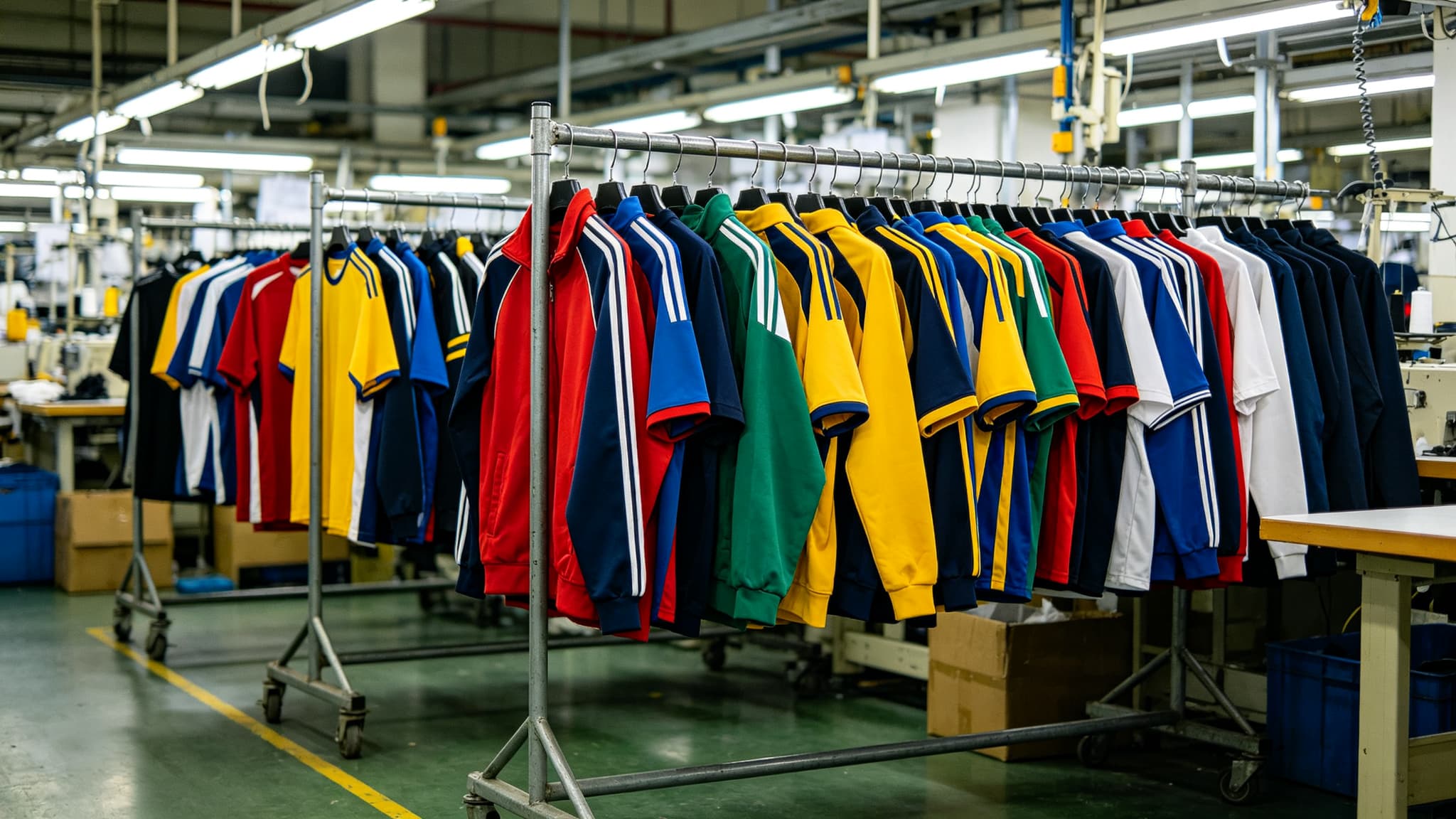
A private label gym wear supplier UK brief should identify the sales channel, the product route, and the person who owns UK-facing product information before a brand compares suppliers. An existing training style can support a logo, labels, hangtag, packaging, and size-colour discussion; a changed fit, fabric, coverage, support, or construction needs factory-custom development and a sample review. A reference image does not confirm a finished garment or compliance outcome.
What should a private label gym wear supplier UK brief cover before proposals?
Start with the programme's role. A gym operator may need staff kit, a studio may be planning member merchandise, and an online retailer may be testing a small capsule. Those routes can use similar products, yet they need different receiving, assortment, presentation, and approval records. A buyer should state whether each reference is a catalogue-informed branding reference or a request for a new garment outcome.
Use the Activewear Performance Collection to discuss training-product roles and the Private Label service when the project begins with an existing direction plus logo, labels, hangtags, and packing. Neither reference confirms the actual fabric, colour, size range, artwork method, quantity, availability, price, or UK-market readiness. If the brief requires a changed neckline, rise, support direction, panel layout, pocket, mesh placement, or fabric performance, it belongs in a custom activewear development and sample conversation.
What should appear in a private-label gym wear brief?
| Brief area | What the UK buyer should state | What a supplier can review | What must remain for approval |
|---|---|---|---|
| Channel and product role | Staff kit, member merchandise, online retail, training top, legging, layer, or set. | Whether a catalogue-informed or custom-development route fits the stated use. | The selected style and commercial scope. |
| Fit and material | Base size, size range, handfeel, stretch, recovery, coverage, support, lining, and movement questions. | Material and construction options, sample purpose, and relevant open questions. | Actual sample fit, coverage, recovery, and product claims. |
| Brand presentation | Artwork, logo zone, labels, hangtags, packaging, product photos, and launch context. | Compatibility, placement, controlled files, and packing sequence. | Final artwork, consumer-facing wording, and files. |
| Receiving and repeat order | Size-colour plan, barcode or carton needs, receiving point, and reorder record. | Packing assumptions and traceable handoff records. | Channel terms, dispatch arrangements, and final receiving instructions. |
The activewear tech pack checklist helps turn a drawing, measurement and construction discussion into a controlled version record. The activewear sample plan helps a buyer give each sample a specific job, rather than asking one early garment to answer fabric, fit, logo, labels, and packing questions all at once.
Which UK-facing information needs a named owner?
This is a sourcing guide, not legal advice. Before label artwork, packaging, online product copy, or bulk approval, the brand should name the person who owns its market-facing information. GOV.UK's textile labelling guidance says special rules apply to textiles in England, Scotland and Wales and that manufacturers and retailers are responsible for compliance. It says fibre content, including fur and other animal parts where applicable, must be shown; a product with components of different fibre contents may need the content of each component stated.
The practical implication is to keep the production file and the market-information review distinct but connected. The brand should decide who checks the selected fibre description, percentage information, any animal-origin statement, product-page copy, labels, packaging statements, and relevant channel requirements against the actual approved garment. For an online sale, the cited legislation also requires fibre-composition information to be visible to the consumer before purchase. Northern Ireland and other destinations can have different legal routes; they should not be treated as automatically identical to a Great Britain launch.
An inPACE production conversation can use approved label and packing files, sample evidence, and version control. It should not be represented as the buyer's legal conclusion. If a material, component, product claim, or intended destination changes, the market-information owner should reopen the affected wording and obtain appropriate advice.
How should a gym wear sample be evaluated?
Name the decision the sample must prove. A training legging review can record waistband stability, rise, coverage during the selected movements, seam comfort, stretch, recovery, and logo-zone behaviour. A gym top or layer may need shoulder range, armhole comfort, body length, sleeve movement, ventilation placement, and the relationship to another garment. These are buyer observations, not universal performance claims.
Record the style version, material direction, colour, size, reviewers, movements, observations, decisions, and open questions. For a printing, embroidery, or wash request, evaluate the actual fabric, location, artwork, and sample purpose. inPACE can coordinate sampling support that may include those applications where suitable, but the path depends on material, construction, components, revision rounds, quantity direction, partner-factory scheduling, and approvals. Planning ranges remain conditional rather than a delivery promise.
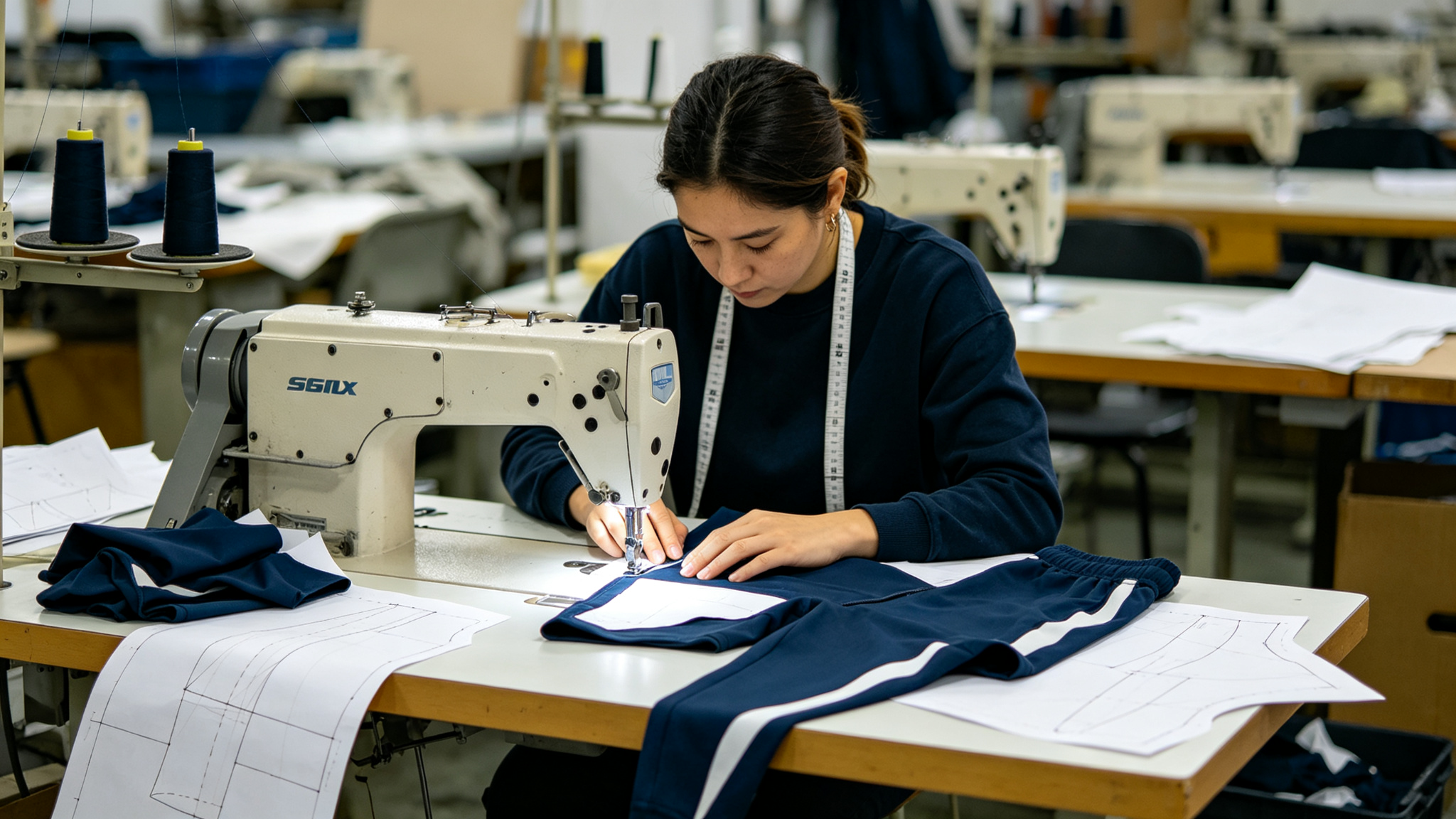
How should packing support a gym, studio, or online-retail launch?
Packing connects the approved garment to the person who receives and sells it. A brand should identify whether cartons go to a gym, studio, warehouse, marketplace-preparation partner, or retailer. State the approved style name or SKU, sample version, size-colour plan, label and hangtag status, barcode needs where the channel requires them, folding direction, carton marks, and the owner of final consumer-facing information.
The activewear packaging checklist and receiving inspection checklist can organise that handoff. They do not settle freight, customs, price, or delivery commitments. If fabric, label, logo method, care statement, size grade, or packing component changes after approval, the buyer should decide whether the change requires a new review.
How can a UK buyer compare supplier responses without reducing the decision to price?
Compare the assumptions first. Ask every supplier to identify the product route, reference source, material direction, sample purpose, construction questions, branding scope, size-colour plan, packing needs, available evidence, and unresolved decisions. A lower figure based on another fabric, fewer colours, a different branding method, or incomplete labelling and packing information is not a like-for-like proposal.
The gym wear manufacturer guide is a useful route when a brief needs a new product, material, fit, or sample decision. The activewear manufacturing workflow helps a buyer see how approved material, construction, branding, QC, and packing records travel together. For a UK programme, the useful supplier question is: “Which facts do you need from us to decide whether this is existing-style branding or new development, and which records must be approved before production?”
What should a UK gym wear buyer send in the first inquiry?
Send the channel, product roles, reference source and purpose, route preference, size range, material and fit questions, branding files, sample purpose, receiving location, packing needs, quantity direction, and the named owner for UK-facing market information. Use the contact route to share a controlled brief rather than a collection of unlabelled screenshots. This gives the supplier a basis for identifying missing information and planning a relevant next review.
How should a brand decide between an existing-style route and custom development?
An existing-style route is useful when the product role already fits the programme and the meaningful changes are brand presentation and assortment planning. A gym might identify a training top and a lower-body option, then define logo zones, label information, colour direction, hangtags, folds, and size allocation. That is still a supplier discussion: actual material, colour, branding method, quantity, and packing must be checked before a style is treated as selected.
Custom development is the more useful route when the desired garment outcome differs from the reference. A changed rise, inseam, leg opening, neckline, underband, mesh position, pocket, coverage requirement, support direction, compression feel, or fabric hand needs a controlled development brief. The buyer should make the difference between the reference and desired garment visible in words, measurements, annotated images, or a tech pack. A vague request for “the same, but better” hides the choices that a sample needs to test.
The route can also vary inside one programme. A staff top may begin from an existing product direction while a retail legging needs its own fit and fabric review. Keeping those decisions separate helps the brand avoid asking a supplier to quote one undefined range as if every product followed the same path.
How should a UK buyer brief fabric without turning it into an untested claim?
Describe the decision first and the claim second. A buyer might ask a supplier to explore a softer handfeel, more coverage during a specified movement, a firmer waistband response, a lighter layer, or a more durable surface for repeated gym use. Those are useful development questions when they are tied to a garment role, construction idea, size, and sample review. They are not proof that an unselected fabric will perform in a particular way for every wearer or use case.
Put the proposed composition, weight, stretch direction, recovery question, surface, lining, mesh or component position, and colour direction in the working brief. Then mark which values are references, which are confirmed material information, and which must be tested on the actual sample. If a proposed material changes after fit approval, reopen the affected coverage, support, seam, artwork, care, label, packing, and consumer-copy questions. This gives the factory a usable comparison basis while helping the brand avoid carrying an early material idea into a customer-facing promise.
What should a buyer check before approving UK-facing claims and presentation?
Product presentation extends beyond the sewn garment. A buyer should keep controlled versions of fibre information, logo artwork, product names, care wording where used, label locations, hangtag content, packaging statements, ecommerce copy, and product photography. The production team needs approved files; the UK market-information owner needs enough detail to check whether the wording still matches the actual material and product.
Environmental language deserves the same discipline. GOV.UK's fashion-sector environmental-claims guidance explains why a claim about recycled or organic fibre, or another fabric characteristic, needs clear and supportable information. A supplier may provide project material information where available, but the brand should not carry an unreviewed claim from a supplier email or mood board into a label, listing, or advert.
This is especially important for a private-label range because a product can change during development. A revised fabric, lining, component, construction, or country-of-origin detail can affect the information the brand needs to review. The buyer's change log should identify the revised sample, the decision owner, and whether consumer-facing copy or packing is affected.
What makes a UK supplier comparison useful?
The comparison should show whether suppliers are answering the same question. Ask for the assumptions beside every response: product route, product references, fabric direction, size and colour plan, logo application, label and packaging scope, sample purpose, evidence requested, receiving point, and open decisions. This prevents a headline number from obscuring a different construction, a missing component, or a label question that has not yet been allocated to the right owner.
Where a buyer is discussing several production routes, it can use the wholesale versus custom manufacturing guide to frame the distinction. That guide is a route-planning reference, not proof that a particular garment is available. A supplier answer is strongest when it identifies what can be assessed now and what needs an actual sample, approved artwork, material confirmation, or channel decision.
UK private-label gym wear buyer checklist
Use this checklist before requesting a formal supplier comparison or bulk approval. It is not a substitute for legal, tax, customs, testing, freight, or local Trading Standards advice.
- State the channel: gym staff kit, studio merchandise, online retail, wholesale, or a defined mix.
- Classify every reference as an existing-style, fit, fabric, construction, or visual-direction reference.
- Name the product role, wearer, activity, base size, size range, and intended layering.
- Record fabric questions: handfeel, stretch, recovery, coverage, surface, lining, and component compatibility.
- Identify which fit, coverage, support, and movement questions a sample must answer.
- Supply controlled artwork and specify logo zone, label location, hangtag, and packaging direction.
- Name the owner of Great Britain-facing fibre, product-page, packaging, and claim review; flag Northern Ireland or another destination separately.
- Set the sample version, review size, reviewers, observations, approval criteria, and change-log method.
- State the size-colour plan and quantity direction without treating either as a fixed production commitment.
- Describe the receiving point, SKU or carton logic, barcode needs where applicable, and final packing owner.
- Separate confirmed facts from questions that the supplier, sample, or market-information owner must still resolve.
- Ask the supplier to explain its assumptions in writing before comparing a price or delivery discussion.
The purpose of the checklist is not to make a buyer perform factory work. It gives the brand a record of what it owns, what it is asking the supplier to review, and what must remain conditional. That record is particularly useful when a gym manager, merchandiser, ecommerce team, and external production contact are not in the same room.
What inPACE can discuss from a well-prepared UK brief
inPACE can discuss catalogue-informed product direction, factory-custom development, material and fit questions, sample planning, branding compatibility, QC and packing records, and the appropriate route through cooperating production factories. The discussion can draw on more than 30 years of garment-production experience in the wider production context without presenting that experience as a fixed capacity, price, timing, certification, or legal conclusion.
Where a project needs printing, embroidery, or wash effects, those choices should be reviewed against the selected fabric, application area, artwork, and sample purpose. Planning ranges for samples and production may be discussed after the relevant scope and approvals are known; they remain conditional on materials, construction, components, revision rounds, quantity direction, factory scheduling, and approvals.
How should a brand preserve decisions after the sample review?
The approved sample should become a controlled reference, not the last item in an informal email chain. The buyer can record its version, material direction, colour, size, measurements, logo method, label location, packing decision, reviewer comments, and the open points that have not been tested. That record does not create a production instruction by itself; it gives the brand and supplier a shared starting point for making one.
Before bulk approval, compare the proposed production-facing files with the actual reviewed sample. Check whether any material, colour, pattern, grade, construction, branding method, label text, packaging item, or intended sales market has changed. If it has, assign an owner to decide whether the sample evidence and market-facing information still apply. This simple control reduces the risk that a small late change is treated as invisible because the original brief was never versioned.
For repeat orders, the same record helps a gym or retailer distinguish a confirmed prior decision from a fresh request. A reorder can still require a new review when the fabric, colour, component, branding, packing, receiving channel, or market information changes. The aim is traceability, not an assumption that a previous order fixes every future commercial or product condition.
What should change control include when product and sales teams disagree?
Treat the disagreement as a decision to document, rather than a problem to hide in an informal approval. A product team may want a revised waistband, softer material, different mesh position, or updated logo zone. An ecommerce colleague may be concerned that the current product page, fibre wording, size guidance, photography, packing statement, or launch date no longer matches the changed sample. Both perspectives matter because a garment change can affect the production file and the buyer-facing information at the same time.
Give the change one version number and record the garment area affected, the reason, the reference being replaced, the person who requested it, the person who approves it, and the evidence still needed. Then separate questions that a supplier can assess from questions that the brand's market-information owner must decide. A revised sample can be checked for the named fit, movement, coverage, construction, or branding question. It does not automatically approve a label statement, an online claim, a final packing message, or an untested performance promise.
This method also makes supplier comparisons more useful. Each response can state whether it is based on the original brief or the revised version, which material and component assumptions it uses, and which points still need a sample or buyer decision. That protects a UK gym, studio, or online retailer from comparing prices that describe different garments or different levels of completed approval.
Share whether the programme is staff kit, member merchandise, or an online-retail capsule, then identify the product roles, references, desired route, material and fit questions, artwork status, packing needs, and market-information owner. Send an activewear product brief to inPACE to distinguish the choices an existing-style branding programme can address from the decisions that need factory-custom development and a sample review.
Product directions
Explore relevant activewear products
Use these product pages as practical references for your brief, then confirm materials, fit, customization, and production details through sampling.
Activewear Performance Collection
Use this product-direction collection to define training roles, layering, movement questions, and the sample evidence required before a gym-wear supplier comparison becomes a production decision.
View product directionPrivate Label Activewear
Use the existing-style route when logo, labels, hangtags, packing, and assortment planning are central, then confirm the actual garment, material, colour, branding method, and quantity for the programme.
View product directionCustom Activewear Development
Use factory-custom development when fit, fabric, coverage, support, construction, or product function differs from the reference and needs a controlled sample review.
View product directionFAQ
Buyer questions
Can a UK gym use catalogue styles for private-label kit?
It can use a catalogue style as a product-direction reference when identity and presentation are the main changes. The supplier still needs to confirm the actual style, material, colour, size range, branding method, labels, packing, and quantity. A changed fit, fabric, coverage, support, construction, or function should move into custom development and sample review.
Who is responsible for textile and consumer-facing information for a UK launch?
The brand should assign the person who owns the final market-facing information. GOV.UK says manufacturers and retailers are responsible for textile-labelling requirements in England, Scotland, and Wales. A supplier can work from approved production files and help keep them tied to sample and packing records, but it should not replace the buyer's legal or regulatory review.
What should the first gym wear sample prove?
It should prove named decisions such as fit, movement, stretch, coverage, seam comfort, support direction, logo placement, label position, or packing presentation. Record the sample version, material, review size, reviewers, observations, decisions, and open questions so later approval is traceable.
Can an online product page repeat supplier claims about fabric or sustainability?
Not without the brand's own review. The market-information owner should check that any fibre, recycled-content, organic-fibre, performance, comfort, or environmental statement is accurate for the selected product and appropriately supported. A supplier email or reference image is not enough evidence for a consumer-facing claim.
How should a studio compare private-label gym wear supplier responses?
Compare the assumptions before comparing a number. Check that every proposal addresses the same product route, material direction, sample purpose, branding, size-colour plan, packing needs, and open decisions. A response based on another fabric or incomplete label and packing information is not directly comparable.
Are sample and production timings fixed for private-label gym wear?
No. Planning depends on material availability, garment construction, components, artwork readiness, revision rounds, quantity direction, schedules across cooperating production factories, and approvals. Discuss a project-specific plan after the relevant inputs are reviewed rather than treating a generic range as a delivery commitment.
What should a UK buyer send in the first inquiry?
Send the channel, product roles, reference source and purpose, material and fit questions, size-colour direction, branding files, sample purpose, receiving plan, and the owner of UK-facing product information. That gives the supplier a practical basis for identifying missing information and proposing the next review.