
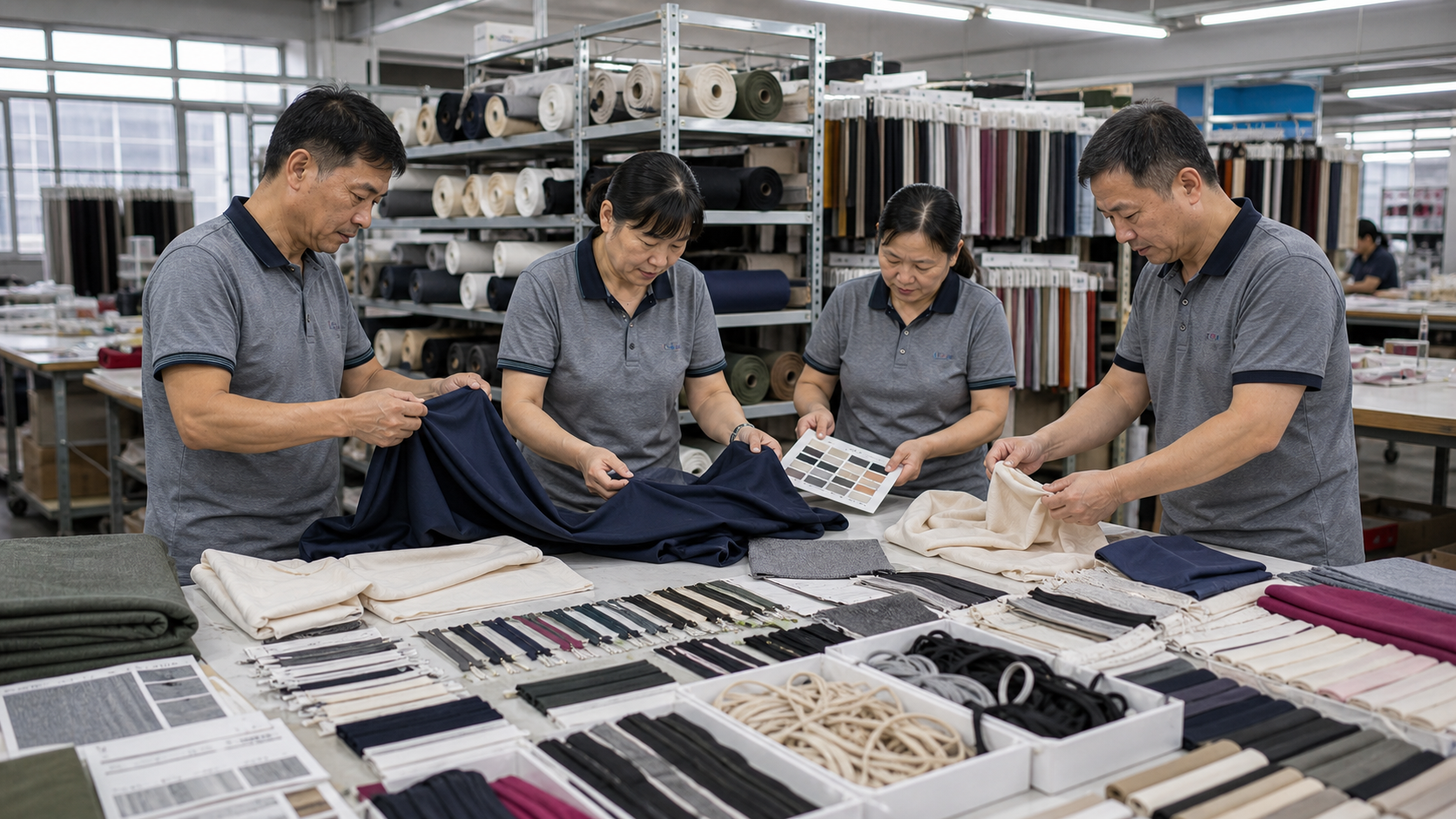
What should moisture management fabrics for activewear actually prove?
A fabric brief can say moisture wicking, quick dry, cooling, and sweat masking in one line, but these phrases describe different questions. Wicking concerns how liquid moves across or through a textile. Drying concerns how moisture leaves a fabric under stated conditions. Cooling may refer to a brief touch sensation, an evaporative response, or a particular technology. Sweat masking concerns how visible a damp area looks. One label cannot answer all four questions.
That distinction matters because a buyer may be solving a visual problem while a supplier responds with a drying claim, or a product team may want a cooler handfeel while the candidate swatch is being judged for liquid transfer. Before comparing fabrics, state the garment, wearer, activity, target concern, and evidence that would change the decision. The purpose is not to collect the most technical labels. It is to decide which property matters in the garment and what the sample still needs to prove.
What does moisture wicking describe?
Wicking describes liquid transport along a textile surface or through a structure. It is not the same as the material absorbing less water, the garment drying faster, or the wearer feeling cooler. A fabric can move liquid away from one location while still holding moisture elsewhere. A knit's yarns, stitch structure, face and back, finishing, thickness, and garment construction all affect what the wearer and observer experience.
Ask which side of the material is intended to receive moisture and where it is intended to move. A supplier response should identify the actual candidate construction and the method or observation supporting the statement. If the activity places pressure on one panel, or a second layer sits against it, test the combination that the wearer will encounter. A swatch result cannot automatically represent a lined short, a close-fitting bra, a bonded panel, or an entire garment.
For a technical comparison, AATCC lists methods such as TM195 for liquid moisture-management properties, TM197 and TM213 for vertical wicking, and TM198 for horizontal wicking. These methods address different observations. Ask the laboratory or supplier which method, specimen side, conditioning, result fields, and product version are relevant to the question; do not treat the name of a method as a passing result. AATCC's current test-method list provides method titles, while the actual method and acceptance criteria must be agreed for the project.
How is quick drying different from wicking?
Quick drying concerns moisture loss over time under a defined test or use condition. It does not by itself explain where liquid first travelled or how a garment looked while wet. A light fabric may dry quickly in one controlled set-up, yet the assembled garment may feel clingy during a particular movement. Another fabric may spread liquid broadly but take longer to lose it. Product decisions need both the relevant property and the intended garment context.
AATCC TM201 is titled Drying Rate of Fabrics: Heated Plate Method. AATCC describes the method as measuring drying rate after a prescribed volume of water is applied while the specimen contacts a heated plate set at 37 °C. The method is not a universal simulation of every workout, room, wind condition, garment layer, or wash routine. If a supplier shares a test, preserve its report date, material code, construction, specimen face, conditioning and test method with the result. The AATCC TM201 summary helps define the method's scope.
A visual drying comparison can support an early choice when all samples are tested side by side under the same stated conditions. It should be called an observation, not a standardized performance test. Record the liquid amount, start time, room conditions, sample dimensions, hanging or flat position, and observation intervals. If the purpose is to compare fabric choices for a specific garment, make the decision rule clear before looking at results. Otherwise, the team can unconsciously prefer the sample that looks best in a different light or at a later time.
What does cooling mean in an activewear brief?
Cooling is not one material property. A cool-to-touch sensation at first contact, evaporative comfort, air movement through an open structure, and a branded cooling technology can create different experiences and require different evidence. A short-lived initial sensation should not be written as continuous temperature reduction. A breathable construction should not be described as a guaranteed cooling outcome. Ask the supplier to explain what feature is being discussed and what the buyer can verify on the intended article.
Some suppliers market named approaches. For example, FREEZETECH describes a print-on cooling treatment that responds when moisture from perspiration contacts the printed area, with wind identified as another part of the experience. The brand also says results depend on the conditions of use and are not guaranteed. S.Café describes ICE-CAFÉ as a yarn/fabric route with a cool-to-touch effect. COOLMAX describes products with moisture-management functions, and its CloakFX page separately discusses visual sweat masking. These are supplier descriptions of their own technology; they do not show that inPACE currently sources or uses those materials. A buyer must confirm the actual material code, supply route, construction and sample availability for a project. See the FREEZETECH technology overview, S.Café technology overview and COOLMAX CloakFX product information.
When a cooling claim matters commercially, request the claim wording, the named technology or material, and the substantiation permitted for the finished product. Ask whether the claim applies to a yarn, a fabric, a finish, a printed zone or a garment test. Then ask what happens after the intended wash or care routine, whether the sample uses the same shade and construction, and who approves the consumer-facing wording. A technology page is background information; the proposed production fabric and garment still need project-specific confirmation.
What does sweat masking solve, and what does it leave unresolved?
Sweat masking addresses visible contrast when an area becomes damp. It does not stop perspiration, remove moisture, prove faster drying, or establish a cooler body temperature. The visual effect may depend on colour, surface, construction, lighting and the amount and location of moisture. A fabric that reduces the appearance of a damp mark may still feel wet. Conversely, a fabric that moves liquid may show a strong tonal change on a particular colour.
COOLMAX's CloakFX information describes an optical masking effect while maintaining moisture movement. That supplier-level description offers a useful vocabulary for buyers: visual appearance and liquid transport can be different design goals. It is not a result for every shade, knit, garment or brand application. Ask which specific fibre or fabric version is involved and whether the proposed swatch is available in the target colour. If a logo, mesh insert, lining or seam crosses the area, include those details in the review.
For a simple visual screen, cut samples from the same colour lot or documented colour reference, label the face and back, and photograph dry and damp states in the same position. Keep the camera distance, lighting, background, wetting pattern and image exposure stable. Use an unaltered reference image for internal comparison. State that the photograph records appearance only. If the buyer needs colourfastness to perspiration, that is a separate question: AATCC TM15 addresses the fastness of colored textiles to acid perspiration, including colour change and transfer evaluation. It does not measure sweat masking. AATCC's TM15 summary describes that scope.
Which concern should a buyer prioritize by garment role?
Start with the wearer's job and the garment's construction. A studio instructor may need an all-day top that is presentable after repeated demonstrations; a gym staff shirt may need a stable branded appearance across shifts; a court top may be reviewed for high-movement use; a two-layer short may need the liner and shell considered together. These examples establish questions, not a universal material recommendation. Ask what the product must do and which observation matters enough to select, revise or reject a candidate.
| Garment or use | Likely first question | Useful early evidence | What the evidence does not prove |
|---|---|---|---|
| Staff polo or training top | Is the damp appearance acceptable in target shades? | Same-colour dry and damp visual comparison; seam and logo review | Drying rate, health benefit or all-day comfort |
| Close-fit studio top | Does the fabric stay acceptable across stretch and recovery? | Intended-size sample, stretch direction, coverage and recovery review | Support level or performance across all sizes |
| Two-layer training short | How do shell, liner and waistband interact? | Separate material records plus an assembled sample | That one layer's result predicts the other |
| Lightweight outer layer | Does the fabric suit airflow, handfeel and the intended layering? | Construction, weight, movement and wash observations | Water resistance or wind protection without evidence |
| Club or team uniform | Can material appearance and branding remain coordinated? | Colour, logo-area and care-route sample review | Colour consistency across future lots |
Do not choose a fabric by activity label alone. Two buyers may both say gym training and have different priorities: one wants a stable printed graphic, another wants an inconspicuous damp appearance, and a third is managing a close-fitting fit with stretch recovery. The garment, use, shade and panel arrangement make the request specific. If the project changes the fit or construction as well as the material, move from existing-style selection to a factory development conversation rather than assuming one swap is production-ready.
How should a brand compare candidate fabrics fairly?
First identify each candidate. Give it a supplier code or temporary project ID, composition record if available, construction, weight or GSM if documented, colour reference, sample date and intended garment role. Do not turn a colour swatch or generic fibre description into a fabric specification. If a supplier cannot yet provide a code or composition, mark the field as pending and keep the material out of any confirmed product claim.
Next make the comparison set answer one decision. If the question concerns wet appearance, compare the same colour family and similar surface under a controlled visual set-up. If it concerns drying, agree on a method or a labelled internal observation. If it concerns handfeel, record the panel location, condition and reviewers. If it concerns stretch recovery, identify direction, extension, recovery interval and the garment component. Changing several factors at once makes it difficult to know why the samples differed.
Use an evidence scale with plain labels: supplier document, laboratory result, visual observation, wearer feedback, or open question. These are not interchangeable. A manufacturer data sheet can identify a property claimed for a particular material; a lab report can record a test under stated conditions; a photograph can record appearance; a wearer comment can express comfort in one context. None should quietly stand in for another.
| Evidence type | Record with the result | Suitable use | Limitation to state |
|---|---|---|---|
| Supplier data sheet | Issuer, date, material code, construction and named property | Confirm what the supplier says about an identified material | Not an independent test or garment approval |
| Laboratory report | Lab, method, specimen, conditioning, date and result | Compare a specified property under the stated method | Does not establish every use, colour or construction |
| Controlled internal observation | Setup, sample IDs, conditions, reviewer and photographs | Screen candidates and formulate the next sample question | Not a certified or standardized result |
| Wearer feedback | Garment version, fit, activity, duration and question | Understand experience in a defined use | Small or informal feedback is not a universal claim |
| Open question | Missing item, owner and due decision | Keep uncertainty visible in the brief | Must not be rewritten as an approved feature |
What should a sample review include?
A swatch can answer a material question, but the product sample can reveal interactions. Stretch changes appearance and panel dimensions. A lining can alter moisture contact. Stitching creates seams and local thickness. A print or embroidery process can cover part of a surface. A mesh insert changes coverage and visual contrast. A branded garment therefore needs review as an assembly, not only as a collection of individual claims.
Keep the sample linked to a version of the brief. Identify the garment code, sample date, size, fabric code or pending placeholder, colour, construction, logo method and wash instructions. Write the intended use and the question the sample must answer. Record observations as observed, requested change, responsible owner and next approval. A note such as looks cool is too vague to guide a revision; a note such as compare initial touch after conditioning against the current reference is more actionable, provided the project defines the method and decision owner.
For an initial fabric screen, the buyer may compare swatches. For a fit, coverage, seam or branding question, request a garment sample using the proposed materials and construction. When those decisions overlap, a swatch alone is not sufficient. The fabric-selection guide covers the broader composition, knit, weight, stretch, colour and evidence decisions that should be recorded before sampling. The activewear wash-sample brief helps keep a wash question tied to an identified version and observation plan.
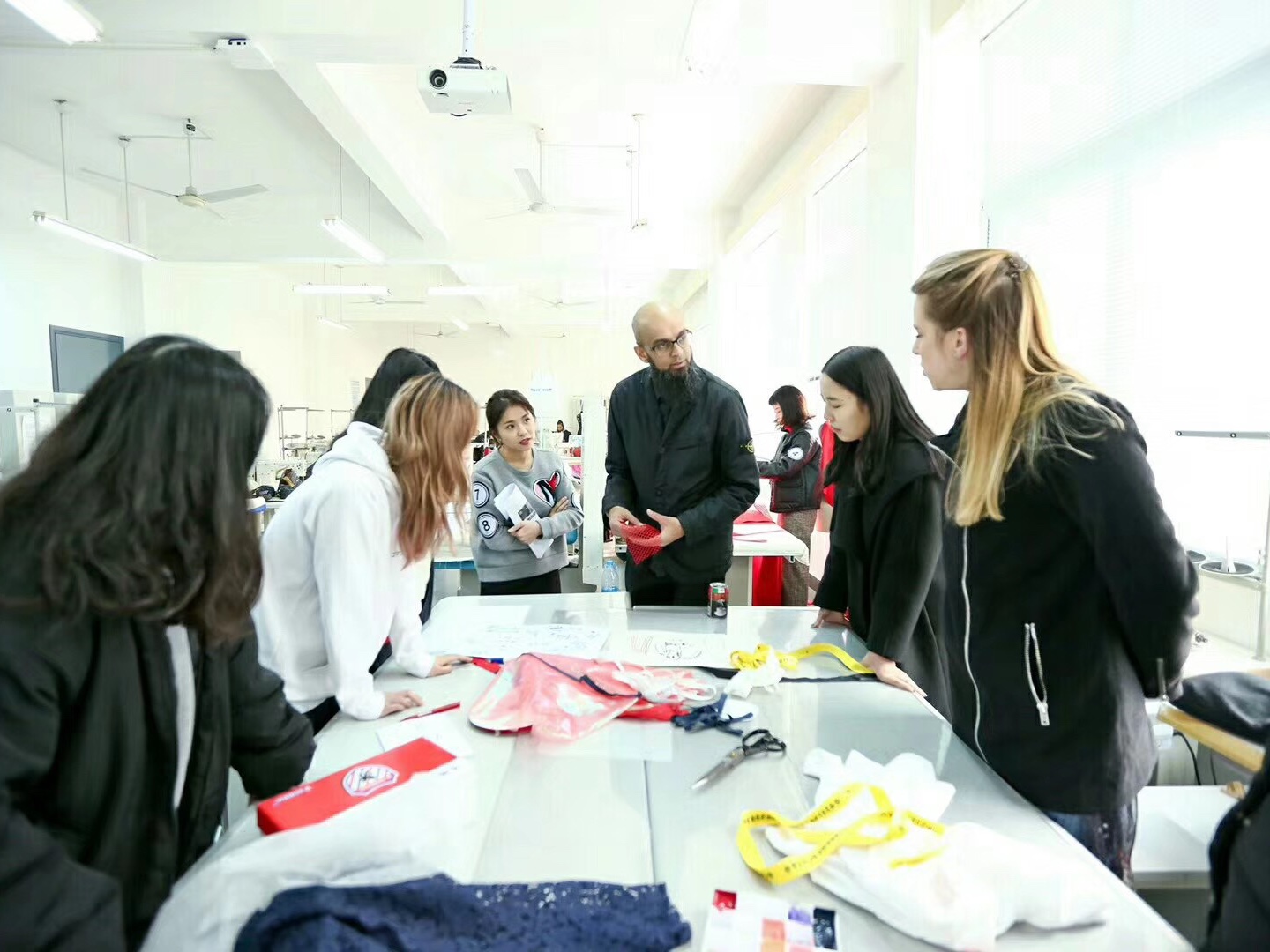
The image shows a material-review setting. It is a process reference, not evidence that a pictured fabric has a particular moisture, cooling, drying or sweat-masking result.
How do colour and surface affect the comparison?
Colour is part of the performance brief whenever a buyer cares about damp appearance, coverage or brand presentation. A light shade, heathered surface, textured knit and deep solid may create different visual contrast when wet. A phone photograph can exaggerate or hide a difference through exposure, white balance and display settings. Ask whether the team is reviewing an initial screen or an approved colour decision, and use the right level of evidence for that decision.
Separate the target colour from the fabric's function. If two candidates are different shades, a visual damp comparison cannot isolate the material construction. If the same fabric is offered in different colours, the buyer still needs evidence for the selected shade and production route. Record light source, viewing distance, dry reference, damp application and recovery period. When a garment panel stretches on the body, compare it in a relevant worn state as well as flat if the issue concerns coverage or contrast.
Mesh, rib, brushed surfaces and open structures may change the way a damp area appears. They can also change how a logo, seam or lining looks across a join. For visual colour and mesh issues, the activewear colour-and-fabric guide provides a related comparison framework. Keep a visual observation separate from colourfastness, opacity, drying or moisture-management test results.
What happens when branding is added?
A function claim can become harder to interpret after branding. A heat transfer, print, embroidery, label, seam or lining may occupy the area the buyer wants to evaluate. The brand should identify the proposed artwork and location before the sample is reviewed. Ask whether the intended method changes the surface, handfeel, airflow, appearance or stretch question. Do not assume that a fabric-level claim automatically applies across a decorated garment.
If the project uses an existing style, first confirm what details are actually available for that style and which material and colour options are current. If the required fabric, panel layout, fit or function changes, define the work through custom activewear development. That route allows the buyer and manufacturer to discuss a specific brief, sample plan and production handover. A new material requirement should not be hidden inside a logo-only request.
The product-reference cards below help buyers describe garment roles. They do not confirm an available fabric, production option or test result. For example, a polo can help frame a staff-top discussion, while a training set can make shell and liner questions visible. Use the code and image to start a conversation, then confirm the current garment, materials and scope directly.
What must be confirmed before a fabric claim reaches a product page?
The buyer should retain the evidence for the exact material and finished product. At minimum, identify the fiber or fabric composition, relevant component, supplier or source record, claim wording, test or observation method, reviewed version, colourway and care conditions. If the evidence covers only the fiber, do not expand it into a claim about the fabric or garment. If it covers only a swatch, do not say that the full garment was tested.
If a material is described as recycled, bio-based or otherwise preferred, composition and chain-of-custody questions are separate from moisture behavior. This guide focuses on moisture-management decisions; it does not establish environmental certification or supply. Product teams should keep environmental documentation and performance evidence attached to the same approved version without treating one as proof of the other.
Before a consumer-facing statement is approved, name the person responsible for confirming technical support and the person responsible for approving destination-market wording. Keep the source file, claims, artwork and garment version together. Ask a qualified testing or compliance partner when the product claim requires specialist review. An inPACE Blog cannot certify a material, approve a regulatory claim or substitute for a test report.
How can a buyer prepare a useful factory brief?
Keep the first brief concise enough for a factory to review while making the unresolved choices visible. Include the following items:
- Garment type, target wearer, activity and channel.
- Intended fabric role, body or panel location and layer relationships.
- Priority concern: liquid transport, drying, initial cooling sensation, sweat appearance, colour stability or another defined question.
- Target colour, surface, logo method and any lining or mesh arrangement.
- Existing sample, reference image, tech pack or approved garment version.
- Candidate material codes, supplier records and known specifications, with unknown fields marked pending.
- Test method or observation plan, conditioning, wash routine and acceptance decision owner.
- Sample size, wearer or movement context, comments owner and revision decision.
- Intended brand language and the evidence required to support it.
- Quantity direction, packing needs, destination and timing assumptions for the quotation discussion.
State the commercial context without implying a guaranteed route. The scope, material availability, quantity, branding and sample requirements can affect the proposal. A supplier should state assumptions where the brief is incomplete. The brand should decide which evidence is required before it approves the product or its public claims.
A practical record can stay blank until actual materials are selected:
| Field | Candidate A | Candidate B | Buyer decision |
|---|---|---|---|
| Material code and source | Pending | Pending | Confirm exact source |
| Composition and construction | Pending | Pending | Match to proposed garment component |
| Colour reference and lot | Pending | Pending | Select the colour to review |
| Moisture or drying evidence | Pending | Pending | Name method and decision threshold |
| Damp appearance | Pending | Pending | Record controlled photo observation |
| Branding and seam interaction | Pending | Pending | Review on assembled sample |
| Wash and care question | Pending | Pending | Agree conditions before comparison |
| Remaining uncertainty | Pending | Pending | Assign owner and next action |
This worksheet is intentionally unfilled. No inPACE candidate fabric number, lab result or matched damp/wash sample has been supplied for this article. It is a request template, not a record of a material trial or an approved inPACE fabric offering.
Which product direction should a buyer show the supplier?
The short-sleeve performance polo reference can start a conversation about a branded training or staff top. Confirm the actual fabric, colour options, fit, logo area and current configuration rather than assuming details from its photograph. For a separate product role, the YA-03 Run-Training Short Set can help identify shell and inner-layer questions. The two garments are references for briefing, not evidence that either uses a named cooling or moisture-management technology.
If the product requirement changes fabric, fit or construction, ask about a custom sample instead of forcing a catalogue selection. The factory team can review the intended garment and the evidence needed to make a decision, subject to the confirmed material route. A buyer can send the product brief to inPACE with the use case, target shade, unresolved moisture question, available supplier information and sample priorities.
The next action should be proportionate to the evidence. If the team has only a brand description, request material details. If it has identified swatches, define the controlled comparison. If it has a garment sample, review the assembled product and branding interactions. If a claim is commercially important, confirm what a suitable test or specialist review can establish. This sequence keeps a promising phrase from becoming an unsupported product promise.
How can the team hand an approved direction to production?
Once the product decision is ready, hand over the approved material identity with the garment specification, component map, colour reference, construction notes, branding files, care details, sample version and unresolved exclusions. If a panel uses a different fabric or finish, identify it by location. Keep the accepted test or observation attached to the version it supports, and tell production or quality reviewers what should be checked at the relevant stage.
The bulk handover should distinguish specification from aspiration. A mood board may show the intended feel; a controlled tech pack and approved sample identify the actual target. A supplier's generic technology sheet may describe a fiber family; the order record identifies the confirmed fabric and construction. If a substitution becomes necessary, route it through the named review owner instead of treating it as equivalent based only on a similar label.
This is why a moisture-management enquiry belongs in the broader development sequence. Start with the product and use, identify a candidate, decide what evidence is needed, sample the garment, record comments, confirm the version and then discuss production assumptions. A manufacturer can assess scope only after the relevant material and garment questions are clear. The buyer remains responsible for the final product claim and market-facing approval.
What to review
Questions designers, buyers, and brands should answer
Brand product teams, fitness operators, club buyers and sourcing teams comparing moisture-related material options for activewear tops, staff uniforms and training garments.
Separate liquid transport, drying, cooling sensation and visual sweat masking; each describes a different decision.
Compare an identified material in the target colour and garment construction, and state what a supplier sheet, lab report or visual observation can establish.
Record missing fabric codes, sample evidence, wash conditions and claim owners as open items rather than implying inPACE has tested or sourced a named technology.
Practical next step
Turn the research into a clearer product brief
Share the garment, target use and colour, moisture-related question, available material records and sample priorities so inPACE can review the appropriate custom-development route.
View the order processProduct directions
Explore relevant activewear products
Use these product pages as practical references for your brief, then confirm materials, fit, customization, and production details through sampling.
Short-Sleeve Performance Polo Reference
Use a staff-top direction to identify the target shade, logo area and moisture-management question, then confirm the current material and sample scope.
View product directionYA-03 Run-Training Short Set Reference
Use the layered garment direction to separate shell, inner-layer and waistband material questions before requesting a sample review.
View product directionCustom Activewear Development
Use factory-custom development when a new fabric, fit or construction requires a project-specific sample and evidence plan.
View product directionFAQ
Buyer questions
Is moisture-wicking the same as quick-dry?
No. Wicking describes liquid movement through or across a textile, while quick-dry describes moisture loss over time under stated conditions. They are related but separate properties. Ask which method, material version, specimen side and use context support each claim.
Does a cooling fabric keep the wearer cooler throughout exercise?
A cooling label alone does not establish a sustained temperature result. It may refer to an initial touch sensation, an evaporative or structure-based effect, or a named supplier technology. Confirm the exact material and evidence, and avoid turning a supplier description into an inPACE test claim.
Does sweat-masking fabric stop sweat from reaching the garment?
No. Sweat masking concerns the visible appearance of a damp area. It does not mean perspiration has stopped, that moisture has disappeared, or that the fabric dries faster. Compare appearance separately from liquid movement and drying.
Can a photo prove that a fabric dries quickly?
No. A photo can record appearance at a specific time under a particular setup. A drying comparison needs defined samples, moisture application, environmental conditions and observation times; a laboratory result needs the named method and report details.
Which test method should a brand request?
Choose a method to match the product question with the supplier or qualified lab. AATCC lists methods for liquid moisture management, wicking, drying and perspiration colorfastness. These methods do not answer the same question, so agree on the specimen and decision criteria before testing.
Can a fabric swatch approve a finished garment?
A swatch can help screen a material question, but it does not show every interaction among fit, stretch, lining, seams, mesh, logos and movement. Request an assembled sample when the decision depends on those relationships.
Does inPACE currently offer COOLMAX CloakFX, ICE-CAFÉ or FREEZETECH fabrics?
This article does not confirm current inPACE sourcing or availability for those named materials. They are examples of supplier-described approaches. A buyer should share the intended garment and ask inPACE to confirm the material route, source documentation and sample scope for the specific project.
What should be sent to an activewear factory first?
Send the garment reference, intended use, target colour, priority moisture question, identified candidate information, branding or lining details, sample objective and unresolved decisions. Mark missing fabric codes and test records as pending so nobody mistakes them for confirmed evidence.