
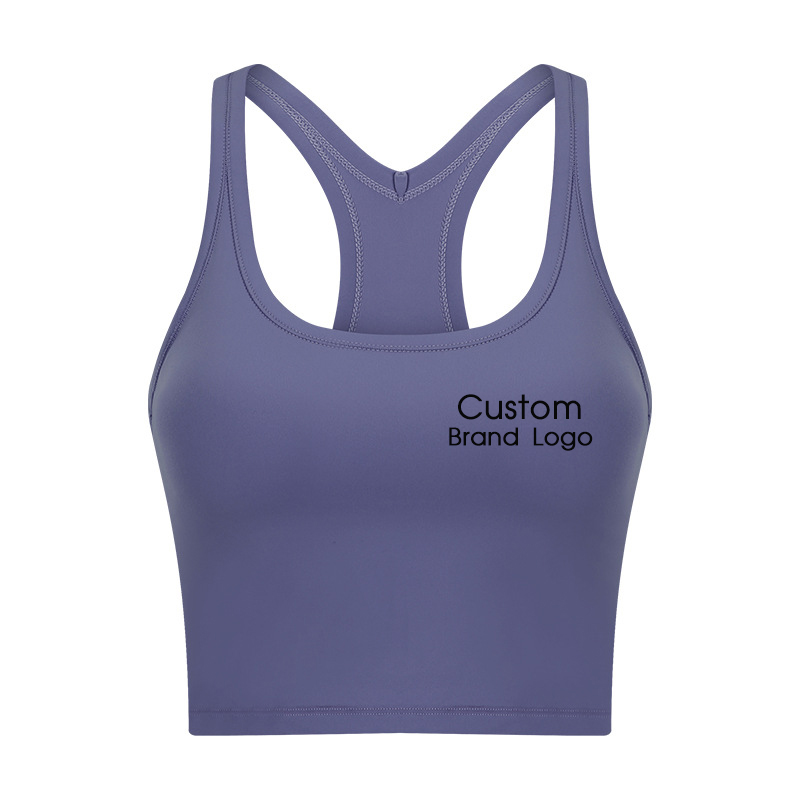
How should a brand plan lavender yoga wear?
Lavender yoga wear is most useful when a brand treats it as a product-system decision rather than a mood-board shade. The team should decide who the collection serves, which garments carry lavender, whether it is a core colour or a limited accent, what it sits beside, and which material, logo, label, and packing questions need physical confirmation. That turns a soft visual direction into a buyer brief a yoga wear supplier can actually review.
For a B2B programme, the next choice is the development route. A catalogue-informed private-label route can suit a selected yoga silhouette that mainly needs a controlled colour option, logo, labels, hangtags, and packing. Factory-custom development is more appropriate when the brief needs a new lavender tone, fabric, fit, lining, construction, panel relationship, feature, or sample purpose. Neither route means a product photo is a ready-made specification. The final material, colour, branding, size range, quantity, and commercial conditions remain subject to project confirmation.
The broader activewear design trends guide explains how colour and silhouette ideas become product roles and sample decisions. This lavender yoga wear guide focuses on a studio-facing use case: how to make a quiet colour feel intentional across a bra, short, tank, light layer, and branded presentation without treating every pale or purple reference as the same production colour.
Should lavender be a core yoga colour, an accent, or a capsule?
Lavender can create a calm visual entry point for yoga, Pilates, recovery-focused movement, and light athleisure. That observation does not make it automatically suitable for every product or customer. A brand should first state the job lavender has in the range. The same shade can work differently as a full matching set, a small trim signal, a lightweight layer, or a packaging element.
| Lavender role | What the collection communicates | Suitable product use | Buyer approval question |
|---|---|---|---|
| Core colour | A recognisable studio colour repeated across key styles | Coordinated bra, legging, short, tank, or core top | Can the chosen lavender remain consistent across the intended fabric, lining, elastic, and product types? |
| Supporting colour | A soft partner to a neutral or darker core | One matching set, a light layer, selected trim, or a seasonal extension | Which garments use lavender, and what colour remains the visual base for replenishment? |
| Accent | A limited signal with a clear purpose | Binding, strap detail, panel, small logo zone, label, hangtag, or packaging accent | Is the contrast sufficiently visible and compatible with the selected logo, trim, and garment surface? |
| Focused capsule | A small visual story tested before broad rollout | Yoga-and-Pilates group with one hero top, one bottom, and one light layer | What should the first sample prove about colour, fit, branding, and customer response? |
A core lavender direction can work when the brand has a clear customer and a compact range. It does not require every SKU to be purple. A useful studio collection may keep one neutral or deep repeat colour for broad use, then place lavender on a matching bra-and-bottom pair or a hero top. This gives the colour a visible role without making colour management more complex than the launch needs.
A supporting or accent role may be more suitable for a buyer who already has black, grey, navy, cream, or another established core. Lavender can then distinguish a seasonal set, collar binding, underband, pocket detail, logo treatment, or retail presentation. The important point is to name the role. “Use a calm purple everywhere” leaves the material, colour count, product hierarchy, and sample purpose unclear.
The Yoga Activewear Catalog can help a buyer identify a product family before a supplier evaluates a lavender programme. A catalog image is a reference for silhouette and use context, not proof of an available colour, fabric, logo method, stock, or production condition. The Lightweight Wind Jacket is useful when a lavender brief includes a light layer and the team needs to discuss colour proportion, packability, logo zone, and the relationship with a studio base layer.
Which colors should sit beside lavender yoga wear?
The most useful lavender palette is not necessarily the one with the most colours. A brand normally needs one stable base, one supporting colour, and one small detail direction. That structure helps the buyer explain where a shade belongs across garments, labels, online photography, and packaging. It also helps the factory distinguish a broad visual preference from a material-specific approval.
| Palette relationship | Collection use | What can change on the garment | What to confirm first |
|---|---|---|---|
| Lavender + charcoal or deep navy | A soft-to-deep studio contrast for layered pieces or a quiet logo | Dark components can make lavender look lighter or cooler by comparison | Which shade is the repeatable core and where should lavender be limited? |
| Lavender + cream or warm neutral | A gentle studio-to-street presentation for selected sets or outer layers | Light neutrals can change perceived coverage and the visibility of seams or labels | Does the proposed material and lining create the intended appearance on the actual silhouette? |
| Lavender + soft grey | A restrained programme with a lower-contrast brand feel | Grey depth can vary across body fabric, elastic, mesh, and trim | Are the approved grey and lavender references being reviewed on matching component types? |
| Lavender + a small darker-purple or tonal detail | A tonal colour story for a focused capsule | A similar hue can disappear on a textured, ribbed, or low-contrast surface | Does the logo, binding, or panel remain readable at the chosen scale? |
Colour language should not be mistaken for a standard. “Lavender,” “lilac,” “soft purple,” and “dusty violet” may help a design conversation, but the buyer needs a physical reference, a recognised colour standard, or a clearly labelled working swatch before a production decision can be confirmed. That is especially important when the program uses more than one fabric or when a logo, elastic, binding, lining, or printed detail must relate to the body colour.
The activewear colour approval guide is the useful adjacent resource when the team is ready to document how a colour should be reviewed on the garment. It helps separate a screen reference from a recorded material, trim, logo, and sample decision. A buyer can begin the conversation with an inspiration image, but should not treat it as blanket approval for every product, size, and fabric surface.
How do fabric and construction affect a lavender yoga set?
Lavender can read differently on a smooth active knit, a ribbed surface, a brushed handfeel, a mesh panel, lining, elastic, or a light outer layer. Stretch, coverage, texture, sheen, seam placement, and component colour can all alter the visible relationship. These are practical review points, not universal claims about how any material will perform.
For a close-fit yoga top or bra, a buyer may want to consider the body fabric, inner support or lining direction, elastic, neckline binding, armhole finish, and logo area together. For a short or legging, the conversation may include the waistband, seam placement, coverage, and the relationship between a solid body colour and any contrast panel. For a light jacket, the relevant details could be shell surface, zipper tape, pocket edge, lining, and how the layer sits over the rest of the capsule.
The Iyengar Cotton Yoga Short can help name a short silhouette and an intended product role in the brief. It should not be described as a lavender offer unless the project confirms a lavender route. The useful buyer request is specific: for example, “review this short role in a soft lavender body with a restrained tonal logo; confirm the fabric handfeel, waistband relationship, and packing presentation through a sample.”
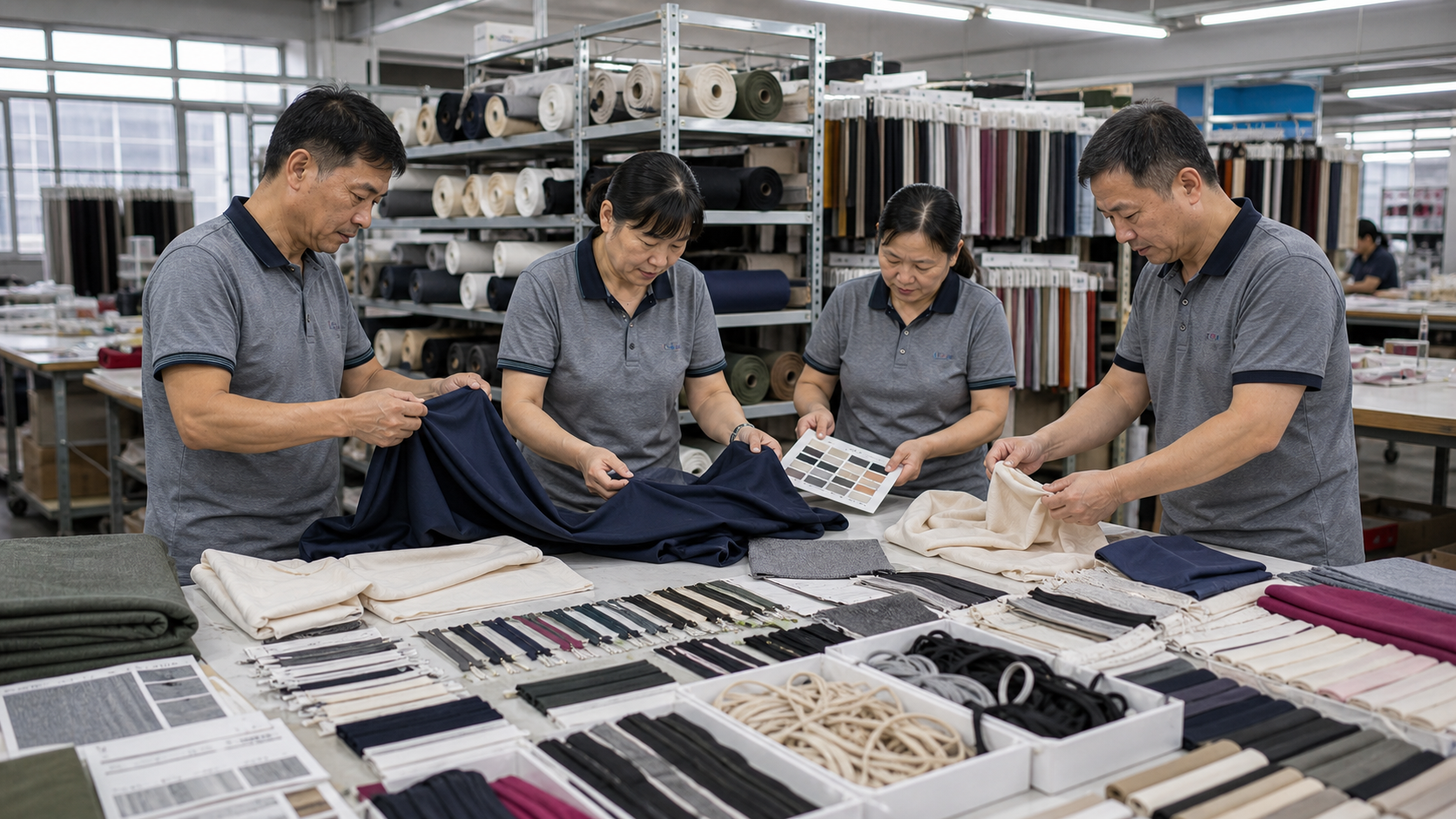
A fabric-room review connects a visual colour direction to the body material, lining, elastic, trims, logo application, and sample question. It is more useful than approving a screen colour alone because it makes the product and the decision boundary visible to everyone involved.
How should logo, labels, and packing support a lavender studio collection?
Brand presentation should support the lavender direction without turning every garment into a colour test. Start with the logo role: it may be tonal and restrained, a deeper contrast, a small placement on a bra or tank, or a mark held back for labels and packaging. The correct choice depends on the garment surface, logo method, logo scale, wear context, and how much of the collection needs to remain repeatable. A highly visible mark on a light layer may serve a different purpose from a quiet internal label on a close-fit studio top.
Labels, hangtags, bags, size stickers, barcode data, folding, and carton marks should be planned with the product rather than added after a colour sample is approved. A buyer may want a soft lavender hangtag accent while keeping the garment logo neutral, or may prefer a tonal label system across a small capsule. Those are presentation choices that can be recorded early. They do not establish a fixed logo application, material, packing method, or production condition until the applicable product and sample review confirm them.
For a private-label programme, make the relationship explicit in the brief: which item gets the visible logo, what colour it should use, whether labels and hangtags share the lavender direction, and which details need the first sample to show. If a logo, print, embroidery, or wash effect changes the surface or colour relationship, identify that as a sample question rather than assuming a colour swatch has approved the branded garment. This keeps the studio story coherent while giving production, QC, and receiving teams a usable record.
When is lavender yoga wear suitable for private label or factory custom development?
The colour direction does not decide the route by itself. The requested garment change does. A private-label discussion can be efficient where a selected silhouette already fits the collection and the buyer is primarily planning a controlled colour route with logo, labels, hangtags, barcode data, individual packing, and carton information. A factory-custom discussion is needed when lavender is connected to a changed garment, not just a chosen presentation.
| Buyer situation | Suitable first route | What to include in the brief | What remains conditional |
|---|---|---|---|
| Existing yoga style is close and branding is the main need | Private label / catalogue-informed review | Product reference, lavender direction, logo file, label copy, hangtag, packing, quantity context | Product route, material, colour availability, logo method, terms, and final packing |
| The collection needs a coordinated lavender colour pack | Product, colour, and sample discussion | Style-colour map, core and accent roles, supporting colours, size plan, and first sample objective | How the colours read on each intended material, component, fit, and brand detail |
| The buyer needs a new fit, fabric, lining, panel, feature, or construction | Factory custom development | Annotated references, product role, target use, fabric direction, size information, branding, and sample purpose | Pattern, material options, sample route, cost, MOQ, timing, and production scope |
Use the private-label activewear service when the programme is based on a selected product direction and needs branded presentation. Use the custom activewear development route when the clothing itself needs a new colour relationship, material, fit, construction, component, or controlled development plan. Both routes become easier to review when the buyer states what is confirmed, what is a preference, and what the first sample must prove.
What should a lavender yoga-wear sample prove?
An early sample should answer a focused question. It may be a colour check on a soft active knit, a review of how a lavender top pairs with a neutral bottom, a test of a tonal logo, a check of a light layer against a studio set, or a private-label presentation review. It does not automatically approve the colour across every material, garment, trim, size, or later reorder.
inPACE can support a complete sampling workflow that may include fabric and trim review, printing, embroidery, wash effects where relevant, construction, fit review, branding, and packing preparation. The exact work follows the product brief. As a usual planning guide, samples often take 5–10 days and production often takes 25–50 days after the applicable scope and approvals are confirmed. These are not fixed commitments; style complexity, fabric availability, colourways, logo and decoration methods, labels, packing, quantities, revisions, and production scheduling can change the applicable plan.
The general sample-charge guideline is 1.5–3 times the corresponding bulk unit quotation, depending on development and product scope. For one style, the stated refund schedule is 10% at 100 units, 30% at 300 units, 50% at 500 units, and 100% at 1,000 units. The buyer should confirm the quotation, style count, sample work, order conditions, and applicable refund arrangement in writing before approval.
The yoga wear manufacturer guide gives a broader supplier-selection context. Use it with a colour-specific brief so the team can distinguish a soft colour preference from the material, fit, branding, and manufacturing evidence needed before a production route is agreed.
Lavender yoga wear buyer checklist
Before discussing lavender yoga wear wholesale, private label, or factory custom development, prepare a concise product brief:
- Identify the target customer, activity context, channel, and reason the lavender direction belongs in the collection.
- State whether lavender is a core colour, supporting colour, accent, or limited test capsule.
- Choose the product roles: bra, tank, legging, short, light layer, or another named silhouette.
- Attach a physical reference, colour standard, or labelled working swatch; distinguish it from an unapproved screen image.
- Show the relationship with any deep, neutral, grey, cream, or tonal supporting colours.
- Name where lavender appears: body fabric, lining, elastic, binding, mesh, panel, logo, label, hangtag, or packaging.
- Record the fabric surface and handfeel direction without assuming an exact material from a reference image.
- State the logo treatment, placement, and desired contrast level.
- Include labels, care information, hangtags, barcode data, folding, bags, and carton requirements when private-label presentation is part of the plan.
- Share preliminary sizes, colour allocation, and quantity context so the supplier can understand the programme rather than one image.
- Separate a selected catalogue silhouette from any new fit, construction, material, or colour-development requirement.
- Define the first sample question, decision owner, and approval boundary.
This checklist gives a yoga clothing manufacturer enough context to recommend a suitable starting path without inventing fixed material, price, MOQ, timing, inventory, or performance claims.
Turn a lavender direction into a usable studio brief
Lavender yoga wear can create a calm, recognisable studio signal when the colour has a defined role and the team checks it on the proposed garment system. Start with the customer and product roles, assign a clear core-and-accent hierarchy, and separate branded presentation from changes that need factory development. Then use a sample to answer the specific colour, material, fit, logo, or packaging question before expanding the capsule.
To discuss a lavender yoga wear programme with inPACE Sports, send the selected product roles, a lavender reference, supporting colours, material and handfeel direction, logo and label needs, packing requirements, size and quantity context, and the exact decision the first sample should support. Send a yoga product brief to confirm whether the next step is a catalogue-informed private-label route or a factory-custom development discussion.
What to review
Questions designers, buyers, and brands should answer
Yoga, Pilates, studio, and activewear buyers deciding how a lavender colour direction should work across garments, private-label presentation, samples, and a factory-development route.
Give lavender a named job as a core colour, supporting colour, accent, or focused capsule before choosing products.
Review its relationship with neutrals, darker bases, material surfaces, components, logo method, labels, and packing on the proposed garments.
Separate a catalogue-informed private-label request from changes that need a new material, fit, construction, colour-development, or sample plan.
Practical next step
Turn the research into a clearer product brief
Send the yoga product roles, lavender and supporting-colour references, material direction, branding and packing needs, quantity context, and the first sample question.
View the order processProduct directions
Explore relevant activewear products
Use these product pages as practical references for your brief, then confirm materials, fit, customization, and production details through sampling.
Yoga Activewear Catalog
Use studio-ready silhouettes to decide which bra, tank, short, bottom, or layer should carry lavender and which products should keep the core colour role.
View product directionLightweight Wind Jacket
Use this light-layer reference to discuss a lavender outer piece, logo zone, trim relationship, packing needs, and how it sits above a studio base layer.
View product directionIyengar Cotton Yoga Short
Use this short reference to name the silhouette, fabric and waistband questions, lavender body or accent placement, and evidence the first sample should provide.
View product directionFAQ
Buyer questions
Should lavender yoga wear be a core colour or a limited capsule?
Choose the role from the customer and range plan. A core colour needs consistency across selected garments and components, while a capsule can test one hero top, bottom, or layer before wider use. In either case, review lavender on the intended fabric, fit, logo, and brand details rather than approving a screen reference alone.
Which colours work with lavender yoga wear?
Deep navy or charcoal, soft grey, cream or warm neutrals, and restrained tonal details can create different studio colour systems. The buyer should state which colour is core, which is secondary, and where lavender appears. Confirm the relationship on the actual fabric, trim, logo, and garment construction.
Can a brand order lavender yoga wear wholesale with its own logo and packaging?
A catalogue-informed private-label discussion can be appropriate when the selected silhouette fits the project and the main needs are a confirmed colour route, logo, labels, hangtags, packing, and quantity context. Actual products, materials, colours, logo methods, and commercial conditions require project-specific confirmation.
When does lavender yoga wear need factory custom development?
Use factory-custom development when the brief needs a new fit, fabric, lining, panel, construction, colour relationship, feature, or controlled sample plan. The buyer should supply product roles, annotated references, colour hierarchy, fabric direction, size information, branding requirements, and the first sample question.
How long do lavender yoga-wear samples and production take?
As a usual planning guide, samples often take 5–10 days and production often takes 25–50 days after scope and approvals are confirmed. Timing depends on style complexity, material availability, colourways, decoration, labels, packing, quantities, revisions, and production scheduling, so it must be confirmed for the project.
How does inPACE handle sample fees for one lavender yoga-wear style?
The general guideline is a sample charge of 1.5–3 times the corresponding bulk unit quotation, depending on the product and development scope. For one style, the stated refund schedule is 10% at 100 units, 30% at 300 units, 50% at 500 units, and 100% at 1,000 units. Confirm the quotation and applicable order conditions in writing.