
What should an international activewear manufacturing brief decide first?
Decide whether the same physical garment can serve the intended launches, and identify what must differ. A country name alone does not answer that question. The customer group, activity, selling channel, fit expectations, product information and receiving arrangement give the factory something concrete to review. Start with those decisions before asking for one price covering every destination.
This guide follows the factory custom manufacturing route: a project in which fit, fabric, construction or another garment feature needs development. If an existing garment is suitable and only branding or packing changes, the scope may be lighter. Record that distinction rather than sending a custom development request for every overseas sale. The custom activewear development page provides the relevant starting point for a garment that needs product work.
A useful brief has two levels. The master file describes the garment that everyone is discussing. A market schedule is a short attachment listing approved differences for a named destination and channel. It should point back to the master, not silently replace it. This arrangement makes a practical question visible: does the proposed difference change the garment, the information attached to it, or only the way an order is packed?
How is this brief different from a tech pack or quotation request?
Think of the international brief as the project map. It tells the team which product version belongs to each launch and who can approve the differences. A tech pack holds the garment specification, while a quotation request describes the commercial scope. Link both to the map using clear file names and revision numbers. Avoid copying their full contents into a third document that will quickly become inconsistent.
Use the activewear tech pack checklist for detailed garment instructions. In the international brief, identify the applicable tech pack and explain exceptions. For example, a shared legging design might have a proposed shorter inseam for a defined customer group. That proposal needs a separate fit decision; translating the size label does not implement it. Until reviewed, show the alternate version as open.
The quotation should identify which versions, quantities and packing arrangements it covers. When a market schedule changes, ask whether the quoted assumptions still apply. A price attached to the original shared garment should not be treated as confirmation of a later construction change. Keep the supplier's response with the changed schedule so the buyer can see both the product consequence and the commercial consequence.
Which market and channel details are useful to a manufacturer?
Name the first intended destination and the actual selling route: a brand website, a distributor, a studio shop or a club order, for example. Then describe what that route changes in the product handover. A distributor may provide its own receiving instructions; a brand selling separate tops and bottoms may need a different unit identity from a programme sold as matched sets. These are project conditions to collect, not rules to infer from a channel label.
Separate confirmed launches from possible expansion. If a second destination is exploratory, mark it accordingly and state what information is missing. Otherwise the supplier may try to resolve a speculative requirement during the first sample, while the buyer assumes it will be considered later. A visible priority helps both sides choose which question needs an answer now.
Write the customer description in observable terms. State the intended activity, coverage, layering, size range and fit preference, supported by the brand's own research or reference garments. Do not translate a nationality into a body shape or assume that every customer in a country wears the same way. Where the team has no evidence yet, describe a hypothesis for sample review and name the person responsible for testing it.
What belongs in the master file, and what belongs in a market schedule?
Use the following division to expose differences before approving samples. It is a suggested working structure; adapt it to the actual products and order rather than treating every row as a universal requirement.
| Decision | Shared master record | Destination or channel schedule | Question before release |
|---|---|---|---|
| Garment identity | Style code and current technical file | Applicable version and any separate variant code | Is this the same physical garment? |
| Fit and size range | Base fit, measurement method and approved size work | Proposed local size names or a distinct fit variant | Is the difference just a label, or a pattern change? |
| Fabric and components | Material references and panel locations | Any proposed substitution or special review condition | Which earlier sample evidence still applies? |
| Colour and artwork | Approved references, placements and file versions | Destination-specific artwork or colour allocation | Has the actual combination been reviewed? |
| Product information | Verified source data and responsible owner | Approved wording, language and placement file | Who checked the content for this destination? |
| Unit and set identity | Stable product and component codes | Channel SKU, barcode mapping and set configuration | Can receiving staff identify each sellable unit? |
| Packing | Agreed common folding and protection direction | Pack mix, carton marks and receiving instructions | Which differences need a packing sample? |
| Release status | Approved product evidence and unresolved issues | Named launch approval and remaining conditions | What exactly is authorised to proceed? |
Avoid placing the same editable instruction in both levels. If a fabric is common to all variants, the schedule should refer to the master material reference. If one variant needs another material, record the exception explicitly and review its effect on fit, appearance and construction. A blank cell is ambiguous; use a clear entry such as “same as master V3” or “decision pending” instead.
How should fit expectations travel across markets?
Begin with a physical fit reference and a defined wearer group. Name the sample size, the points to inspect and the movements relevant to the garment. For leggings, a buyer might review waistband position, rise and leg length. For a top, the team might examine arm movement, neckline coverage and the relationship to another layer. These are useful instructions because someone can observe and discuss them.
Keep consumer size names separate from garment measurements. A letter or number used on a sales page is an identifier, not evidence that two garments fit alike. If the brand proposes different size labels across channels, create a mapping to the actual approved garment size. If measurements change, create a product variant and review it as such. The fit model brief guide can help define the person, sample and observations used in that review.
Record who participates in the fit decision and whose needs the sample represents. One wearer can provide specific observations, but that does not establish suitability for every intended customer or every size. Keep the limits of the review visible. An unresolved fit question should lead to a named next sample or additional review, rather than an unsupported statement that the product is ready for an entire market.
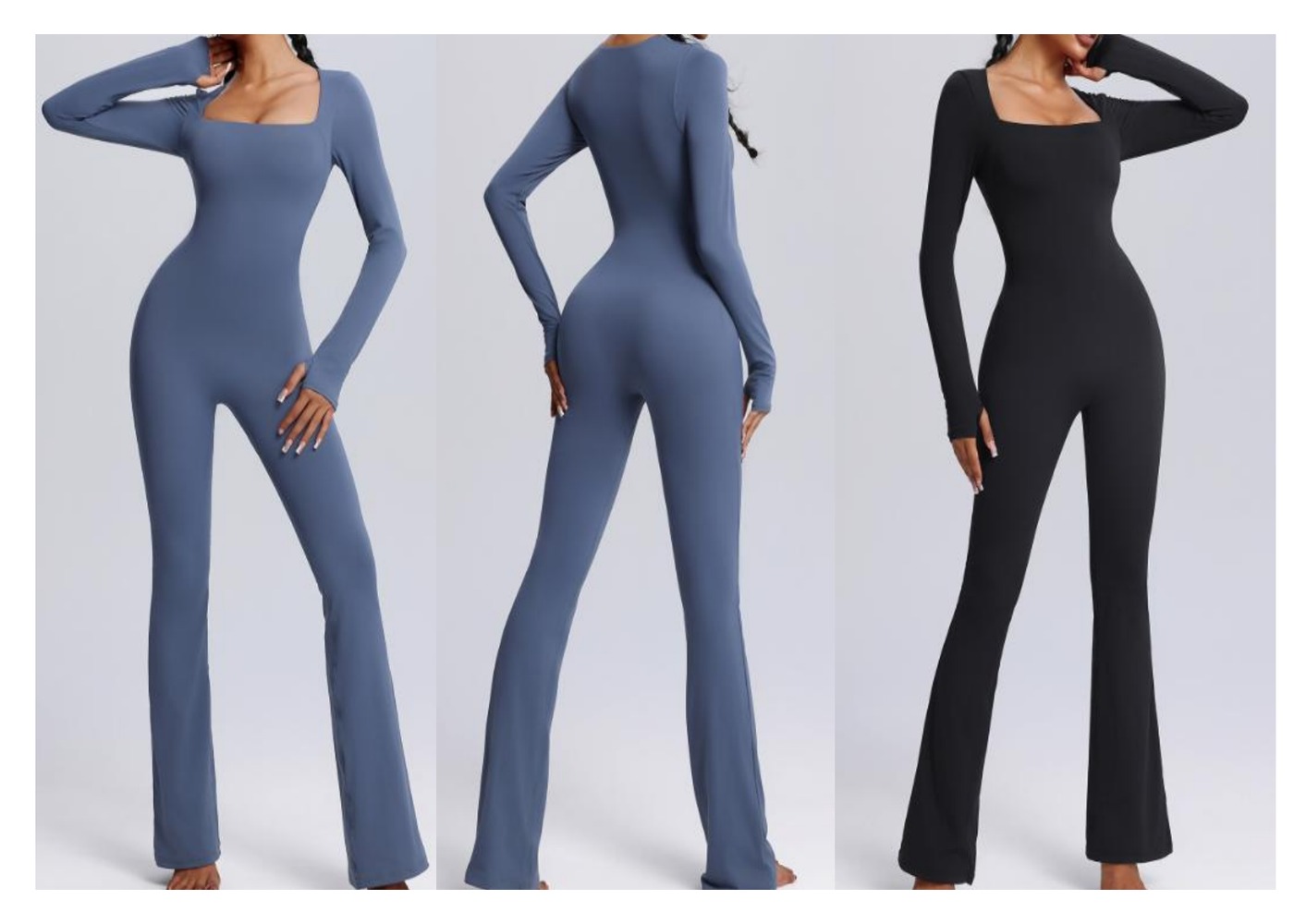
The pictured silhouettes help locate questions about neckline, sleeves and leg shape. They do not establish a measurement chart, material specification or approved fit for a destination. Mark the particular feature that matters to the brief, then connect it to the relevant sample observation.
Which fabric decisions can be shared, and which need separate evidence?
A shared fibre description is not enough to establish a shared material specification. Identify the actual material reference, the garment panels it serves and the swatch or sample used for review. Where lining, elastic or contrast panels matter, include them in the same discussion. This lets the team distinguish a change in written description from a change in the garment itself.
Describe the intended use conditions without making automatic performance promises. A buyer can ask to review coverage during a particular movement, handfeel against the skin, or the garment's appearance after an agreed care procedure. The brief should identify the evidence needed and who will assess it. A fabric name, photograph or statement about the destination's climate does not by itself settle those questions.
If a second launch proposes a substitute fabric, ask which decisions must be reopened. Fit, seam appearance, print application and colour relationship may need another look on the proposed combination. The fabric and trim service is a useful place to organise these references. Keep the accepted material identity in the master and the proposed substitution in the schedule until the relevant review is complete.
Who should own product information, translations and claims?
Assign a brand-side owner for destination product information and identify the specialist review needed for that project. This article does not provide a jurisdiction-specific label template. The brief should record who confirms the applicable requirements, who supplies approved wording and who checks the factory's physical execution. Those responsibilities are different, even when one person coordinates the conversation.
Give each language file a version and connect it to its source content. When a source statement changes, identify the affected translations rather than assuming an earlier approval still covers them. Keep uncertain wording out of the released artwork. If the brand wants a performance, environmental or other product claim, record the supporting evidence and approval responsibility before using it on a label or sales page.
Review content and execution separately. A readable photograph can show placement and print quality without proving that the wording is correct for the intended sale. Conversely, approved text can still be placed on the wrong size or product. The release record should show both checks. Product information should follow the exact variant, material and approved file; it should not float between destinations as an unlabelled attachment.
How should labels and packaging connect to each selling channel?
Create a stable relationship between the physical garment, the sellable unit and the receiving record. If a top and legging are sold together in one channel and separately in another, name both configurations. Ask the buyer's commercial or operations team to provide the actual identifiers and mapping. The factory needs clear instructions for which garment, label and pack belong together.
Collect receiving requirements from the named recipient, with an owner and a current reference. A statement such as “standard e-commerce packing” leaves the supplier to guess which standard the buyer means. Record the proposed unit protection, fold, identification, grouping and carton allocation, then identify what needs a physical example or receiving-team confirmation. The activewear packaging checklist develops those details beyond the international brief.
Keep sample purpose explicit. A fit sample can be useful before final retail artwork is available, provided temporary labels are identified as temporary. A later packing review should use the intended product identity and current files. Do not approve a packing configuration by looking only at an attractive bag; check that the unit inside, its identifier and the order allocation all agree.
How can one example reveal the differences without multiplying documents?
Consider an illustrative project with one training legging design and three proposed launches. This is a planning example, not an inPACE customer case. The brand wants a website launch, a studio retail order and a distributor order. It initially expects all three to use the same garment, but has not yet checked the fit and receiving assumptions.
The website team proposes a shorter length. Put that request in the schedule as a possible physical variant and arrange fit review before merging it into the master. The studio wants tops and leggings paired for display. Check whether that means a single sellable set or simply merchandising two separate items together; the answer changes packing identity. The distributor supplies receiving instructions. Attach the current file and name the person who will resolve any unclear carton allocation.
These requests should not all become three complete tech packs. Retain the common garment specification, create a separate variant only where the product actually changes, and use the schedules for order presentation and receiving differences. If the shorter length is later rejected, record the decision and remove it from the active quotation scope. The example illustrates why a market name is less useful than a precise description of what changes.
Which samples should resolve the cross-market differences?
Start with the decision that could change the most downstream work. If the common fit is unresolved, approving destination artwork first may create files that need revision after the garment changes. If the garment is already accepted and the only open issue is unit identification, another generic fit sample may add little. Choose evidence according to the unresolved question rather than requesting every sample type automatically.
For each proposed sample, write a short purpose statement: what is being evaluated, which version it represents, which markets it could inform and what it cannot approve. An accepted common garment sample may support several launches, while a new material or length variant needs its own relevant evidence. Use the activewear sample plan to organise that sequence and record dependencies.
Send comments back against the sample identifier and a visible location. Replace “the international fit is wrong” with an observation about the actual garment and the intended result. The sample feedback guide provides a more detailed structure for that exchange. When a comment affects more than one schedule, name all affected launches so a local correction does not leave the shared specification inconsistent.
What must be resolved before a brief becomes a production instruction?
A development brief can contain open questions; a production release needs a clear account of what is approved to proceed. Use distinct statuses such as proposed, under review, approved and superseded. Avoid a single green status for the entire international programme when one destination still has unresolved artwork or fit work. Record approval at the level where the difference exists.
Before release, compare the current garment file, accepted samples, artwork, order quantities and packing schedules. Ask the factory to identify conflicting instructions and confirm the agreed scope. The manufacturing overview gives context for this handover, but a general service description cannot approve an individual order. Keep the actual release decision and any remaining conditions in the project record.
If the buyer wants to proceed with one destination while another remains open, ask the supplier to review whether the work can be separated and what the consequence would be. Do not assume that a shared fabric, component or production arrangement can be split without affecting the plan. Confirm commercial terms against the released scope; the brief itself does not promise a price, quantity minimum or delivery date.
What should the buyer prepare before sending the international brief?
Use this checklist to find missing decisions before the first factory review. An honest open item is more useful than a completed-looking field based on a guess.
- Name the garment, intended wearer and activity, with a stable style code and current reference files.
- State the factory custom route and identify the fit, material or construction work requested.
- List confirmed destinations and selling channels separately from possible future launches.
- Assign one master garment specification and show which version each schedule references.
- Describe each proposed difference as a physical product change, information change or packing change.
- Identify the fit reference, sample size, review participants and unresolved size-mapping questions.
- Link materials, trims, colour and artwork to the exact garment or variant they describe.
- Name the owner who confirms destination information and approves each language file.
- Provide channel identifiers, set definitions and receiving instructions from the responsible buyer team.
- Give each sample a decision purpose, applicable variants and limits on what it can approve.
- Record who can release each launch and how changes reach the quotation, technical file and packing schedule.
- Ask the supplier to identify missing information, feasibility questions and assumptions before confirming the next step.
Keep the first message readable. Lead with the garment and the most consequential unresolved difference, then attach the controlled files. The factory should be able to tell which decision the buyer wants help with before opening a folder of references.
How can inPACE Sports review an international development brief?
Bring one coherent product direction and the destination differences already known. inPACE can use that brief to discuss the garment development scope, material questions, sample purpose and production handover. A useful opening request describes the decision to resolve, rather than asking for an undefined product that will suit every market. The development workflow helps place that request in the broader sample-to-order process.
If the project is ready for a factory discussion, send your international activewear manufacturing brief with the target destinations and channels, current garment reference, fit and fabric direction, information owner, packing questions and proposed sample priorities. Mark what is shared, what differs and what remains undecided. That gives the next conversation a concrete outcome: agree which evidence is needed before any launch version is released.
Product directions
Explore relevant activewear products
Use these product pages as practical references for your brief, then confirm materials, fit, customization, and production details through sampling.
Custom Activewear Development
Define the shared garment and identify which market-specific changes need fit, material or construction development.
View product directionActivewear Performance
Select a garment reference and mark what remains common across launches and what needs a separate sample decision.
View product directionYoga and Activewear
Compare silhouettes for your intended wearer and activity, then document the fit and coverage questions for development.
View product directionFAQ
Buyer questions
Can one activewear manufacturing brief cover several countries?
Yes, when it clearly separates the common garment specification from destination and channel differences. Use a master file for shared product decisions and schedules for exceptions. If a difference changes fit, fabric or construction, identify a physical variant and review the relevant sample evidence before treating it as part of the approved range.
Does every destination need a separate tech pack?
Not necessarily. A destination with the same physical garment may only need a schedule for approved information, identifiers and packing. A genuinely different product needs an identifiable specification. Keep shared instructions in one controlled place and make exceptions explicit so separate files do not accidentally describe conflicting versions of the same garment.
Should a brand choose fit from the target country's size labels?
No. Define fit through the intended wearer group, measurements, physical references and sample review. Size labels are identifiers and need a clear mapping to the approved garment. A change to the garment's dimensions is a product decision, even if it begins as a request to adapt a size name for another channel.
Who approves translated labels and destination product information?
The brand should name the responsible information owner and arrange the appropriate destination review. The factory can check execution against approved files, but a placement or print-quality check is not the same as approving the wording. Keep the source content, translation version and physical sample identity connected throughout the approval record.
Can one approved sample support every international launch?
Only within the scope it actually represents. Record the garment version, materials, size, purpose and review limits. Shared product evidence may inform several launches, while a changed length, material, artwork application or packing arrangement may require additional evidence. Ask which earlier approvals remain relevant instead of extending one sample's approval automatically.
What if a destination or selling channel changes after sampling?
Record the change in the relevant schedule and review its effect on the garment, product information, identifiers, packing and commercial assumptions. Name the decisions that must be reopened and the people who approve them. Keep the earlier version as history while making the current instruction clear to everyone handling the order.
What should an international brand send in its first enquiry to inPACE?
Send the product reference, custom development needs, intended destinations and channels, fit and material direction, quantity direction, information owner and open packing questions. Explain what the first sample should resolve. A concise master brief with clearly labelled differences gives the supplier a practical basis for reviewing feasibility and proposing the next discussion.