
What should a gym hoodie manufacturer review before sampling?
A gym hoodie manufacturer should review the garment role, hood, zip or pullover route, pocket, sleeve and thumbhole direction, hem, fabric, layering, branding, sample purpose, QC points, packing, and approval record as one system. A close catalogue reference can support a branding discussion. A different hood, fit, construction, material, or feature needs factory-custom development and a physical sample before production details are confirmed.
A hoodie often moves across several customer situations: a warm-up layer, staff uniform, studio retail item, travel layer, outer gym piece, or a hero item in a training collection. That is why “hoodie” is not a sufficient factory brief. A hood that is comfortable over a ponytail may have different volume and neckline questions than a close training hood. A zip can change the front panel, pocket placement, facing, top-stop review, and logo area. A thumbhole changes cuff construction and sleeve length. A kangaroo pocket changes front bulk and the lower hem relationship. These choices should be named before a sample is asked to answer them.
The Gym Wear Manufacturer solution provides the right starting route when the buyer needs a new hoodie fit, structure, fabric, panel, colour, feature, or sample plan. A catalogue-informed route may be suitable when the silhouette and construction are already close and the work is mainly a logo, label, hangtag, packing, or limited colour direction. Neither route should treat an image as a complete pattern, material, size, artwork, quantity, or production instruction.
| Brief area | What a buyer can provide | Why it matters | What the first sample should show |
|---|---|---|---|
| Product role | Warm-up, commute, coach uniform, gym retail, travel, or another named use | The role changes the desired layering, pocket utility, hood volume, length, material, branding, and packing context | The garment worn in the named layer sequence and use situation |
| Hood and neckline | Hood shape, overlap or opening direction, neckline height, drawcord question, and reference | Hood, neck, front opening, seam, lining, and logo placement are connected construction decisions | Hood position and neckline relationship during the stated wear test |
| Front opening | Pullover, partial zip, full zip, placket, zipper direction, or an open factory recommendation | The opening affects front patterns, facings, pocket map, trim, top stops, labels, and decorative placement | Opening operation and the exact construction or trim question to review |
| Sleeve and cuff | Sleeve length, shoulder or raglan direction, cuff, thumbhole, and intended movement | Sleeve pattern, cuff finish, thumbhole, material recovery, and arm mobility must be reviewed together | Sleeve position, cuff and thumbhole observation in the stated base size |
| Pockets and hem | Kangaroo, seam, zip, hidden, or no pocket; hem, side split, rib, elastic, or drawcord direction | Pockets change front balance, bulk, seams, lining, packing, and logo zones | Pocket opening, capacity question, seam placement, and hem behaviour on the sample |
| Sample purpose | Development, fit, material, zip, decoration, pre-production, or another named purpose | One sample needs a clear decision to prove rather than an implied bulk approval | Reviewer, observation, requested revision, approval boundary, and next owner |
The table is deliberately a working brief, not a demand for a finished technical package. A line such as “review full-zip facing and hood overlap over a light base layer in the stated base size” gives the factory a factual question. A request for a “premium feel” alone does not identify which material, construction, trim, fit, or sample observation must change.
How should the hood and neckline be specified together?
The hood begins at the neckline. It cannot be approved as an isolated silhouette. The buyer should state whether the garment is expected to work as a true hooded layer, a high-neck zip layer, a pullover with casual volume, or a route still open for advice. Note the intended use, the relationship with a base layer, the amount of neck coverage being explored, whether the hood needs a lining or an unlined direction, and any drawcord, binding, elastic, or seam concerns. Then state what the sample must prove.
Hood volume affects the front opening and the way the garment sits at the shoulder. A larger hood may change the centre-back seam, neckline curve, facing, lining, and the visual balance of a front logo. A closer hood can raise different questions about the neck edge, zip guard, component contact, and layer beneath. The correct response is not to promise a universal hood shape. It is to connect the requested silhouette to an actual base size, fabric direction, construction route, and review observation.
The zip-front activewear layer reference can help a buyer point to a long-sleeve, front-opening, and hood-or-high-neck direction. The Hooded Thumbhole Training Set can help define a coordinated hood, sleeve, and lower-body relationship. They are reference pages, not a promise that a current product can be copied with a different fabric, measurement set, logo, labels, or construction. If the buyer needs a changed hoodie, the request should proceed through custom activewear development.
When is a zip a component decision rather than a styling detail?
A zip changes more than the centre front. It can affect the front-panel balance, facing width, neck guard, zipper tape visibility, pocket location, bottom opening, hem construction, top and bottom stops, artwork zone, and packing presentation. A buyer can start by stating whether the desired route is a full zip, quarter zip, half zip, placket, pullover, or one that needs factory recommendation. Then add the approximate opening length, collar or hood relationship, visible or concealed direction, logo relationship, and the sample question.
The trim should be tied to the actual garment, not chosen from an isolated photo. Record the material direction, front-facing or guard direction, any contrast or tonal intent, components that need review, and the likely care or packing context. The zipper and hardware brief is useful when the buyer needs to distinguish a visual preference from an engineering or sample-review question. It cannot establish the final component or construction before the product, materials, artwork, sample purpose, and factory route are confirmed.
For a pullover, the absence of a zip creates different decisions. The neck opening, hood overlap, pocket, hem, and layer beneath become more prominent. A pullover route should still identify whether the hood, neckline, front pocket, side seam, sleeve, rib, logo zone, label, and packing instructions are fixed or awaiting development input. Both a zip hoodie and a pullover should end with an approved sample record, not just a reference image.
How do pockets, hems, and thumbholes affect the hoodie pattern?
Pockets are useful only when their type and role are clear. A kangaroo pocket may change the front-panel balance and logo space. A side-seam pocket can change the side construction, entry angle, pocket bag, and grading. A zip pocket introduces a second component and placement question. A hidden pocket may need a different lining or seam route. The buyer should identify the intended use, the preferred entry direction, whether the pocket needs a specific observation, and whether the garment is expected to carry a chest, sleeve, back-neck, or front graphic.
The hem is connected to those decisions. A straight hem, rib hem, elasticated hem, side split, curved hem, drawcord route, or open direction can change the way the layer sits over a legging, short, or tee. It also affects the front and back length relationship, hem logo zone, material consumption, and fit comments. Rather than measuring from an online image, state the visual direction and the base size, then use the sample to establish what should be revised or approved.
Thumbholes need the same level of clarity. They are not merely a hole at the cuff. The sleeve length, cuff shape, thumbhole placement, fabric recovery, seam route, and wearer movement all matter. A buyer should say whether the thumbhole is a fixed feature, a preferred reference, or a point for factory advice. The sample can then review the exact garment version in the declared size and material. It should not be described as proving a universal fit or recovery result.
The raglan training-layer reference can help a buyer name a sleeve and shoulder direction before a hoodie is developed. Its product role, materials, construction, branding, and final fit may still be different. Use it to improve the brief, not to collapse different construction routes into one description.
What fabric and layering questions belong in a gym hoodie brief?
The buyer does not need to make unsupported material claims. Instead, identify the product role, expected season or environment, layer beneath, desired handfeel or surface direction, stretch requirement where relevant, and whether the selected fabric needs a lining, rib, mesh, facing, tape, or trim conversation. A heavy-looking outer layer and a light training zip top can use very different material and construction paths, even if both have hoods and pockets.
Material choice also interacts with the hood, zip, cuff, pocket, and hem. It can change how seams sit, how a zip area is supported, how a rib returns, how a pocket drapes, how a logo surface appears, and which samples need to be reviewed. The fabrics and trims resource is the place to keep fabric, lining, rib, tape, drawcord, zipper, label, artwork, and colour questions together. It does not replace the actual garment sample or justify blanket claims about warmth, breathability, waterproofing, recovery, or wear life.
Layering also benefits from a named use. A gym staff hoodie may need a clear relationship with a T-shirt or uniform beneath. A retail training hoodie may need to coordinate with a legging or short. A travel layer may need a different pocket and packing conversation. State the companion garment and the visual or movement question. That tells the factory whether the shoulder, hood, sleeve, hem, and fit should be reviewed as an outer layer, a close training layer, or a product direction to be developed.
Ask one practical pairing question before sampling: is the hoodie expected to be worn with a tee, sports bra, or compression base, and should the lower hem clear a waistband, cover it, or align with it? That decision affects body length, pocket location, rib depth, logo position, motion observations, and how the buyer records the size and layer used during review. It is a sample question, not a universal fit rule.

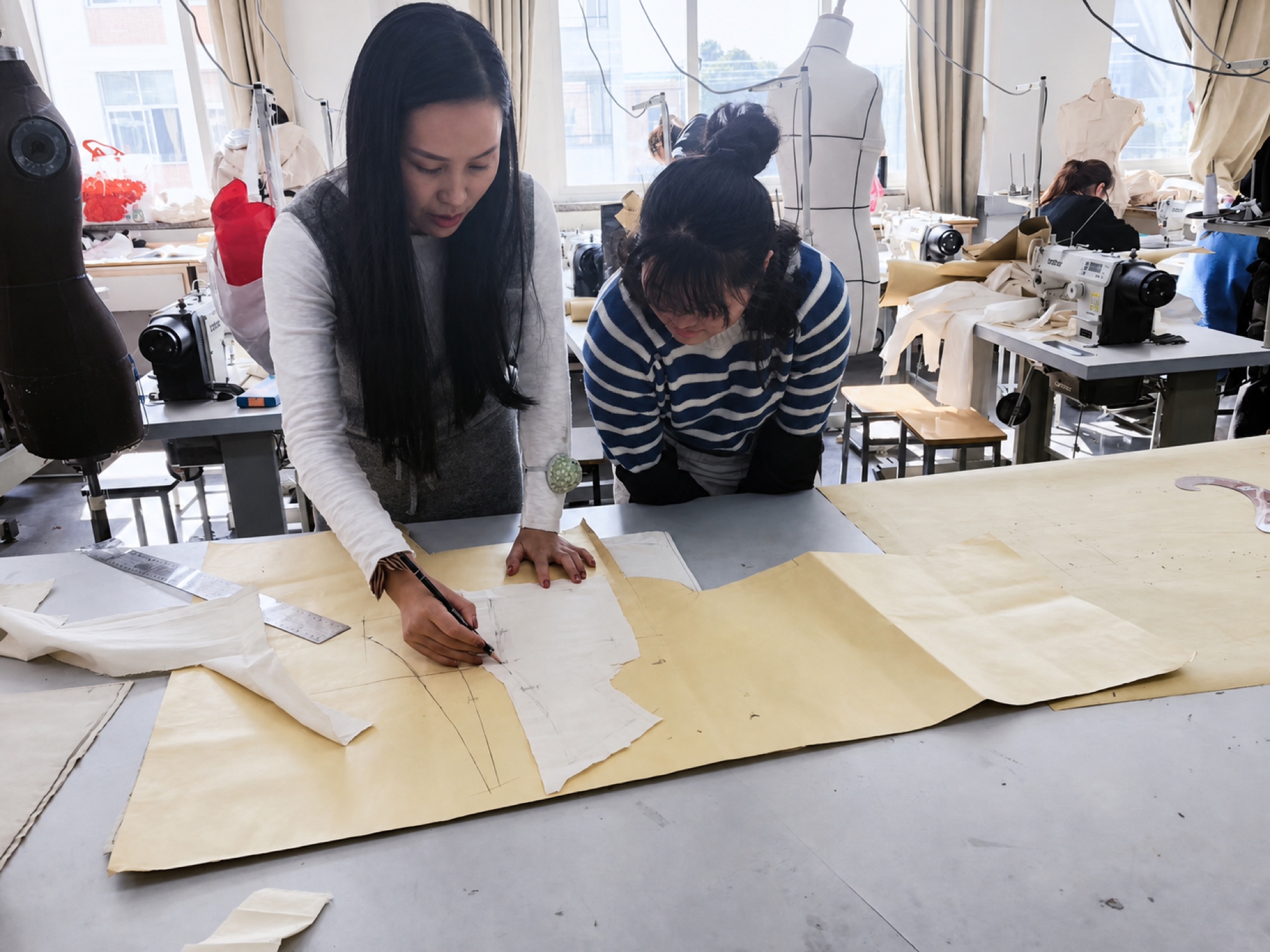
This factory-context image shows a sample-making setting. It is not proof that a particular hoodie fabric, zip, hood, pocket, or construction has been approved. The actual product record needs to connect the reviewed material, trim, pattern, sample version, comments, and approval scope.
What should the first hoodie sample prove?
Give the sample one defined job. A development sample can establish whether the factory understood the hood, neckline, front opening, pocket, sleeve, cuff, hem, panel, and construction direction. A fit sample can focus on the declared base size, shoulder, sleeve length, hood position, body length, and named movement or layering observation. A component sample can focus on a zip, pocket entry, drawcord, cuff, or thumbhole. A branding sample can focus on artwork scale, placement, labels, and packing context.
Each sample should retain a version name. The record should show the reference, confirmed and open decisions, material and trims, artwork, base size, reviewer, observations, requested change, approval boundary, and next owner. Acceptance of one observation does not automatically approve final materials, all grades, colours, logo methods, labels, packaging, quantity, QC checkpoints, or bulk-production scope. The activewear sample-plan guide is useful for separating those stages and preventing comments from different samples being combined.
For inPACE projects, sampling support can include printing, embroidery, or wash-effect discussion when they are relevant to the confirmed scope. General planning commonly allows about 5–10 days for samples and about 25–50 days for production after scope and approvals are confirmed. These are planning ranges, not fixed promises. Material availability, colour, components, construction, decoration, labels, packing, quantity direction, revisions, and factory scheduling can change the actual plan.
Samples are generally quoted at 1.5–3 times the related bulk unit quotation, subject to the specific product, material, construction, and scope. For one style, the stated sample-fee refund guide is 10% at 100 units, 30% at 300, 50% at 500, and 100% at 1,000. These figures are planning information rather than a standing price or unconditional term. The final agreement must confirm the applicable style, scope, quantity, order conditions, and approval route.
How can inPACE support a hoodie supplier or factory discussion?
The words supplier, manufacturer, and factory should describe the buyer's next decision rather than repeat the same claim. A supplier discussion can begin with a viable product direction and the inputs required for a quote. A manufacturer discussion turns a hoodie brief into a sample-ready product record. A factory discussion focuses on approved materials, pattern and construction notes, components, decoration, QC, packing, and production coordination. Naming the needed stage helps the buyer avoid treating a catalogue reference as if it were an approved production package.
inPACE can begin with a brief, reference, existing sample, sketch, or tech pack and discuss hoodie role, hood, neckline, zip or pullover route, pocket, sleeve, thumbhole, hem, material, fit, branding, sample purpose, QC points, and packing requirements. Where a product requires it, inPACE can coordinate a suitable route through multiple partner factories according to the confirmed style, materials, construction, decoration, quantity direction, and scope.
More than 30 years of garment-production experience provides manufacturing context for linking design and material review with sampling, production coordination, QC, packing, and repeat-order records. This is not an inPACE brand-age claim, capacity statement, or guarantee of price, lead time, certification, or performance. The buyer's approved sample and product record remain the boundary before bulk production is discussed.
What should QC and packing record after the hoodie is approved?
QC should begin with the specific hoodie version that was approved, not with a generic list detached from the brief. The product record can identify the approved material and colour direction, hood and neckline, zip or pullover construction, pocket type, sleeve, cuff or thumbhole, hem, measurements, artwork, labels, folding, poly bag, carton marks, quantity direction, and any carefully named attention point. It should also retain the approved sample reference, because a later change to a zip, fabric, colour, sleeve, panel, or artwork can create a different garment version.
For a zip hoodie, useful review points may include the centre-front alignment, opening direction, facing, guard, top and bottom stops, component position, pocket relationship, and artwork location. For a pullover, the record may focus on neckline opening, hood overlap, pocket shape, hem, side seam, cuff, and logo zone. These are examples of what a buyer and factory can review for the named product. They are not a guarantee that every hoodie requires the same checklist or will have the same result.
Packing also belongs in the product record. The buyer can identify the label, hangtag, barcode, folding direction, poly bag, size sticker, carton mark, destination, and receiving instructions that are known. If an item is meant to work as a coach uniform, studio retail layer, online range, or a coordinated training set, the packing record should say how the version and size information must stay linked. Adding branding and packing only after the sample has been reviewed can make it harder to tell which components were actually approved for the production run.
The order workflow offers a practical route from a buyer brief through sample review, production coordination, QC, packing, and export preparation. It is not a fixed sequence for every garment. It gives the buyer a place to separate confirmed approvals from questions that still depend on materials, components, construction, quantity, destination, or factory planning. The point is to make the next handover understandable before a later version is released.
For repeat orders, retain the approved hoodie version rather than relying on a product name alone. Record the material and colour used, hood and opening direction, component notes, pocket type, artwork version, label and packing instructions, size direction, and any change made after the original approval. That record helps a buyer ask a supplier or factory whether a later request remains the same product or needs a revised sample and approval route.
It also protects the buyer from carrying an earlier sample comment into a garment whose fabric, component, construction, colour, size direction, artwork, or packing has changed.
Which product directions can make the hoodie brief clearer?
Hooded Thumbhole Training Set
Use the Hooded Thumbhole Training Set to discuss a hood, sleeve, thumbhole, companion bottom, logo zone, and a coordinated training-layer role. It is a useful starting reference for a buyer. Final fabric, construction, fit, material, branding, labels, packing, and sample evidence must be confirmed for the actual project.
Zip-Front Activewear Layer
Use the zip-front layer reference to frame a front opening, long sleeve, collar or hood relationship, body length, and layering direction. It is not a substitute for confirming zipper components, facings, pocket map, measurements, colour, artwork, or sample approval.
Custom Activewear Development
Use custom activewear development when the buyer needs a changed hoodie, new hood or neckline, zip construction, pocket, cuff, thumbhole, hem, material, panel, fit, colour, or sample plan. The route gives the factory a clear product-development job instead of forcing a new garment into an existing catalogue description.
What should a buyer send before asking for a gym hoodie quote?
- Name the target customer, product role, channel, season or layer role, and companion garments.
- Share the closest reference, existing hoodie, sample, sketch, marked image, measurement sheet, or tech pack. State what must remain, change, or stay open for factory advice.
- Describe the hood, neckline, front opening, zip or pullover route, pocket, sleeve, cuff, thumbhole, hem, panel, logo zones, and fit direction.
- List known materials, lining, rib, tape, zipper or drawcord direction, labels, artwork, colour, packing, and destination information.
- Identify the base size, size-range direction, first-sample purpose, named layering or movement observation, reviewer, and decision owner.
- Keep confirmed, proposed, substituted, and unresolved decisions separate before asking for a later sample or bulk plan.
The manufacturing workflow shows how the approved product reference, materials, components, construction, artwork, labels, packing instructions, sample evidence, quantity direction, QC attention points, and version history can stay together. When the information is ready, send a gym hoodie development request that names the actual product decisions and the sample question.
Product directions
Explore relevant activewear products
Use these product pages as practical references for your brief, then confirm materials, fit, customization, and production details through sampling.
Hooded Thumbhole Training Set
Use this reference to discuss a hood, sleeve, thumbhole, companion bottom, logo zone, and the sample questions for a coordinated gym training layer.
View product directionZip-Front Activewear Layer
Use this product direction to define the front opening, long sleeve, hood or collar relationship, body length, and the component questions that need sample evidence.
View product directionCustom Activewear Development
Use the factory-custom route when the hoodie needs a changed hood, front opening, pocket, thumbhole, hem, fabric, fit, construction, colour, logo zone, or sample plan.
View product directionFAQ
Buyer questions
What should a gym hoodie manufacturer brief include?
Include the product role, reference, hood and neckline direction, zip or pullover route, pocket, sleeve, cuff, thumbhole, hem, fabric and trim direction, logo zones, base size, size-range direction, sample purpose, packing context, quantity direction, and open decisions. Mark what is confirmed, proposed, substituted, or awaiting review.
How should a buyer describe a hoodie hood and neckline?
State the intended layer role, hood volume or reference, neckline and opening direction, lining or drawcord question, base size, garment beneath, and the observation required from the sample. The hood, neckline, front opening, material, seams, and fit work together, so a photo should begin rather than finish the specification.
When should a gym hoodie use a full zip rather than a pullover route?
The route depends on product role, styling, layer sequence, hood and neckline direction, pocket map, fabric, construction, components, branding, and buyer preference. A full zip creates specific facing, guard, top-stop, and front-panel questions; a pullover changes neck opening, pocket, and hem questions. Confirm the direction through the project brief and sample.
Why do pockets and thumbholes need sample review?
Pockets affect front balance, seams, bulk, logo zones, lining, and packing. Thumbholes affect sleeve length, cuff construction, material recovery, seam route, and movement. A sample can assess the specific garment version in the stated size and material; it should not be treated as a universal fit or performance guarantee.
Can a catalogue hoodie become a private-label gym layer?
A close existing product direction can suit a project where silhouette, material direction, and construction are already appropriate and the main work is logo, labels, hangtags, packing, or limited colour direction. Artwork, components, labels, packing, quantities, materials, and approval needs still require project-specific confirmation.
How can inPACE support a gym hoodie project?
inPACE can begin with a brief, reference, sample, sketch, or tech pack and discuss hoodie role, hood, neckline, front opening, pocket, sleeve, cuff, thumbhole, hem, materials, fit, branding, sample evidence, QC, packing, and production coordination. It can coordinate a suitable route through partner factories subject to the confirmed product, materials, construction, decoration, quantity direction, and scope.
How long do gym hoodie samples and production normally take?
For inPACE projects, general planning commonly allows about 5–10 days for samples and about 25–50 days for production after scope and approvals are confirmed. These are planning ranges rather than fixed commitments. Materials, colours, components, construction, decoration, labels, packing, quantity direction, revisions, and factory scheduling can change the applicable plan.