
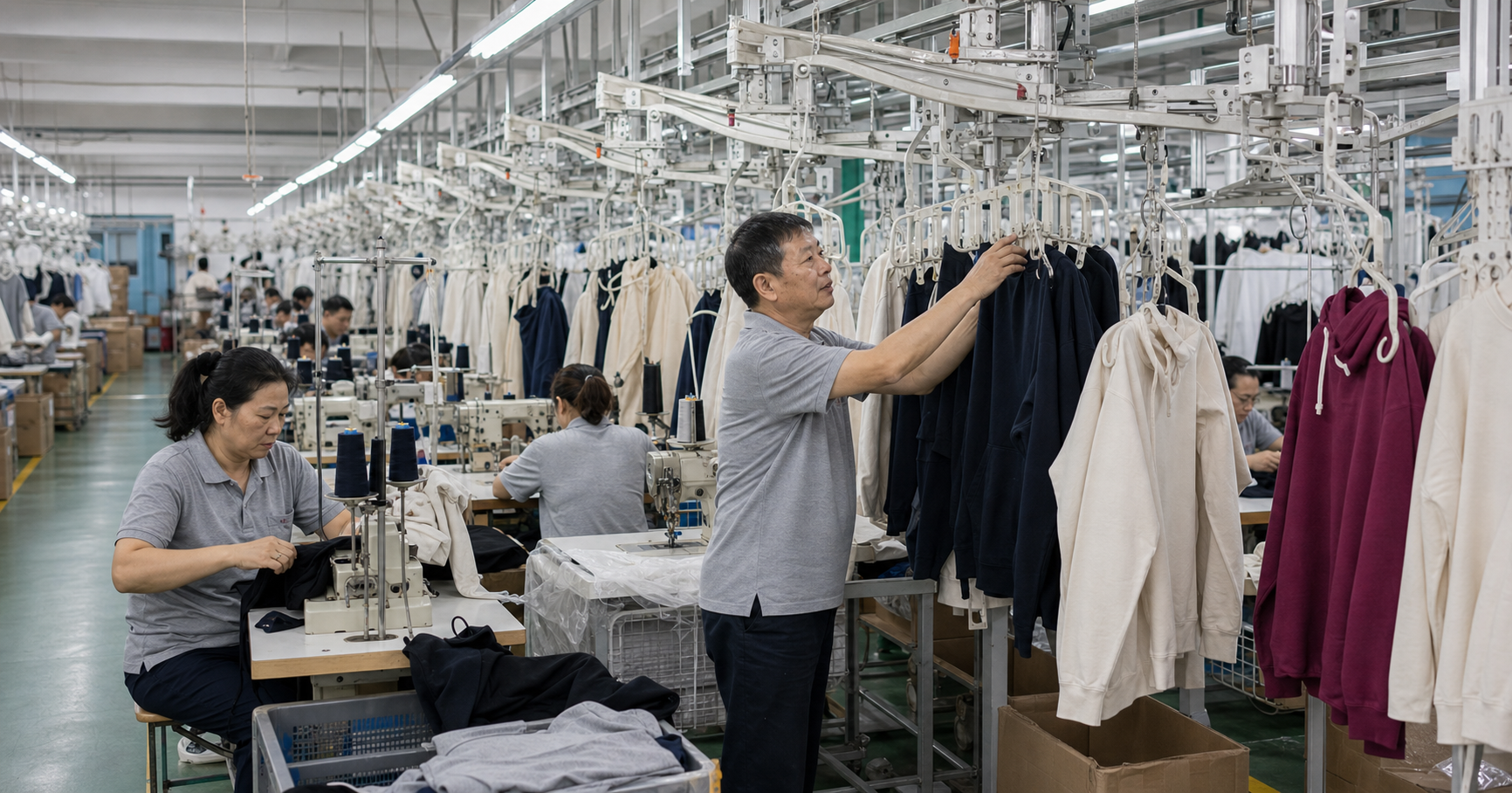
What should a gym compression wear factory review before sampling?
A gym compression wear factory should review the garment type, intended compression direction, body zones, fabric, panel map, seam route, measurements, grading, sample purpose, branding, QC points, packing, and approval boundary as one controlled brief. A product image can show a visual direction. It cannot prove a medical effect, a performance result, a finished material, a correct measurement set, or approval for bulk production.
The phrase “compression wear” is often used for very different products: a close training legging, a fitted base layer, a short, a long-sleeve top, a bra-led set, a recovery-oriented look, or a team layer. Each has different garment questions. A higher waistband changes the relationship between the body, the panel lines, the elastic route, and the top edge. A close long sleeve changes shoulder mobility, arm length, cuff construction, and logo zones. A legging changes rise, inseam, gusset, knee placement, and how seams cross movement areas. The factory needs the buyer to identify which of these decisions are fixed and which need development advice.
The Gym Wear Manufacturer solution is the appropriate path when the buyer needs a changed fit, fabric, panel layout, seam route, colour, feature, or sample plan. A catalogue reference can still make the discussion faster, but a reference remains a starting point. It does not turn a new compression garment into a light-custom project merely because the buyer has supplied a photo.
| Brief area | What the buyer can define | Why the factory needs it | What the first sample should answer |
|---|---|---|---|
| Garment role | Legging, short, top, base layer, bra-led set, team layer, or another named use | The role determines the fit, panel, seam, coverage, branding, and packing questions | Whether the garment supports the stated product role in the declared base size |
| Compression direction | A body-hugging fit, a firmer zone, an open question, or a reference to compare | “Compression” is not one measurable instruction without a product, material, pattern, and sample context | Whether the intended close-fit direction and movement observations are clear enough to revise or approve |
| Fabric and lining | Desired handfeel, stretch direction, surface, opacity discussion, lining, mesh, elastic, or trim question | Material changes how panels, seams, measurements, logo surfaces, and fit comments should be reviewed | Whether the selected material direction is suitable for the named garment version and sample purpose |
| Panel and seam map | Zone locations, contour direction, inseam, gusset, underarm, side seam, or decorative line reference | A line on a photograph may be a seam, binding, print, knit change, or visual shadow | Whether each visible zone has a construction purpose and a review point |
| Measurements and grading | Base size, size range, fit priorities, key body lengths, and unresolved points | Close-fit garments need a shared way to distinguish a measurement issue from a material or construction issue | Whether the declared base-size measurements and grading questions need revision before wider production planning |
| Sample purpose | Development, fit, fabric, construction, branding, pre-production, or another named review | A sample can only provide useful evidence when its decision purpose is named | Reviewer comments, approval boundary, unresolved risks, and next owner |
This table is a buyer tool, not a demand for a complete technical package. A statement such as “review a high-waist training legging in the declared base size with firm but not medical compression direction, curved side panel reference, and squat or lunge observations” gives a factory a usable starting question. A request for “maximum compression” does not say what garment, wearer, movement, material, construction, measurement, or evidence should be evaluated.
Why should a buyer define compression direction without making medical claims?
Compression is a design and fit direction before it is a claim. A buyer can describe whether the garment should feel close to the body, whether a waistband needs a stable direction, whether a particular zone needs more structure, or whether the brief is still open to material and pattern advice. The buyer should also name the intended activity, wearer profile, layer relationship, and movement observations. That language gives the product team something specific to sample without implying circulation, injury-prevention, therapeutic, endurance, or other medical or performance outcomes.
The desired feel is produced by several connected choices. Fabric weight alone is not an answer. Stretch direction, recovery, fibre blend, knit or weave construction, panel geometry, seam position, elastic, lining, garment circumference, rise, sleeve length, and grading all influence how a close-fitting garment is experienced. A smaller measurement is not automatically a better compression solution. It can simply move the issue to a different body zone, create an unstable seam, change coverage, or make the sample unrepresentative of the intended wearer.
The Zip-Neck Sculpt Set is useful as a reference when a buyer wants to discuss a close-fit training silhouette, front opening, panel balance, and companion bottom. The Hooded Thumbhole Training Set can help show how a close upper layer and bottom relate in a coordinated range. Neither product page certifies a compression level, material behaviour, medical purpose, measurement set, or construction for a new programme. If those variables must change, use custom activewear development to turn the buyer’s intent into a sample-ready brief.
Which fabric questions change a compression-wear factory decision?
Start with the garment and use situation. A buyer can describe whether the project is a gym legging for strength training, a base layer under another garment, a close top for studio movement, a short with an inner layer, or a coordinated set. Then state the desired handfeel, surface appearance, stretch direction, coverage question, lining or mesh requirement, logo surface, colour direction, and any reference material that should be reviewed. This is more reliable than treating “nylon-spandex,” “performance fabric,” or “high stretch” as a complete specification.
Fabric can change the practical effect of a panel map. A smooth surface may show a curved seam differently from a textured surface. A mesh insertion may need a different seam allowance, edge finish, lining relationship, or logo location. A fabric that works for a short sleeve may raise different questions at a high waistband, a cuff, a gusset, or an ankle opening. If a buyer wants the garment to remain opaque in a stated colour or movement, that is a sample observation to define and review, not a blanket material promise.
Use the fabrics and trims resource to keep fabric, elastic, mesh, lining, binding, labels, artwork, and component questions visible in the same discussion. It does not replace a swatch, a garment sample, or an approval record. The same principle applies to a product catalogue: the Yoga Activewear catalogue can provide a reference for close-fit silhouettes and companion pieces, but the actual compression garment requires its own material, fit, construction, and sample evidence.
How should panels and seams be connected to the wearer’s movement?
Panel lines are useful when they have a reason. A buyer may want a contour line to create a visual shape, a mesh panel for an identified area, a gusset for a legging, a side pocket, a front shaping line, an underarm panel, or a seam that avoids a particular logo zone. The factory needs to know whether the line is structural, decorative, a material transition, a print placement, a knit effect, or simply a visual reference. The answer affects the pattern, cutting, sewing sequence, seam type, sample purpose, QC points, and quotation assumptions.
For a legging, describe the rise, waistband height, front and back panel relationship, gusset question, side seam, inner leg, knee region, ankle opening, pocket or no-pocket direction, and logo zones. For a top, describe neckline, armhole, underarm, sleeve, cuff, hem, chest or back panels, and any opening or thumbhole. For a short, add inseam, liner, leg opening, pocket, and waistband questions. The goal is not to prescribe every construction detail prematurely. It is to identify which zones need factory input and which must be held to a specific reference.
The activewear seam-construction guide can help a buyer distinguish seam location, seam type, edge treatment, binding, and decorative lines before writing a sample comment. It should not be used to state that one seam route is universally superior. The right construction depends on the actual garment, material, panel geometry, movement, styling, and test question.
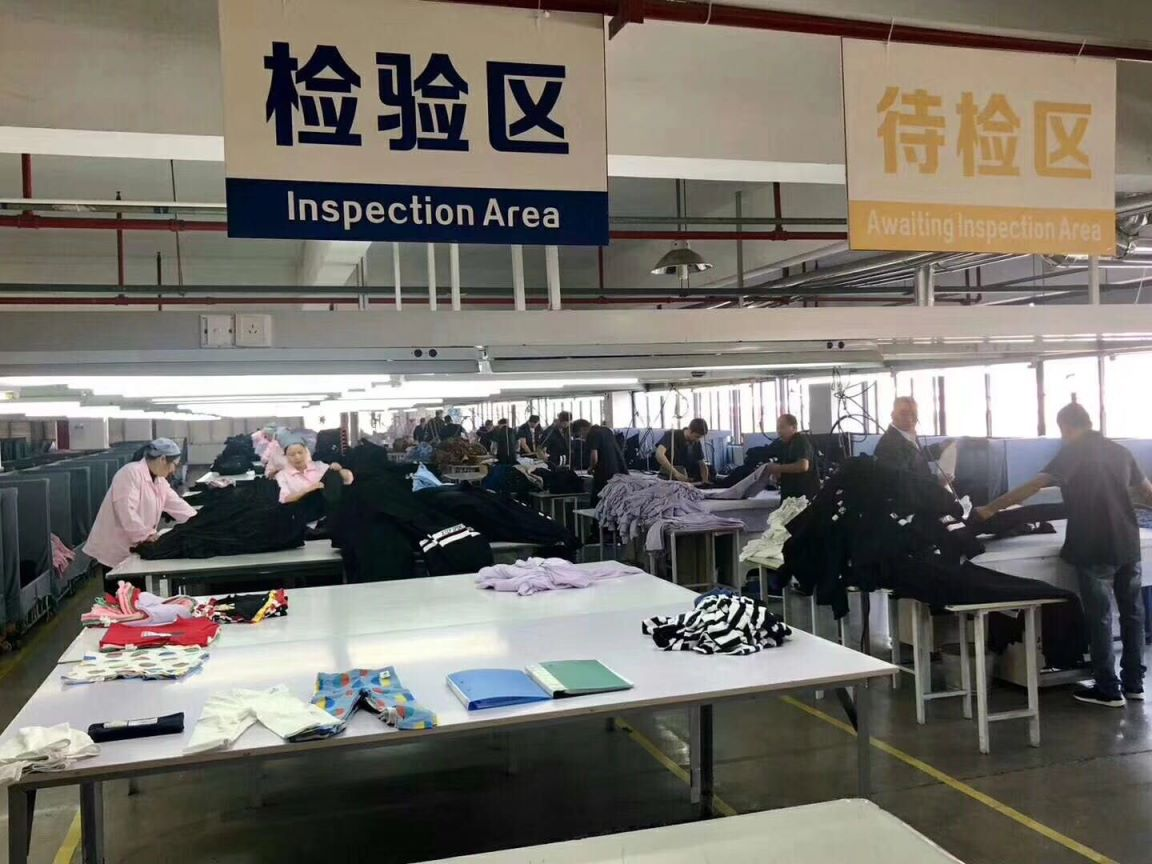
This is a factory-context image of an inspection area. It does not show an approved compression garment or prove any measurement, fabric, seam, performance, or QC result. Those facts must come from the approved product record and the project’s defined checks.
What measurements should a compression-wear sample make visible?
A close-fit garment needs a named base size and a way to record the fit questions the sample must answer. A buyer does not need to guess a full grading rule from a reference photo. They can provide a measurement chart, an existing sample, a tech pack, a body-size reference, marked images, or a list of priorities. The list might include waistband position, front and back rise, inseam, hip or thigh relationship, sleeve length, cuff opening, body length, neck opening, panel alignment, logo clearance, or coverage during a named movement.
Keep the meaning of each note clear. “Tighter at the waist” could mean a different waistband height, a changed elastic route, a smaller opening, a material question, a rise issue, or a comparison against an existing sample. “More support” can be equally unclear unless the garment, body zone, intended use, material, construction, and observation are recorded. A useful sample comment names the location, what was observed, which version was worn, the material and size, the requested change, and whether the issue must be reviewed again.
Grading belongs in the same record. The buyer can name the planned size range and which body zones are sensitive. The factory can then review whether the base sample supplies enough evidence, or whether a size-set or another sample is appropriate. Do not treat one approved base sample as proof that every size, colour, material, logo method, or construction version is settled. That distinction is particularly important in close-fit garments because a small pattern or material change can alter a neighbouring zone.
What should the first compression-wear sample prove?
Give the first sample one job. A development sample can test whether the factory understood the silhouette, body zones, material direction, panel map, seams, and logo zones. A fit sample can focus on the declared base size, named measurements, garment lengths, coverage question, and specific movement observations. A fabric sample can compare a material direction with the intended panel and seam route. A branding sample can review artwork scale, placement, label, and packing context. A pre-production sample can only be useful when the preceding decisions and its approval boundary are explicit.
The activewear sample-plan guide helps keep these purposes separate. If the buyer has asked a first sample to answer a fit question, do not quietly interpret it as final proof of all colours, grades, trims, logo methods, labels, packing, quantity, and production details. Record what was shown, what was approved, what needs revision, what remains open, and who owns the next decision.
For inPACE projects, sampling discussion can include printing, embroidery, or wash effects where they are relevant to the confirmed garment scope. General planning commonly allows about 5–10 days for samples and about 25–50 days for production after scope and approvals are confirmed. Those are planning ranges, not fixed commitments. Material availability, colour, construction, decoration, labels, packing, quantity direction, revisions, and factory scheduling can change the actual plan.
Samples are generally quoted at 1.5–3 times the related bulk unit quotation, subject to product, material, construction, and scope. For one style, the stated sample-fee refund guide is 10% at 100 units, 30% at 300, 50% at 500, and 100% at 1,000. These figures are planning information, not an unconditional price or order term. The actual project must confirm style, scope, quantity, order conditions, sample purpose, and approval route.
How do factory production, QC, and packing follow an approved compression brief?
The factory discussion starts after the buyer and manufacturer have established the approved garment version. It focuses on the material and colour direction, panel and seam map, current measurement specification, artwork, labels, packing, quantity direction, and product-specific QC points. A factory should not receive a generic “compression wear” instruction and be expected to infer which close fit, zones, seams, brand treatment, or approval record applies.
For a compression legging, useful checks may include the declared waistband, rise, gusset, panel alignment, inseam, leg opening, seam locations, artwork zone, labels, and packing version. For a close top, the check list may focus on neckline, sleeve, underarm, body length, panel alignment, cuff, hem, logo position, and packing version. These examples are not a universal inspection plan. They show why the actual approved product record must travel from sampling into production coordination and QC.
The manufacturing overview provides the broader route from an approved product record through production coordination, QC, packing, and export preparation. The order workflow helps a buyer keep the reference, materials, sample comments, labels, packing, quantity, and open questions in one handover. Neither page promises a fixed production outcome. Both help the buyer make the required decisions visible before work is coordinated.
How should a buyer use supplier, manufacturer, and factory language in this project?
Use each word for a different decision. A supplier discussion starts with the available product direction, reference, buyer inputs, and scope behind a quotation. A manufacturer discussion turns the intended garment into a brief with material, fit, panel, seam, sample, and approval questions. A factory discussion applies the approved record to production coordination, QC, packing, and repeat-order control. This makes the conversation more useful than using all three terms as interchangeable claims.
inPACE can begin with a brief, reference, existing garment, sketch, or tech pack and discuss the compression garment role, material direction, body zones, panel map, seams, measurements, sample purpose, branding, QC, packing, and production coordination. When it suits the confirmed product, materials, construction, decoration, quantity direction, and scope, inPACE can coordinate an appropriate route through multiple partner factories.
More than 30 years of garment-production experience provides context for connecting product development with sampling, production coordination, QC, packing, and repeat-order records. This is not an inPACE brand-age claim, a fixed-capacity statement, a price guarantee, or a certification claim. The approved garment, sample evidence, and current project record remain the boundary before bulk production is discussed.
How can a buyer separate a product reference from a compression-wear production brief?
Use a reference to point at a decision, not to hide the decision. A buyer may like the proportion of a legging waistband, the way a top follows the torso, the position of a contrast panel, or the relationship between a close upper layer and a bottom. Write exactly what the reference is being asked to communicate. For example: “use the front-panel balance as a direction, but review a higher waistband, a different fabric surface, no front seam, and a revised side-logo zone.” That makes it possible for a pattern and sample discussion to begin without presenting another garment as a production instruction.
The same discipline helps when a buyer has several references. A product photograph can show a silhouette. A fabric swatch can show a surface or colour direction. A marked technical sketch can show a panel route. An existing sample can show a measurement or fit concern. A packing reference can show a folding and label requirement. They should be listed separately because each file answers a different question. Combining them into “make this one” can cause the factory to make assumptions about which garment feature, material, trim, logo, size, or construction point is actually required.
At the first discussion, label every input as confirmed, preferred, proposed, substituted, or open. The factory can then identify the dependencies. A change to fabric may affect panel visibility, seam allowance, logo method, lining, measurements, or the evidence needed from the sample. A change to the target size range may reopen grading. A change to a seam location can affect a pocket, gusset, binding, or print placement. A controlled brief does not prevent those changes. It gives both parties a place to record them before a later sample or production plan treats the older version as current.
This also makes supplier comparisons fairer. Send each prospective manufacturer the same version of the garment role, reference files, compression direction, material question, panel and seam map, measurement priorities, branding, packing, quantity direction, and destination context. Ask each team to identify what it can assess from the brief, what it assumes, and what needs a swatch or sample. The useful comparison is the scope behind the response, not a single detached number.
Which product directions can help frame a compression-wear brief?
Zip-Neck Sculpt Set
Use the Zip-Neck Sculpt Set to discuss a close top, front opening, panel balance, companion bottom, and the difference between a product reference and an approved compression specification. Final fabric, fit, measurements, panel map, seam route, branding, labels, packing, and sample evidence still need project confirmation.
Hooded Thumbhole Training Set
Use the Hooded Thumbhole Training Set to discuss coordinated upper and lower layers, sleeve and thumbhole decisions, logo zones, and a range-level sample question. It is not evidence for a particular compression direction or an approved material and construction.
Custom Activewear Development
Use custom activewear development when the project needs a changed close fit, fabric, panel layout, seam route, waistband, gusset, sleeve, cuff, pocket, logo zone, colour, or sample plan. The factory then has a defined development task instead of an instruction to replicate a catalogue image.
What should a buyer send before asking a gym compression wear factory for a quote?
- Name the product type, intended wearer, activity, layer role, and the exact question the garment needs to answer.
- Share the closest reference, existing sample, sketch, measurement chart, tech pack, or marked image. State what must stay, what must change, and what is open to factory advice.
- Describe the intended close-fit or compression direction without making medical or performance claims; name the body zones and movement observations to review.
- List known fabric, lining, mesh, elastic, trim, panel, seam, colour, logo, label, and packing directions.
- Identify the base size, planned size range, measurement priorities, sample purpose, reviewer, approval boundary, and next decision owner.
- Keep confirmed, proposed, substituted, and unresolved decisions separate before requesting a later sample or production plan.
When the brief is ready, send a gym compression wear factory request with the actual garment, material, panel, seam, measurement, sample, branding, QC, and packing questions. That gives the factory a meaningful basis for a project-specific discussion rather than a generic compression claim.
Product directions
Explore relevant activewear products
Use these product pages as practical references for your brief, then confirm materials, fit, customization, and production details through sampling.
Zip-Neck Sculpt Set
Use this close-fit reference to discuss panel balance, front-opening questions, companion bottoms, and the sample evidence needed for a compression-wear brief.
View product directionHooded Thumbhole Training Set
Use this coordinated upper-and-lower reference to frame sleeve, thumbhole, logo-zone, and range-level sample decisions without treating it as a compression specification.
View product directionCustom Activewear Development
Use the factory-custom route when the project needs a changed close fit, fabric, panel map, seams, measurements, waistband, gusset, branding, or sample plan.
View product directionFAQ
Buyer questions
What should a gym compression wear factory brief include?
Include the garment type and role, intended close-fit or compression direction, wearer and movement context, body zones, reference, fabric and trim direction, panel and seam map, base size, size-range direction, measurements, branding, sample purpose, packing context, quantity direction, QC points, and open decisions. Keep approved requirements separate from points still needing review.
How should a buyer describe compression without making medical claims?
Describe the intended close fit, body zones, garment role, activity, movement observations, fabric direction, construction questions, and sample evidence needed. Do not use a broad compression label as proof of circulation, recovery, injury prevention, treatment, or performance outcomes. The actual garment and sample must be reviewed for the defined project.
Why do panel lines and seam placement matter in compression wear?
Panels and seams can affect pattern balance, material transitions, movement areas, logo zones, sewing sequence, sampling, and QC. A line in a reference image might be a seam, binding, print, knit change, or a visual effect. Name its purpose before asking the factory to reproduce it.
What should a compression-wear fit sample prove?
A fit sample should answer the declared base-size, measurement, body-zone, material, panel, seam, coverage, and movement questions for that garment version. It should record what is approved, what requires revision, and what remains open. It does not automatically approve every size, colour, material, logo, label, packing detail, or bulk-production condition.
Can a catalogue activewear style become compression wear?
A catalogue page can help a buyer describe a close-fit silhouette, companion garment, panel idea, or logo zone. When the fit, fabric, panel map, seams, measurements, construction, or sample plan change, the project requires factory-custom development and a project-specific sample rather than a simple catalogue copy.
How can inPACE support a compression-wear project?
inPACE can begin with a brief, reference, sample, sketch, or tech pack and discuss the garment role, fabric, body zones, panels, seams, measurements, sample purpose, branding, QC, packing, and production coordination. It can coordinate an appropriate route through partner factories according to the confirmed product, materials, construction, decoration, quantity direction, and scope.
How long do compression-wear samples and production normally take?
For inPACE projects, general planning commonly allows about 5–10 days for samples and about 25–50 days for production after scope and approvals are confirmed. These are planning ranges, not fixed commitments. Materials, colours, construction, decoration, labels, packing, quantity direction, revisions, and factory scheduling can change the applicable plan.