
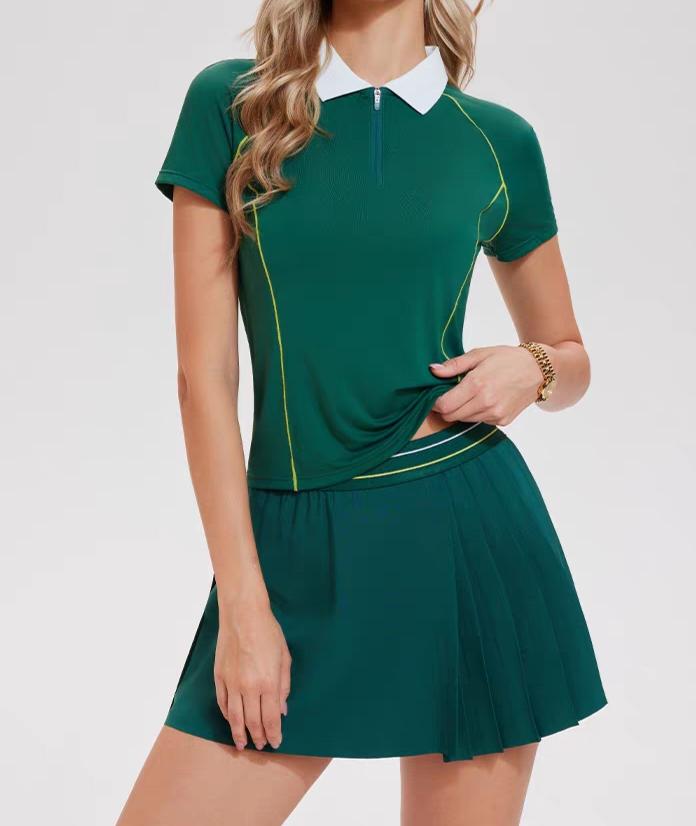
Direct answer. A custom golf polo manufacturer needs more than a collar photograph and a logo file. The buyer should define the wearer, channel, collar and placket direction, sleeve and body fit, material questions, colour map, artwork placement, sample purpose and approval owner. A published polo can start the discussion; a named sample and approved specification decide what can be produced.
This guide is for golf brands, clubs, resort programmes, retailers and teamwear buyers. It does not promise an available fabric, fixed price, minimum order, performance result or production date. It separates a catalogue-led branding conversation from factory-custom polo development, then helps the buyer prepare a brief that a manufacturer can review.
The hero image is an unbranded editorial product-direction reference. It is useful for seeing a short-sleeve zip-polo and coordinated-colour direction, but it is not a production record for the buyer’s proposed polo. Collar build, material, trim, artwork method and fit must be identified in the project brief and then reviewed on the relevant sample.
What should a custom golf polo manufacturer know first?
Begin with the garment’s role. A player polo, staff uniform, pro-shop item and branded retail polo can share a colour family without needing the same fit, surface, logo position or packing record. State who will wear the polo, where it will be used or sold, whether it is a core range item or a complementary piece, and what decision the first sample must answer.
Choose the route before expanding the style list. Wholesale or light customisation may suit an existing product direction with confirmed branding, labels, hangtags or packing. Factory custom manufacturing is appropriate when the buyer needs a different collar, placket, fit block, material, construction, colour placement or component. Keep this choice per garment: an existing staff polo and a new retail-fit polo can belong to the same programme while following different development paths.
The short-sleeve performance polo reference is a useful starting point for discussing silhouette and logo area. It does not establish the final material, collar construction, measurements, availability or decoration method for another project. Mark what should remain, what should change and what still needs sample evidence.
How do wearer and channel change the polo brief?
The word *golf* does not settle the product brief. A club player polo may need one balance of collar presence, body ease and crest visibility; a resort staff shirt may prioritize role recognition across a shift; a pro-shop offer may need a different size presentation and product story. Those are commercial and wearer decisions, not assumptions a manufacturer should make from the word “polo.” List the intended channels separately if one programme covers more than one.
Start by defining which visual elements must stay related across the range. A buyer may want a shared club colour, a consistent collar contrast or one crest position across player and staff versions. Then identify what is allowed to differ: a placket opening, sleeve finish, body length, name treatment, label set or packing identifier. This prevents a programme from looking coordinated in a mood board while losing control of which approved detail belongs to which garment.
Use a simple role matrix before asking for a sample. For each version, note the wearer, use context, sales or issue channel, mandatory visual cues, optional details and the question to test. If the initial request only covers the player version, say so. A manufacturer can then avoid applying a player fit or retail presentation to a staff version by default.
The same discipline applies when the programme has a men’s, women’s or unisex direction, or uses project-defined size groups. Do not infer fit from a product photograph or a generic size label. Record the sample size to be reviewed, the intended wearer group, the reference point for measurements and the approval owner. Those details make feedback usable when a buyer later compares versions across a club, resort or retail range.
Which collar and placket choices need a written brief?
“Polo collar” is not one specification. A buyer may be comparing collar height, collar shape, edge finish, contrast treatment, button placket, zip opening, hidden placket or another neckline direction. Those details affect the look of the garment, the position of branding and the questions a sample must answer. Name the preferred direction without treating a reference photograph as proof of its construction.
Write front and back references beside a short change list. Identify the collar point, neckline opening, placket length, closure direction, trim position and any colour boundary. If the buyer wants a zip-neck direction, record the visible reference and the question to review; do not assume a zip, puller, tape or backing specification from an unrelated garment. A zip polo and pleated skort set reference can make a coordinated colour or opening discussion more concrete, while the project still needs its own product record.
| Polo decision | What to define | What a first sample should answer |
|---|---|---|
| Collar | Shape, height, edge finish, contrast or self-fabric direction | Does the proposed collar hold the intended proportion on the agreed sample? |
| Placket or zip | Opening type, visible length, position, components and colour relationship | Does the opening sit as intended with the selected collar and body fit? |
| Sleeve and shoulder | Sleeve length, shoulder relationship, armhole and branding area | Are fit and logo-area questions clear for the intended wearer? |
| Body and hem | Intended ease, body length, side shape and hem treatment | Does the sample support the stated role without importing an untested performance claim? |
Use the table to define a comparison, not to make a universal recommendation. A resort retailer may want a different presentation from a club player programme. The buyer should decide which option fits the channel, then identify the sample observations that determine whether it is retained or revised.
How can collar and placket samples reduce approval risk?
A collar and placket are most useful when reviewed as an assembled relationship, rather than approved from separate swatches or artwork alone. The buyer can ask whether the collar sits at the intended opening, whether the edge and placket meet cleanly, whether any contrast remains in the correct visual position and whether the opening changes how a chest mark reads. The answer belongs to the named sample, selected material and stated fit—not to a generic polo category.
Create a short approval sheet for the neckline. Include front and back reference images, a close view of the intended opening, the current material and trim references, colour callouts, artwork location and a blank section for observed issues. Ask reviewers to distinguish a visual preference from a measurable concern. “Prefer a cleaner neckline” needs a follow-up question; “opening appears longer than the marked reference on sample P-02” gives the development team something traceable to review.
If the project compares a button placket with a zip or another opening direction, keep the variants separate. Each may change the apparent collar shape, the fold at the front body, trim visibility and the space around the proposed logo. A decision on one version should not automatically close the other. The goal is not to make every possible option; it is to give the buyer enough evidence to retain one defined direction before bulk planning.
Include wear and care questions only where the project has a way to assess them. For example, the buyer may request a sample review after an agreed handling or wash procedure. Record the version, procedure, reviewer and observation rather than claiming that any collar or opening has a universal durability or wash outcome. This protects later production communication from vague statements that cannot be checked.
How should sleeve, shoulder and body fit be reviewed?
Use a named base size, measurement method and wearer context. State whether the buyer is comparing a closer, regular or another project-defined fit; avoid turning a vague preference into an unmeasured requirement. Shoulder, armhole, sleeve, chest, body length and hem questions interact. A change made to create more room at the shoulder can change sleeve balance and the position of a chest mark.
Ask the reviewer to record what is visible on the designated version: sample number, size, material reference, movement or use context, observation and requested next action. The fit-model review guide gives a structure for that record. It does not prescribe an industry-wide golf fit or prove that a sample will suit every wearer.
Keep the polo distinct from a matching bottom. A colour story can be approved across a range, yet the polo needs its own garment record. If it is paired with a skort, describe the intended visual relationship and any body-length or trim question without assuming the skirt’s material or fit approves the top. This is especially useful when a club wants player, staff and retail variants that look related but are not the same item.
How should fabric, handfeel and coverage questions be documented?
Record the fabric as an identified candidate, not as a marketing adjective. Where known, capture supplier or internal reference, composition, structure, surface, colour, finish, intended component and the information source. Where unknown, label it as open. A fibre name or product image cannot prove handfeel, recovery, coverage, care, drying behaviour, UPF, jacquard construction or another performance claim.
The fabrics and trims resource helps organise the material conversation around the polo body, collar, placket and any trim. A buyer can ask for a softer hand, a more structured collar or a particular visual surface, but the project should state what will be observed on the sample. If washing matters, identify the agreed sample version, method, reference point and decision owner. Do not publish a general wash result before the project has the relevant evidence.
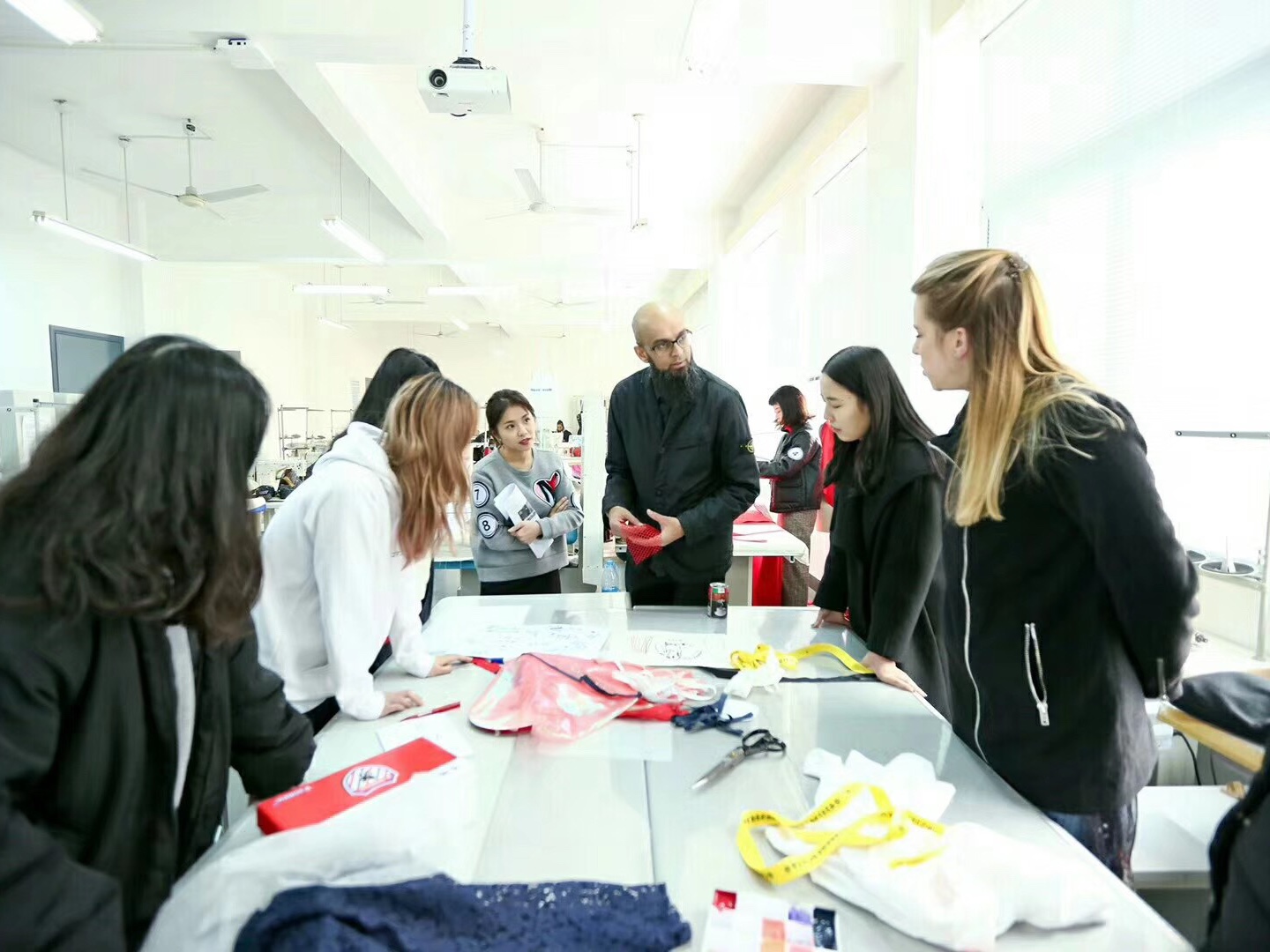
*A material review image can help frame the questions for a polo sample. It does not prove the composition, performance, colour approval or care result for a new club programme.*
What should a club-colour and trim record capture?
Colour direction is not limited to naming a main shade. A polo brief should separate body colour, collar or placket contrast, piping or edge treatment, logo colours, labels and any packing identifiers. A project may use a club colour across a range while assigning it different roles on each garment. Write what is mandatory, what is a proposed option and what must be seen on a sample or strike-off before approval.
Where a buyer supplies a visual reference, preserve its source and revision. A screenshot, Pantone reference, swatch, previous garment or digital artwork can each be helpful, but they are not interchangeable evidence. The brief should say which one controls the discussion and which are supporting references. If the material has not been selected, describe the colour as a direction pending the material and sample review, not as a final production match.
Trims need the same level of separation. A contrast edge, neck tape, zipper tape, button, label or hanger tag may be part of the buyer experience, yet it may belong to a different approval file from the body fabric. Record the position, colour relationship, version and decision owner. This makes it easier to identify whether a later comment changes the whole polo or only one component.
Packing can also carry a club or retail identity without becoming an assumed standard. Specify any required size sticker, barcode, polybag label, fold direction, assortment note or carton mark as a project requirement, with the final content subject to confirmation. The aim is traceability: receiving teams should be able to identify the approved polo version without relying on an informal colour nickname or an outdated artwork file.
What needs approval before a logo is placed on a golf polo?
Treat the artwork and the base garment as connected but separate records. The buyer should supply the authorised logo file, version, colours, intended position, approximate scale and the person who can approve it. A screen proof can resolve spelling and visual layout; an application sample is needed to review the proposed mark on the selected surface.
Printing, embroidery, heat-applied artwork or another method may be discussed when the polo surface, artwork, placement and project scope are known. No technique should be assumed to work on every material or every area. The logo-methods guide for stretch activewear can support that discussion. Use it to ask better questions, then review the actual proposed polo version.
For a club collection, keep crest placement, staff name treatment, sponsor artwork and retail branding distinct where they differ. A logo that is accepted on the chest of a player polo is not automatically approved at the collar, sleeve or back of another version. Version control matters when artwork changes late: identify the affected sample, labels and packing files before an instruction replaces the prior one.
Why are an artwork proof and an application sample different?
An artwork proof checks the authorised file, spelling, position guide and intended scale before it is applied to a garment. It is valuable for catching version mistakes early, especially where a club crest, sponsor mark and staff name treatment have different owners. It does not show how the proposed artwork will look, feel or sit on the selected polo surface.
An application sample answers the garment-specific question. It lets the buyer review the proposed position against the collar, placket, seams and wearer fit; it also makes the proposed colour relationship and surface appearance visible on the actual candidate material. If a programme has multiple logo positions, record each placement separately. A chest crest approval should not be treated as an approval for a sleeve mark or back-neck detail merely because the file is the same.
Keep the approval route deliberately small. Name who supplies artwork, who checks brand accuracy, who reviews the sample and who consolidates the release decision. When a change is requested, issue one current artwork or placement record and mark the earlier version superseded. This is more reliable than relying on an email subject line or verbal confirmation when several parties are discussing the same polo.
When is private label branding enough, and when does the polo need custom development?
The private label route is relevant when a buyer selects an existing direction and needs project-confirmed branding, label, hangtag or packing choices. The brief still needs the reference, logo, colour direction, size-colour quantities and approval path. “Private label” is not a substitute for these inputs.
Use custom activewear development when the polo requires a new fit, collar, placket, material, construction or colour placement. inPACE can coordinate design discussion, material and trim questions, sample work, production communication and packing planning across cooperating factories. Its group’s garment-production experience spans more than 30 years, while the actual responsibilities, sample scope, materials and production conditions must remain project-specific.
What should the polo sample and QC record include?
Give each sample a style code and revision. Keep the polo reference, change list, material note, colour information, artwork version, base size and feedback together. Record observations separately from conclusions: “collar edge lifts after the agreed fit check” is an observation; “change the collar construction” is a requested action that still needs technical review.
| Record area | Evidence to retain | Decision before the next stage |
|---|---|---|
| Fit | Sample version, size, measurements and reviewer observations | Keep, revise or compare another fit option |
| Materials | Identified fabric, collar or trim reference, colour and open items | Confirm candidate or request defined sample evidence |
| Branding | Artwork version, placement, scale and proposed method | Approve, revise or hold the application |
| Range and packing | Player/staff/retail role, label and pack identifiers | Confirm what the receiving or retail record needs |
The sample-feedback guide can help a brand consolidate comments. Send one current list of observations, decisions and open questions rather than parallel messages to different factory contacts. If multiple cooperating facilities are involved, state which approved file travels with each relevant handoff and who stops work when a conflict appears.
How should a custom golf polo move between development and production teams?
For factory-custom development, the first sample is a decision point rather than a silent handoff to production. The buyer and development contacts should consolidate the approved or open decisions for collar, placket, fit, materials, colour, branding, labels and packing. A list of unresolved questions is useful: it makes clear what has not yet been approved rather than allowing an early reference image to fill the gap.
inPACE can coordinate discussion of design direction, materials, trims, samples, production communication, QC and packing across cooperating factories. That coordination does not make every facility responsible for every decision. The project file should identify the latest controlled version, the owner of each approval and the information that must accompany a handoff. Where a component or decoration is handled through another supplier, the buyer should still be able to trace which polo version, artwork and colour direction the instruction belongs to.
Before bulk work is considered, preserve the accepted sample version and the changes that distinguish it from earlier samples. A practical handoff record can include the style code, revision, material and trim references, size and colour plan, artwork version, label and packing instructions, QC focus points and named contacts. It is not a substitute for project-specific production confirmation, but it reduces the risk of rebuilding the brief from scattered messages later.
The useful question is therefore not “is the polo finished?” but “what evidence lets the next team use the same approved polo definition?” This approach works for a small test run as well as a broader club or retail programme. Exact scope, timing and production conditions still need to be reviewed for the individual order after the relevant approvals are confirmed.
What should a buyer send in the first golf polo enquiry?
Prepare a concise technical and commercial brief:
- Name the channel, wearer and product role of each polo version.
- Supply a marked reference and separate retained details from requested changes.
- State collar, placket, sleeve, shoulder, body and hem directions.
- Provide base size, fit objective and measurement method where available.
- List fabric, colour and trim information as confirmed, proposed or open.
- Send authorised logo files with placement and approval ownership.
- Identify any label, hangtag, packing or club-receiving requirements.
- Define the first sample question and the person who consolidates feedback.
What should be locked after the first sample is approved?
An accepted first sample does not mean every commercial detail has been settled, but it should establish a controlled base for the next conversation. Keep the final sample identifier beside the confirmed garment direction, material and trim references, colour decisions, artwork and placement records, label and packing requirements, size-colour plan and any agreed QC focus points. If an item remains open, list it as open rather than attaching it informally to the word “approved.”
For a repeatable programme, preserve the logic behind the decision as well as the decision itself. Note which collar or placket option was retained, what reviewer observation closed the fit question and which artwork version applied to which product role. That context is useful if a club adds a new staff variant, a resort requests a retail adaptation or a buyer needs to compare a later sample against the original approved direction.
The manufacturer can then review the next sample, pricing or production discussion against a single current brief. Neither a catalogue photo nor an old email should override the controlled record. Material availability, decoration feasibility, quantity, timing and final production conditions remain project-specific and should be confirmed before they are treated as a commitment.
The manufacturing overview and order workflow provide process context, but exact prices, timing, material availability and order conditions need confirmation for the individual project. Send the polo reference, wearer, collar and placket direction, fit, fabric handfeel, logo artwork, colours and sample questions through the inPACE contact page for a custom golf polo development review.
Product directions
Explore relevant activewear products
Use these product pages as practical references for your brief, then confirm materials, fit, customization, and production details through sampling.
Short-Sleeve Performance Polo
Use this polo direction to define collar, sleeve, body, surface and logo-placement questions before requesting a custom golf polo sample.
View product directionShort-Sleeve Zip Polo & Piped Pleated Skort Set
Use this coordinated reference to discuss zip-placket, piping, club-colour and polo-to-bottom relationships without assuming its specification applies unchanged.
View product directionCustom Activewear Development
Use factory-custom development when the golf polo needs a different collar, placket, fit block, material, construction or sample-evidence plan.
View product directionFAQ
Buyer questions
What should a custom golf polo manufacturer receive before sampling?
Provide the wearer and channel, marked polo reference, collar and placket direction, fit and base-size information, material and colour status, authorised artwork, sample question and decision owner.
Can an existing polo reference be used for private label golf branding?
It can start a discussion when the buyer wants an existing direction with confirmed branding options. The actual style, material, logo placement, labels, packing and order conditions still need project confirmation.
When does a golf polo need custom development?
Custom development is appropriate when the project needs a different collar, placket, fit, material, construction, colour placement or another product feature that the chosen reference does not establish.
Can a product image prove UPF, quick-dry or fabric performance?
No. A product image can discuss silhouette and surface direction, but it does not prove a material specification, test result, coverage, UPF, drying behaviour or performance claim.
How should logo placement be approved for a golf polo?
Keep the authorised artwork version, proposed placement, scale, garment surface, application sample and approval owner together. A screen proof and an application sample answer different questions.
What should be confirmed before production?
Confirm the accepted sample and fit, identified materials and colours, artwork and placement, labels, packing, size-colour plan, order scope and the project-specific checks that still apply.