
Why should the use context come before the sourcing location?
A request for yoga and workout clothing can hide several different product needs. A garment intended for a floor-based studio session may be reviewed differently from one intended for training with equipment or as a layer worn outdoors. The brand should define those uses before asking a supplier to recommend a manufacturing route.
Consider an illustrative brand reviewing a yoga bottom and a separate fitted workout set for customers in Australia and New Zealand. Its team can organise local sample sessions, but it has not decided which garment details need new development. This is a planning example, not a reported order or a statement about the preferences of either country's consumers.
The team needs to identify what it wants to learn from those sessions. Questions might concern waistband movement, hem position, strap placement, coverage or how clearly the size information supports selection. A general instruction to make comfortable activewear does not tell a local partner or a China supplier which issue to solve.
Use the local versus China supplier comparison to frame the location decision after defining the product work. Nearby feedback can be valuable when the team needs to observe a specific garment in use. Supplier development becomes more concrete when those observations have been translated into measurements, material questions and an agreed sample objective.
Australia and New Zealand should remain named destinations in the project record. Neither country has one universal activity, climate or body profile that determines the correct garment. Use the intended audience and actual sales channel to define the review, then assign each destination's product-information decisions to an appropriate owner.
How can a brand separate the roles within a yoga and workout range?
Give each proposed style one primary role. The yoga bottom may be intended for a particular class format, while the fitted set may serve a different training use. A separate layer could be considered for arrival, departure or a defined outdoor activity. Do not require every item to solve all three tasks simply because they share a brand identity.
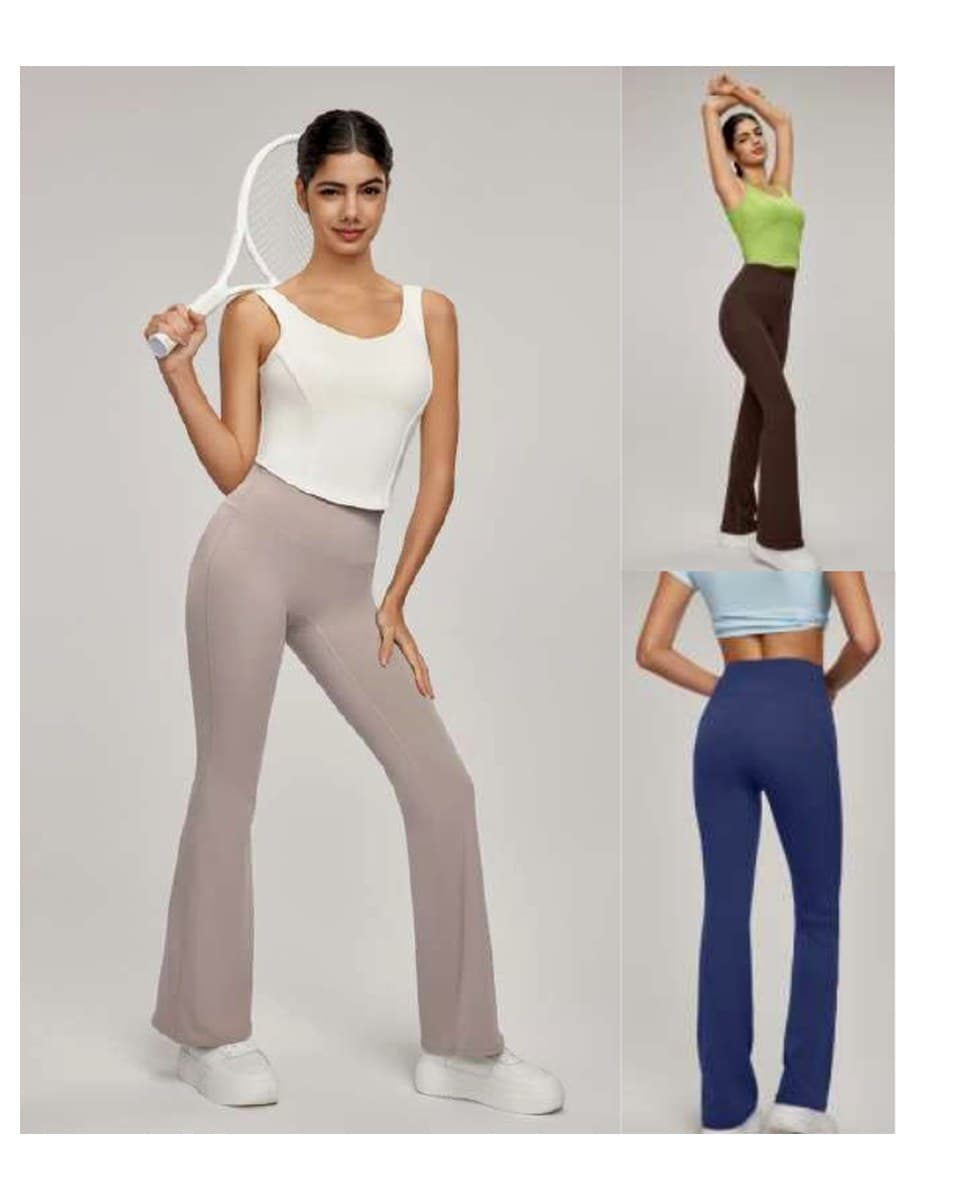
The yoga activewear collection can help the team identify references for its first discussion. The flared activewear pants reference gives a visible waistband, leg and hem direction to assess. Review whether that shape suits the intended use; the image alone does not establish activity suitability or fit.
Use the activewear performance collection when discussing the separate workout role. Write down which movements and garment interactions matter for the proposed product. For example, the review may need to consider a waistband during a bend, a strap during a reach or a hem near the wearer's footwear. These are questions for a sample, not performance claims about the reference.
Keep coordinated appearance distinct from identical construction. A top and bottom can belong to one range while requiring different material or fit decisions. Likewise, a layer worn before or after a session may need a different review from the base garments used during exercise.
Remove a proposed item if the team cannot explain its role or organise the relevant review. A clear two-product project is easier to brief than a larger range with overlapping purposes and unresolved sample questions. The number of styles should follow the brand's ability to evaluate and manage them, rather than a universal launch formula.
What can local review contribute to the sample decision?
Local review can connect the garment to its intended use when the brand has access to suitable reviewers and a consistent process. It can reveal questions that are difficult to describe from a flat photograph, such as where an edge sits during movement or whether a size explanation matches the sample being tried.
Choose reviewers relevant to the intended product and record the limits of the group. Instructors or staff may be convenient participants, but their opinions should not automatically represent all customers. Differences between two review groups may come from participant selection, activity, garment size or expectations rather than national preferences.
Ask participants for specific observations. “The waistband moved during this movement” is more useful than a broad comfort score without context. Record what happened, on which sample, under which conditions and what the wearer wanted to be different. The brand can then decide whether the observation warrants a product change.
Keep participation voluntary and collect only the information needed for the garment review. Supplier feedback usually needs sample identity, measurements and a clear description of the issue, not personal customer histories. Consolidated notes can retain the useful evidence without forwarding unrelated participant information.
Use the sample feedback guide to organise the findings. A local session is valuable when it produces an actionable decision for the next sample or confirms the selected reference. It does not by itself establish formal technical performance, a broad demand forecast or suitability for every future wearer.
How do local, hybrid and China routes handle these questions?
Compare the routes against the same product roles and open sample questions. A local supplier may offer a complete product service or only part of the development. A China supplier may need a more defined brief before it can assess the work. Confirm the actual scope rather than assuming it from the supplier's location.
| Route | Brand's review arrangement | Supplier work to define | Condition for proceeding |
|---|---|---|---|
| Local development and production | Direct access to the agreed local sample and fitting process | Garment development, materials and manufacturing included in that partner's proposal | The selected partner can address the product roles and evidence needed |
| Local use review with China development | Local observations consolidated by one brand owner | Feasibility, relevant sample revisions and production coordination | Observations become clear instructions linked to an identified garment version |
| China development with remote brand approval | Physical samples and documented questions reviewed by the brand | The agreed material, fit, construction and manufacturing scope | The brand can resolve sample questions and issue specific written approvals |
The hybrid route may be useful for the illustrative range because the brand wants to observe garments locally while assessing supplier development. That is a project-specific possibility, not a recommendation that all Australian or New Zealand brands should use the same arrangement.
If a selected existing style meets the product need, discuss private-label branding within the supplier's confirmed options. If the review identifies a new fit, material, construction or functional requirement, define it through custom activewear development. A local trial does not turn a substantial garment change into a minor branding adjustment.
Compare the proposals once the required work is visible. Include the samples, revision responsibilities, material decisions and approvals retained by the brand. Do not infer price, timing or quality from geography, and do not compare an existing-style branding quote with a new-development proposal as if they cover the same task.
What should a use-context review plan record?
Prepare the review plan before handing out samples. Identify the style, size, version, intended use and the questions still open. If two groups receive different revisions, retain that distinction when analysing their comments. A combined score from unlike samples may conceal the reason for disagreement.
| Use context | Garment question to observe | Evidence to record | Decision the observation can support |
|---|---|---|---|
| Defined indoor yoga session | How do waistband, leg shape and hem position behave during the selected movements? | Sample identity, movement and specific wearer observation | Keep the selected reference or request a defined fit or construction review |
| Specified workout activity | Do the top and bottom remain acceptable to the wearer during the agreed activity? | Strap, seam, coverage or waistband observations connected to that activity | Identify the relevant garment detail for the next sample |
| Arrival or after-session use | Does the proposed layer or lifestyle item perform the role the brand has described? | Fit with the base garment and practical handling observations | Decide whether the product adds a useful role to the range |
| Clearly defined outdoor use | Which conditions and garment interactions need assessment? | The actual setting, layer combination and questions requiring further evidence | Define additional development or technical-review needs without inventing a protective claim |
This plan describes observation areas, not universal test methods or acceptance thresholds. Choose appropriate technical assessment where the product or intended claim requires it. A photograph of a wearer outside is not evidence that the garment provides sun protection, weather protection or another measured performance result.
For the yoga bottom, hem position may be relevant to the selected movement and the wearer's footwear. For the fitted set, the team may prioritise strap position or the relationship between the top and waistband. Keep those questions specific to the garment instead of applying one generic pass or fail label to the entire range.
Agree what the brand will do with conflicting observations. It may accept the current style for a defined use, request a revision, select another reference or separate two product needs. The supplier should receive that decision and its supporting evidence, rather than several unresolved opinions presented as simultaneous instructions.
How should the workout set be reviewed as two garments?
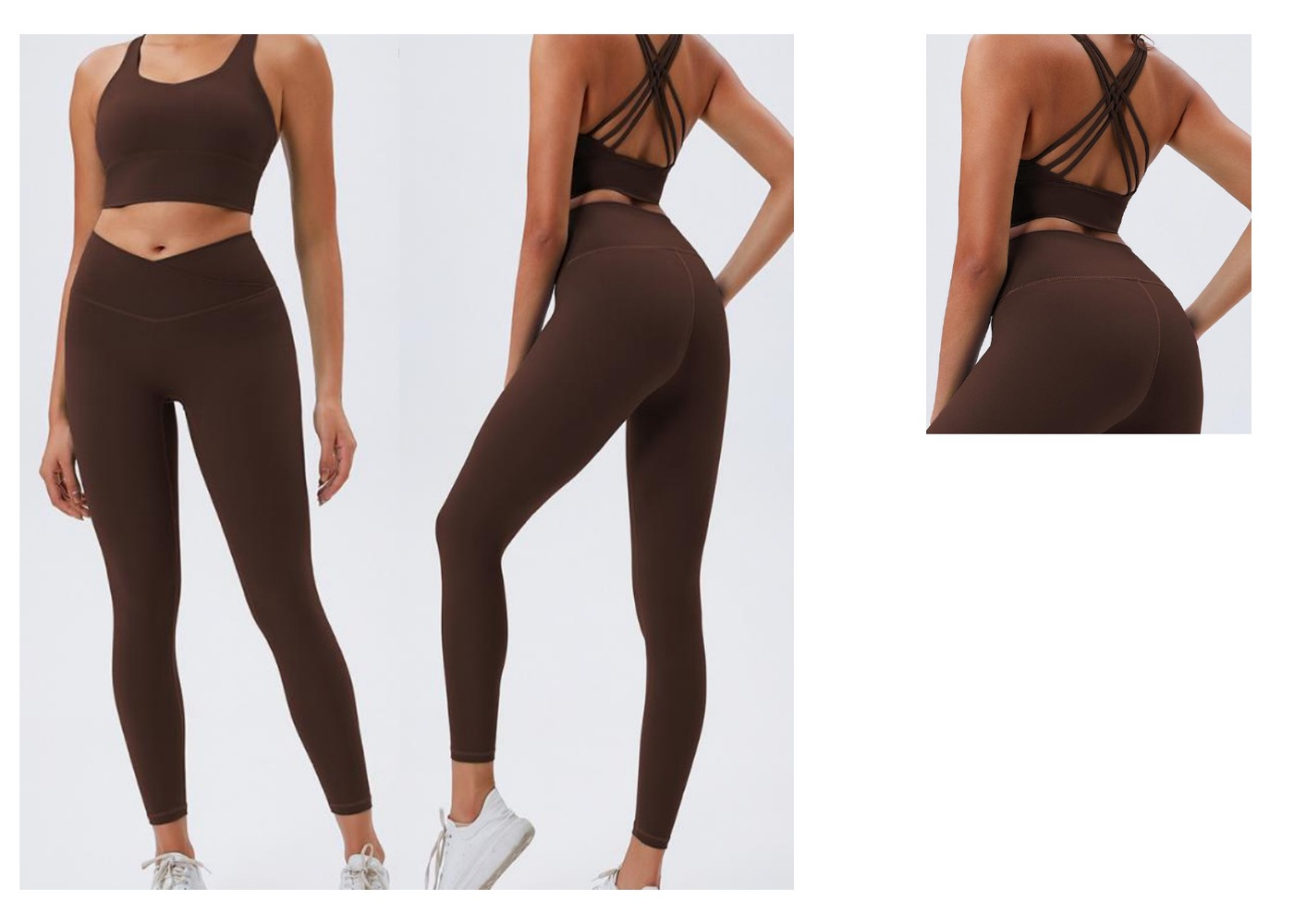
The reference above shows a fitted top and leggings with a visible back-strap arrangement. It provides details to discuss when planning the sample review. Confirm the selected garment's measurements, construction and intended use directly; the photograph does not establish support level, fabric behaviour or a completed wear-test result.
Review the top and bottom separately before judging the combination. A wearer may accept the leggings while asking for a different top size or coverage. A single approval for the set can hide that distinction. Record the actual garment sizes and the observations attached to each component.
Then review the pieces together where that is part of the intended use. Note the relationship between the waistband and top edge during the agreed movements. If the team requests a change, identify which garment should change and why. Adjusting both pieces at once can make the next sample difficult to interpret.
Do not assume that a coordinated set should be sold or packed as one fixed-size unit. The brand may want separate size selection, a defined combination or only a coordinated display. That commercial decision belongs in the brief so the quantity and packing records match the intended member or customer experience.
Retain a clear product identity for each piece even when it shares a colour story. This helps the team compare observations, allocate quantities and discuss a repeat order without confusing a change to one garment with a revision to the whole collection.
What should an outdoor-use request say without relying on assumptions?
Describe the actual use: the activity, expected layer combination, fit priorities and the conditions the brand wants the garment reviewed against. “Suitable for outdoors” is too broad to guide material selection. It may mean a garment worn briefly between locations or a product intended for a specific sustained activity.
Avoid turning a country name into a climate specification. The relevant conditions belong to the use case the brand is planning. Record them explicitly and explain which are assumptions still needing confirmation. A supplier cannot reliably infer them from Australia or New Zealand written in the destination field.
Discuss fabric and trim requirements in relation to those defined conditions. Ask which material references and sample evidence are relevant to the garment question. If the product needs a measured functional claim, identify the appropriate evidence and review route before adding that claim to marketing or labels.
Keep ordinary wear observations and technical claims in separate parts of the record. A reviewer can report that an item felt acceptable during a particular session. That observation should not be converted into a universal breathability, UV, water-resistance or durability claim without suitable supporting evidence.
If the brand has not yet defined a credible outdoor role, keep the requirement open or leave the item outside the first range. An honest product brief can state what remains undecided. Adding an unsupported use claim makes the supplier discussion less precise and can create an expectation the approved garment was never designed to meet.
How should sizes and destination allocations follow the evidence?
Use the selected garment's measurement information and the relevant sample observations to develop size guidance. Do not assume that one national size convention or a size label from a previous product explains the new range. The actual measurements, garment role and intended wearer need to be connected.
The size, colour and quantity planning guide can structure the order matrix. Identify each style, colour, size and branding version, then allocate quantities by the actual Australian and New Zealand channels involved. Separate confirmed requests from informal interest and the brand's own stock assumptions.
A sample group is a source of product feedback, not a complete quantity forecast. Record the limits of that evidence. A request from several reviewers for a particular size may warrant further investigation, while the purchasing decision still needs the brand's channel information and commercial judgment.
Keep top and bottom allocations separate if customers can select their sizes independently. The same principle applies to a layer that serves a different role from the base range. A clean overall order total can conceal an unsuitable variant mix if the team has not checked each component.
Ask the supplier to confirm the actual style, colour, size and customization scope before making commitments. This guide does not promise fixed minimum quantities, standing inventory or automatic replenishment. The written response should reflect the selected products and the current order plan.
Which product-information questions need Australian and New Zealand owners?
For Australia, use the official Consumer Goods (Care Labelling) Information Standard 2023 as a starting point for the care-information review. The Federal Register lists the standard as in force. Assign a destination owner to confirm the requirements applicable to the actual garments and the proposed information.
For New Zealand, the Commerce Commission's clothing-origin guidance explains country-of-origin labelling for most new clothing and footwear and points to related care and fibre-information requirements. Use the relevant official guidance for the actual product rather than assuming one destination's label can simply be reused for the other.
Keep factual product information connected to the approved material and garment record. If a development change affects those facts, revisit the destination documents before label production. Branding approval alone does not confirm that the care, composition or origin information is complete and accurate.
The supplier can coordinate the agreed implementation, while the brand's destination reviewers confirm current requirements and any additional professional review needed. This article provides sourcing questions, not a complete legal checklist or a guarantee of compliance for a specific shipment.
Store each approved label and product-description version with its destination allocation. This makes the final packing review clearer and helps a later repeat order identify exactly which product information belonged to the accepted garment.
How should sample decisions become production and receiving instructions?
Use one brand owner to consolidate the local observations into the supplier's current brief. Identify the accepted sample, the changes still requested and the features that should remain unchanged. Each revision should have a reason and a clear record of what the team will review next.
Follow the order workflow to distinguish the stages. Receiving a sample, preferring a material, accepting garment details and approving production information are different decisions. State which action the current approval authorises and which open questions remain outside it.
Connect the agreed inspection and packing scope to the final product records. For the two destinations, verify garment identity, size allocation, artwork, label versions and selling units together. A supplier should be able to tell which approved version applies to each line of the order.
Use the receiving inspection checklist when goods arrive. Record discrepancies against the style, version and quantity information already used during production review. Specific references make the discussion more useful than separate destination teams reporting an issue without identifying the affected items.
For the next order, retain the accepted files and review the repeat-order production process. Separate replenishment of an existing approved product from a new use requirement or design change. A request for the same item should still ask the supplier to confirm current feasibility and the applicable scope.
What belongs in the final route and sample checklist?
Use this review before committing to the next development stage. The team should be able to explain each product's role, the observations supporting its decisions and the responsibilities remaining with local reviewers or the supplier.
- Name the actual Australian and New Zealand destinations and channels.
- Assign one primary use to each proposed garment.
- Identify the exact style references and features to be retained.
- Define the yoga, workout or outdoor questions each sample must answer.
- Record the sample size, material and version used in every review.
- Choose relevant reviewers and state the limits of their feedback.
- Separate practical observations from claims requiring technical evidence.
- Consolidate conflicting comments into one brand decision.
- Distinguish existing-style branding from garment development.
- Confirm separate top, bottom and destination quantity allocations.
- Approve the relevant artwork, product information and packing records.
- Name the owner and next action for every unresolved issue.
How can inPACE support the China development scope?
inPACE can discuss product, sample and production coordination for the agreed activewear project. Its company information provides published supplier-review starting points. Yinshan Garments' clothing-production experience since 1986 is manufacturing background; the proposed product still needs its own material evidence, sample decisions and commercial agreement.
Bring the local feedback in a form that identifies the garment and the decision it supports. A note that connects a waistband observation to a sample version and requested outcome is more actionable than a collection of unstructured opinions. The supplier can then assess the actual development question and the information needed to answer it.
To compare the routes, send inPACE an Australia and New Zealand sourcing brief with the use contexts, selected product directions, sample objectives, local review arrangement and proposed factory-development work. Include destination approval owners and the records already available. That gives the discussion a defined next step for the yoga and workout range.
Product directions
Explore relevant activewear products
Use these product pages as practical references for your brief, then confirm materials, fit, customization, and production details through sampling.
Yoga Activewear Collection
Define the intended yoga use and select the product roles that the local sample review needs to assess.
View product directionFlared Activewear Pants Reference
Use the waistband, leg shape and hem direction to frame garment-specific fit and movement questions.
View product directionCustom Activewear Development
Consolidate local observations into material, fit and construction requirements for a defined supplier-development scope.
View product directionFAQ
Buyer questions
When should an Australian or New Zealand brand consider a China activewear supplier?
Consider the route when the brand can define its product roles, development questions and approval responsibilities clearly enough for a supplier review. Compare local, hybrid and China proposals against that same scope. A country destination alone does not establish which route is suitable or whether an individual partner can meet the requirements.
Can local sample sessions be combined with China manufacturing?
Yes, when the feedback handover is agreed. Record the garment version, size, activity and specific observation, then consolidate the findings into one brand instruction. The supplier needs a clear product decision or revision question rather than several conflicting comments that have not been assessed by the brand.
Can one garment cover yoga, workouts and outdoor use?
It may suit more than one defined use, but that should be evaluated for the actual garment and intended wearer. Identify the questions relevant to each context and gather suitable evidence. Do not assume broad activity suitability or a protective performance claim from a catalogue image or a general activewear description.
What should reviewers check on flared yoga pants?
Frame the review around the intended use, including waistband behaviour, leg shape, hem position and the wearer's observations during the agreed movements. Record the exact sample and size. Those observations can guide selection or a revision request; they do not establish suitability for every class, movement or wearer.
Should workout tops and bottoms have one sample approval?
Review each garment separately and then assess the combination where that matches the intended use. Record the sizes and questions for each piece. A wearer may accept one garment while requesting a change to the other, so a single undifferentiated approval for the set can hide an unresolved decision.
Can the same labels be used for Australia and New Zealand?
Do not assume so. Assign destination owners to confirm the current product-information requirements for the actual garments and keep approved records connected to the selected material and version. Use relevant official guidance and any necessary professional review before asking the supplier to implement the final labels.
What should a brand include in its first sourcing enquiry?
Send the actual destinations, sales channels, garment roles, selected references, sample objectives and local feedback arrangement. Include artwork, measurement information, quantity assumptions and the work proposed for the supplier. Separate settled decisions from open questions so the next stage can be assessed without guessing the intended yoga and workout range.