
How should brands plan beige activewear wholesale?
Beige activewear wholesale is most useful when a brand treats beige as a controlled range decision, not a catch-all name for every light neutral. Define the customer, product roles, color references, material surfaces, branding, labels, and packing first. Then decide whether an existing silhouette with private-label presentation is sufficient or whether a new color, fabric, fit, or construction needs factory-custom development and a sample review.
Neutral apparel can support a studio-to-street collection because it gives buyers a quiet base for yoga, Pilates, travel, light training, and everyday layering. That does not mean a catalog photo establishes an available beige, ecru, cream, taupe, warm grey, or brown option. Each reference may look different on a smooth knit, a brushed fabric, a light woven layer, lining, elastic, zipper tape, print, or logo. A useful brief gives the supplier something more precise than “make it neutral.”
For a B2B project, start by separating two routes. A catalogue-informed private-label route can fit when a selected product direction mainly needs a confirmed color approach together with a logo, labels, hangtags, barcode data, packing, and quantity context. Factory-custom development is the better conversation when the buyer needs a new fabric, fit, panel arrangement, construction detail, special color relationship, or controlled sample plan. Product, material, color, logo method, price, MOQ, timing, and commercial conditions remain subject to project confirmation.
The broader activewear design trends guide explains how color and silhouette directions become real product, material, and sample decisions. This beige activewear wholesale guide focuses on a narrower question: how can a brand make a neutral range feel intentional and repeatable without assuming every pale reference is the same production color?
Why should beige, ecru, cream, taupe, and warm grey be named separately?
Neutral is a useful collection word, but it is not a production specification. Beige can lean pink, yellow, grey, or brown. Ecru may appear warmer than a light cream. Taupe can look cooler or deeper next to a black logo or a white zipper. Warm grey can read beige in one material and distinctly grey in another. If a buyer uses one label for all of these possibilities, the team may agree on the mood but still disagree on the garment.
The first job is to name the visual role and attach a reference. A physical swatch, color standard, labelled working cut, or carefully identified prior sample gives a discussion point that a screen image cannot replace. The reference should say whether it applies to the body fabric, lining, rib, mesh, elastic, binding, zipper tape, print, label, logo, hangtag, or outer packaging. It is also helpful to state which color family is acceptable and which nearby directions are not. For example, “warm ecru body with a soft charcoal logo” is more useful than “beige set,” but it still needs review on the intended material.
Neutral color choices often look simple because they have less visual contrast. In practice, low contrast can make surface, stitch line, seam placement, logo scale, and component tone more visible. A cream outer layer may show a zipper tape relationship differently from a beige fitted top. A tonal logo can appear suitably restrained on one smooth fabric and disappear on another textured surface. A darker label may look deliberate against a pale body but clash with an otherwise quiet packing system. These are decisions to check, not rules that apply to every garment.
The activewear color approval guide is the adjacent resource for recording a color decision on the actual garment. Use it when the team moves from inspiration toward a traceable material, trim, logo, and sample review. It helps protect a neutral range from being approved only as a digital mood board.
Which neutral roles make a studio-to-street range easier to buy and replenish?
A neutral range becomes easier to explain when each shade has a job. A brand does not need six pale colors to create a calm collection. It may need one dependable core, one supporting light neutral, and one controlled detail color. The product mix then shows where each role appears: on a fitted top, a bottom, a short, a light layer, or the brand presentation elements around the garment.
| Neutral role | Range purpose | Useful product application | Buyer review question |
|---|---|---|---|
| Core neutral | Gives the range a repeatable base across the most important styles | Core top, legging, short, or layer that may continue beyond one capsule | Which material, component, and garment types must match this reference most closely? |
| Light supporting neutral | Adds softness or contrast without replacing the core | Selected top, bra, jacket, lining, or a limited coordinated set | Does it create the intended relationship with the core under indoor and daylight review? |
| Deep neutral | Provides definition for a logo, trim, bottom, or packaging mark | Small logo, binding, label text, zipper tape, or contrast product | Is the contrast readable at the selected scale without dominating the collection? |
| Seasonal neutral | Gives a compact capsule a different feeling while keeping the core stable | Hero top, travel layer, one short, or a presentation accent | Is this a test color or a color planned for a broader repeat order? |
For a compact launch, the core neutral may sit on the products a buyer expects to carry most consistently, while a lighter neutral gives the range an identifiable studio character. A deep neutral can clarify product details and make the logo, care information, or hangtag easier to read. This structure also gives a supplier a sensible starting point for the sample conversation: the team can see which color relationships need proof first and which are only background preferences.
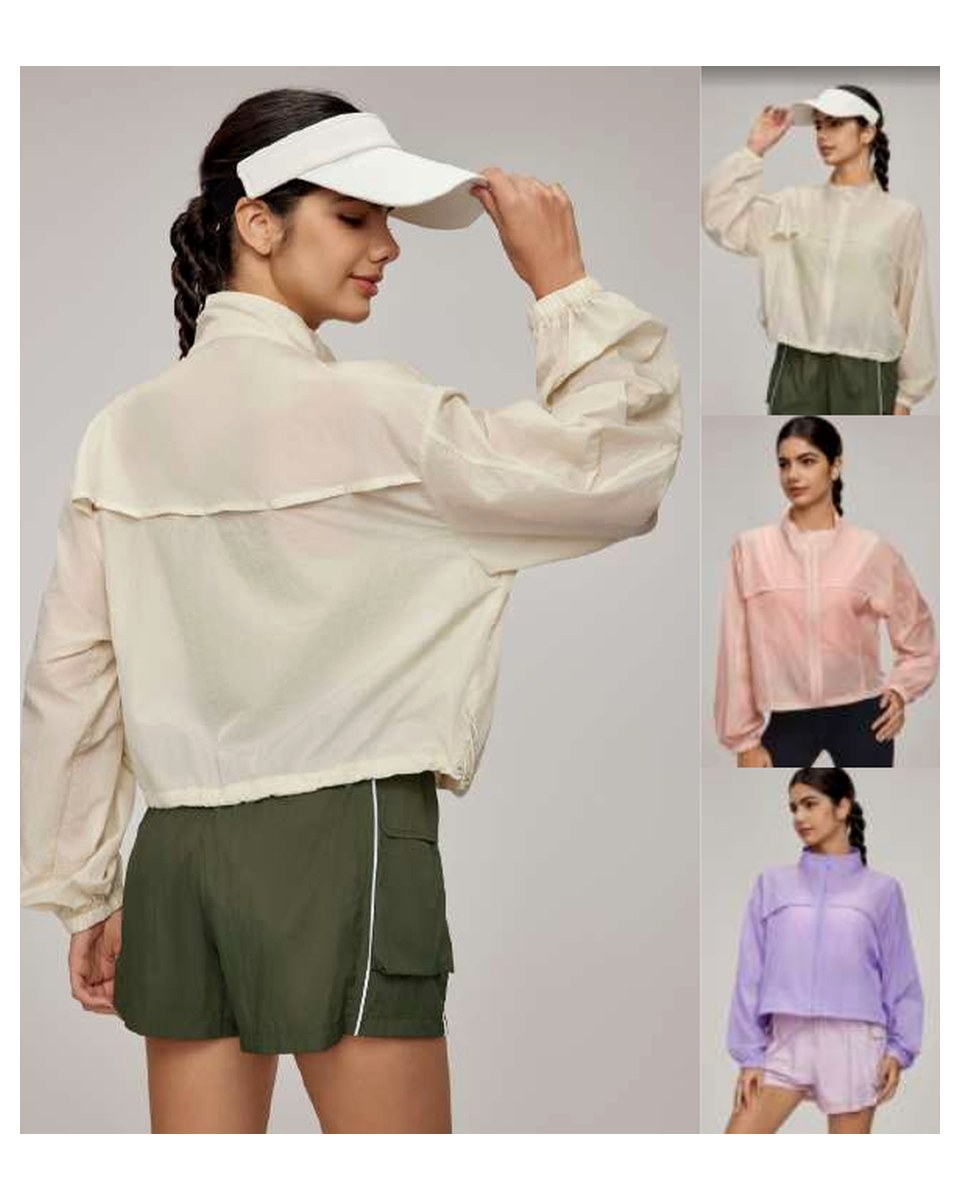
The Yoga Activewear Catalog can help a buyer choose product families before defining the neutral color system. Its images are product-role references, not proof of a specific color, material, logo method, stock position, or ready-to-order condition. The Heart-Neck UPF Top is useful when a brief needs to identify a close-fit top, neckline, logo zone, and supporting-color relationship. The Lightweight Wind Jacket is useful when a beige program includes a light layer and needs a discussion about outer-surface tone, zipper tape, trim, pack presentation, and the relationship with the base garments.
How should a buyer review neutral colors on fabric, trims, and product surfaces?
The same beige reference can appear warmer, cooler, lighter, or deeper when the surface changes. Smooth active knit, rib, mesh, brushed fabric, light woven shell, lining, elastic, and a printed or embroidered mark do not always show a color in the same way. Stretch, opacity, surface texture, sheen, garment coverage, and nearby components can affect what a buyer sees. A color name is only the beginning of the material discussion.
For a fitted top or bra, the review can include body fabric, inner support or lining direction, elastic, neckline binding, armhole finish, seam path, and logo placement. For a short or legging, the relevant points may include waistband, panel layout, seam visibility, coverage, and how a light body color relates to a darker trim or label. For a lightweight outer layer, buyers may need to consider shell appearance, zipper tape, pocket edge, lining, cuff, hood, packability, and how the jacket sits over the rest of the range.
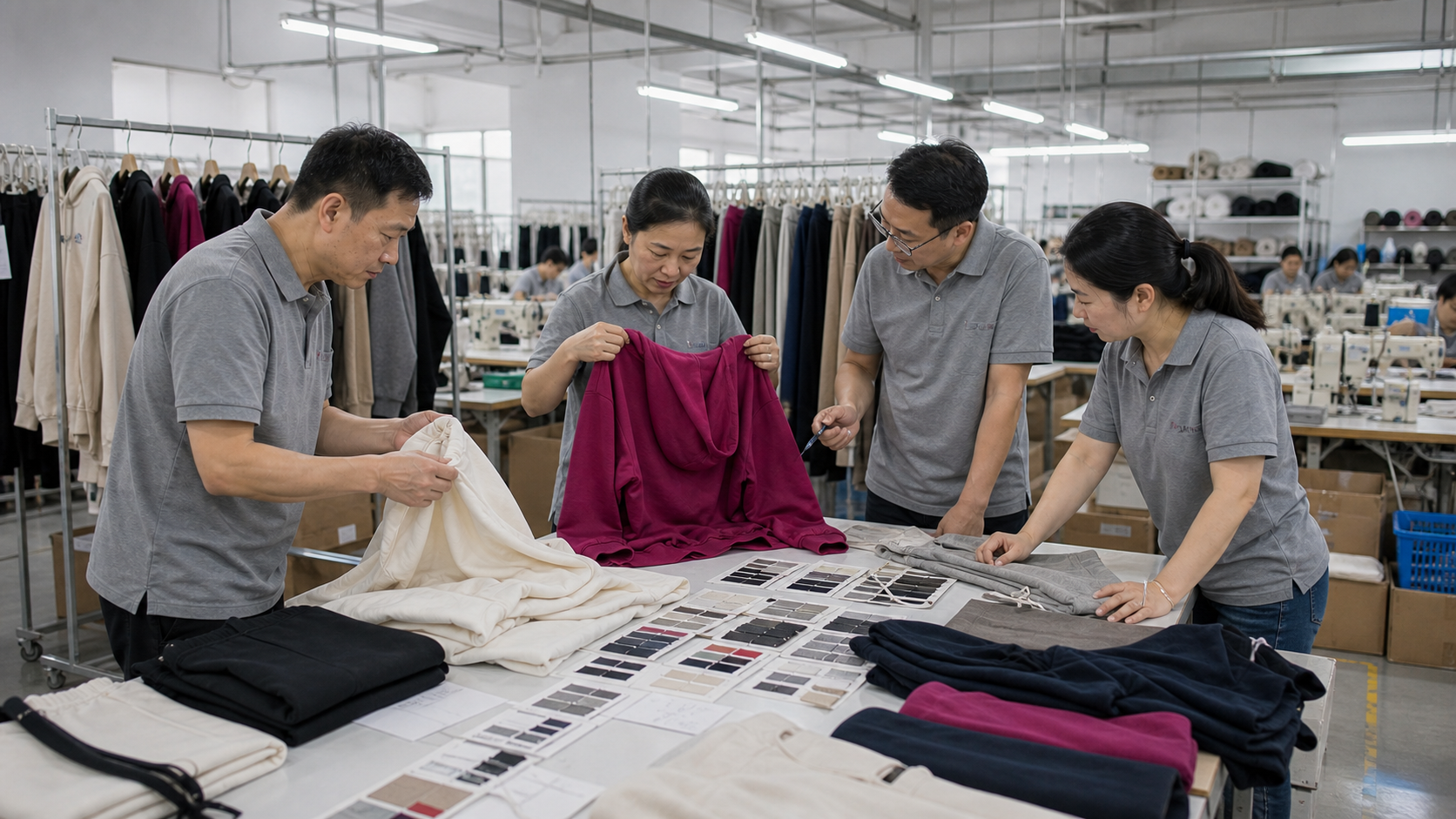
This kind of sample-room review makes a neutral brief more useful because it gathers the body material, components, and product roles in one conversation. It does not turn a visual reference into a universal approval. The buyer and supplier still need to confirm what the first sample should prove, who approves it, and which later changes would require a further check.
When a buyer is considering a light neutral for close-fit activewear, the right question is not “will beige always work?” It is “what should this sample show about the intended fabric, coverage, surface, seams, and branded details?” A buyer can also state how the garment will be used and what visual result matters: a soft studio appearance, a travel layer, an everyday matching set, or a clear contrast with a darker base. That context helps avoid treating every soft beige reference as interchangeable.
The fabrics and trims resource can support the material conversation, while the color-approval guide helps document the specific decision. Neither page removes the need to review the selected color on the proposed product. They give the buyer a clearer vocabulary before a sample or quotation discussion begins.
How can logo, labels, hangtags, and packing support a neutral wholesale range?
Private-label presentation should reinforce the neutral range rather than add an unrelated visual system after the garment is approved. Start with the logo role. It might be tonal and quiet, a small deeper contrast, a label-only mark, or a detail carried more clearly through hangtags and packaging. The appropriate direction depends on the surface, logo method, placement, scale, product use, and the repeatability the brand wants across the range.
For example, a brand may keep a body logo small on a light top and use a deeper neutral for the neck label, hangtag text, and carton mark. Another brand may use a restrained tonal logo on the garment but a more readable contrast on the poly bag label or outer packaging. These are presentation choices, not automatic specifications. The brief should record which item gets the visible mark, what contrast is intended, whether labels and hangtags share the color direction, and what the first sample needs to show.
Labels, care content, size stickers, barcode information, folding, bags, carton marks, and receiving requirements are easier to coordinate when they enter the conversation with the product selection. A small color difference on a hangtag or packaging insert can matter to a brand story, but it should not be confused with approval of the garment fabric. Keep the garment color, branding color, printed materials, and packing requirements as connected but distinct review points.
Use the private-label activewear service when the project begins with an existing product direction and needs branded presentation. The private label product route is useful for a buyer preparing logo, label, hangtag, and packaging requirements. For a broader view of branded collection planning, see private label activewear wholesale. Each path can help the buyer prepare a clearer request, but final application methods and commercial terms still need project-specific confirmation.
How should a neutral range prepare for replenishment without overpromising continuity?
Neutral programs often include a repeat-order question because a core beige, cream, charcoal, or warm-grey direction may support more than one selling period. That commercial interest is reasonable, but a color story should not be mistaken for a promise that every material, component, or garment can be repeated unchanged. A buyer needs to describe what “repeatable” means for the range and which details would create a new approval question.
Start with a simple record of the core styles and the role each neutral plays. The record can distinguish a core top from a seasonal light layer, a deep logo color from a body color, and garment labels from outer packaging. It can also state which references must be kept together when the program is reviewed again: body fabric and elastic, shell and zipper tape, body color and print, or the garment logo and hangtag. This is more useful than giving every beige item the same generic name.
The buyer should also separate three questions that are often combined too early. The first is the product question: which style or silhouette should continue? The second is the color question: which physical reference and component relationship needs review? The third is the commercial question: what size allocation, quantity direction, packing, channel, and timing should be discussed for the next order? Combining them into “repeat the beige set” leaves important variables undefined.
For a private-label project, a clear record may include the selected product URL, the working color reference, logo artwork version, label copy, hangtag layout, barcode or size-sticker requirements, folding direction, bag, carton marks, and the date or version of the approved sample. That record is not a production guarantee. It gives the brand and supplier a starting point for confirming what can be reused, what has changed, and which material or presentation detail should be checked again.
A useful replenishment conversation also identifies changes deliberately. A brand may want the same neutral core but a different seasonal light layer, a changed logo scale, a new packing insert, another size range, or a revised color allocation. Each change can affect the relevant review route. By naming the change, the buyer can keep a stable range foundation while avoiding the assumption that a prior photo, screen color, or packaging sample automatically approves the next project.
When is beige activewear suitable for private label, and when does it need factory custom development?
The color itself does not decide the route. The scope of the product change does. A private-label discussion can be a practical first step when a buyer has selected an existing silhouette and needs to align the color direction, logo, labels, hangtags, packing, and quantity context. A factory-custom discussion is more appropriate when the neutral range depends on a changed garment rather than a branded presentation of an existing reference.
| Buyer situation | Useful first route | What to provide | What remains subject to confirmation |
|---|---|---|---|
| Selected silhouette is close and branding is the main need | Catalogue-informed private-label review | Product references, neutral color direction, logo file, label copy, hangtag, packing, and quantity context | Product route, material, color availability, logo method, packing, terms, and final order conditions |
| Collection needs a controlled neutral color pack across selected styles | Product, color, and sample discussion | Style-color map, core and supporting roles, component notes, size plan, and first sample objective | How colors read on each material, fit, component, and branded detail |
| Buyer needs a new fit, fabric, panel, lining, feature, or construction | Factory-custom development | Annotated references, product use, material direction, color hierarchy, sizes, branding, and sample purpose | Pattern, materials, color development, sample route, MOQ, timing, cost, and production scope |
The useful boundary is straightforward: if the buyer is mainly selecting and presenting an existing product direction, begin with private-label review. If the buyer needs the clothing itself to change, use the custom activewear development route and make the sample question explicit. A neutral trend should never hide a more substantial development requirement such as a new fabric handfeel, changed coverage, altered panel structure, new pocket, new lining, or a different light-layer construction.
What should a beige activewear sample prove before a range expands?
An early sample should answer a focused product question rather than approving every neutral across every garment. It might check a cream or beige body color on the selected fabric, review a tonal logo against a close-fit top, compare a light layer with a darker core bottom, confirm how labels and hangtags support the range, or establish what must remain consistent for a later replenishment discussion. The buyer should identify the decision owner and the approval boundary before the sample is made.
inPACE can coordinate a complete sampling workflow that may include fabric and trim review, printing, embroidery, wash effects where relevant, construction, fit review, branding, and packing preparation. The exact work follows the product brief. As a usual planning guide, samples often take 5–10 days and production often takes 25–50 days after the applicable scope and approvals are confirmed. These are not fixed commitments. Style complexity, material availability, colorways, logo and decoration methods, labels, packing, quantities, revisions, and production scheduling can change the applicable plan.
The general sample-charge guideline is 1.5–3 times the corresponding bulk unit quotation, depending on development and product scope. For one style, the stated refund schedule is 10% at 100 units, 30% at 300 units, 50% at 500 units, and 100% at 1,000 units. Confirm the quotation, style count, sample work, order conditions, and applicable refund arrangement in writing before approval. A published guide cannot replace a project quotation.
For a repeat-oriented neutral range, the sample record should distinguish the core color from a seasonal supporting color and note which products, materials, components, and presentation details belong to each. That does not promise a fixed replenishment program. It gives the brand a clearer evidence trail for the next conversation about what should remain stable and what may change with a later product or color update.
Beige activewear wholesale buyer checklist
Before asking a supplier to review beige activewear wholesale, prepare a concise brief that makes the range and the next decision visible:
- Identify the target customer, activity context, sales channel, and reason the neutral range suits the collection.
- State whether the neutral is a core, light supporting, deep detail, or limited seasonal role.
- Name the intended shades separately, such as beige, ecru, cream, taupe, warm grey, or brown. Do not use one label for several unapproved directions.
- Attach a physical reference, color standard, labelled working swatch, or prior sample. Distinguish it from a screen image.
- Choose the product roles, such as a fitted top, bra, short, bottom, light layer, or another named silhouette.
- Record where each neutral belongs: body fabric, lining, elastic, binding, zipper tape, panel, logo, label, hangtag, bag, or outer packaging.
- Describe the material surface and handfeel direction without assuming that a catalog photo fixes the material or color.
- State the intended logo treatment, placement, size, and contrast level.
- Include label copy, care information, size details, hangtags, barcode data, folding, bags, carton marks, and receiving requirements when private-label presentation is in scope.
- Share preliminary sizes, color allocation, and quantity context so the supplier can understand the range rather than one reference image.
- Separate a selected catalogue silhouette from any new fit, fabric, construction, feature, or color-development requirement.
- Define the first sample question, approval owner, and what must be confirmed before the range is expanded or repeated.
This checklist gives a neutral gym wear supplier enough context to recommend a sensible starting route without inventing fixed inventory, pricing, MOQ, lead time, or production capacity. It also prevents a neutral range from turning into a collection of loosely related pale garments with no product or brand hierarchy.
Turn a neutral studio-to-street idea into a usable product brief
Beige activewear wholesale can support a calm, flexible range when the brand gives each neutral a role, names the intended product system, and checks colors on the actual material and branded details. Start with the customer and core products. Define the neutral hierarchy, logo and packaging approach, and the evidence the first sample must provide. Then choose a catalogue-informed private-label route or a factory-custom development discussion based on the changes the garment actually needs.
To discuss a neutral activewear program with inPACE Sports, send the product roles, color references, material and surface direction, logo and label needs, packing requirements, preliminary sizes and quantity context, any repeat-order question, and the exact decision the first sample should support. Send a neutral activewear product brief to confirm the suitable next step for the project.
What to review
Questions designers, buyers, and brands should answer
Activewear brands, studios, wholesale buyers, and product teams building a neutral studio-to-street range with controlled branding, replenishment, sampling, and development decisions.
Treat beige, ecru, cream, warm grey, taupe, and brown as named product and material references rather than interchangeable neutral labels.
Assign each neutral a core, supporting, or accent role before defining a product mix, logo contrast, labels, hangtags, packing, and replenishment conversation.
Separate a catalogue-informed private-label request from changes that need a new material, fit, construction, color-development, or sample plan.
Practical next step
Turn the research into a clearer product brief
Send the selected product roles, neutral references, intended material and surface, logo and packaging needs, size and quantity context, replenishment question, and the first sample decision.
View the order processProduct directions
Explore relevant activewear products
Use these product pages as practical references for your brief, then confirm materials, fit, customization, and production details through sampling.
Yoga Activewear Catalog
Use the catalog to assign neutral roles across a studio top, bottom, short, and light layer before defining which pieces need a private-label presentation review.
View product directionHeart-Neck UPF Top
Use this top reference to discuss a neutral body-color role, neckline and logo zone, supporting colors, labels, and the sample evidence needed before a range is confirmed.
View product directionLightweight Wind Jacket
Use this light-layer reference to decide whether cream, ecru, beige, or another neutral belongs on the outer piece, trim, logo, label, or pack presentation.
View product directionFAQ
Buyer questions
What does beige activewear wholesale mean for a brand?
For a B2B brand, beige activewear wholesale can begin with selected product references and a controlled private-label presentation. The buyer should still define the exact neutral reference, product roles, logo, labels, packing, and quantity context. Actual products, materials, colors, logo methods, and commercial conditions require project-specific confirmation.
Are beige, ecru, cream, taupe, and warm grey the same production color?
No. These names can describe related neutral families, but they are not interchangeable production standards. A buyer should provide a physical reference, recognized standard, labelled working swatch, or prior approved sample and state how it applies to the intended fabric, trim, logo, and garment components.
How should a brand build a neutral activewear color palette?
Start with one core neutral, one supporting light or seasonal neutral, and a controlled detail color when needed. Assign each role to named products and components, then review the relationship on the intended material, logo, labels, and packaging rather than approving a broad mood-board palette alone.
When should a neutral activewear project use private label or factory custom development?
A catalogue-informed private-label route can suit a selected silhouette that mainly needs color, logo, labels, hangtags, packing, and quantity review. Factory-custom development is more suitable when the request needs a new fit, fabric, lining, panel, construction, feature, color relationship, or controlled sample plan.
How long do beige activewear samples and production take?
As a usual planning guide, samples often take 5–10 days and production often takes 25–50 days after scope and approvals are confirmed. Timing depends on style complexity, material availability, colorways, decoration, labels, packing, quantities, revisions, and production scheduling, so it must be confirmed for the project.
How does inPACE handle sample fees for one beige activewear style?
The general guideline is a sample charge of 1.5–3 times the corresponding bulk unit quotation, depending on the product and development scope. For one style, the stated refund schedule is 10% at 100 units, 30% at 300 units, 50% at 500 units, and 100% at 1,000 units. Confirm the quotation and applicable order conditions in writing.