
Define the route
What does private label activewear wholesale mean for a B2B buyer?
The phrase is often used loosely. In this guide, it describes a wholesale project that starts with an activewear product direction already available for discussion, then adapts the presentation of that product for a brand, retailer, online store, studio, club, distributor, or other business buyer. The garment is not anonymous stock after a logo is attached. It becomes a controlled package of product, identity, information, packing, and receiving instructions.
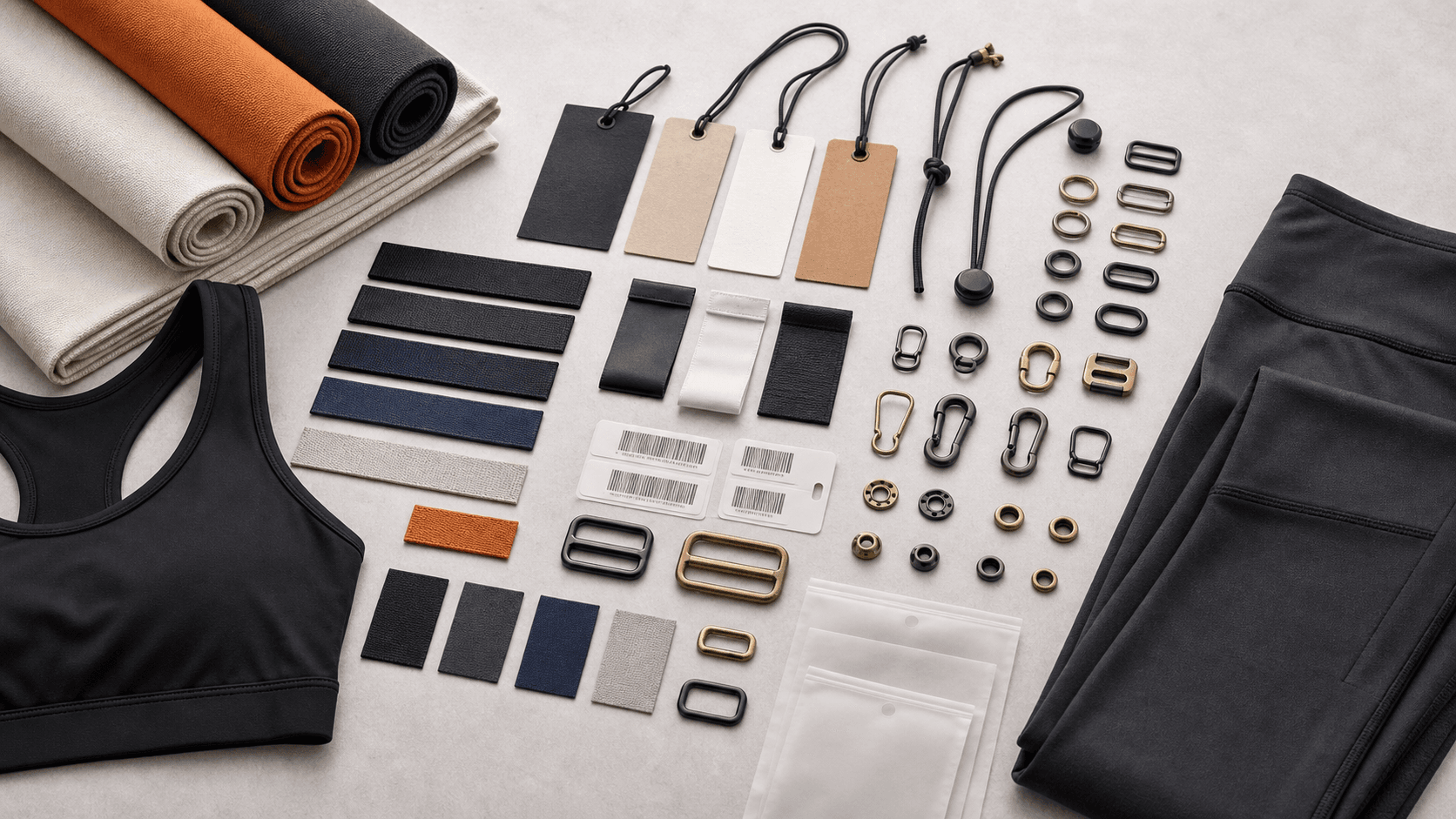
The selected style may be a sports bra, legging, training top, short, jacket, or coordinated set. The brand layer may include a trademark application, neck or waistband branding, size identification, care and composition information, hangtags, individual bags, stickers, carton marks, and a colour-size assortment. Each part has to relate to the actual garment. A heat-transfer mark that looks clean on a stable panel may behave differently across a high-stretch area; a label that is attractive in a sample book may feel intrusive when placed inside a close-fitting bra.
Private label wholesale is therefore a coordination route, not a shortcut around product review. The buyer still needs to explain the intended activity, customer, market, channel, quantity, colours, size plan, and launch purpose. The supplier needs to review the selected product, material direction, brand components, sampling needs, packing, and order assumptions before confirming what is workable. It is not a retail, dropshipping, or guaranteed ready-stock offer.
Wholesale or development
How is private label wholesale different from custom activewear manufacturing?
The practical dividing line is the garment itself. If an existing product direction already meets the buyer's main needs, the work can concentrate on colour, size assortment, logo, labels, packing, and other agreed presentation details. If the buyer wants to alter the fit, fabric, pattern, support, construction, or performance, the supplier must treat those requirements as product development rather than decoration.
This distinction protects the buyer's expectations. Calling every project "private label" can hide the cost and time needed to change a garment. Calling every branding request "full custom" can make a straightforward catalogue-based programme appear more complex than it is. Decide which elements are already acceptable, which need a light brand adaptation, and which would change the product's fit or function.
| Buyer question | Private label wholesale | Custom manufacturing |
|---|---|---|
| Where does the product begin? | With an existing activewear direction that is already close to the buyer's desired silhouette and use. | With a concept, tech pack, reference sample, sketch, or substantial change to an existing direction. |
| What normally changes? | Brand marks, labels, hangtags, packing, colour and size assortment, and other agreed presentation details. | Fit, measurements, fabric, construction, panel layout, support, pockets, straps, closures, trims, and performance details. |
| What is the key approval task? | Confirm that the selected product and private-label package work together and can be repeated consistently. | Develop and approve the garment itself before the full branding and packing system is locked. |
| What should the RFQ contain? | A selected style, brand assets, colour-size plan, estimated quantity, packaging needs, destination, and launch context. | A detailed product brief, construction and fit requirements, fabric direction, artwork, quantity assumptions, and sample goals. |
For a focused explanation of logo preparation within the wholesale route, read the adjacent guide to wholesale activewear with a custom logo. The present article goes further into the complete private-label system: the garment, all information components, packaging, receiving, and approval control.
Start with the product
Which activewear product direction should a buyer choose first?
Begin with a product role, not with a bag or label. Is the item a hero set for a studio launch, a replenishment-friendly bra, an entry product for a gym community, a coordinated team layer, or part of a broader retailer assortment? A clear role helps the buyer judge silhouette, support, coverage, material feel, colour count, size range, branding visibility, and packing effort.
Use catalogue images to narrow the discussion, but do not treat a photograph as a complete specification. Record what attracts you to the style: perhaps the neckline, legging rise, strap treatment, thumbhole, coverage, or set coordination. Then record the non-negotiable use conditions. A product intended for studio practice may prioritise soft handfeel and unobtrusive labels, while a club-training product may need clear member identification, robust size control, and a repeatable logo position.
Also consider how the item will be sold. An online store needs a stable SKU and barcode structure. A multi-location studio may need packing by site. A wholesaler may require clear colour-size assortments and carton marks. A promotional event may value a strong visual mark but still needs a product that suits the activity. Brand presentation cannot fix an unsuitable garment, so product choice always comes first.
Wholesale product direction
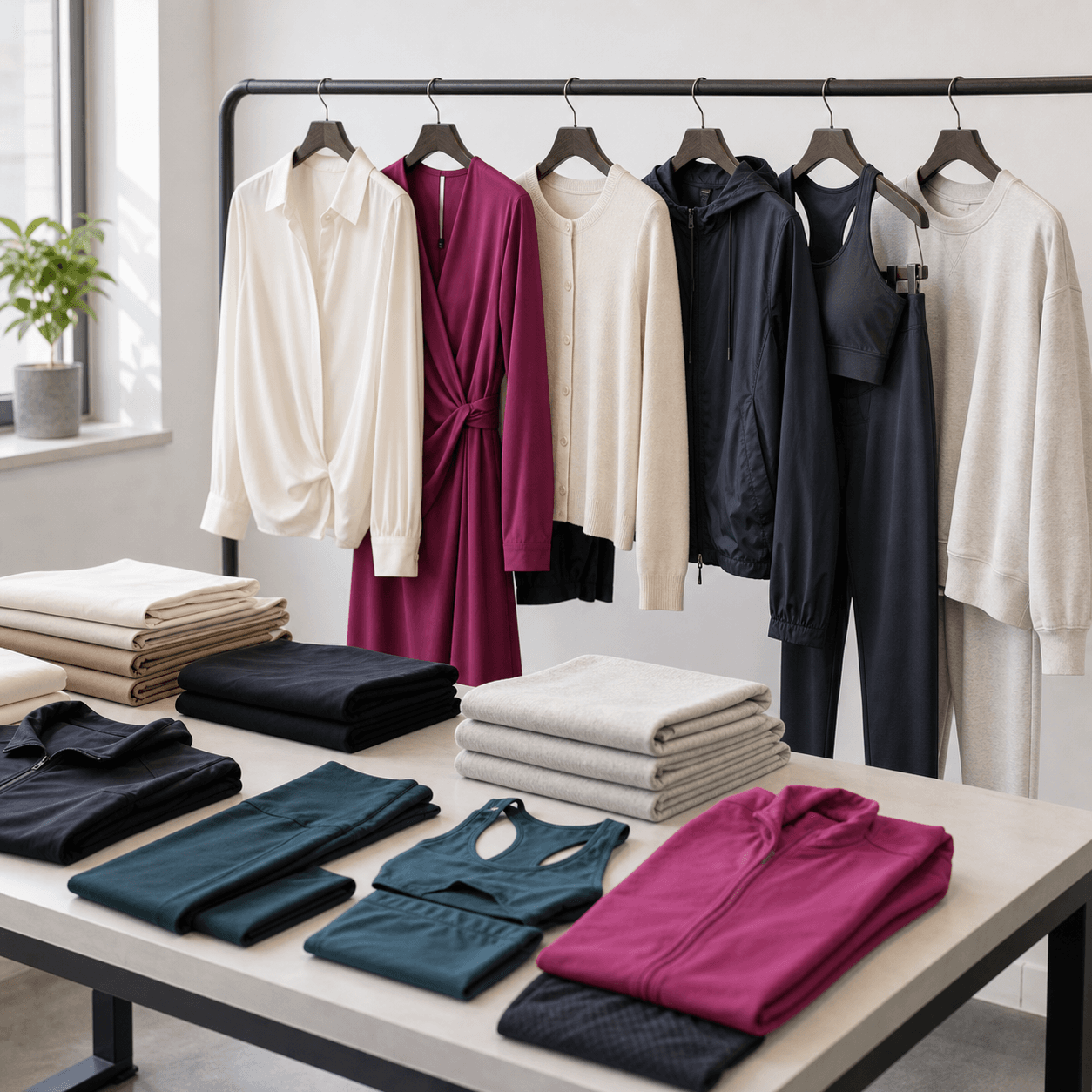
Activewear Performance Collection
Compare training sets, bras, leggings, and coordinated performance styles before planning the private-label package.
View product direction
Coordinated set reference
Hooded Thumbhole Training Set
A reference for planning matching logos, garment labels, colour-size assortments, folding, bags, and repeat presentation.
View product directionFocused core-style reference
Light Support Bra Program
A focused product direction for testing logo scale, label comfort, colour packs, size stickers, and compact packing.
View product directionBuild one connected brief
What belongs in a private label activewear wholesale brief?
A useful brief connects every visible and operational detail to an approval point. It should tell the supplier what the buyer has decided, what evidence is available, and what still needs review. A collection mood board can explain visual intent, but production also needs exact files, measurements, copy, colour references, quantities, and responsibilities.
Keep confirmed facts separate from preferences. "Logo supplied as an editable vector; intended width 45 mm at centre back" is a confirmed instruction. "Prefer a soft, low-profile method; please recommend after reviewing the fabric" is a preference and a request for technical review. "Care-label copy pending market review" is an open item. That distinction is more helpful than presenting every note as final.
| Component | Buyer decision | Factory review | Approval evidence |
|---|---|---|---|
| Product direction | The catalogue style or product reference, intended activity, target customer, selling channel, and role in the collection. | Whether the existing silhouette, construction, material direction, and available options are suitable for the intended programme. | A referenced style, confirmed colour and size plan, and an approved garment sample or documented product standard. |
| Main brand mark | Correct artwork, intended size, colour, location, visibility, and whether the mark should feel subtle, tonal, or prominent. | Compatibility with the fabric surface, stretch zone, seam position, application method, artwork detail, and expected handfeel. | A placement measurement and an approved branding sample on the relevant material or garment area. |
| Garment labels | Brand label, size identification, care and composition copy supplied for the destination market, and preferred placement. | Label material, dimensions, legibility, attachment method, wearer comfort, seam allowance, and production handling. | Approved label artwork or sample, confirmed copy, and a placement reference on the garment. |
| Hangtag system | Artwork, paper direction, shape, information hierarchy, attachment point, string or fastener preference, and barcode fields. | Print and finishing feasibility, hole and string specification, attachment security, and whether the tag could mark the garment. | Approved print proof or physical sample plus a photograph showing the agreed attachment position. |
| Individual packaging | Bag type, warning or recycling copy where required, size sticker, barcode label, folding method, set grouping, and presentation needs. | Bag dimensions, garment bulk, adhesive position, ventilation needs, packing efficiency, material availability, and market instructions. | An approved packed sample or a clear packing sheet with bag, fold, label, and orientation references. |
| Carton and receiving | Carton mark fields, purchase-order reference, SKU data, colour-size assortment, carton quantity, and receiving restrictions. | Carton dimensions, gross weight planning, assortment practicality, packing sequence, and consistency with the final order breakdown. | A confirmed packing list format, carton-mark proof, and final colour-size-carton allocation. |
Logo and garment information
How should logos and labels be planned for stretch activewear?
Start with the mark's job. A small tonal logo may identify a core garment without interrupting its design. A team or studio mark may need clearer visibility. A sponsor layout may require several pieces of artwork and tighter placement control. Provide the correct vector file where possible, intended dimensions, colour, orientation, and a garment photograph or drawing that marks the position.
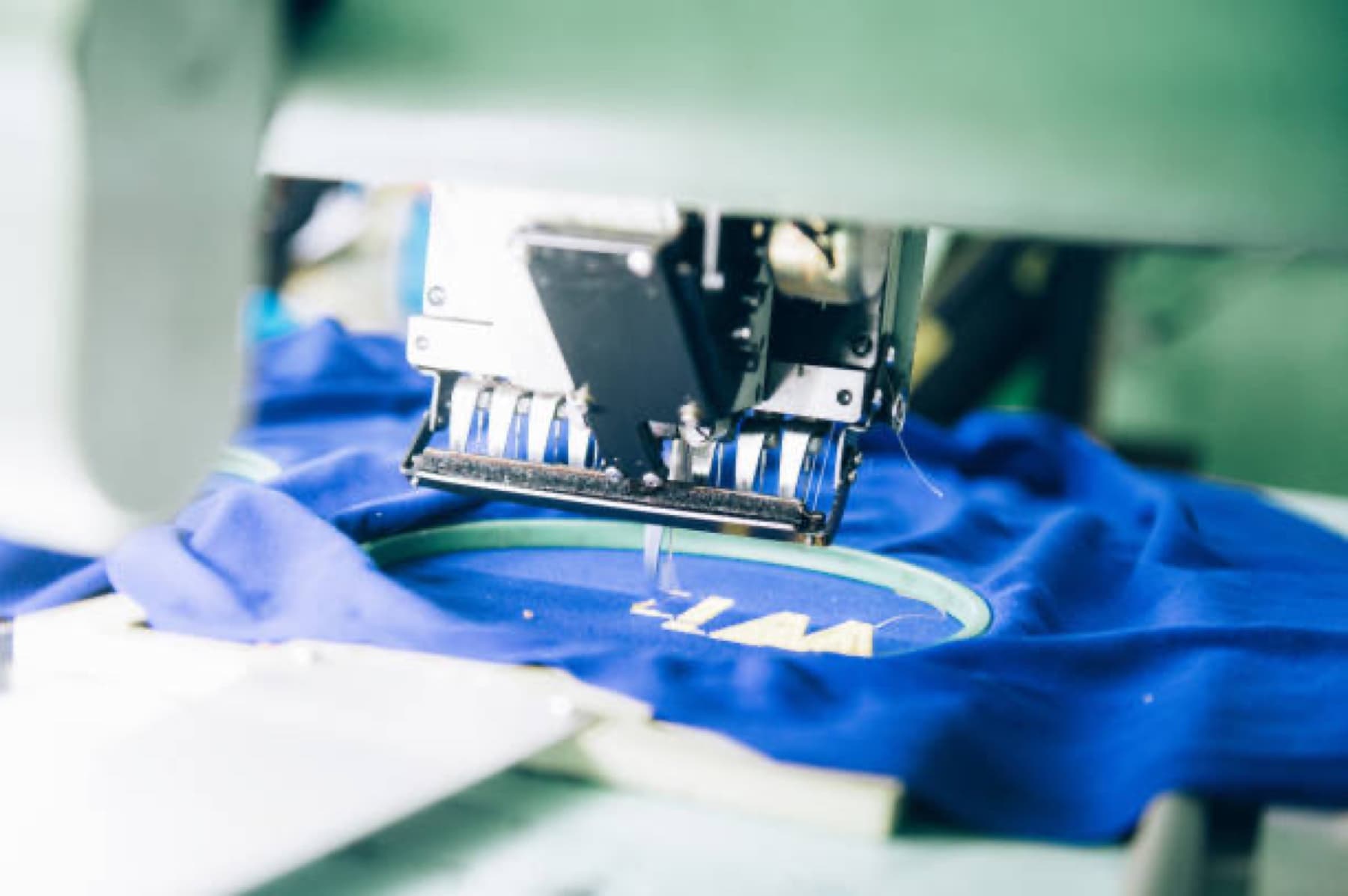
The application method should follow the garment, not fashion jargon. Fabric composition, surface texture, stretch, recovery, placement, seam proximity, artwork detail, desired handfeel, appearance, wash expectation, quantity, and sample result all matter. An embroidery reference may suit one stable panel yet feel heavy or restrict another. A transfer may look crisp, but scale and placement still need to be reviewed where the fabric stretches on the body.
Labels deserve the same attention. The brand label, size indicator, care information, and composition information may be separate pieces or part of a consolidated system. Confirm the copy, language, symbol source, dimensions, material, print or weave quality, fold, seam allowance, attachment, and position. The buyer is responsible for providing destination-appropriate information; the supplier should not invent compliance wording to fill an empty layout.
Control the handoffs
Which approval stages keep a private-label programme consistent?
Private-label mistakes often happen between components. The logo may be approved in one email, the label in a chat, the bag in a spreadsheet, and the colour-size order in a later purchase order. Each piece can look correct in isolation while the packed garment is still wrong. A better workflow builds a small chain of evidence from product choice to the shipment-ready unit.
Name the decision owner on the buyer's side and the working contact on the supplier's side. Record the version and date of every approved file. When a change occurs, state what it replaces and which downstream items must be checked again. If a logo moves after a sample is approved, for example, the product photograph, placement measurement, packaging orientation, and inspection reference may all need an update.
1. Product-direction review
Choose the activewear direction and explain who will wear it, for which activity, at what selling position, and how it fits the wider range. Confirm which details are acceptable as shown and which remain open.
2. Brand-asset review
Collect the correct logo files, label copy, colour references, size system, hangtag content, barcode data fields, and packing instructions. Mark unfinished assets as pending rather than letting placeholders become production copy.
3. Component and placement sample
Review the brand mark, labels, tags, stickers, bag, and attachment details on the relevant garment or material. Check scale, colour, handfeel, stretch response, comfort, legibility, and physical position.
4. Pre-production reference
Consolidate the approved garment, colour, logo application, label set, packing method, and order breakdown into one controlled reference before bulk work proceeds.
5. In-line production checks
Check early output against the approved references, with attention to logo position, label orientation, shade consistency, size identification, stitching around added components, and pack preparation.
6. Final packing and receiving check
Verify garments, assortments, bags, stickers, hangtags, carton marks, packing lists, and buyer-specific receiving fields before shipment preparation.
Commercial planning
What can affect MOQ, quotation, sampling, and lead time?
Buyers frequently ask for one universal MOQ, unit price, or delivery promise before defining the programme. Private-label wholesale does not support a reliable answer at that stage. The selected garment, material and colour availability, size and colour split, brand-mark method, artwork readiness, label quantities, hangtag and packaging components, sample approvals, order quantity, destination, and current production schedule can all change the route.
Component minimums may not align neatly with garment quantities. A custom-woven label, printed hangtag, bag, or sticker can have its own production condition. A buyer should ask how unused components will be handled, whether they can support a repeat order, and how version changes will be controlled. Buying a large quantity of labels to reach an attractive component price is not useful if the product name, size system, care copy, or artwork will soon change.
The number of colours and sizes matters as much as the headline quantity. A balanced core-colour programme may be easier to plan than a fragmented assortment across many colours, each with a shallow size split. Ask the supplier to review the whole breakdown. If the buyer has a target buying position or launch window, share it as planning context rather than presenting it as a guaranteed factory outcome.
Sampling should also be proportional to risk. Existing product direction does not mean every detail can be approved from a screen. Review the garment when fit or material is important, and review the brand application on the relevant fabric. For a complex packed set, an approved packing sample can prevent more expensive sorting or relabeling later. Commercial confirmation should follow a defined scope, not precede it.
Quality beyond sewing
How should QC include private-label details?
Garment inspection and brand-component inspection belong in the same quality plan. A well-sewn legging with the wrong size label is not ready for sale. A correct bra placed in a bag with the wrong barcode can fail at receiving. A consistent logo that sits outside the approved tolerance can make a whole set appear mismatched. The inspection reference should therefore include the finished product as the buyer expects to receive it.
Early checks should confirm that the application and attachment process does not damage the garment. Look at puckering around embroidered or stitched components, heat or pressure marks around transfers, label stitching, alignment, colour appearance, and the behaviour of the branded area when gently stretched. The exact test and tolerance depend on the product and approved standard; the useful principle is to inspect the new private-label operation, not assume it is harmless.
Final checks should sample across styles, colours, and sizes. Verify product identity, logo, label copy, label position, hangtag, barcode or size sticker, fold, bag, assortment, and carton mark. Reconcile physical units with the final order and packing list. If a buyer has a specific inspection method or acceptance requirement, it should be shared before production so the factory can review it against the order.
For an overview of production coordination, in-line checks, finishing, and shipment preparation, review the activewear manufacturing process. The private-label record should sit inside that process rather than arriving as a separate design file after the garment is complete.
Build for repeatability
How can brands prepare for repeat private-label wholesale orders?
A repeat order should begin with the previous approved record, not with memory. Keep the garment reference, colour, size chart or product standard, logo file, placement measurement, branding sample, label artwork, hangtag, bag, sticker, carton mark, packing method, and order breakdown together. Record any approved deviation that occurred during production so it is not rediscovered months later.
Before repeating, confirm what must remain and what may change. Fabric, colour, trim, or component availability can change over time. Artwork and care information may also be revised. Ask for current review instead of assuming that every previous commercial or scheduling condition still applies. When the buyer is building a core programme, stable brand components and a disciplined naming system make replenishment much easier.
Use SKU names that connect product, colour, and size without relying on an image. Keep barcode ownership clear. Decide whether spare labels or hangtags should be stored, shipped, or discarded, and document the version. If a private-label component is updated, stop the old version from drifting into a new order. These administrative details are not glamorous, but they protect the customer experience the brand has worked to create.
Know when the route changes
When does a private-label wholesale project need custom development?
Move beyond the wholesale route when the requested changes alter how the garment fits, performs, or is constructed. Examples include a new pattern or grading direction, different compression or support, a new fabric, a revised panel layout, bonded construction, added pockets, changed straps, a new closure, a different liner, or a purpose-built trim. A catalogue style can still be a useful reference, but it is no longer the production answer.
At that point, prepare a development brief that explains the target customer, activity, measurements or fit priorities, material behaviour, construction, design details, brand assets, size range, quantity assumptions, market, and what the first sample must demonstrate. Expect the sample to answer questions. A development sample may reveal that a panel must move, a strap needs adjustment, a fabric feels different at scale, or a logo position conflicts with a seam.
The custom activewear development route is the appropriate starting point when the product itself requires this work. Private-label elements still matter, but they should be finalised around an approved garment rather than used to conceal unresolved fit and construction questions.
Buyer checklist
What should be ready before sending a private label activewear wholesale enquiry?
The first message does not need to contain a perfect production file. It should, however, let the supplier see the product direction, brand scope, order context, and open decisions. Use this checklist to turn a general request into a reviewable B2B enquiry.
- Identify the selected product page, catalogue reference, or sample and state what you want to keep.
- Describe the intended activity, customer, selling channel, product role, and destination market.
- List requested colours, size range, size assortment, estimated quantity, and launch objective.
- Provide the correct logo or trademark file and identify the intended size, colour, and placement.
- State whether the brand mark should be printed, transferred, embroidered, patched, or reviewed for a suitable method.
- Supply brand-label, size-label, care-label, and composition-label artwork or clearly mark missing copy.
- Define hangtag artwork, material direction, attachment, barcode fields, and retail information hierarchy.
- Explain individual packing: fold, bag, size sticker, barcode label, set grouping, and presentation orientation.
- Provide carton-mark fields, purchase-order references, assortment instructions, and receiving restrictions.
- Separate confirmed requirements from preferences and questions that still need a factory recommendation.
- Name the approval owner for the garment, branding components, packing sample, and final order breakdown.
- Keep one version-controlled approval record that both the buyer and production team can identify.
If several points are unknown, say so. A supplier can respond more usefully to "product selected, logo artwork ready, label copy pending, please review packing options" than to a request that appears complete but leaves hidden decisions for later. The private-label activewear service provides a practical route for aligning the garment with these brand and packing components.
Prepare the enquiry
How can a buyer start a private label activewear wholesale discussion with inPACE Sports?
Start with the closest product direction and the intended business use. Tell inPACE Sports whether the range is for an online brand, retailer, wholesaler, studio, club, team, event, or another B2B channel. Add the colour and size plan, estimated quantity, market, target launch context, and the brand materials already available. Include logo artwork, label and hangtag needs, packing instructions, and receiving fields where possible.
The first review can then separate four things: the product direction that already works, the private-label details ready for execution, the decisions that need a recommendation or sample, and any requested change that moves the project into custom development. Ningbo Yinshan Garments Factory in Ningbo, Zhejiang, China supports the manufacturing discussion behind inPACE Sports; the final scope, commercial terms, sampling route, and schedule remain specific to the confirmed project.
A clear enquiry saves time because the conversation begins with evidence instead of assumptions. Choose the product direction first, then attach the brand and packing brief. If you are undecided between two garments or logo approaches, send both and explain the intended customer. The goal of the first exchange is not to pretend every detail is final. It is to identify the right route and the next approval step.