
When selecting an activewear manufacturer for USA launch, a brand should start with a market-ready brief, not a price-only request. Define the channel, first product roles, intended fit and fabric direction, branding, sample purpose, US-facing product information owner, packing needs, and approval path. Existing styles can support light customisation; a new fit, fabric, structure, colour, or function needs factory-custom development and sample evidence.
A China sourcing conversation becomes more useful when it separates what the brand already knows from what the manufacturer must help test. A founder may have a target customer and a collection mood board but still need to decide whether the first drop is a yoga-led set, a training layer, a legging-led performance range, or a small studio merchandise programme. Those choices affect the product brief, sample sequence, logo placement, size and colour plan, and the people who must approve consumer-facing information before launch.
This guide is for US brands, studios, gym operators, online retailers, and product teams that are considering an activewear manufacturer in China. It is a sourcing and development guide, not legal, customs, tax, or product-compliance advice. The responsible importer and the brand's US advisers should confirm current market requirements before goods, labels, packaging, advertising, or product pages are approved.
Should a US brand begin with wholesale-style branding or factory-custom development?
Start with the decision that changes the work. A catalogue-informed, light-customisation route can make sense when an existing product direction already matches the intended role and the project mainly needs a selected colour direction, logo, labels, hangtags, size-pack plan, and packaging. It is not a promise of stock, fixed price, fixed minimum, or dropshipping. The product direction, material, available sizes, branding method, and commercial scope still need to be confirmed.
Factory-custom manufacturing is the better route when the brand needs a different fit, fabric, compression or coverage direction, panel map, pocket, lining, support structure, garment length, neckline, colour, print placement, or original collection identity. A new product is not fully specified by a reference image. The image can show a visual target, but the brief must turn it into measurements, materials, construction questions, sample purpose, and approval evidence.
A practical way to begin is to compare the intended launch against the activewear wholesale versus custom manufacturing guide. Use a catalogue route when the product reference is genuinely suitable and branding is the main variable. Use custom activewear development when the customer experience depends on a new garment decision that has to be checked on a sample.
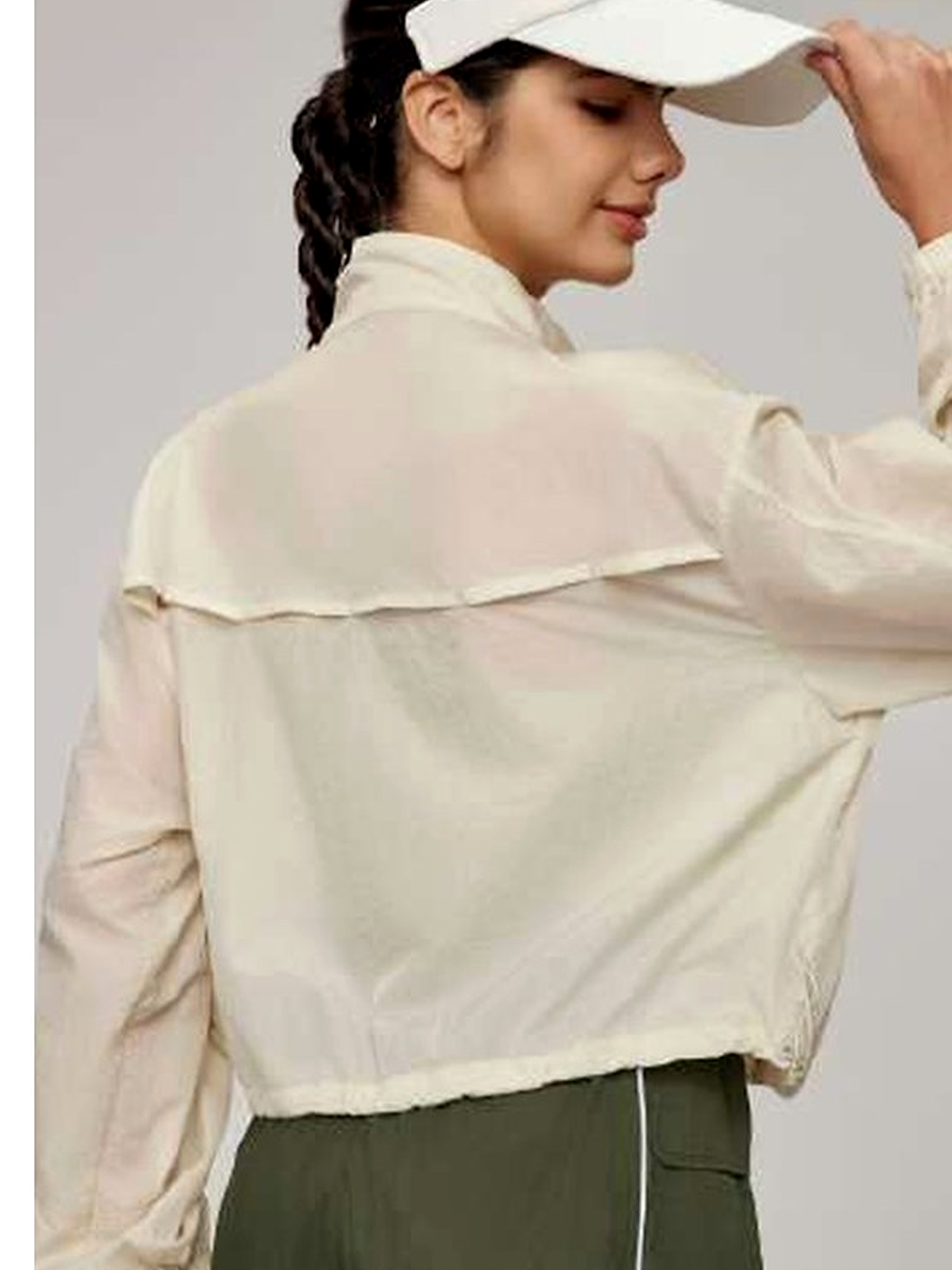
This image is a product-direction reference only. It does not confirm a future project's fabric content, fit, country of origin, label information, stock, price, quantity, test result, production capacity, or delivery date.
Which US sales channel should shape the first activewear brief?
A product brief should name the channel before it lists every garment detail. A direct-to-consumer launch, a studio merchandise programme, a gym-retail range, and a wholesale account plan can use similar silhouettes but place different pressure on size information, product imagery, logo visibility, packaging, merchandising, and reorder records. The factory should not have to infer that context from a request for “US activewear.”
For a direct-to-consumer brand, the first brief may need a clean core-SKU story, wearable product roles, fit evidence, size-chart ownership, approved product information, and a clear handoff between the product team and the people building product pages. A studio or Pilates business may begin with a smaller range of member-facing yoga sets, layers, and branded essentials, where logo placement, labels, presentation, and size assortment are central. A gym or training retailer may need a training top, short, legging, outer layer, and staff or member distinction that keeps the range coherent.
State what the garments must do in the range. A sports bra can be a visible hero product, a support component in a set, or a reference for a deeper custom-development conversation. A legging may be a core volume style, a colour story carrier, or a fit and fabric test. A lightweight layer may create the entry point for a studio collection or the transition piece for a training assortment. Naming the role keeps a China manufacturer focused on the correct decisions rather than treating every style as an isolated image.
| Channel and launch route | Useful first product decision | What belongs in the sourcing brief | Evidence to approve before the next step |
|---|---|---|---|
| Direct-to-consumer activewear | Choose hero SKU, support styles, use occasion, and product-page sequence. | Target customer, product roles, intended fit, size information owner, colour story, logo, packing, and image needs. | Base-size sample, movement and fit comments, approved material direction, product-data responsibility map. |
| Yoga or Pilates studio | Decide between branded catalogue pieces and a custom studio capsule. | Studio use, coverage and layering preference, member-merchandise role, logo, labels, colours, sizes, and packing presentation. | Selected product direction or annotated development brief, logo-placement check, size and colour plan. |
| Gym retail or training programme | Separate staff kit, member merchandise, and retail product roles. | Activity, garment layer, performance questions to validate, product hierarchy, branding, packaging, and channel owner. | Wear and fit observations for the intended movement, graphic proof, sample version, and QC criteria. |
| Wholesale account or distributor | Define the line plan and the information needed by the receiving market. | Product range, customer segment, size and colour pack, labels, cartons, barcodes if applicable, and reorder record owner. | Approved product information, packing brief, sample sign-off, and receiving-data checklist. |
The table is not a consumer merchandising plan. It is a way to give the supplier, manufacturer, factory, brand, and channel team a shared starting point. It also helps a US buyer see which information is still open before a quotation is compared.
How should a brand choose the first product roles?
Avoid beginning with an arbitrary number of styles. A useful first range normally has a clear hero role, supporting roles, and shared decisions that can be tested together. For example, a yoga-led brand may begin with a longline top or bra, a legging, a layering piece, and a selected set relationship. A training-led brand may begin with a T-shirt or tank, short or legging, and a light outer layer. The exact style count, materials, colours, and quantities depend on the project; the purpose is to define what each sample needs to prove.
Use the Yoga Activewear catalog and the Activewear Performance collection as product-direction references, not as a statement that a future order will use the same construction or materials. They can help a buyer identify the role of a bra, top, legging, training layer, or matching set. If the brand needs a new silhouette or a changed construction, mark the reference as a starting point and write down what must change.
For each potential SKU, ask five questions. Who wears it and in which movement or setting? What should the fit, coverage, stretch, recovery, or layering relationship be? Which details are visual and which must perform a specific role? Which colours, logos, labels, or packaging components are being considered? Which items need evidence from the first sample before the brand can decide whether to continue?
That approach is more reliable than naming a fabric as “premium,” calling a legging “squat proof,” or assuming a jacket is suitable for every climate. Those are conclusions that require the actual selected material, construction, size, colour, wearer context, and sample review. A good brief asks the factory to review the question rather than converting a marketing phrase into an unverified production requirement.
What should an activewear manufacturer for USA brief include before quotation review?
A sourcing brief does not need to be a finished tech pack to be useful. It needs a clear boundary between confirmed inputs and questions that the manufacturer should help assess. Give every open point an owner and a next piece of evidence. A material direction can be open, for example, if the brand can describe the intended handfeel, stretch relationship, opacity question, surface, colour, and use case. The manufacturer can then explain what must be sampled rather than guessing the final specification.
| Brief field | What the brand can provide | What the manufacturer should review | Who should confirm it before launch |
|---|---|---|---|
| Market and channel | US sales route, customer, launch format, and product role. | Whether the proposed product, sample route, packing, and communication plan fit the scope. | Brand product owner and channel owner. |
| Product and fit | Reference images, sketch, tech pack, body measurements, coverage or support question, and named movements. | Pattern route, construction questions, fit dependencies, size-grade discussion, and sample purpose. | Brand fit or product owner after reviewing the actual sample. |
| Fabric and trims | Handfeel, stretch, recovery, opacity, surface, lining, elastic, zipper, or label direction. | Feasible material options, seam and logo compatibility, and sample evidence needed. | Brand product owner after material and garment review. |
| Branding | Artwork, logo zone, label, hangtag, and packaging direction. | Application method, surface relationship, placement, approval proof, and production sequence. | Brand owner or approved artwork contact. |
| Product information | Proposed fibre, care, origin, size, and marketing information that needs validation. | What factory-side material, construction, and packing records can support the approval process. | Responsible importer and relevant US adviser, with the brand's product-data owner. |
| Sample and quantity direction | Why the first sample is being made, review version, target timing discussion, and quantity direction. | Sample sequence, production dependencies, cost assumptions, and what remains conditional. | Brand decision owner after sample review. |
The activewear tech pack checklist is useful when the team needs a more detailed drawing, measurement, construction, and version-control structure. The activewear sample plan helps separate a material, development, fit, branding, or approval sample so one garment is not asked to answer every question at once.
Which US-facing product-information questions should be kept in the brief?
For US consumer-facing textile products, product information needs a responsible owner. The Federal Trade Commission explains that most textile and wool products require labels that identify fibre content, country of origin, and the identity of the manufacturer or another responsible business. The FTC also provides guidance on care instructions. See the FTC's Clothing and Textiles guidance, its textile and wool labelling guide, and its care-label guide for current source material.
This does not mean a factory blog can decide a US brand's legal obligations. It means the sourcing brief should clearly identify the person responsible for confirming fibre statements, country-of-origin information, care language, label location, packaging information, marketing claims, and any importer-side questions. If the product, material, country of origin, construction, consumer claim, or intended market changes, the responsible importer or local adviser should reassess the information before it is used on labels or product pages.
Keep the evidence trail practical. Ask the factory to preserve agreed material identity, approved sample version, component list, logo and label artwork, packing specification, carton marks where applicable, and changed or substituted items. The brand should keep the approval record that turns those inputs into consumer-facing copy. Neither a factory photo nor a preliminary material conversation is enough to approve a fibre, care, origin, or performance statement.
How should a brand use reference images without copying a product blindly?
Reference images are useful when they are annotated. A product image can show a proportion, neckline, pocket location, sleeve length, panel break, waistband relationship, or colour-block idea. It cannot independently establish a pattern, fabric weight, fibre content, exact colour, seam route, support level, opacity result, logo method, grading rule, or country-specific product information.
Attach the reference and state what should be retained, what should change, and what requires sample review. For a legging, mark rise, inseam direction, waist construction, pocket location, coverage question, and expected movement. For a sports bra or top, identify neckline, strap route, underband or hem relation, coverage goal, logo zone, and the movements to observe. For a layer, state whether the role is warm-up, travel, studio, staff, or training and how it should relate to the garment underneath.
A compact version log helps when several people comment. Put the sample number, date, material direction, size, colour, image or tech-pack revision, named reviewers, observations, decision, and open question on the same record. That prevents an old photo from becoming the unspoken source of truth after the fit, fabric, or construction has changed.
What should be reviewed on the first activewear sample?
The first sample should answer a defined development question. It might test the overall proportion of a training top, the coverage and waistband relationship of a legging, the fit of a layer over a base product, the feel of a material direction, the position of a logo, or the relationship between two pieces in a coordinated set. Ask the reviewer to use named poses or movements, not a general instruction such as “check quality.”
Record fit observations at rest and in the intended activity. For yoga, that may include reach, forward fold, twist, and a floor transition. For gym training, it may include squat, lunge, overhead reach, pull, or a mobility movement relevant to the product role. The aim is not to make a universal support or performance claim. It is to make the sample feedback precise enough for the next pattern, fabric, construction, or branding decision.
If a project includes printing, embroidery, or wash effects, discuss them only after the selected surface, location, artwork, and sample purpose are clear. inPACE can coordinate sampling support that may include those applications where suitable. Sample planning commonly falls within about 5–10 days and production planning commonly falls within about 25–50 days after scope and approvals are confirmed. These are planning ranges, not promises. Actual timing depends on materials, construction, colours, components, decoration, revisions, quantity direction, partner-factory scheduling, and the approvals still open.
How should supplier, manufacturer, and factory responsibilities connect?
A supplier discussion helps the brand compare product directions, material and trim options, sample assumptions, brand requirements, and commercial questions. A manufacturer discussion turns the selected route into garment, fabric, fit, construction, grading, branding, and sample decisions. A factory discussion implements approved specifications through materials, cutting, sewing, logo application, inspection, packing, and production coordination.
For a US launch, these roles need a clear handoff. The supplier should not assume that a mood board resolves fibre, label, or fit questions. The manufacturer should not treat a preliminary reference image as an approved pattern. The factory should not begin bulk planning from a sample that still has open material, construction, size, logo, label, packing, or product-information decisions.
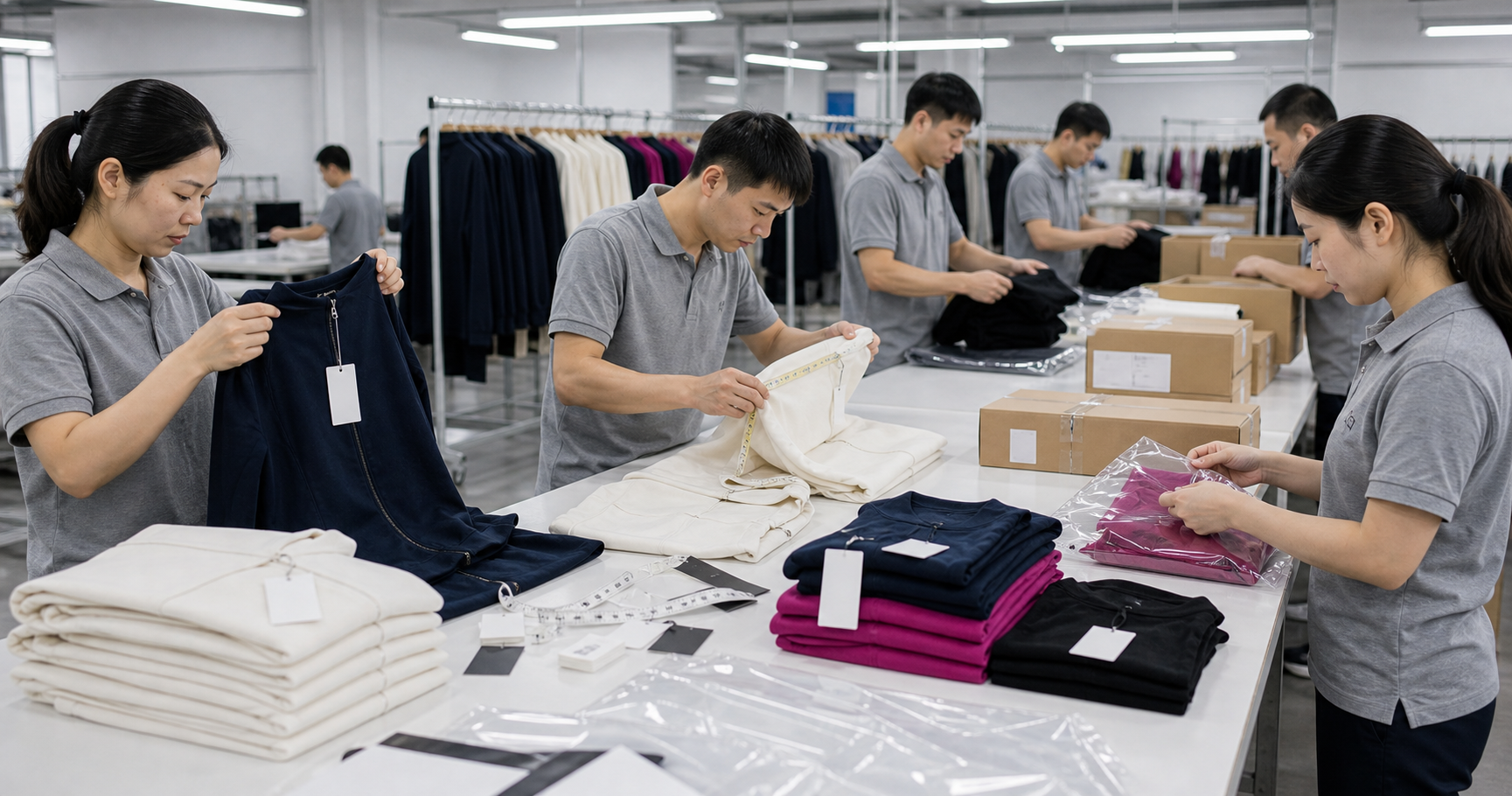
This image supports a QC and packing discussion. It does not prove a specific factory assignment, customer order, material specification, country-of-origin information, inspection result, production capacity, or shipping condition for a future programme.
How inPACE can support a US sourcing decision
inPACE can help a brand turn a market and product brief into a controlled development route. A team can begin with a reference, sketch, sample, or tech pack, then discuss fabric handfeel, stretch, recovery, coverage, structure, and fit questions that need evidence on the actual garment. For a catalogue-informed project, the focus can remain on product direction, logo, labels, and packing. For a new product, the focus can move to sample purpose, pattern and construction questions, material review, and approval records.
Once the style, material, construction, decoration, quantity direction, and approval scope are clearer, inPACE can coordinate an appropriate production path through multiple partner factories, including QC and branded-packing preparation. Yinshan Garments' garment-production experience since 1986 informs that manufacturing judgement and coordination. It is background context, not a claim that inPACE itself has operated for that period, owns every facility, offers fixed capacity, or guarantees timing, price, certification, or performance.
What should QC and packing review before a US launch handoff?
QC should check approved decisions, not a vague idea of quality. The record can identify the sample version, selected material, colour, measurements, construction points, logo location, label artwork, packing components, size and colour assortment, and any project-specific observations that were approved. If a material, component, pattern, label, logo method, size grade, colour, or packing instruction changes, decide whether it affects the original sample approval.
Packing preparation should name what has been approved and who owns outstanding market-facing information. Depending on the project, that can include polybag direction, hangtags, labels, carton marks, barcode data, receiving requirements, product photos, size information, care copy, and reorder records. The activewear packaging checklist offers a detailed handoff framework, while the activewear receiving inspection guide helps a brand prepare the record it will use when cartons arrive.
US activewear sourcing brief checklist
- Name the US sales channel, target customer, product role, and the person responsible for each product decision.
- Choose whether the project is catalogue-informed branding, a small market-test route, or factory-custom development.
- List the hero SKU, support styles, intended layering relationships, and each garment's sample purpose.
- Attach reference images, sketches, tech packs, or physical samples and mark what is confirmed, proposed, open, or not yet tested.
- Define fabric, stretch, recovery, coverage, handfeel, construction, fit, logo, label, packaging, and colour questions without turning them into unsupported claims.
- Provide base size, size range, colour direction, branding files, channel context, quantity direction, and the requested sample evidence.
- Assign a responsible US product-information owner to confirm fibre, origin, care, label, packaging, advertising, and importer-side questions with appropriate advisers.
- Record the sample version, reviewer, movement observations, changes, approvals, substitutions, and open decisions.
- Prepare QC and packing criteria that connect directly to the approved sample and brand files.
- Keep the supplier, manufacturer, factory, brand, and channel handoffs visible before bulk production or launch is discussed.
Three useful product and service paths
Activewear Performance Collection
Product-direction route. The Activewear Performance collection can help a US buyer identify a training-led product role before deciding whether the project is light customisation or a new development route. Confirm the actual style, material, fit, and commercial scope for the project.
Yoga Activewear Catalog
Yoga and studio reference route. The Yoga Activewear catalog can support a first conversation about set, top, legging, and layer roles. A selected reference does not confirm a future programme's fabric, coverage, colour, labels, price, quantity, or availability.
Private Label and Custom Activewear
Choose the development path. Use the private-label activewear service when an existing product direction and branding details are the main decision. Use custom activewear development when the brand needs a new fabric, fit, construction, colour, function, or sample programme.
Start with a US market-ready activewear brief
Send inPACE Sports the sales channel, target customer, first product roles, reference images or tech pack, fabric and fit direction, size and colour plan, branding files, packaging needs, sample purpose, quantity direction, and the owner of US-facing product information. We can discuss whether a catalogue-informed, market-test, or factory-custom route fits the project. When the brief is ready, request an activewear manufacturing quote to move from a general sourcing idea to a controlled sample and production discussion.
FAQ
Buyer questions
How should a US brand choose between private label and custom activewear manufacturing?
Use a catalogue-informed private-label route when an existing product direction fits and the main changes are branding, labels, hangtags, colours, size planning, or packing. Use factory-custom development when the project needs a new fit, fabric, structure, function, colour, or sample programme. Confirm the actual scope with the supplier before quotation or production planning.
What should a US activewear sourcing brief include?
Include the sales channel, target customer, product roles, reference images or tech pack, fit and material direction, base size and size range, colour plan, branding, packing, sample purpose, quantity direction, open questions, and the people who own product, sample, and US-facing information approvals.
Can a reference image serve as a full activewear specification?
No. A reference image can communicate a visual direction, but it does not prove pattern, fabric, fibre content, exact colour, seam route, support, opacity, logo method, grading, country-specific product information, or commercial terms. Mark what should be retained, what should change, and what the sample must verify.
What US label information should be discussed with an activewear manufacturer?
The sourcing brief should identify the brand owner responsible for confirming fibre, country-of-origin, care, label, packaging, advertising, and importer-side information. FTC guidance covers textile and care labelling, but the responsible importer and relevant US adviser should confirm current requirements before the information is approved for consumers.
How should a brand review its first activewear sample?
Give the sample one defined purpose, such as checking fit, material direction, coverage, construction, logo placement, or the relationship between two set pieces. Record the version, size, material, named movements, observations, requested changes, reviewer, and open questions so the next sample has a clear decision boundary.
How long does an activewear sample and production plan take?
Sample planning commonly falls within about 5–10 days and production planning commonly falls within about 25–50 days after scope and approvals are confirmed. These are planning ranges, not promises. Material availability, construction, colours, components, decoration, revisions, quantity direction, scheduling, and unresolved approvals affect the actual route.
Can inPACE coordinate China activewear production for a US brand?
inPACE can discuss product, fabric, fit, sample, logo, QC, packing, and production-coordination requirements from a clear brief. It can coordinate suitable routes through partner factories after the style, material, construction, decoration, quantity direction, and approval scope are confirmed. Final timing, price, capacity, and market requirements remain project-specific.