
A German activewear brand looking for an activewear manufacturer for Germany and EU sales should separate what is already decided from what must be tested, approved, or reviewed for its intended market. Begin with the product role, target wearer, route, material and fit questions, brand files, packing flow, and the owner of consumer-facing information. Existing-style branding can support a defined assortment; a changed fit, fabric, coverage, support, or construction needs factory-custom development and sample evidence.
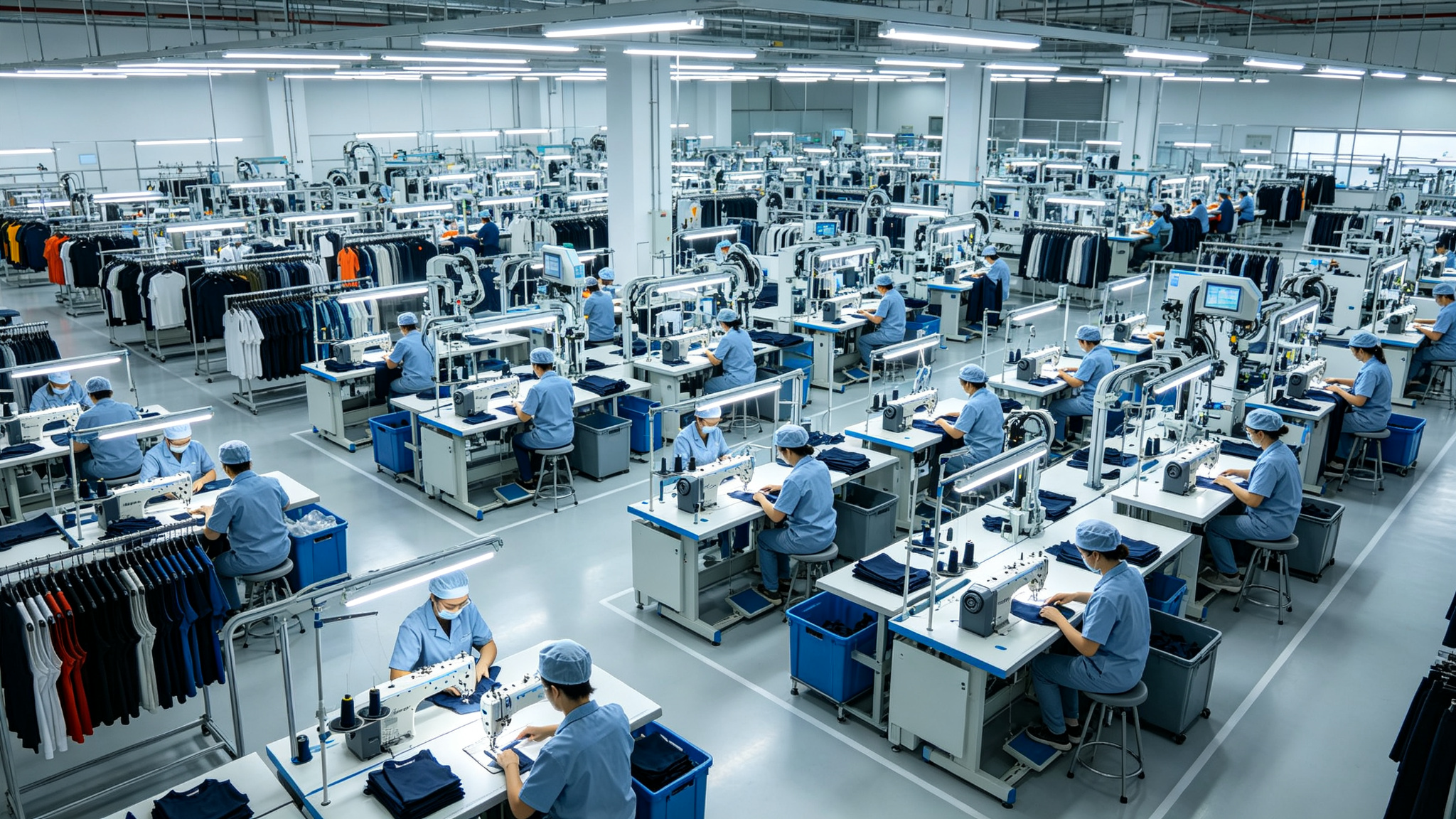
*Factory workflow reference: it illustrates controlled handoffs between workstations, not a capacity, timing, certification, or product-specification claim for this Germany brief.*
What should an activewear manufacturer for Germany brief cover before proposals?
The first decision is not a price target. It is the product route. A brand may already have an existing training top, legging, bra, layer, or set that it wants to brand with approved artwork, labels, and packing. That is a catalogue-informed or light-customisation conversation. The actual fabric, colour, size range, artwork method, quantity direction, and packing still require confirmation.
Factory-custom development is the more useful route when the desired garment differs from a reference in a way that affects development: a different rise, inseam, armhole, neckline, panel layout, coverage target, support direction, pocket, waistband, mesh position, recovery question, or fabric hand. In that case, the buyer should use a custom activewear development route and describe the desired outcome rather than ask a factory to infer it from unlabelled screenshots.
For a Germany-focused launch, assign one person to own the product information that will reach the market. That owner should know which countries are in the first sales plan, which information is already confirmed, and which statements remain conditional on a selected material, approved sample, or external advice. This article is a sourcing guide, not legal advice.
Which activewear route matches a Germany and EU sales plan?
The route can vary by product. A brand might keep an established training layer close to an existing direction while developing a retail legging with a new waistband, opacity question, and fabric feel. Combining these as one undefined request makes a supplier comparison less useful.
| Buyer situation | Useful route | What the first brief should show | What still needs approval |
|---|---|---|---|
| A product role is already established and the main work is brand presentation. | Existing-style branding / light customisation. | Product reference, logo zone, labels, hangtags, packing, size-colour direction and channel. | Actual style, material, colour, brand application, quantity, and packing components. |
| A garment needs a changed fit, material, construction, support, or function. | Factory-custom development. | Annotated reference, measurements, intended wearer and movement, material questions, sample purpose and open decisions. | Pattern, material, fit, construction, sample evidence, consumer wording, and production files. |
| A new collection needs a limited learning cycle before a broader launch. | Small-batch custom discussion. | Core product roles, what the sample or limited run must test, feedback method and possible next decisions. | Scope, quantities, materials, pricing, schedule, repeat-order assumptions, and evidence from the review. |
The Activewear Performance Collection can help a brand name training-product roles in an existing-style conversation. It is a product-direction reference, not evidence that a particular material, colour, style, or quantity is available for a German programme. A brand that needs product-specific private-label presentation can also review the private-label activewear service. Both pages become more useful when the buyer states what is fixed and what it is asking the factory to explore.
Why should a German buyer name the market-information owner early?
Product development and market-facing wording follow different but connected decisions. The factory needs approved references, materials, components, artwork, labels, and packing instructions. The brand needs a named owner who can determine whether its selected fibre information, product-page copy, care or claim wording where used, packaging statements, and country-specific information still match the approved product.
Germany's Textile Labelling Act applies to textile products made available on the market and implements Regulation (EU) No 1007/2011. The legal text addresses fibre names, fibre-composition labelling and certain non-textile animal-origin components. It also extends market-surveillance treatment to textile products offered electronically. That does not mean a supplier should give legal conclusions. It means a brand should not leave material composition, label copy, ecommerce content, and evidence ownership as an informal afterthought.
The European Commission's Your Europe textile-label guidance explains the buyer handoff in practical terms. For textile products within the rule's scope that are marketed to consumers in the EU, fibre-composition information must be shown on a label or marking; the guidance describes the required composition order and readability, and says consumer-facing information must be translated for each EU country where the product is made available to consumers. It also notes that, for business-to-business sales, labels may be replaced or supplemented by accompanying commercial documents. Regulation (EU) No 1007/2011 sets the detailed scope and exceptions, so the brand's market-information owner should confirm how it applies to the exact garment and sales route with the appropriate reviewer.
Who owns each EU textile-information handoff?
Use this table to assign the work before a label or product listing is released. It is a coordination aid, not a legal determination.
| Handoff | Brand or importer owns | Manufacturer can contribute | Record to keep |
|---|---|---|---|
| Product and destination | Name the style, components, sales countries, channel, and who reviews market-facing information. | Identify the material and composition information available for the confirmed product scope. | Style and material version linked to the sample under review. |
| Fibre wording and label file | Confirm the final wording, required destination languages, artwork, and reviewer for the actual market route. | Work from the approved file and flag when a requested change no longer matches the identified garment or material version. | Approved label artwork, language set, reviewer, and revision date. |
| B2B paperwork | Decide whether the transaction uses accompanying commercial documents and name the owner who retains them. | Keep agreed product and material records identifiable against the order or style reference. | Document name, version, recipient, and product reference. |
| Online product information | Approve the consumer-facing listing and any product or environmental claims for the named SKU. | Supply only product facts that can be connected to the confirmed material and sample records. | Approved copy and the evidence/reviewer attached to the same SKU version. |
The manufacturer should not approve a brand's legal interpretation or consumer claims. If a destination, fibre composition, component, label language, or product-page statement changes, route that change back to the named brand or importer reviewer before the production file is treated as final.
This is particularly important when the initial scope includes more than Germany. A brand should list the intended EU destinations, language needs, ecommerce presentation, label and packing files, and the person who owns each decision. A good manufacturer brief makes these dependencies visible without promising a compliance result.
How should fabric and construction be described without turning a request into a claim?
Describe the buyer's product question before describing a performance conclusion. A brand can ask for a softer hand, a more stable waistband, coverage during named movements, a lighter layer, a more structured support direction, a particular stretch or recovery question, or a mesh position. Those are useful development inputs when they are tied to a garment role, size, construction idea, and sample-review plan. They do not prove that an unselected fabric will deliver a universal comfort, support, opacity, or durability outcome.
Use the fabrics and trims review to put composition, handfeel, stretch direction, recovery question, surface, lining, mesh, elastic, zipper, binding, and label compatibility into a structured conversation. Record what is a reference, what is supplied information, what has been selected, and what must be checked on the actual sample. If the material changes after a fit review, reopen the fit, coverage, support, seam, artwork, care, packing, and consumer-copy questions that depend on it.
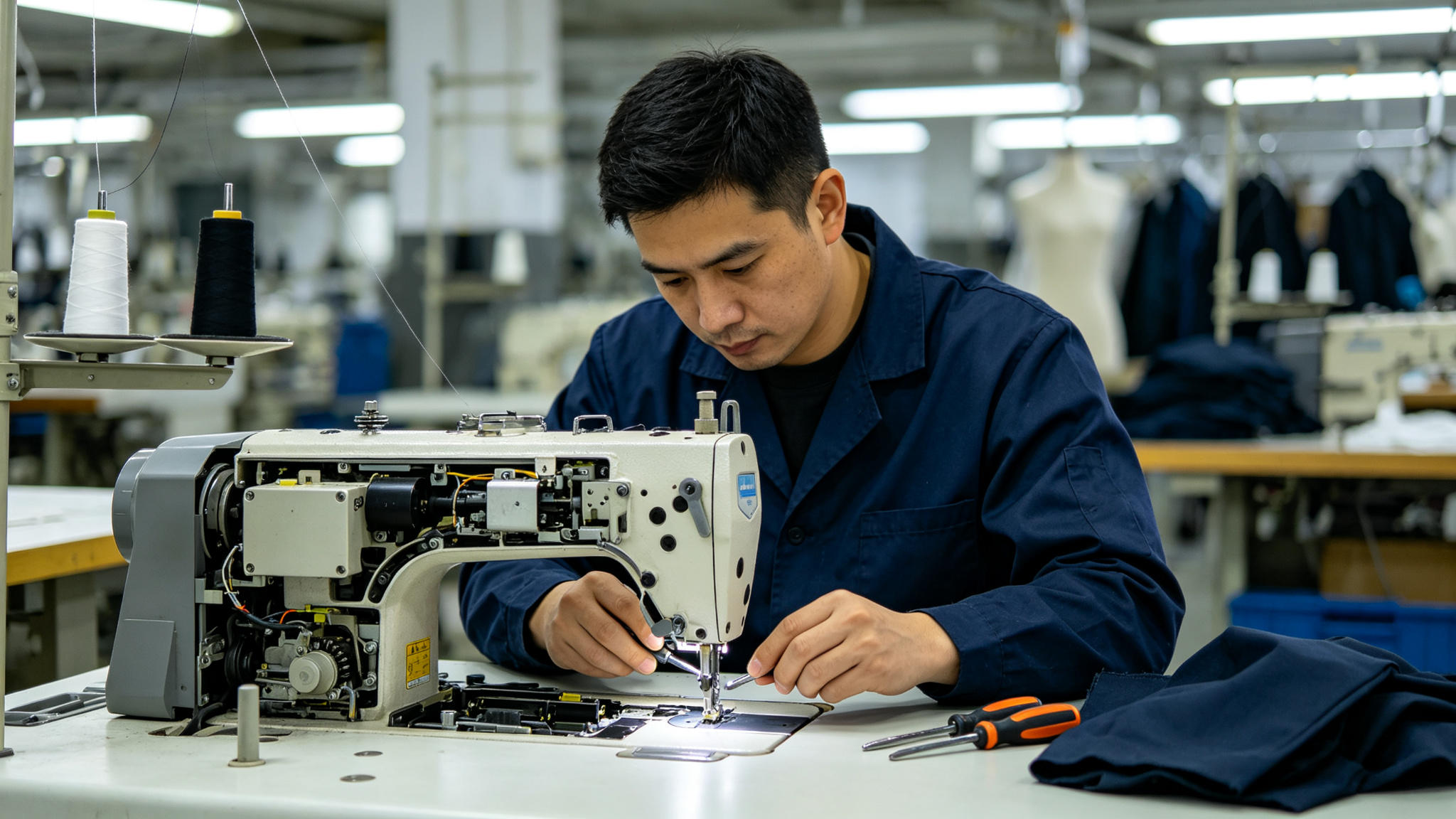
*Factory workflow reference: it supports the need for versioned production files and review points; it does not prove a particular machine, component, or garment outcome for this project.*
What should a German activewear sample prove?
Give each sample a job. A legging sample may need to answer waistband stability, rise, coverage during selected movements, seam comfort, stretch, recovery, logo-zone behaviour, and measurement questions. A bra or fitted top may need to answer neckline, underband direction, armhole comfort, coverage, support direction, and interaction with a layer. A training jacket may need to answer body length, sleeve movement, collar, zip, pocket, and layering choices.
The activewear sample plan is useful because it helps the buyer distinguish a design reference from a production approval. Record the style version, material direction, colour, size, reviewers, movements, observations, decision owner, evidence still needed, and the specific change requested. A sample is not a universal test result or a substitute for market review.
inPACE can coordinate sample development across cooperating production factories and discuss printing, embroidery, or wash effects where the selected material, construction, application area, and project scope make them suitable. Sample and production planning must still be confirmed after scope and approvals; supplier coordination does not create a fixed time, capacity, price, or test claim.
How can a brand compare manufacturer responses fairly?
Compare the assumptions before comparing the headline figure. Ask every manufacturer to state the product route, reference source, fabric and component direction, fit and construction questions, sample purpose, branding scope, size-colour plan, packing needs, available evidence, and open decisions. A proposal that assumes another material, fewer colours, a different logo method, or missing label and packing work is not a like-for-like answer.
Use the manufacturing workflow to identify how approved material, construction, branding, QC records, and packing instructions must travel together. For a German brand, the useful supplier question is: “Which assumptions are you using, which questions need a sample, and which consumer-facing files must the brand owner approve before a production-facing file is treated as final?”
The comparison should also distinguish a factory's production discussion from the brand's commercial and market decisions. Freight, customs, consumer-law conclusions, tax, product testing, and destination-specific obligations should stay with the appropriate owners and advisers. Keeping those boundaries clear makes the factory brief more usable, not less complete.
How should packing and online sales information enter the brief?
Packing is a handoff from the approved garment to the receiving and sales channel. State whether goods will move to a German warehouse, a marketplace-preparation partner, a retailer, another EU receiving point, or a controlled internal location. Include the approved product name or SKU, sample version, size-colour plan, barcode requirements where applicable, label status, packing components, fold direction, carton marks, and the owner of final market-facing information.
For online retail, do not treat a product listing as a separate marketing task that can wait until after production decisions. It may depend on the selected material, confirmed composition information, final product photography, label statement, component changes, and language or destination review. The buyer should keep a version log so a changed fabric, lining, component, logo method, or grade does not leave earlier consumer copy or packing files unexamined.
Germany's packaging-register guidance also illustrates why responsibility should be allocated rather than assumed. It describes registration, system participation, and reporting steps for parties considered producers under German packaging rules, and notes that online-retail and import situations can alter the analysis. A factory can supply agreed packing data; a brand should seek appropriate advice to decide its own role and obligations.
What should the first production brief contain?
Use this checklist before asking a manufacturer for a formal review:
- Name the first sales countries and channel: online retail, wholesale, studio, gym, retailer, or a defined mix.
- Identify the buyer's route for each product: existing-style branding, factory custom development, or a small-batch learning discussion.
- Classify every reference: fit, fabric, construction, colour, product role, branding, or visual direction.
- State the wearer, activity, product role, base size, size range, and layering context.
- Record material questions: handfeel, stretch, recovery, coverage, surface, lining, mesh, and component compatibility.
- Identify the named sample questions for fit, movement, support, coverage, seam comfort, and brand application.
- Provide controlled artwork and record logo zone, label, hangtag, packaging, and version status.
- Name the owner of fibre information, product-page wording, packaging statements, and destination-specific review.
- State the size-colour plan and quantity direction without presenting either as a fixed production commitment.
- Identify receiving point, SKU logic, barcode needs where applicable, carton information, and packing owner.
- Separate confirmed information from questions the sample, supplier, buyer, or adviser must resolve.
- Ask the manufacturer to state assumptions in writing before a price or delivery discussion is compared.
How should change control work after a sample review?
An approved sample should become a controlled reference, not the last attachment in a long email chain. Record the version, material direction, colour, size, measurements, construction, logo method, label location, packing decision, reviewer comments, and open points. That record gives the brand and manufacturer a shared starting point; it is not an unconditional production instruction.
Before bulk approval, compare the production-facing files with the actual reviewed sample. If a material, colour, grade, pattern, construction, logo method, label text, packing item, or intended sales country has changed, assign an owner to decide whether the prior sample evidence and market-facing wording still apply. This helps a German brand maintain traceability when product, merchandising, ecommerce, and factory contacts are not working from one room or one version.
For repeat orders, the same record distinguishes a confirmed prior decision from a fresh request. A re-order can still need review when the fabric, component, branding, packing, receiving channel, or market information changes. The objective is controlled comparison, not an assumption that a previous order settles every later commercial or product question.
How should the brief connect a German launch to a wider EU plan?
Avoid a vague instruction to make one “EU version” of the product. Start with a country-and-channel list: Germany-only online retail, a German warehouse feeding several markets, a wholesale partner, a studio network, or a combination. The list gives the brand's market-information owner a practical basis for separating files that are common across the range from details that require a country, language, channel, or adviser review.
The production brief should not speculate about the answer. It should make the questions traceable: Which fibre composition is being reviewed? Which label artwork is the controlled version? Which product-page statement is supported for the selected garment? Which packing component and barcode file apply to the receiving route? A tech-pack checklist can keep measurements, construction, components, artwork and revisions together. It cannot turn a reference garment, a supplier email, or a general EU sales intention into an approved consumer claim.
For a cross-border launch, set a decision date beside each open issue and name the person who can close it. The factory can then see whether it should hold an item as a sample question, await a final file, or produce against an already controlled instruction. That distinction helps prevent a late commercial request from being mistaken for a change that was physically tested on the sample.
What evidence should stay with a factory-custom brief?
The useful file is a small, controlled evidence set rather than a large unlabelled folder. Keep the versioned reference images or garment notes, annotated measurements, material direction, component list, sample request, colour direction, artwork file, label and packing drafts, fit comments, receiving instructions, and change log. Each item needs an owner and a status: reference only, proposed, approved for sampling, approved for production, or still open.
This structure lets the brand compare a factory response to the same source of truth. It also lets teams revisit why a seam, fabric, label location, or packing item changed. When a buyer is exploring China-based production, the activewear supplier route can be used to frame the factory conversation; the business still needs to confirm project scope, materials, samples, commercial terms, and the final files.
An adjacent US manufacturer launch brief shows the same discipline of separating factory input from brand-owned market information. It is not a substitute for Germany or EU review. Its useful lesson is operational: every external market discussion becomes more manageable when the product team, ecommerce team, and factory can see which statements describe a tested product and which are still assumptions.
How should product, merchandising, and factory teams resolve a late change?
Treat a late change as a documented decision rather than an informal correction. A merchandiser may want a revised colour, logo zone, or pack presentation. A product developer may be concerned that the new material or construction no longer matches the reviewed sample. An ecommerce colleague may see that the existing product page, fibre wording, size guidance, or imagery would no longer describe the revised garment. None of those questions should be hidden inside a request to “update the file.”
Give the revision a number and record the affected product area, the reason, the prior version, the requested change, the person who asks for it, the person who approves it, and the evidence still needed. Then separate what the manufacturer can assess from what the brand's market-information owner must decide. A revised sample can answer a named fit, construction, coverage, or branding question. It does not automatically approve online copy, packaging claims, a label statement, or a general performance promise.
This method is also fairer to a supplier. The factory can state whether its proposal is based on the earlier version or the revised one, which material and component assumptions it uses, and which points still need a sample or buyer decision. The German brand can compare like with like while protecting its own sales and product files from silent drift.
What can inPACE discuss from a well-prepared Germany brief?
inPACE can discuss catalogue-informed product direction, factory-custom development, material and fit questions, sample planning, branding compatibility, QC and packing records, and coordination across cooperating production factories. That discussion can draw on more than 30 years of garment-production experience in the wider production context without turning that experience into a fixed capacity, certification, price, schedule, or legal conclusion.
Share the product roles, references and their purpose, route, material and fit questions, controlled artwork, sample purpose, receiving plan, and owner of German and EU market-facing information. Send an activewear product brief to inPACE to separate the choices an existing-style branding programme can address from the decisions that need factory-custom development and sample evidence.
Product directions
Explore relevant activewear products
Use these product pages as practical references for your brief, then confirm materials, fit, customization, and production details through sampling.
Custom Activewear Development
Use factory-custom development when a German or EU sales plan needs a new fit, fabric, coverage, support, construction, or controlled sample review rather than an existing-style branding discussion.
View product directionActivewear Performance Collection
Use this product-direction collection to define training roles, layering, movement questions, and the product references that belong in an initial manufacturer brief.
View product directionPrivate Label Activewear
Use the existing-style route when logo, labels, hangtags, packing, and a defined assortment are central, while confirming the actual garment, material, colour, brand application, and quantity for the programme.
View product directionFAQ
Buyer questions
Can a German activewear brand start with an existing product direction?
Yes, when the product role already fits and the meaningful changes are brand presentation, labels, hangtags, packing, and assortment planning. The actual garment, material, colour, size range, application method, quantity, and packing still need confirmation. A changed fit, fabric, coverage, support, construction, or function needs a custom-development and sample conversation.
Who should own consumer-facing fibre and product information?
The brand should assign an owner for its final market-facing information. A manufacturer can provide agreed product and material data and work from approved files, but it should not replace the buyer's legal, regulatory, or destination-specific review.
What should an activewear sample prove before a Germany launch?
It should answer named product questions such as fit, movement, coverage, support direction, seam comfort, material behaviour, branding placement, label position, or packing presentation. Record its version, inputs, reviewers, observations, decisions, and open questions.
Does an EU fibre-composition rule settle all product information for every country?
No. The textile-labelling framework addresses fibre-composition information, but a brand should separately identify the countries, language needs, sales channel, and other product or consumer-information questions that require review for its actual plan.
How should German buyers compare manufacturer proposals?
Compare the assumptions before comparing a number. Confirm that the product route, material direction, construction, branding, sample purpose, size-colour plan, packing, and open decisions are the same. Otherwise, the proposals may describe different garments or different levels of completed work.
Are sample and production timings fixed for EU-focused activewear?
No. Planning depends on the selected material and components, construction, artwork readiness, revision rounds, quantity direction, schedules across cooperating production factories, and approvals. Discuss a project-specific plan after the relevant inputs are reviewed.
What should be included in the first inquiry?
Send the sales countries and channel, product roles, reference source and purpose, route preference, fit and material questions, size-colour direction, branding files, sample purpose, receiving plan, packing needs, and the owner of market-facing information. That gives the manufacturer a practical basis for identifying missing information and proposing the next review.