
How should a brand validate an activewear color trend before sampling?
Activewear color trend validation begins when a brand turns a preferred colour into a controlled product question. The brief should connect the target customer, product roles, colour reference, material direction, development evidence, sample purpose, logo and component relationships, labels and packing, size–colour quantity context, approval owner, and the next bulk decision. A trend image or old market statistic does not approve the product.
The question is not whether a colour looks appealing in isolation. It is whether the colour has a defined job in a real collection, behaves as intended on the selected material, works beside the planned components and branding, and has enough evidence for the team to decide what comes next. A colour can be promising for a bra, a core legging, a light layer, a panel, a small logo ground, or a presentation item. Those roles need different proof.
This guide provides a B2B evidence chain from colour direction through sampling and bulk handoff. It does not treat historical reports, digital palettes, product photographs, lab language, or a prior sample as a guarantee of current demand, exact colour, material, price, MOQ, availability, or production timing. Each project still needs its own confirmed inputs and evidence.
Why is liking an activewear color not enough for a range decision?
A colour preference is a useful starting point, but it does not explain customer, product, material, component, or commercial fit. A bright signal may suit a limited visual capsule while a neutral or darker companion carries the core product role. A colour that looks strong on a paper reference can change on mesh, rib, smooth knit, lining, or a more reflective surface. It can also compete with a logo, print, label, or packing element if those relationships are not assigned a role.
Separate the trend hypothesis from the product decision. The hypothesis may say that a target customer responds to a particular colour family, contrast, or mood. The product decision must say which garment carries that direction, which material and components are being considered, what must be reviewed on the sample, and who decides whether to continue, revise, or stop. This keeps a creative observation from becoming an unrecorded production instruction.
Older trend figures and broad forecasts can help a team formulate questions, but they are not current facts to paste into a 2026 product promise. Revalidate the actual customer, channel, price positioning, product mix, material direction, and sample evidence for the current project.
What is the evidence chain for activewear color trend validation?
A clear evidence chain helps a team see where a colour direction becomes a product decision and where more proof is required. The steps can overlap, but the owner and next action should stay visible.
| Validation stage | Main decision | Evidence to connect | Result to record |
|---|---|---|---|
| Trend hypothesis | Why this colour may matter to the intended customer or channel | Current direction, target wearer, product family, and visual reference | Working hypothesis, not an approved production specification |
| Product role | Where the colour belongs in the range | Hero, core, support, accent, or presentation role across named products | Product allocation and what should remain neutral or separate |
| Colour reference | Which colour is being discussed | Physical or agreed reference, version, owner, and affected product areas | Current source of truth for the project conversation |
| Material and component review | How the colour behaves on the intended product | Body material, mesh, lining, trim, logo, print, label, and packing context | Open questions and sample evidence needed |
| Development evidence | Whether the proposed result is reviewable | Colour-development evidence such as a relevant strike-off, lab-dip discussion where appropriate, or material comparison | What the evidence shows and what remains unconfirmed |
| Garment sample | Whether the colour works at product scale | Selected style, size, construction, components, branding, and intended use context | Approve, revise, compare another option, or change scope |
| Bulk handoff | Whether the current approval record is complete enough to proceed | Approved version, comments, size–colour quantities, labels, packing, and quality priorities | Current production package and any remaining project confirmations |
The table does not prescribe one technical route for every colour. A project may need a material comparison before a garment sample, or it may need a revised artwork or trim proof after a first sample. The useful discipline is to document what the current evidence applies to and what it does not.
How should brands assign a trend color to product roles?
Start with the product mix. Name the hero product, core product, supporting layer, controlled accent, and presentation items. A colour can appear differently on a bra, tee, legging, short, jacket, label, hangtag, bag insert, or carton mark. Giving each use a role prevents a moodboard from becoming a request to apply the same colour to every product and component.
The Activewear Performance Collection can help a buyer identify which silhouettes might carry a trend-colour discussion before the exact material and colour are confirmed. The Light Support Bra Program is useful for naming a bra body, strap, underband, logo background, companion lower body, and the first colour-and-component question. These are product references, not proof of a fixed colour, material, availability, or production condition.
A well-scoped colour map also states what need not match. A core legging may use a quieter body while a bra or layer carries the visible colour direction. A logo, zipper, elastic, label, or packing element can be a close match, controlled contrast, or still-open decision. Recording the intended contrast makes review more productive than asking a supplier to make a set “feel more on trend.”
What should a color reference and development record contain?
Use a current reference that the buyer and supplier can identify. Record the version, owner, target product areas, material direction, component relationships, and the decision it is intended to support. If the team is using a digital palette or an inspiration image, call it a working direction rather than a final production standard. Pair it with the evidence needed to evaluate the desired result on the actual material and product.
Some projects use colour-development evidence such as a material comparison, a print strike-off, or a lab-dip discussion where the selected material and supplier process make it relevant. The evidence should be tied to its scope. It may support one colour on one material, not every component, print method, size, or product in the range. Note the product, material, related components, reviewer, and the observation that the evidence is meant to answer.
The activewear color approval guide is the adjacent resource for recording decisions across body material, trims, logo, labels, and samples. Use it once a team moves from exploratory direction to an approval record. This article stays focused on validating whether the trend direction deserves that next step.
How do material, logo, trims, and packing change a trend-color decision?
Colour is not approved in a vacuum. The body material can affect texture, coverage, reflection, and apparent depth. Mesh, lining, elastic, binding, thread, zipper tape, logo artwork, print, labels, and packing can reinforce or distract from the intended product role. Review them together when the relationship affects what a customer will see or what a sample needs to prove.
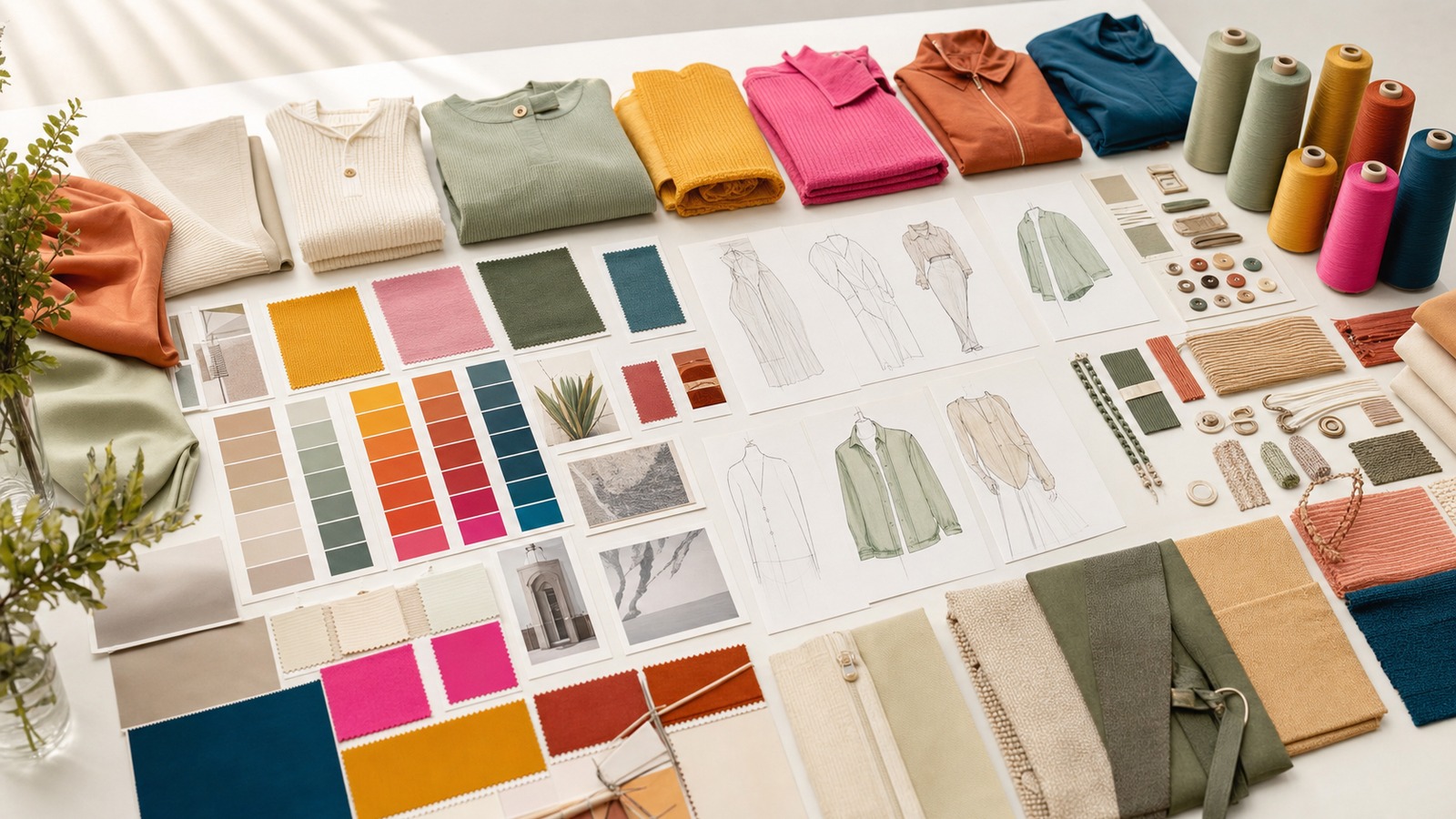
The image above is a planning reference for linking colours, materials, trims, and product ideas. It is not an inPACE product range, a stock statement, or a production approval. A project still needs the selected material, colour reference, components, and sample evidence before the team decides whether the visual direction is viable.
| Review area | Buyer question | Evidence to request or record |
|---|---|---|
| Body material | Does the selected surface support the intended colour role? | Material direction, target colour reference, product area, and controlled comparison |
| Mesh, lining, and panels | Does the connected structure create the intended contrast or coverage? | Placement, underlayer, components, construction context, and garment review |
| Logo and print | Is the current artwork clear and balanced on the selected background? | Artwork version, method, scale, placement, reviewer, and proof |
| Trims and components | Should each component match, contrast, or remain neutral? | Elastic, binding, thread, zipper, label, and colour-role notes |
| Labels and packing | Does the presentation support the range without being mistaken for garment approval? | Current files, proof owner, packing requirements, and separate decision status |
Keep garment and presentation approvals separate. A colour-approved hangtag does not approve the body fabric. A logo proof does not approve a lining or mesh relationship. A detailed record helps a factory and brand keep the correct question attached to the correct item.
What should the first color-and-product sample prove?
The first sample should answer one written question. It may show whether the selected colour reads correctly on a specific body material, whether a companion panel creates the intended contrast, whether a logo is legible, whether a lighter body needs a different lining discussion, or whether the proposed product role should move from hero to accent. Define the reviewer, decision owner, required evidence, and action that follows each possible result.
The activewear sample plan guide helps a buyer organise which physical pieces are needed to answer the next product questions. Treat the colour result as one item in that plan. A sample can support a defined decision, but it does not automatically approve every later style, colourway, material, component, or bulk condition.
inPACE can coordinate sampling support that may include printing, embroidery, wash effects, and other project-appropriate steps. As a usual planning guide, samples often take 5–10 days and production often takes 25–50 days after scope and approvals are confirmed. Actual timing depends on style complexity, material availability, colourways, decoration, labels, packing, quantities, revisions, and production scheduling, so it must be confirmed for the project.
How does a team decide whether its color evidence is sufficient?
Evidence is sufficient for a decision when it answers the written question for the current product scope. It does not need to settle every possible future style, material, or colourway. If the question was whether a target body colour works beside a specific mesh panel and logo on a selected bra, the review should show that relationship on the selected material, construction, and product scale. If the question was whether a colour belongs as a controlled accent rather than a core body, the record should show the relevant products and the reason for the allocation. Keep the conclusion matched to the evidence that actually exists.
Ask what remains unknown. The next evidence may need to compare a second material, test a different component, revise a logo background, confirm a lining relationship, review another size, or decide whether the colour direction changes the product scope. A simple pass or fail note is less useful than a record that identifies the observation, owner, decision, and next action. It makes the team’s reasoning visible when later artwork, material, quantity, or packing comments arrive.
Use a decision boundary. The team can approve a current colour-and-material relationship for one named style while making it clear that a new fabric, panel, fit, logo method, print, trim, or product family requires another review. This prevents a helpful sample result from being overextended into an unverified bulk instruction. It also keeps a buyer and factory aligned about whether the next activity is a small proof, a revised sample, a broader custom-development discussion, or a production handoff.
The strongest record is practical: it lets a new reviewer understand the current source reference, product role, material and component context, sample version, visible conclusion, open point, and next owner without reconstructing the decision from messages or a moodboard. That traceability is the useful outcome of trend validation; it turns inspiration into an accountable product-development conversation.
How should size–color quantities fit into the validation process?
Do not leave size and colour allocation until after the visual decision is made. A range can look coherent in a trend board but become difficult to buy, present, pack, or replenish if the product roles and size–colour mix were never discussed. A buyer can identify the preliminary styles, colours, sizes, quantity context, channel, destination market, and packing needs once the colour roles are clear. That commercial context does not set a fixed MOQ or price; it helps the supplier understand the question behind the project.
The activewear size and colour quantity planning guide can support the allocation conversation after the colour-development record names the product roles and evidence. Keep the allocation tied to the current project, not to a generic trend claim.
When does a trend-color project need private label or factory custom development?
A catalogue-informed private-label discussion may fit a selected silhouette that mainly needs confirmed logo, labels, hangtags, packing, and a limited colour-presentation decision. Actual product, colour, material, logo method, availability, quantity, and commercial conditions require project-specific confirmation. The discussion should make clear which existing reference is being used and which material or colour questions are still open.
Factory-custom development is appropriate when the direction changes fabric, fit, panel map, construction, lining, colour relationship, print, trim, logo background, or the controlled sample plan. A trend colour may start as a visual interest but become a factory-custom question when it changes the physical product. The custom activewear manufacturer service is the appropriate path for that deeper scope, while how it works provides the broader sequence from brief through sampling and production coordination.
How should a team hand off color validation to bulk preparation?
Before a colour decision moves forward, gather the current product, material, colour reference, sample version, construction notes, component and logo relationship, labels, packing, size–colour allocation, reviewer comments, approval owner, and remaining open points. State which evidence is approved for the current style and which items require a new proof or sample. This lets the team separate a controlled product decision from a general visual preference.
Do not assume a past sample, reference image, or trend discussion settles later revisions. If material, colour, component, artwork, fit, construction, quantity plan, or packing changes, record whether the change requires new evidence. The goal is a traceable handoff, not a blanket approval that hides unresolved details.
How should validation differ across a core range, a capsule, and a presentation detail?
A core range usually needs the clearest repeatable evidence because its colour relationship may appear across several products, sizes, components, and buying periods. Identify the core body, companion styles, material direction, branding treatment, and the limits of the current approval. A colour may be a stable core only for the products and material evidence that have been reviewed; it does not automatically remain unchanged when a new surface, lining, trim, or construction decision is introduced.
A seasonal capsule can carry a more visible colour or contrast, but it still needs a defined product role. The buyer may decide that the trend direction belongs on one bra-and-legging set, a controlled panel, or a launch layer while the rest of the programme stays neutral. Record the intended coverage, companion products, logo and packing relationship, and the first sample question. This lets the capsule feel distinct without accidentally changing every core SKU or component.
Presentation details should be reviewed separately from garments. A hangtag, bag insert, barcode label, carton mark, digital guide, or campaign asset may repeat a trend colour to connect the range. That proof does not approve the body material, lining, mesh, logo background, or construction. Give each presentation item its own artwork version, owner, proof, and next action so a late packaging comment does not become an unrecorded garment revision.
The same discipline helps with later extensions. A brand may retain the colour hierarchy while changing the hero product, adding a new layer, revising logo scale, testing a different component, or creating a new product family. State the deliberate change and decide which evidence needs renewal. This is how a colour direction remains useful to a collection without being misrepresented as a universal approval or a permanent commercial condition.
What should a buyer include in an activewear color development brief?
- Target customer, market or channel, activity context, and the visual hypothesis being tested.
- Product mix with hero, core, supporting, accent, and presentation roles.
- Current colour reference, version, owner, and the garment or component areas it affects.
- Material direction, mesh, lining, panel, surface, coverage, and component relationships.
- Logo or artwork version, method, placement, scale, and background requirements.
- Labels, hangtags, bags, inserts, barcodes, carton marks, and the presentation approvals that remain separate from garment approval.
- Size range, preliminary colour allocation, quantity context, destination market, and packing requirements.
- First sample purpose, reviewer, approval owner, observations to record, and the next action for a pass or revision.
- The production-handoff question that remains after the sample, rather than an assumption that a trend image completes the brief.
How do sample charges and refunds work for one trend-color style?
As a general guideline, the sample charge is 1.5–3 times the corresponding bulk unit quotation, depending on the product and development scope. For one style, the stated refund schedule is 10% at 100 units, 30% at 300 units, 50% at 500 units, and 100% at 1,000 units. Confirm the quotation, sample scope, and applicable order conditions in writing because material, colour development, decoration, components, revisions, and construction can change what is included.
Ready to validate an activewear color trend?
Send inPACE Sports the target customer, product mix, colour reference, fabric and component direction, logo and packing requirements, size and quantity context, and the exact question the first sample should answer. Send a color-development brief to discuss whether a catalogue-informed private-label route or factory-custom development fits the project.
Product directions
Explore relevant activewear products
Use these product pages as practical references for your brief, then confirm materials, fit, customization, and production details through sampling.
Activewear Performance Collection
Use the collection to assign a trend colour to a bra, tee, legging, short, layer, or coordinated set before deciding which products need colour-development and sample evidence.
View product directionLight Support Bra Program
Use this bra reference to discuss a trend-colour body, straps, underband, logo background, companion bottom, component contrast, and the first sample question.
View product directionCustom Activewear Development
Use the factory-custom route when the trend direction changes the garment’s fabric, fit, panel map, construction, colour relationship, branding, or controlled sample plan.
View product directionFAQ
Buyer questions
What is activewear color trend validation?
It is the process of turning a colour preference or trend hypothesis into a controlled product decision. A useful record connects the target customer, product roles, colour reference, material and components, development evidence, sample purpose, reviewer, size–colour quantity context, packing, and next approval action.
Does a trend image approve an activewear color for production?
No. A trend image can help describe a visual direction, but it does not approve an exact colour, material, product, logo method, availability, price, MOQ, or production condition. Use a current project reference, selected material and components, and a controlled sample to review the relevant decision.
What evidence should a brand use for activewear color development?
Use evidence that is tied to the current product question, such as a current colour reference, material comparison, relevant strike-off, lab-dip discussion where appropriate, garment sample, logo or component proof, reviewer observations, and next action. Record what the evidence applies to and what remains open.
How should a brand assign a trend color across an activewear range?
Assign it a named role such as hero, core, support, accent, or presentation, then map that role to named products and components. State what remains neutral, which relationships must match or contrast, and what the first sample needs to prove at product scale.
When does trend-color validation require factory-custom development?
Use factory-custom development when the direction changes fabric, fit, panel map, construction, lining, colour relationship, print, trim, logo background, or the controlled sample plan. Share the current reference, target product, material and component direction, sizes, quantity context, and first sample question.
How long do trend-color samples and production take?
As a usual planning guide, samples often take 5–10 days and production often takes 25–50 days after scope and approvals are confirmed. Timing depends on style complexity, material availability, colourways, decoration, labels, packing, quantities, revisions, and production scheduling, so it must be confirmed for the project.
How are sample charges and refunds handled for one trend-color style?
The general guideline is a sample charge of 1.5–3 times the corresponding bulk unit quotation, depending on the product and development scope. For one style, the stated refund schedule is 10% at 100 units, 30% at 300 units, 50% at 500 units, and 100% at 1,000 units. Confirm the quotation and applicable order conditions in writing.