
Un fournisseur de vêtements de sport en gros doit aider un studio ou un détaillant à faire correspondre les produits à son client, à son plan de tailles et de couleurs, à son image de marque, à son emballage et à ses besoins de réapprovisionnement. Avant de commander, remettez au fournisseur un brief au niveau du style et demandez-lui ce qui est confirmé à partir du catalogue, ce qui nécessite un échantillon et ce qui ferait passer le projet en développement personnalisé.
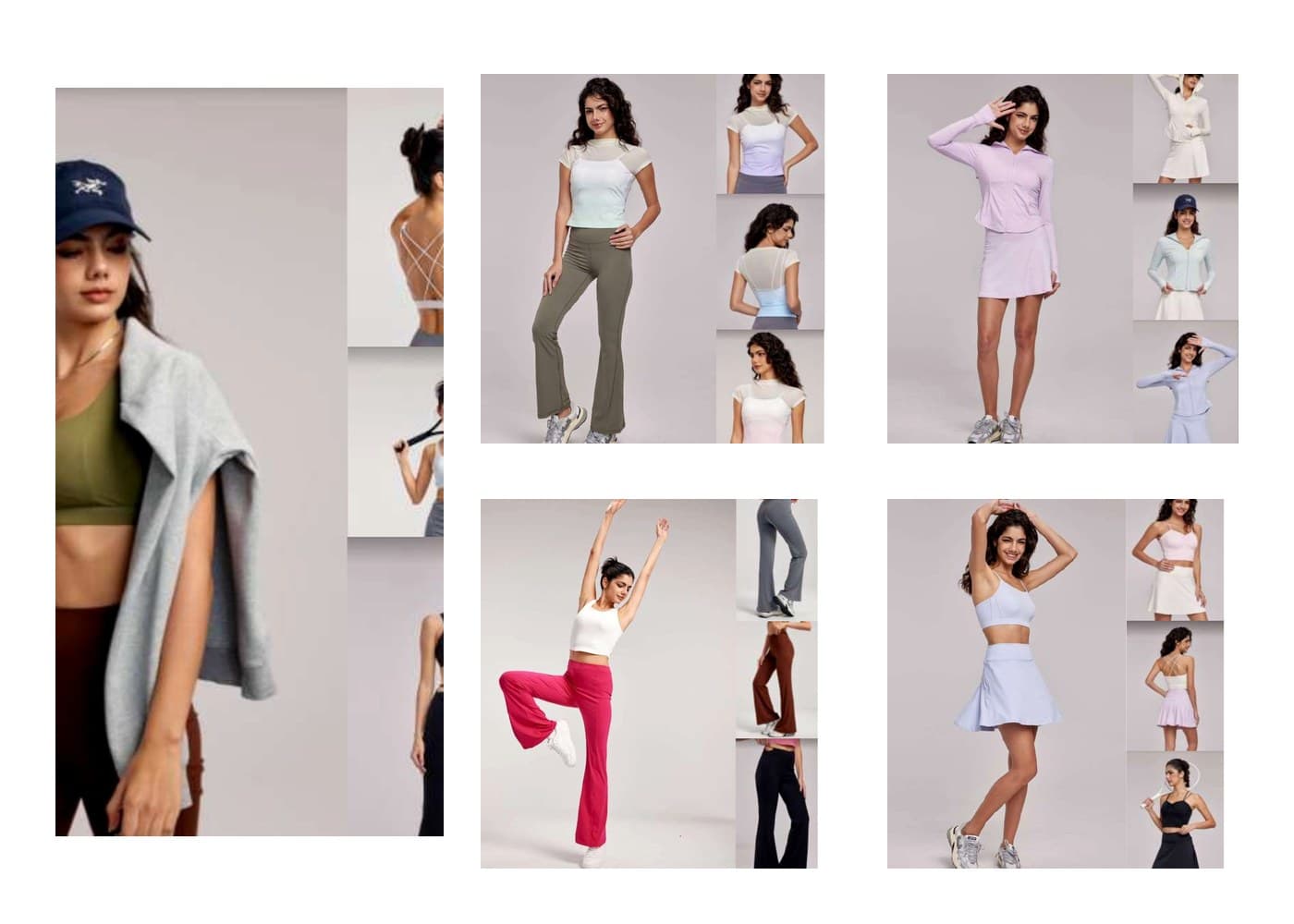
Commencez par les orientations produits, puis planifiez l'assortiment, la présentation de la marque et le dossier de commande en fonction du client visé.
La décision d'achat
En quoi un fournisseur de vêtements de sport en gros peut-il vous aider à décider ?
La première décision n'est pas le logo. C'est de savoir si les produits ont du sens pour les personnes qui les porteront et les achèteront. Un studio de force peut avoir besoin de leggings stables, de hauts d'entraînement et d'une couche pratique. Une entreprise de yoga ou de Pilates accordera davantage d'importance au toucher, à la liberté de mouvement, à la couverture et à une couleur coordonnée. Un détaillant peut avoir besoin d'une gamme principale compacte qui peut être expliquée rapidement, merchandisée ensemble et évaluée pour les ventes répétées. Ces différences changent quelles références méritent attention et quelles questions le fournisseur doit résoudre.
Considérez un catalogue comme un ensemble d'orientations produits, et non comme la preuve d'un stock permanent. Présélectionnez les silhouettes qui conviennent au client, puis demandez comment les choix de produit, de couleur, de taille, de branding et d'emballage sont examinés pour la demande. Une voie de gros interentreprises ne signifie pas commande au détail à l'unité, stock disponible, dropshipping ou calendrier de livraison automatique. La disponibilité, la quantité, les fichiers graphiques, les besoins en échantillons et le timing restent spécifiques au projet.
Cette voie fonctionne mieux lorsqu'une orientation produit existante convient et que le travail principal consiste à construire autour d'elle un programme de marque cohérent. Cela peut inclure un logo ou une marque déposée, des étiquettes, des étiquettes suspendues, des marquages de taille, des sachets produits, des autocollants, des codes-barres et la présentation en carton. Consultez le service de vêtements de sport en marque blanche lorsque ces composants sont au cœur du brief. Si le vêtement lui-même doit changer, cessez de parler de simple branding et discutez de la bonne voie de développement.
Tableau de décision
Quelles questions doivent figurer dans un brief de vêtements de sport en gros ?
Utilisez le tableau suivant avant de demander des produits ou de comparer des fournisseurs. Il transforme une demande générale de « vêtements de sport de marque » en une conversation au niveau du produit. Sur mobile, le tableau défile horizontalement afin que les questions et les actions de l'acheteur restent lisibles.
Envoyez les mêmes informations lors de la comparaison des fournisseurs. Une réponse basée sur une seule couleur, un emballage de base et un seul produit n'est pas comparable à un programme qui comprend plusieurs couleurs, étiquettes, étiquettes suspendues, codes-barres, emballage par ratio de tailles et plusieurs destinations de réception. Demandez à chaque fournisseur d'énoncer les hypothèses qui sous-tendent l'itinéraire proposé plutôt que de comparer un seul chiffre phare.
Client et canal
Comment les studios et les détaillants doivent-ils définir le client avant de choisir les produits ?
« Les personnes qui vont à la salle de sport » est une définition trop large pour guider un assortiment. Rédigez un énoncé client concis qui relie le porteur, l'activité et la situation d'achat. Un membre peut acheter un legging aux couleurs du studio en tant que produit communautaire. Un instructeur peut avoir besoin d'un uniforme fiable qui s'harmonise à travers des cours répétés. Un acheteur en ligne peut s'attendre à une tenue complète et à une photographie produit claire. Un détaillant multi-magasins peut prioriser un réapprovisionnement facile et une cohérence de présentation.
Nommez ensuite les besoins pratiques qui découlent de cet énoncé : couverture, orientation du maintien, extensibilité et récupération, superposition, poches, longueur, aisance, visibilité du logo ou position tarifaire spécifique. Ce sont des critères d'achat, et non des affirmations selon lesquelles chaque vêtement du catalogue répond déjà à toutes les attentes. Le fournisseur doit évaluer le produit sélectionné par rapport à son usage prévu, et l'acheteur doit décider quels points nécessitent un échantillon physique avant validation.
Séparez les exigences du canal des exigences du vêtement. Les codes-barres prêts pour la vente au détail, la présentation en rayon, le pliage, les autocollants de taille ou la répartition par magasin ne modifient pas la silhouette, mais ils changent le bon de commande et le travail d'emballage. Un uniforme du personnel peut avoir une présentation en retail plus simple mais des exigences plus fortes en matière de couleur répétée, d'identification du nom ou du rôle et de distribution par site. Consigner les deux niveaux permet d'éviter un produit qui semble correct mais arrive dans un format de réception inutilisable.
Réponses de fournisseurs comparables
Comment les acheteurs doivent-ils évaluer la réponse d'un fournisseur de vêtements de sport en gros ?
Recherchez une réponse qui suit le brief produit au lieu de le remplacer par des affirmations générales. Le fournisseur doit être capable d'identifier la direction produit sélectionnée, l'usage client, les couleurs et tailles demandées, les éléments de branding, les besoins d'emballage, la destination et les décisions non résolues. Les questions de suivi utiles sont précises. Elles peuvent demander si un logo se trouve sur une zone à forte élasticité, si un ensemble est vendu en haut et bas séparés, quel fichier d'étiquette est définitif, ou comment les allocations par magasin doivent être emballées. Ces questions montrent que la commande est considérée comme un programme produit complet.
Séparez les faits confirmés des points conditionnels. Une référence de catalogue peut définir une direction de silhouette, mais la réponse ne doit pas présenter la disponibilité des matières, la couleur, les minimums, le coût, le délai d'échantillon, le délai de production en série ou l'expédition comme universellement fixes lorsque ces données dépendent de la demande. Demandez au fournisseur de signaler les hypothèses et d'expliquer ce dont il a besoin avant que chacune puisse être confirmée. Cela rend une réponse précoce plus utile sans demander à l'une ou l'autre partie de prétendre que toutes les décisions de production existent déjà.
Enfin, comparez la méthode de travail autant que le produit proposé. Vérifiez si les fichiers graphiques versionnés et les commentaires peuvent être conservés ensemble, si l'échantillon a des points d'approbation définis, comment les questions de production seront soulevées, et quelles références seront utilisées pour le contrôle qualité et l'emballage. Une commande à moindre friction se construit généralement grâce à un contrôle clair de l'information. Une promesse vague suivie de clarifications répétées n'est pas nécessairement une voie plus simple, même si le premier message semble plus rapide.
Discipline d'assortiment
Comment une première gamme de vêtements de sport en gros peut-elle rester ciblée ?
Une première gamme disciplinée donne un rôle à chaque style. Un soutien-gorge ou un haut de base peut soutenir les ventes récurrentes ; un legging ou un short peut compléter la tenue ; une couche peut ajouter une option de plus grande valeur et prolonger l'usage au-delà d'un cours. Un ensemble coordonné peut simplifier le merchandising, mais il crée aussi davantage de questions d'assortiment de tailles et d'équilibre des stocks. Choisissez d'abord les rôles, puis choisissez les références produits. N'ajoutez pas de styles simplement parce que le catalogue les contient.
La couleur exige la même discipline. Les couleurs de base peuvent faciliter les discussions de réapprovisionnement, tandis qu'une couleur saisonnière peut donner à la gamme une histoire actuelle. Trop de coloris dispersent la commande sur davantage de combinaisons et rendent la répartition des tailles plus difficile à gérer. Au lieu de demander « trois couleurs en tailles mélangées », préparez les unités pour chaque cellule style-couleur-taille. C'est à ce niveau que les questions de production, de conditionnement et de réception deviennent claires.
Parcourez la Collection Activewear Performance pour constituer une présélection, mais gardez le brief final lié au client cible. Les noms du catalogue, les couleurs affichées et les images produits sont des références pour la discussion. Le matériau, la couleur, la taille, le branding, la quantité, la disponibilité et le calendrier finaux doivent être examinés sur le programme réel.
Points de départ produits
Quels produits de gym wear peuvent constituer l’ancrage d’un assortiment de gros ?
Ces trois points de départ illustrent différents rôles d’assortiment. Ils ne constituent pas une affirmation de stock disponible ni un package de commande fixe. Utilisez-les pour identifier une direction, puis confirmez le produit, la matière, les couleurs, les tailles, le branding, la quantité, l’échantillon, l’emballage et les paramètres de livraison pour votre demande.
Construire la gamme
Collection Performance Activewear
Utilisez la collection pour présélectionner des silhouettes et décider quels produits méritent une place dans l’assortiment studio ou retail.
Superposer et assortir
Ensemble d’entraînement à capuche et passe-pouce
Une référence coordonnée pour les acheteurs qui planifient une couche studio, un ensemble assorti, une direction colorielle, un branding et une présentation d’emballage.
Style permanent de base
Programme de bras à maintien léger
Un point de départ utile pour un programme compact de couleurs de base dans lequel les étiquettes, le placement du logo, les ratios de tailles et les registres de réapprovisionnement comptent.
Tailles et quantités
Quelle répartition des tailles et des couleurs un acheteur doit-il préparer ?
Préparez les quantités par style, couleur et taille. Un total de commande ne peut pas montrer si une entreprise souhaite une couverture équilibrée des tailles, des tailles cœur fortement pondérées, des ratios différents selon le produit, ou une allocation distincte pour le personnel et la vente au détail. La répartition révèle également des combinaisons qui peuvent être commercialement fragiles. Si une couleur de déclaration ne reçoit que quelques unités réparties sur de nombreuses tailles, l'acheteur peut reconsidérer la gamme avant de demander au fournisseur de construire un plan autour de celle-ci.
Utilisez des données probantes lorsqu'elles existent. Un studio peut disposer de données de tailles des membres issues d'uniformes ou de précommandes ; un détaillant peut avoir un historique de ventes de coupes comparables. Si aucun historique n'existe, indiquez que la première commande est une gamme d'apprentissage et gardez les hypothèses visibles. Le fournisseur peut examiner la répartition soumise, mais il ne peut pas connaître la clientèle de l'acheteur sans informations fournies. Évitez de présenter une courbe de tailles générique comme une réponse commerciale garantie.
Les ensembles assortis nécessitent une attention particulière. Les clients peuvent porter des tailles différentes pour le haut et le bas, de sorte qu'un ratio d'ensemble fixe peut créer des déséquilibres. Décidez si les produits sont vendus ensemble ou séparément, comment les couleurs s'harmonisent et comment les unités doivent être emballées. Consignez cela avant la finalisation des visuels et de l'emballage, car un ensemble magnifiquement brandé échoue tout de même si l'appariement des tailles ne correspond pas au canal de vente.
Système de marque
Quels détails de branding et d'emballage doivent être convenus ensemble ?
Une demande de logo nécessite un vêtement, un emplacement, un fichier de création, des dimensions cibles, des couleurs et un effet visuel souhaité. La méthode appropriée dépend de la surface du produit et du comportement du matériau ainsi que de la création. Une petite marque sur une zone stable constitue une application différente d'un graphique plus grand sur un panneau extensible. Demandez au fournisseur d'examiner la combinaison réelle et d'identifier ce qu'un échantillon brandé doit montrer.
Construisez le reste du système de marque en même temps : étiquette principale, informations d'entretien, marquage de taille, étiquette suspendue, code-barres ou autocollant, sac individuel, méthode de pliage, ratio de colisage et marquage de carton. Chaque élément nécessite un responsable et un fichier ou une instruction approuvés. Si le détaillant dispose d'un manuel d'entrepôt, fournissez les pages de réception pertinentes suffisamment tôt pour examen plutôt que de les introduire une fois les vêtements terminés.
Consultez le guide de l'activewear en gros avec logo personnalisé pour la décision adjacente relative à la création et à l'application. Il explique pourquoi la méthode de logo, le tissu, le placement, les preuves d'échantillon, les étiquettes et l'emballage appartiennent à un seul brief contrôlé.

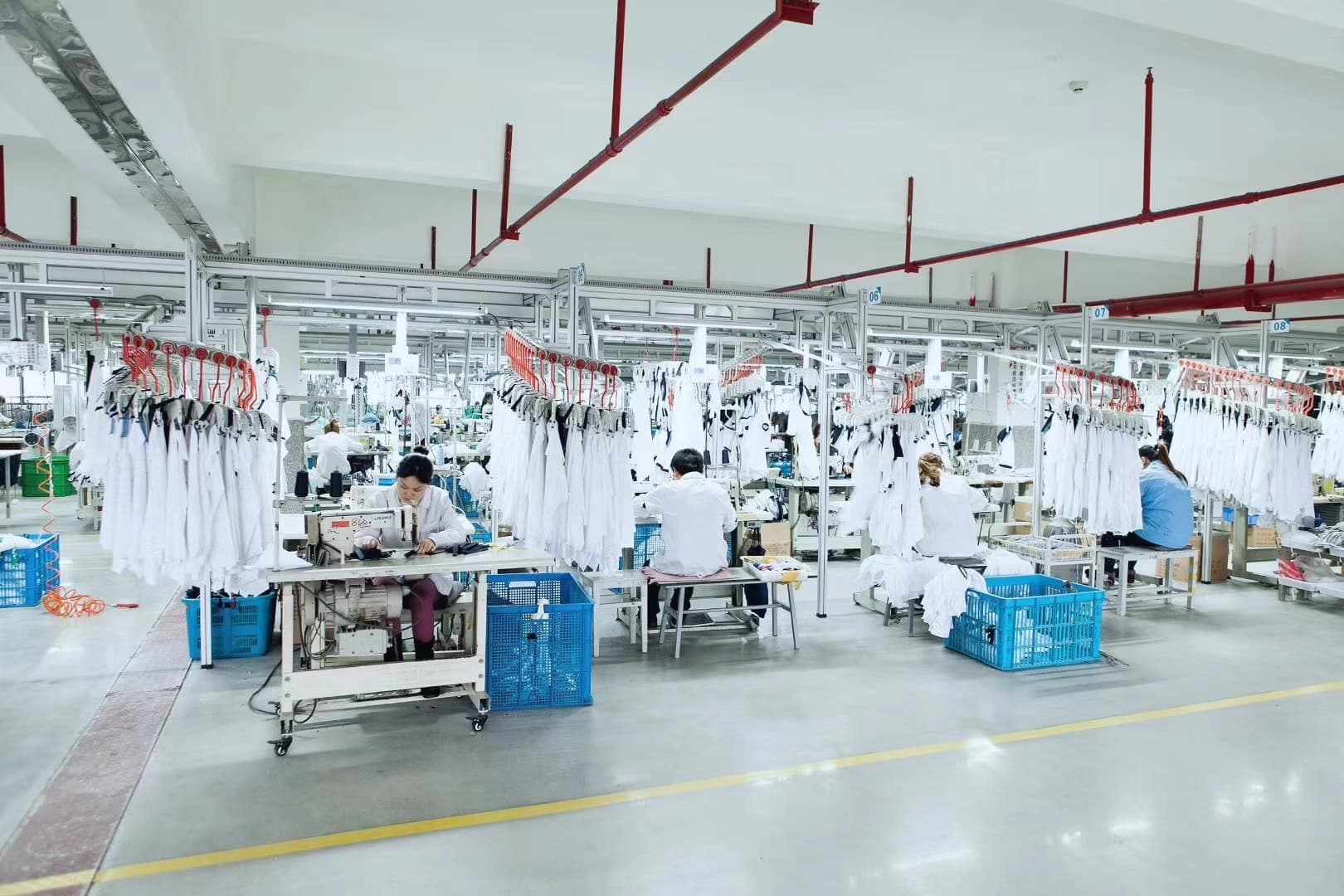
Une véritable ligne de production : le produit approuvé, le branding, l'étiquette et les références d'emballage doivent rester connectés à mesure que le travail progresse dans l'usine.
Preuves d'échantillon
Que doit prouver un échantillon de vêtements de sport en gros ?
Définissez la fonction de l’échantillon avant de le fabriquer ou de le sélectionner. Dans une approche de personnalisation légère, l’examen peut devoir confirmer que la direction produit choisie est adaptée, que le logo est lisible et correctement positionné, que les étiquettes et les marquages de taille sont utilisables, et que la présentation correspond au canal. Si l’acheteur doit évaluer la coupe ou le comportement du matériau, précisez-le. Une photographie peut aider pour l’apparence, mais elle ne peut pas remplacer un examen physique du mouvement, du toucher, de la couverture, des dimensions ou de l’emballage.
Regroupez les commentaires. Marquez chaque point comme approuvé, à réviser ou en attente, et joignez une image ou une mesure lorsqu’elle réduit l’ambiguïté. Une série de messages de discussion du type « déplacez un peu le logo » ne constitue pas un registre d’approbation fiable. Indiquez l’emplacement actuel, le nouvel emplacement demandé, les dimensions et la référence visuelle. Appliquez la même discipline pour la position des étiquettes, la fixation des étiquettes suspendues, le pliage et les autocollants.
L’approbation doit clore un ensemble défini de questions ; elle ne doit pas masquer celles qui ne sont pas résolues. Si la couleur est encore en cours d’examen, si le fichier graphique n’est pas définitif ou si la répartition des tailles peut changer, consignez-le ouvertement. Le fournisseur peut alors expliquer quelles étapes ultérieures dépendent de ces décisions. Cela protège les deux parties contre le fait de considérer un échantillon précoce de produit ou de logo comme une approbation globale pour une commande en gros complète.
Limite de parcours
Quand un acheteur doit-il passer du négoce au développement de vêtements de sport personnalisés ?
Passez au développement personnalisé lorsque la modification demandée affecte le vêtement lui-même plutôt que sa présentation de marque. Une coupe différente, un jeu de mesures différent, un comportement de tissu différent, un niveau de maintien différent, une ceinture, un système de sangles, une poche, une disposition de panneaux, une construction de coutures ou une nouvelle silhouette nécessitent une discussion de développement produit. Même un changement qui semble mineur peut affecter le patron, la matière, la fabrication, l'échantillonnage ou la planification de production.
L'application de logo, les étiquettes, les cartons de suspension et l'emballage sur une direction existante appropriée relèvent davantage du négoce ou d'une personnalisation légère. Cette frontière est utile car elle permet de garder la réponse du fournisseur honnête. Elle évite qu'une demande personnalisée soit évaluée comme si seul l'habillage graphique changeait, et elle évite qu'un programme de branding simple porte des hypothèses de développement inutiles.
Si votre brief inclut des modifications produit, consultez la voie de fabrication de vêtements de sport personnalisés et précisez ce qui doit être conservé à partir de la référence, ce qui doit changer et ce qui nécessite encore l'avis de l'usine. Les mêmes informations sur le client, le canal, la quantité, le branding, l'emballage, la destination et le timing restent pertinentes ; le périmètre d'échantillonnage et d'approbation devient plus approfondi.
Qualité et réception
Comment le contrôle qualité et l'emballage doivent-ils suivre le brief de gros approuvé ?
Le contrôle qualité a besoin d'une référence. Demandez quel produit approuvé, quelles informations de mesure, quel artwork, quelle étiquette, quelle instruction d'emballage et quel détail de carton seront utilisés lors de la vérification de la commande. Les points pertinents varient selon le vêtement et le programme, mais peuvent inclure la qualité d'exécution, les mesures, l'état des matériaux et des garnitures, l'identification des couleurs, l'apparence et le placement du logo, les étiquettes, le marquage des tailles, le pliage, les sacs, les ratios et les marquages de carton.
Ne comptez pas sur l'inspection finale pour corriger des décisions produit floues. Le contrôle qualité peut vérifier par rapport à une exigence approuvée ; il ne peut pas inventer la taille de logo souhaitée, décider comment un ensemble doit être assorti, ou déterminer quel code-barres appartient à un style si l'acheteur n'a jamais fourni cette information. Intégrez les points de contrôle dans le brief et l'approbation de l'échantillon, puis demandez comment les questions sont soulevées en cas de conflit dans les informations de production.
L'emballage doit s'aligner sur le processus de réception réel de l'acheteur. Identifiez si les cartons vont vers un seul studio, plusieurs magasins, un entrepôt tiers ou un autre site d'entreprise. Fournissez les instructions connues concernant la répartition, les ratios, les étiquettes, les codes-barres, les marquages de carton et la livraison. L'aperçu de la fabrication et de la qualité apporte un contexte supplémentaire pour transmettre les informations approuvées à travers la coordination de la production, le contrôle, l'emballage et la préparation à l'export.
Commandes répétées
Quelles informations facilitent l’examen d’une commande répétée de vêtements de sport ?
Le meilleur moment pour préparer une commande répétée est lors de la première commande. Conservez ensemble la référence finale du produit, les fichiers approuvés de visuel, d’étiquette et d’emballage, la répartition des couleurs et des tailles, les instructions d’emballage, les informations sur les cartons et les décisions prises lors de la revue. Attribuez un numéro de version et une date à ce dossier. Un acheteur doit pouvoir expliquer quel produit a été commandé et comment il a été présenté sans reconstituer le programme à partir d’anciens messages.
Après le lancement, ajoutez des preuves commerciales : unités vendues par style, couleur et taille ; écarts de stock ; commentaires clients ; retours ; et demandes pour un autre produit. Ces éléments peuvent aider l’acheteur à ajuster la prochaine répartition. Ils ne confirment pas automatiquement la matière, la couleur, le prix, les minimums ou les délais d’une future commande. Demandez au fournisseur de réexaminer les paramètres actuels, surtout lorsque du temps s’est écoulé ou que l’acheteur souhaite un changement.
Distinguez la répétition du développement. Commander à nouveau une direction approuvée avec les mêmes références contrôlées de marque et d’emballage est différent de l’ajout d’un nouveau tissu, d’une nouvelle coupe, d’un nouveau procédé de couleur ou d’un nouveau détail de construction. Identifiez clairement les changements afin que le fournisseur puisse déterminer si la demande est une répétition, une légère mise à jour ou un nouveau projet de développement sur mesure.
Liste de contrôle de l’acheteur
Votre demande de vêtements de sport en gros est-elle prête à être envoyée ?
Utilisez cette liste de contrôle comme dernière revue des lacunes. Elle n'exige pas que chaque détail soit finalisé. Elle demande à l'acheteur d'indiquer ce qui est connu, ce qui est une préférence et ce qui nécessite encore l'examen du fournisseur.
Évitez les lacunes évitables
Quelles erreurs de commande en gros créent le plus de reprises ?
Choisir trop de produits
Une première gamme trop large disperse l'attention sur davantage de styles, couleurs, tailles, fichiers de motifs et enregistrements d'emballage. Commencez par des produits ayant un client et un rôle d'assortiment clairs.
Approuver via des messages dispersés
Regroupez les commentaires sur le produit, le logo, l'étiquette et l'emballage. Une trace d'approbation peu claire rend plus difficile de savoir quelle référence est à jour et quels points restent en suspens.
Traiter l'emballage comme un ajout tardif
Codes-barres, autocollants, pliage, ratios et marquages de carton relient le produit à la réception. Introduisez-les pendant que l'échantillon de marque et l'enregistrement de commande sont encore en cours de révision.
Contexte fournisseur
Comment inPACE examine-t-il une demande de vêtements de sport en gros ?
inPACE Sports accompagne les discussions B2B autour de l'activewear en s'appuyant sur les orientations produits, les exigences de marque blanche, la revue des échantillons, la coordination de la production, le contrôle qualité, l'emballage et la préparation à l'export. Le point de départ utile est un brief acheteur contenant le client et le canal, les produits sélectionnés, l'usage prévu, les quantités par style, couleur et taille, le branding, les étiquettes, l'emballage, la destination, les besoins en échantillons et la fenêtre d'arrivée cible. La disponibilité des produits, les minimums, le prix, le circuit d'échantillonnage et les délais sont examinés à partir du programme réel plutôt que promis comme des conditions fixes de catalogue.
Étape suivante pour le commerce de gros
Choisissez des produits de sport en gros à personnaliser
Communiquez votre client, canal de vente, présélection de produits, quantités par style, couleur et taille, fichier logo, besoins d'étiquettes et d'emballage, destination, exigences d'échantillons de validation et fenêtre d'arrivée souhaitée. Indiquez clairement les modifications de vêtements demandées afin que l'équipe puisse distinguer une voie de gros/personnalisation légère d'un développement sur mesure.
Parcours article
Gros / personnalisation légère
- Une décision client et canal
- Planification d'assortiment guidée par les produits
- Logo, étiquettes et emballage ensemble
- Échantillon et preuves de contrôle qualité
- Registre de commandes répétées maîtrisé
Questions acheteurs
FAQ : Commander auprès d'un fournisseur de vêtements de sport en gros
Ces réponses visibles correspondent aux mêmes questions incluses dans les données structurées FAQ de la page.
Que faut-il demander à un fournisseur de vêtements de sport en gros avant de commander ?
Demandez au fournisseur d'examiner le client visé, les références produit, l'usage lié à l'activité, les unités par style, couleur et taille, les fichiers logo, les étiquettes, les étiquettes suspendues, l'emballage, la destination, les besoins en échantillons et la fenêtre d'arrivée cible. Demandez également quels détails peuvent être confirmés à partir du brief et lesquels dépendent du produit, du matériau, du fichier, de la quantité ou de la revue d'échantillon.
Le vêtement de sport en gros, est-ce la même chose qu'acheter du stock de détail ?
Non. Dans ce guide, le gros désigne une voie produit interentreprises basée sur des directions produit existantes adaptées, avec des options de marquage et de présentation convenues. Cela n'implique pas de stock disponible, d'achat à l'unité, d'exécution de commandes de détail, de dropshipping ou de disponibilité fixe. Produit, couleur, taille, quantité, marquage, emballage et délais sont examinés pour la demande réelle.
Un studio peut-il ajouter son logo à des vêtements de sport en gros ?
Un studio peut discuter de l'application d'un logo ou d'une marque dans le cadre d'un brief de gros ou de personnalisation légère. La méthode et le placement appropriés dépendent de la surface du vêtement, du comportement du tissu, du fichier, des dimensions cibles, des couleurs, de la quantité et de l'usage. Les étiquettes, étiquettes suspendues, marquages de taille, sacs et présentation en carton doivent être examinés avec le même produit plutôt qu'ajoutés après coup.
Combien de styles de vêtements de sport une première gamme en gros doit-elle inclure ?
Il n'existe pas de nombre universel de styles. Commencez par le plus petit assortiment qui offre au client un choix cohérent et donne à chaque SKU un rôle clair. Un mix ciblé pourrait combiner un haut ou un soutien-gorge essentiel, un bas et une couche ou un élément d'ensemble. La bonne étendue dépend du canal, du client, de l'orientation prix, de la courbe de tailles, du plan de couleurs et de l'allocation de commande disponible.
Quand une demande de vêtements de sport en gros devient-elle un développement personnalisé ?
Elle évolue vers un développement personnalisé lorsque le vêtement demandé lui-même change—par exemple la coupe, les mesures, le comportement du tissu, le maintien, la disposition des panneaux, la ceinture, les bretelles, la poche, la construction des coutures ou une nouvelle silhouette. Le logo, les étiquettes, les étiquettes suspendues et l'emballage sur une direction existante adaptée relèvent davantage de la personnalisation légère. Le fournisseur doit confirmer la voie après avoir examiné le brief réel.
Que faut-il approuver avant la préparation de vêtements de sport en gros ?
Approuvez la direction produit, les mesures et notes de coupe pertinentes, la direction matériau et couleur, les détails de construction, le fichier logo et son placement, les étiquettes, les étiquettes suspendues, l'emballage, la répartition taille et couleur, les ratios d'emballage, les informations carton et les points QC qui seront vérifiés. Consignez toute décision en suspens et ne considérez pas le silence comme une approbation.
Comment les détaillants doivent-ils se préparer aux commandes répétées de vêtements de sport en gros ?
Conservez ensemble la référence produit approuvée, les fichiers de logo, les spécifications d'étiquettes et d'emballage, la répartition taille et couleur, les instructions d'emballage et l'historique des commandes. Après le lancement, ajoutez les ventes réalisées, les retours clients, les retours produit et les écarts de stock. Une demande répétée doit toujours confirmer le matériau, la couleur, la quantité et les délais actuels plutôt que de supposer que chaque paramètre reste inchangé.