
Un proveedor mayorista de ropa de gimnasio debe ayudar a un estudio o minorista a adaptar los productos a su cliente, plan de tallas y colores, branding, empaque y necesidades de pedidos recurrentes. Antes de hacer el pedido, entregue al proveedor un brief a nivel de estilo y pregunte qué está confirmado en el catálogo, qué necesita una muestra y qué llevaría el proyecto a un desarrollo personalizado.
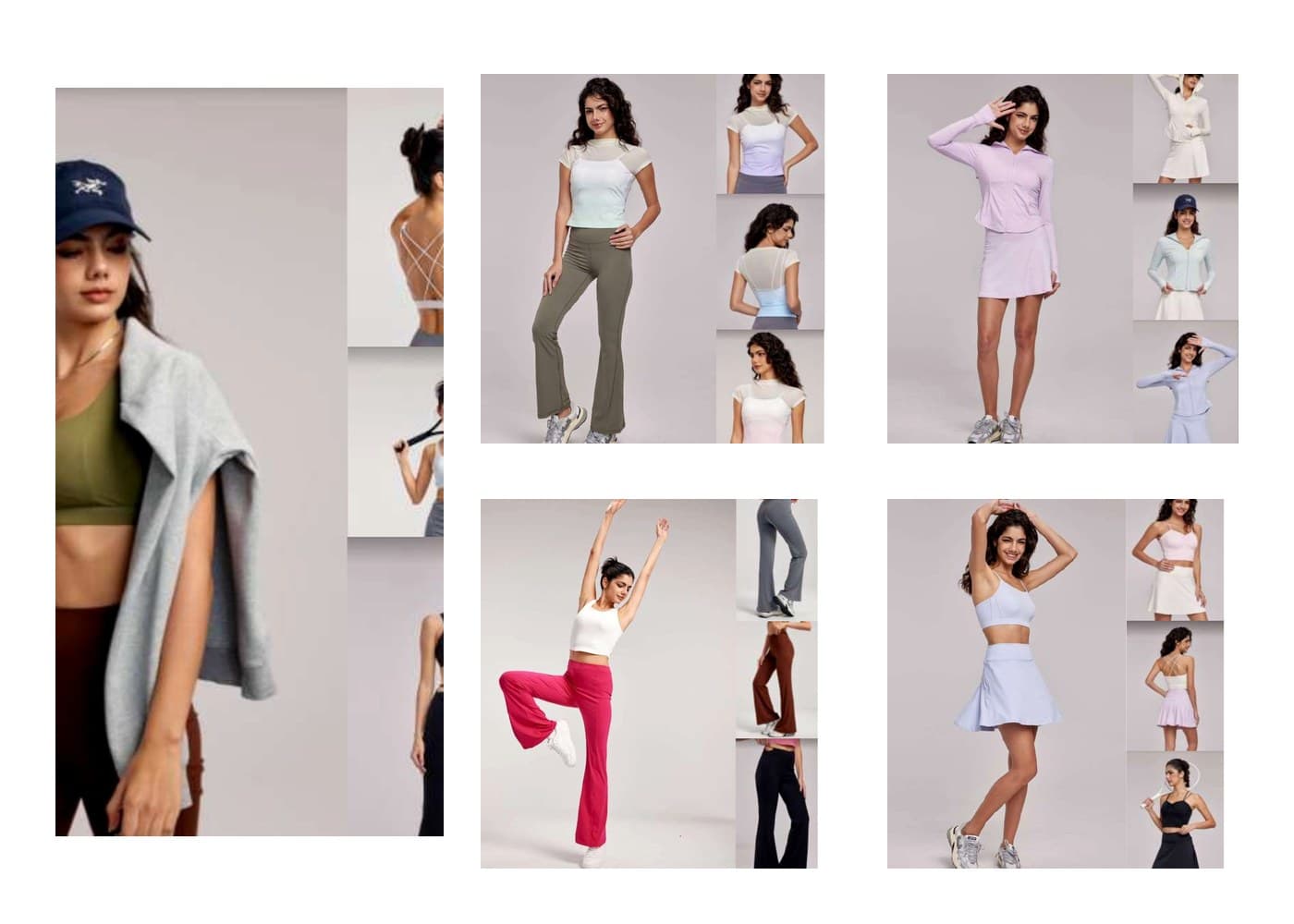
Comience con las direcciones de producto, luego planifique el surtido, la presentación de marca y el registro de pedidos en torno al cliente previsto.
La decisión de compra
¿En qué debería ayudarte a decidir un proveedor mayorista de ropa para gimnasio?
La primera decisión no es el logotipo. Es si los productos tienen sentido para las personas que los van a usar y comprar. Un estudio de fuerza puede necesitar leggings estables, tops de entrenamiento y una capa práctica. Un negocio de yoga o Pilates puede dar más peso al tacto, la libertad de movimiento, la cobertura y el color coordinado. Un minorista puede necesitar una gama núcleo compacta que se pueda explicar rápidamente, comercializar en conjunto y evaluar para ventas repetidas. Esas diferencias cambian qué referencias merecen atención y qué preguntas debe responder el proveedor.
Trata un catálogo como un conjunto de direcciones de producto, no como prueba de inventario permanente. Preselecciona las siluetas que encajen con el cliente y luego pregunta cómo se revisan el producto, el color, la talla, el branding y las opciones de embalaje para la consulta. Una vía mayorista business-to-business no significa pedidos minoristas de una sola unidad, stock disponible, dropshipping ni un calendario de entrega automático. La disponibilidad, la cantidad, el arte, las necesidades de muestras y los tiempos siguen siendo específicos de cada proyecto.
Esta vía funciona mejor cuando una dirección de producto existente es adecuada y el trabajo principal es construir un programa de marca coherente en torno a ella. Eso puede incluir un logotipo o marca registrada, etiquetas, colgantes, marcas de talla, bolsas de producto, pegatinas, códigos de barras y presentación de cajas. Revisa el servicio de activewear de marca blanca cuando esos componentes sean centrales para el brief. Si la prenda en sí debe cambiar, deja de llamarlo branding simple y habla de la vía de desarrollo correcta.
Tabla de decisión
¿Qué preguntas deben incluirse en un brief de ropa de gimnasio al por mayor?
Utilice la siguiente tabla antes de solicitar productos o comparar proveedores. Convierte una solicitud amplia de "ropa de gimnasio de marca" en una conversación a nivel de producto. En el móvil, la tabla se desplaza horizontalmente para que las preguntas y las acciones del comprador sigan siendo legibles.
Envíe la misma información al comparar proveedores. Una respuesta basada en un solo color, embalaje básico y un único producto no es comparable con un programa que incluye varios colores, etiquetas, colgantes, códigos de barras, embalaje por ratio de tallas y múltiples ubicaciones de recepción. Pida a cada proveedor que indique los supuestos que sustentan su ruta propuesta en lugar de comparar una única cifra destacada.
Cliente y canal
¿Cómo deben los estudios y los minoristas definir al cliente antes de elegir productos?
«Personas que van al gimnasio» es demasiado amplio para orientar un surtido. Redacta una breve declaración del cliente que conecte a quien lo usa, la actividad y la situación de compra. Un miembro puede estar comprando una legging con la marca del estudio como producto de comunidad. Un instructor puede necesitar un uniforme confiable que combine a lo largo de clases repetidas. Un comprador en línea puede esperar un conjunto completo y fotografías de producto claras. Un minorista con varias tiendas puede priorizar el reabastecimiento fácil y la consistencia en la presentación.
Luego nombra las necesidades prácticas que se derivan de esa declaración: cobertura, dirección de soporte, elasticidad y recuperación, capas, bolsillos, largo, facilidad, visibilidad del logo o una posición de precio específica. Estos son insumos de compra, no afirmaciones de que cada prenda del catálogo ya cumple con todas las expectativas. El proveedor necesita revisar el producto seleccionado frente a su uso previsto, y el comprador necesita decidir qué puntos requieren una muestra física antes de la aprobación.
Mantén los requisitos del canal separados de los requisitos de la prenda. Los códigos de barras listos para retail, la presentación en estante, el doblado, las etiquetas de talla o la asignación por tienda no cambian la silueta, pero sí cambian el registro del pedido y el trabajo de empaque. Un uniforme de personal puede tener una presentación retail más simple pero requisitos más fuertes de color repetible, identificación de nombre o rol, y distribución por ubicación. Registrar ambas capas evita un producto que se ve bien pero llega en un formato de recepción inutilizable.
Respuestas comparables de proveedores
¿Cómo deben los compradores evaluar la respuesta de un proveedor mayorista de ropa de gimnasio?
Busque una respuesta que siga el brief del producto en lugar de reemplazarlo con afirmaciones generales. El proveedor debe poder identificar la dirección de producto seleccionada, el uso del cliente, los colores y tallas solicitados, los componentes de branding, las necesidades de empaque, el destino y las decisiones no resueltas. Las preguntas de seguimiento útiles son específicas. Podrían preguntar si un logo se ubica en una zona de alta elasticidad, si un conjunto se vende como unidades separadas de parte superior e inferior, qué archivo de etiqueta es el final, o cómo deben empacarse las asignaciones por tienda. Esas preguntas demuestran que el pedido se está considerando como un programa de producto completo.
Separe los hechos confirmados de los puntos condicionales. Una referencia de catálogo puede definir una dirección de silueta, pero la respuesta no debe presentar la disponibilidad de materiales, el color, los mínimos, el costo, los tiempos de muestra, los tiempos de producción en volumen o el envío como universalmente fijos cuando esos insumos dependen de la consulta. Pida al proveedor que marque los supuestos y explique qué necesita antes de que cada uno pueda confirmarse. Esto hace que una respuesta temprana sea más útil sin pedir a ninguna de las partes que finja que todas las decisiones de producción ya existen.
Finalmente, compare el método de trabajo así como el producto propuesto. Verifique si los archivos gráficos versionados y los comentarios pueden mantenerse juntos, si la muestra tiene puntos de aprobación definidos, cómo se plantearán las preguntas de producción, y qué referencias se usarán para el QC y el empaque. Un pedido con menos fricción generalmente se construye mediante un control claro de la información. Una promesa vaga seguida de aclaraciones repetidas no es necesariamente una ruta más simple, incluso si el primer mensaje parece más rápido.
Disciplina de surtido
¿Cómo puede mantenerse enfocada una primera gama de ropa de gimnasio al por mayor?
Una primera gama disciplinada da a cada estilo una función. Un sujetador o top básico puede apoyar las ventas recurrentes; un legging o short puede completar el conjunto; una capa puede añadir una opción de mayor valor y extender el uso más allá de una clase. Un conjunto coordinado puede simplificar la comercialización, pero también crea más preguntas sobre el emparejamiento de tallas y el equilibrio de stock. Elija primero las funciones, luego elija las referencias de producto. No añada estilos simplemente porque el catálogo los contenga.
El color necesita la misma disciplina. Los colores básicos pueden facilitar la conversación sobre reposición, mientras que un color de temporada puede dar a la gama una historia oportuna. Demasiadas combinaciones de colores dispersan el pedido entre más combinaciones y dificultan la gestión del desglose de tallas. En lugar de pedir "tres colores en tallas surtidas", prepare unidades para cada celda de estilo-color-talla. Ese es el nivel en el que las preguntas sobre producción, embalaje y recepción se vuelven claras.
Explore la Colección de Activewear Performance para crear una lista de preseleccionados, pero mantenga el brief final vinculado al cliente objetivo. Los nombres del catálogo, los colores mostrados y las imágenes de producto son referencias para el debate. El material final, el color, el tallaje, la marca, la cantidad, la disponibilidad y los plazos deben revisarse en el programa real.
Puntos de partida de producto
¿Qué productos de ropa de gimnasio pueden anclar un surtido mayorista?
Estos tres puntos de partida ilustran diferentes roles de surtido. No son una afirmación de stock disponible ni un paquete de pedido fijo. Úsalos para identificar una dirección y luego confirma el producto, material, colores, tallas, branding, cantidad, muestra, embalaje y logística para tu consulta.
Construye la gama
Colección de Rendimiento de Activewear
Usa la colección para preseleccionar siluetas y decidir qué productos merecen un lugar en el surtido de estudio o retail.
Capas y conjunto
Conjunto de Entrenamiento con Capucha y Agujero para el Pulgar
Una referencia coordinada para compradores que planifican una capa de estudio, conjunto a juego, dirección de color, branding y presentación de embalaje.
Estilo básico repetible
Programa de Sujetadores de Soporte Ligero
Un punto de partida útil para un programa compacto de colores básicos en el que las etiquetas, la ubicación del logo, los ratios de tallas y los registros de reposición importan.
Tallas y cantidades
¿Qué desglose de tallas y colores debe preparar un comprador?
Prepare cantidades por estilo, color y talla. Un total de pedido no puede mostrar si un negocio quiere una cobertura equilibrada de tallas, tallas principales con mayor peso, proporciones diferentes por producto o una asignación separada para personal y retail. El desglose también expone combinaciones que pueden ser comercialmente débiles. Si un color de declaración recibe solo unas pocas unidades en muchas tallas, el comprador puede reconsiderar la gama antes de pedir al proveedor que construya un plan en torno a él.
Use evidencia donde exista. Un estudio puede tener datos de tallas de miembros de uniformes o pedidos anticipados; un minorista puede tener historial de ventas de ajustes comparables. Si no existe historial, indique que el primer pedido es una gama de aprendizaje y mantenga visibles los supuestos. El proveedor puede revisar el desglose enviado, pero no puede conocer la mezcla de clientes del comprador sin datos de entrada. Evite presentar una curva de tallas genérica como una respuesta comercial garantizada.
Los conjuntos combinados necesitan atención especial. Los clientes pueden usar tallas diferentes de parte superior e inferior, por lo que una proporción fija de conjunto puede crear desequilibrios. Decida si los productos se venden juntos o por separado, cómo se coordinan los colores y cómo deben empaquetarse las unidades. Registre esto antes de finalizar el arte y el empaque, porque un conjunto bellamente marcado aún falla si el emparejamiento de tallas no se ajusta al canal de ventas.
Sistema de marca
¿Qué detalles de branding y embalaje deben acordarse juntos?
Una solicitud de logotipo necesita una prenda, una ubicación, un archivo de arte, dimensiones objetivo, colores y un efecto visual previsto. El método adecuado depende de la superficie del producto y del comportamiento del material, así como del arte. Una marca pequeña en una zona estable es una aplicación diferente a un gráfico más grande sobre un panel elástico. Pida al proveedor que revise la combinación real e identifique qué debe mostrar una muestra con branding.
Construya el resto del sistema de marca al mismo tiempo: etiqueta principal, información de cuidado, marcado de talla, etiqueta colgante, código de barras o adhesivo, bolsa individual, método de plegado, ratio de empaque y marcado del cartón. Cada elemento necesita un responsable y un archivo o instrucción aprobados. Si el minorista tiene un manual de almacén, proporcione las páginas de recepción relevantes con la suficiente antelación para su revisión, en lugar de introducirlas una vez que las prendas estén terminadas.
Lea la guía de activewear al por mayor con logotipo personalizado para la decisión adyacente sobre arte y aplicación. Explica por qué el método de logotipo, el tejido, la ubicación, la evidencia de muestra, las etiquetas y el embalaje pertenecen a un mismo brief controlado.

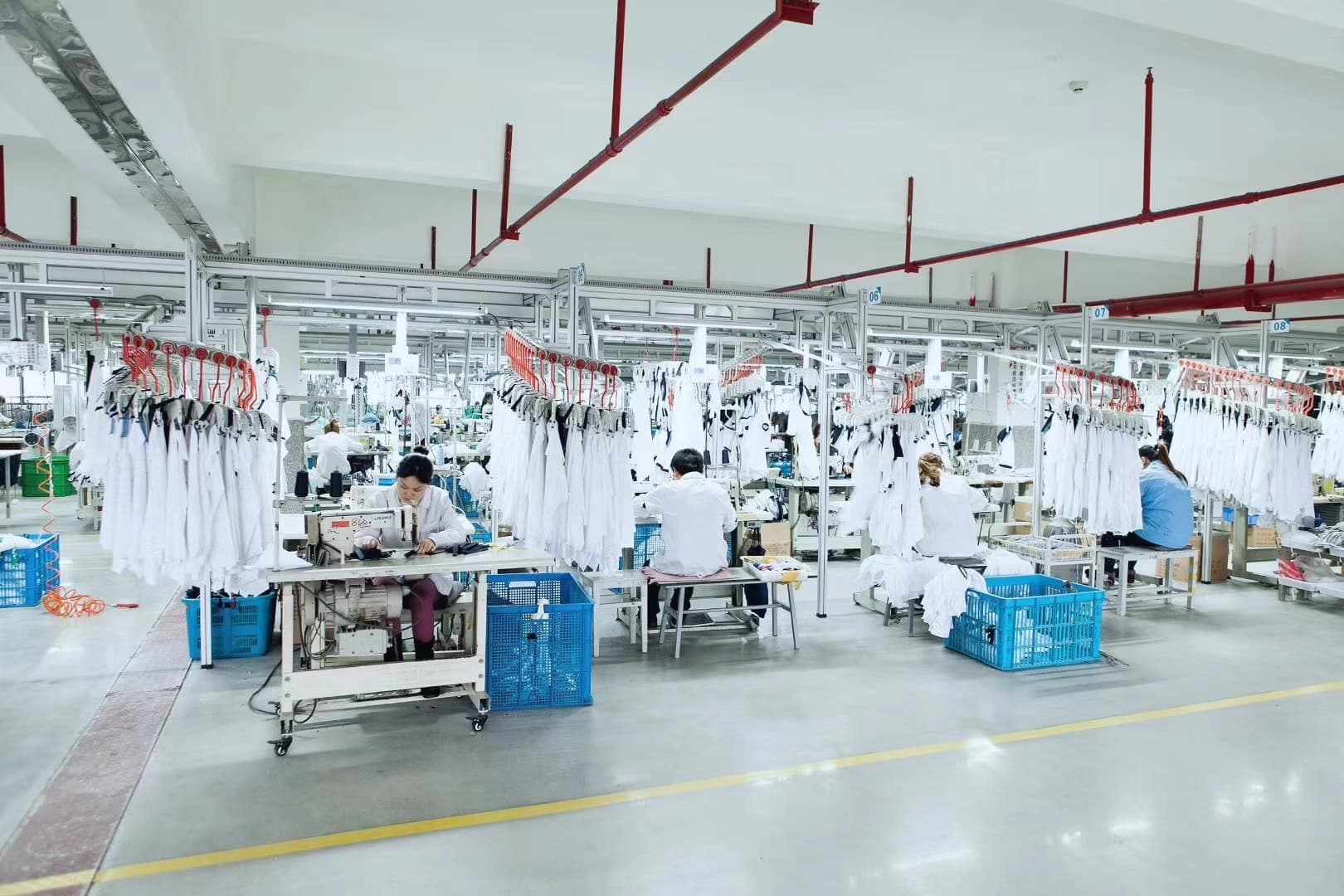
Una línea de producción real: el producto aprobado, el branding, la etiqueta y las referencias de embalaje deben permanecer conectados a medida que el trabajo avanza por la fábrica.
Evidencia de muestra
¿Qué debe demostrar una muestra de ropa de gimnasio al por mayor?
Defina la función de la muestra antes de que se fabrique o se seleccione. En una ruta de personalización ligera, la revisión puede necesitar confirmar que la dirección de producto elegida es adecuada, que el logo es legible y está correctamente posicionado, que las etiquetas y marcas de talla son utilizables y que la presentación coincide con el canal. Si el comprador necesita evaluar el ajuste o el comportamiento del material, indíquelo. Una fotografía puede ayudar con la apariencia, pero no puede reemplazar una revisión física del movimiento, el tacto, la cobertura, las dimensiones o el embalaje.
Consolide los comentarios. Marque cada punto como aprobado, revisar o abierto, y adjunte una imagen o medición donde reduzca la ambigüedad. Una secuencia de mensajes de chat como «mueve el logo un poco» no es un registro de aprobación fiable. Indique la ubicación actual, la nueva ubicación solicitada, las dimensiones y la referencia visual. Use la misma disciplina para la posición de la etiqueta, la fijación del colgante, el plegado y las pegatinas.
La aprobación debe cerrar un conjunto definido de preguntas; no debe ocultar las que siguen sin resolverse. Si el color aún está en revisión, el archivo de arte no es definitivo o el desglose de tallas puede cambiar, regístrelo abiertamente. El proveedor puede entonces explicar de qué decisiones posteriores dependen esos pasos. Esto protege a ambas partes de tratar una muestra temprana de producto o logo como una aprobación global para un pedido al por mayor completo.
Límite de ruta
¿Cuándo debe un comprador pasar de la venta al por mayor al desarrollo de ropa de gimnasio personalizada?
Avance hacia el desarrollo personalizado cuando el cambio solicitado afecte a la prenda en sí y no a su presentación de marca. Un ajuste diferente, un conjunto de medidas, un comportamiento del tejido, un nivel de soporte, una cinturilla, un sistema de tirantes, un bolsillo, una disposición de paneles, una construcción de costuras o una nueva silueta requieren una conversación sobre desarrollo de producto. Incluso un cambio que suene pequeño puede afectar al patrón, al material, a la mano de obra, al muestreo o a la planificación de la producción.
La aplicación de logotipos, las etiquetas, los colgantes y el embalaje sobre una dirección existente adecuada se acercan más a la venta al por mayor o a la personalización ligera. El límite es útil porque mantiene honesta la respuesta del proveedor. Evita que una solicitud personalizada se evalúe como si solo cambiara el arte gráfico, y evita que un programa de branding sencillo conlleve suposiciones de desarrollo innecesarias.
Si su brief incluye cambios de producto, revise la ruta de fabricación de ropa deportiva personalizada e indique qué debe conservarse de la referencia, qué debe cambiar y qué aún necesita la orientación de la fábrica. La misma información sobre el cliente, el canal, la cantidad, el branding, el embalaje, el destino y los plazos sigue siendo relevante; el alcance de las muestras y las aprobaciones se vuelve más profundo.
Calidad y recepción
¿Cómo deben el control de calidad y el embalaje seguir el brief mayorista aprobado?
El control de calidad necesita una referencia. Pregunte qué producto aprobado, información de medidas, arte, etiqueta, instrucción de embalaje y detalle de cartón se utilizarán cuando se verifique el pedido. Los puntos relevantes varían según la prenda y el programa, pero pueden incluir mano de obra, medidas, estado del material y los avíos, identificación de color, apariencia y ubicación del logo, etiquetas, marcado de talla, doblado, bolsas, ratios y marcas del cartón.
No espere que la inspección final repare decisiones de producto poco claras. El control de calidad puede verificar contra un requisito aprobado; no puede inventar el tamaño de logo previsto, decidir cómo debe combinarse un conjunto o determinar qué código de barras pertenece a un estilo si el comprador nunca proporcionó ese registro. Incorpore los puntos de control en el brief y en la aprobación de la muestra, y luego pregunte cómo se plantean las dudas si la información de producción entra en conflicto.
El embalaje debe conducir al proceso real de recepción del comprador. Identifique si los cartones van a un estudio, varias tiendas, un almacén de terceros u otra ubicación comercial. Proporcione instrucciones de asignación, ratio, etiqueta, código de barras, marca del cartón y entrega que sean conocidas. La descripción general de fabricación y calidad ofrece contexto adicional para trasladar la información aprobada a través de la coordinación de producción, la verificación, el embalaje y la preparación para la exportación.
Pedidos repetidos
¿Qué información facilita la revisión de un pedido repetido de ropa de gimnasio?
El mejor momento para preparar un pedido repetido es durante el primero. Mantén juntos la referencia final del producto, el diseño gráfico aprobado, los archivos de etiquetas y embalaje, el desglose de colores y tallas, las instrucciones de empaque, la información del cartón y las decisiones tomadas durante la revisión. Asigna a cada registro una versión y una fecha. Un comprador debería poder explicar qué producto se pidió y cómo se presentó sin reconstruir el programa a partir de mensajes antiguos.
Después del lanzamiento, añade evidencia comercial: unidades vendidas por estilo, color y talla; brechas de stock; comentarios de clientes; devoluciones; y solicitudes de otro producto. Esa evidencia puede ayudar al comprador a ajustar el siguiente desglose. No confirma automáticamente el material, el color, el precio, los mínimos ni los plazos de un pedido futuro. Pide al proveedor que revise nuevamente los datos actuales, especialmente cuando haya pasado tiempo o el comprador quiera un cambio.
Separa la repetición del desarrollo. Repetir una dirección aprobada con las mismas referencias controladas de marca y embalaje es distinto de añadir un nuevo tejido, corte, proceso de color o detalle de construcción. Etiqueta los cambios con claridad para que el proveedor pueda determinar si la solicitud es una repetición, una actualización ligera o un nuevo proyecto de desarrollo personalizado.
Lista de verificación del comprador
¿Está tu consulta de compra al por mayor de ropa de gimnasio lista para enviar?
Usa esta lista de verificación como una revisión final de brechas. No requiere que cada detalle esté terminado. Requiere que el comprador indique lo que se sabe, lo que es una preferencia y lo que aún necesita revisión del proveedor.
Evita brechas prevenibles
¿Qué errores de pedido al por mayor generan más retrabajo?
Elegir demasiados productos
Una primera gama amplia dispersa la atención entre más estilos, colores, tallas, archivos de arte y registros de embalaje. Comienza con productos que tengan un cliente claro y un rol de surtido definido.
Aprobar a través de mensajes dispersos
Consolida los comentarios sobre producto, logo, etiqueta y embalaje. Un historial de aprobación poco claro dificulta saber qué referencia está vigente y qué puntos siguen pendientes.
Tratar el embalaje como un añadido tardío
Los códigos de barras, pegatinas, plegado, ratios y marcas de cartón conectan el producto con la recepción. Introdúcelos mientras la muestra de marca y el registro del pedido aún se están revisando.
Supplier context
¿Cómo revisa inPACE una consulta de ropa de gimnasio al por mayor?
inPACE Sports apoya las conversaciones B2B sobre activewear mediante orientaciones de producto, requisitos de marca privada, revisión de muestras, coordinación de producción, control de calidad, embalaje y preparación para la exportación. El punto de partida útil es un brief del comprador que contenga el cliente y el canal, los productos seleccionados, el uso previsto, las unidades por estilo, color y talla, el branding, las etiquetas, el embalaje, el destino, las necesidades de muestras y la ventana de llegada objetivo. La disponibilidad de producto, los mínimos, el precio, la ruta de muestras y los plazos se revisan a partir del programa real en lugar de prometerse como términos fijos de catálogo.
Siguiente paso al por mayor
Elija productos de ropa de gimnasio al por mayor para branding
Comparta su cliente, canal de ventas, preselección de productos, unidades por estilo, color y talla, diseño del logo, necesidades de etiquetas y empaque, destino, requisitos de muestras de revisión y ventana de llegada objetivo. Marque claramente los cambios de prendas solicitados para que el equipo pueda distinguir una ruta de mayoreo/ligera personalización de un desarrollo personalizado.
Ruta del artículo
Mayoreo / ligera personalización
- Una decisión de cliente y canal
- Planificación de surtido liderada por el producto
- Logo, etiquetas y empaque en conjunto
- Evidencia de muestras y control de calidad
- Registro controlado de pedidos recurrentes
Preguntas del comprador
FAQ: Pedidos a un proveedor mayorista de ropa de gimnasio
Estas respuestas visibles son las mismas preguntas incluidas en los datos estructurados de FAQ de la página.
¿Qué debo preguntar a un proveedor mayorista de ropa de gimnasio antes de hacer un pedido?
Pide al proveedor que revise el cliente objetivo, las referencias de producto, el uso para la actividad, las unidades por estilo, color y talla, el arte del logotipo, las etiquetas, los colgantes, el embalaje, el destino, las necesidades de muestras y la ventana de llegada prevista. Pregunta también qué detalles se pueden confirmar a partir del brief y cuáles dependen del producto, el material, el arte, la cantidad o la revisión de la muestra.
¿El mayorista de ropa de gimnasio es lo mismo que comprar stock minorista?
No. En esta guía, mayorista significa una vía de producto de empresa a empresa basada en direcciones de producto existentes adecuadas, con opciones acordadas de branding y presentación. No implica stock disponible, compra de una sola unidad, fulfillment minorista, dropshipping ni disponibilidad fija. El producto, el color, la talla, la cantidad, el branding, el embalaje y los plazos se revisan para la consulta real.
¿Puede un estudio añadir su logotipo a la ropa de gimnasio mayorista?
Un estudio puede tratar la aplicación del logotipo o la marca registrada como parte de un brief mayorista o de personalización ligera. El método y la ubicación adecuados dependen de la superficie de la prenda, el comportamiento del tejido, el arte, las dimensiones objetivo, los colores, la cantidad y el uso. Las etiquetas, los colgantes, las marcas de talla, las bolsas y la presentación en caja deberían revisarse junto con el mismo producto en lugar de añadirse como algo secundario.
¿Cuántos estilos de ropa de gimnasio debería incluir una primera colección mayorista?
No hay un número universal de estilos. Empieza con la selección más pequeña que ofrezca al cliente una elección coherente y dé a cada SKU un rol claro. Una mezcla enfocada podría combinar una parte superior o sujetador básico, una parte inferior y una capa o pieza para completar el conjunto. El alcance adecuado depende del canal, el cliente, la dirección de precio, la curva de tallas, el plan de color y la asignación de pedido disponible.
¿Cuándo una consulta de ropa de gimnasio mayorista se convierte en desarrollo personalizado?
Pasa hacia el desarrollo personalizado cuando la prenda solicitada cambia en sí misma, por ejemplo el ajuste, las medidas, el comportamiento del tejido, el soporte, la disposición de los paneles, la cinturilla, las tiras, el bolsillo, la construcción de costuras o una nueva silueta. El logotipo, las etiquetas, los colgantes y el embalaje sobre una dirección existente adecuada se acercan más a la personalización ligera. El proveedor debería confirmar la vía tras revisar el brief real.
¿Qué debe aprobarse antes de la preparación de ropa de gimnasio al por mayor?
Aprueba la dirección del producto, las medidas y notas de ajuste relevantes, la dirección de material y color, los detalles de construcción, el arte y la ubicación del logotipo, las etiquetas, los colgantes, el embalaje, el desglose de tallas y colores, los ratios de empaque, la información de la caja y los puntos de QC que se comprobarán. Registra cualquier decisión pendiente y no trates el silencio como aprobación.
¿Cómo deben prepararse los minoristas para pedidos repetidos de ropa de gimnasio al por mayor?
Mantén juntos la referencia de producto aprobada, los archivos de arte, las especificaciones de etiquetas y embalaje, el desglose de tallas y colores, las instrucciones de empaque y el historial de pedidos. Tras el lanzamiento, añade el sell-through, los comentarios de los clientes, las devoluciones y los huecos de stock. Una consulta repetida debería seguir confirmando el material, el color, la cantidad y los plazos actuales en lugar de asumir que cada dato permanece sin cambios.