
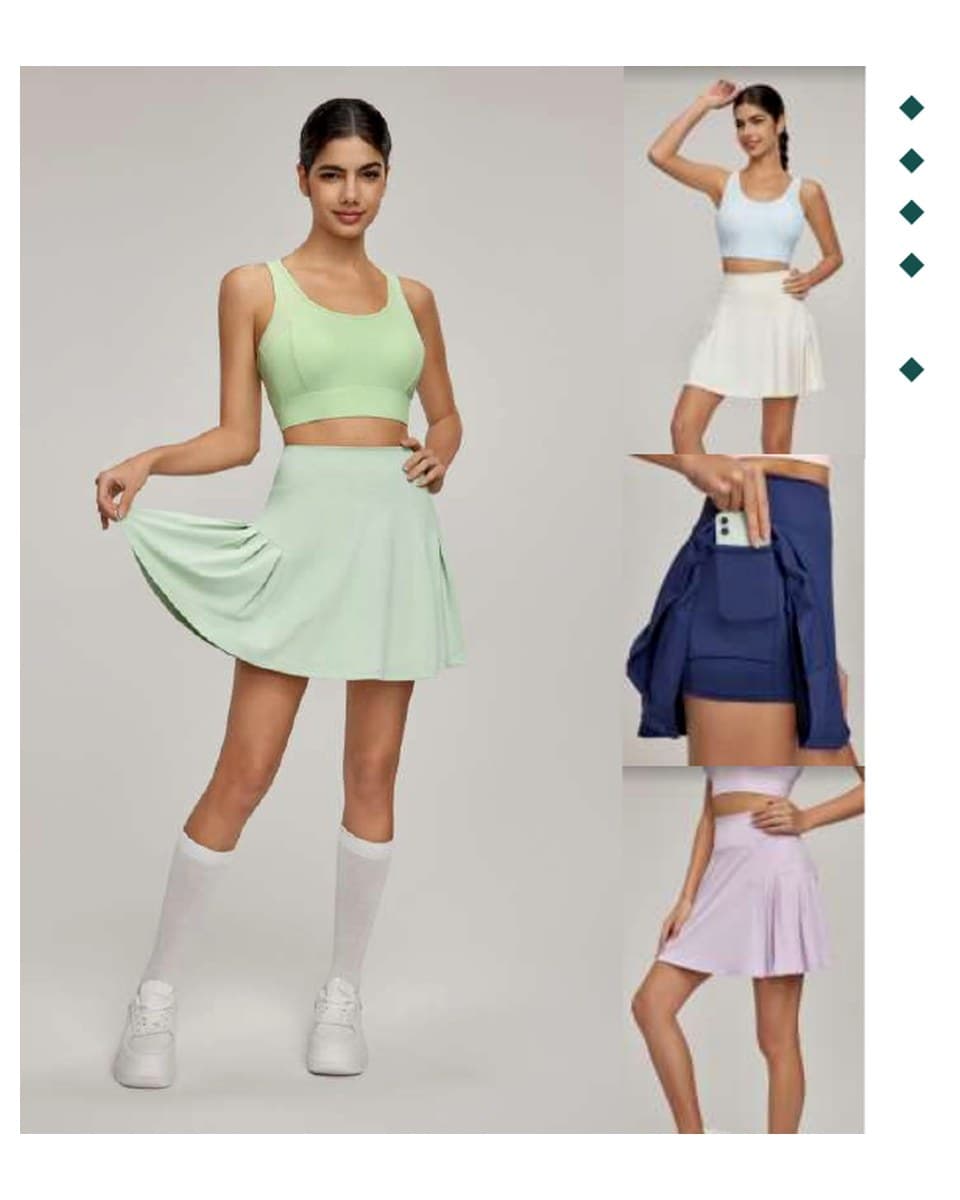
What should a yoga skirt factory brief define before sampling?
A yoga skirt factory brief should identify the outer skirt, inner short, waistband, pocket, length, movement context, fabric direction, fit intent, branding, sample purpose, and open decisions as one connected garment system. A skirt reference can help a brand show a silhouette, but it does not confirm the inner layer, fabric, construction, pocket route, measurements, colour, logo, or production conditions needed for another project. A clear brief lets the factory distinguish a catalogue-informed starting point from a custom garment that needs controlled development.
The first question is whether the buyer needs the garment itself to change. A catalogue direction may be useful when the outer silhouette and key construction are already suitable and the conversation mainly concerns branding, labels, or packing. Factory-custom development is the better route when the product needs a changed inner short, waistband, pocket, length, fabric, panel map, coverage direction, fit, logo zone, or sample plan. Name that boundary early so a product photo is not mistaken for a complete production instruction.
The Yoga Wear Manufacturer solution provides the right commercial path for a new yoga skirt development discussion. The Yoga Activewear Catalog can help a buyer identify a reference product, then document what should stay, change, or be physically reviewed.
How should the outer skirt and inner short be described as one system?
The visible skirt and the inner short have different jobs, but they cannot be designed in isolation. The outer layer affects silhouette, drape, coverage, hem movement, pocket visibility, and the relationship with the waistband. The inner short affects coverage, leg opening, rise, gusset, seam placement, pocket access, and the movement question that a sample must answer. A buyer should state whether the inner short is a separate layer, integrated construction, a lining-like component, or an open direction for factory review.
Start with product use rather than a vague claim such as “comfortable for everything.” A studio skirt, a travel-oriented skort, a court-inspired layer, and an outdoor yoga piece may put different importance on length, coverage, pocket access, fabric, and the relationship between the outer and inner layers. The correct sample question depends on the intended product role, not on a category name alone.
| Brief field | What the buyer can record | Why it matters | Useful next question |
|---|---|---|---|
| Product role | Studio, travel, outdoor, court-inspired, or another named use | Role helps the factory understand the expected silhouette and movement context | What must the skirt do beside the rest of the collection? |
| Outer skirt | Shape, panels, pleats, hem, length, and intended drape | The visible layer affects coverage, movement, logo zone, and component placement | Which outer-layer details are fixed and which are reference ideas? |
| Inner short | Rise, inseam direction, leg opening, gusset, seam, pocket, or lining relationship | An inner layer must be reviewed on the actual garment, not inferred from a photo | What evidence should the sample provide for this layer? |
| Waistband | Height, width, elastic direction, panel relationship, and intended position | The waistband connects both layers and can change fit and movement observations | Which waist relationship should be reviewed in the named size? |
| Location, intended access, device or small-item context, and whether it belongs to the skirt or inner short | A pocket can change layers, seams, opening stability, and sample scope | Which pocket use and garment location need physical review? | |
| Fabric and trim | Body and inner-layer material directions, binding, lining, elastic, mesh, or trim questions | Material choices can change drape, coverage, stretch, seams, and pocket construction | Which inputs must be present in the first sample? |
| Sample purpose | Development, fit, material and trim, pocket, branding, or later approval purpose | One sample should answer a stated question, not silently approve the full order | What is approved, proposed, and still open after the review? |
This table lets a buyer start without pretending every field is final. “Inner-short leg opening to be reviewed at the base size” is more useful than assuming a reference photo proves the construction. “Pocket location proposed; access and seam relationship need a sample” is more useful than treating a pocket icon as a production-ready instruction.
How should a brand decide skirt length, coverage, and movement questions?
A useful brief identifies a measured or comparative length direction, the intended base size, the product use, and the areas that need physical observation. The outer skirt may be expected to sit at a particular visual point relative to the inner short. The inner short may need its own discussion of rise, crotch depth, leg opening, and the relationship to the garment's movement context. The appropriate observation should be named rather than implied by a generic claim about performance.
For example, a buyer may ask the team to review whether the outer skirt remains aligned with the inner short during a stated movement sequence, whether the waistband returns to the intended position, or whether the pocket opening is accessible when the garment is worn over the selected base layer. These are sample questions. They do not create a universal no-ride, no-chafe, coverage, or performance guarantee for every person, fabric, size, or later production version.
Use the activewear inner-short brief when the project needs a more detailed record of the layered-garment relationship. It helps a team keep outer-layer, inner-layer, waistband, pocket, material, fit, and sample decisions connected to the same product version.
Which waistband decisions should be visible in the factory brief?
A waistband is a construction and fit decision, not just a dimension. The brief should state the intended height and position, how it joins the outer skirt and inner short, the relevant fabric or elastic direction, whether a clean front or seam detail is intended, and which observations need a sample. A waistband can affect the inner-short rise, outer-layer drape, pocket placement, logo area, and the way the garment sits beside a bra, tank, or jacket.
When a buyer changes the waistband height, panel direction, elastic, fabric, seam, or connection to the inner layer, the factory should review the whole relationship rather than applying a local change in isolation. The fabrics and trims resource can help organise body fabric, inner-layer material, elastic, binding, mesh, and trim questions before the selected materials are confirmed on a physical piece.
How should a pocket be specified without guessing at the construction?
Describe the pocket's intended role and exact location. A buyer can say whether it is meant for a small item, where it should sit, whether it belongs to the inner short or outer layer, the opening direction, the surrounding panel or seam context, and which size or use observation needs review. This gives the factory a basis to assess construction feasibility, material relationship, access, and the sample evidence required.
Do not make a product photo carry more information than it has. A side pocket, hidden pocket, waist pocket, or inner-short pocket may interact differently with the waistband, outer layer, panel shape, lining, stretch, and garment movement. The factory may need to recommend a different detail, adjust the placement, ask for a sample, or identify information that remains open. That is a useful manufacturing discussion, not a reason to promise that every reference can be copied without change.
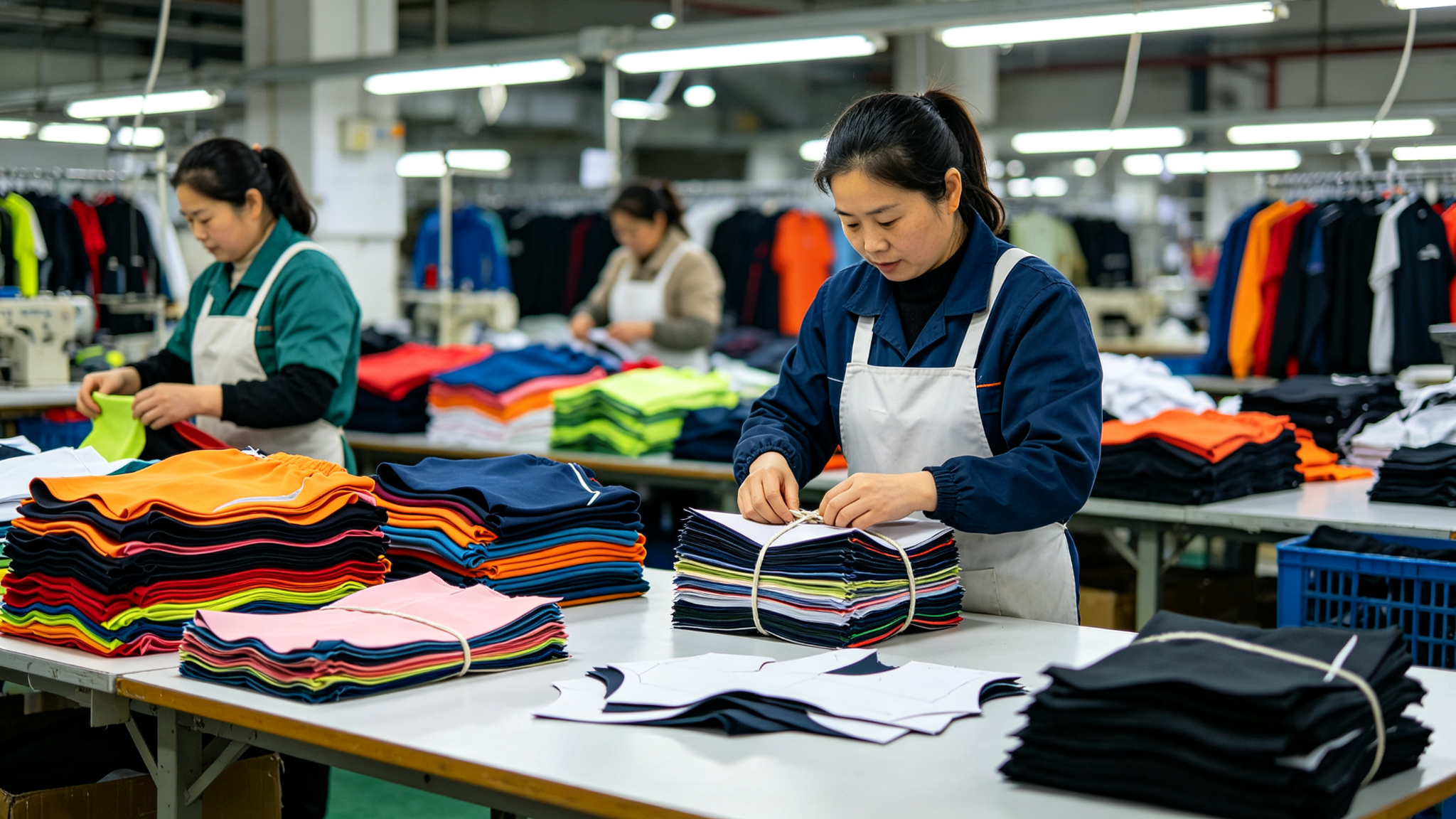
The image is a production-context reference rather than evidence for a specific yoga skirt. It shows why a confirmed product record matters: cut panels, layer identity, materials, components, sample approvals, and packing information must stay associated with the same style before the garment can move into an appropriate production discussion.
How do fabric and fit decisions affect the layered garment?
The outer skirt and inner short can require different material questions. The brief should identify the body fabric direction, inner-layer direction, any lining, elastic, binding, mesh, trim, or pocket component that must appear in the sample. It should also state whether an available development material is being used only to answer a fit or construction question rather than to confirm final production material.
A buyer can discuss handfeel, weight, drape, stretch relationship, recovery question, coverage direction, surface, and colour relationship without presenting any unapproved property as a fact. The right fabric depends on the actual silhouette, inner layer, waistband, pocket construction, intended use, and sample objective. A fabric swatch may be a useful start, but it cannot establish how both layers work together on the completed garment.
The activewear sample feedback guide can help a brand record exact observations after a physical review. It is especially useful when the next action might be a pattern revision, material change, pocket adjustment, waistband change, another sample, or a limited approval for the stated garment version.
How do Supplier, Manufacturer, and Factory responsibilities differ for a yoga skirt?
A supplier discussion helps a buyer compare whether product communication, sample evidence, production coordination, QC, packing, and next actions are clear enough to evaluate. A manufacturer discussion turns the outer skirt, inner short, waistband, pocket, material, fit, and branding notes into a development plan. A factory discussion begins after relevant product decisions are confirmed and focuses on making the approved outer and inner components, construction, logo application where applicable, QC attention points, packing instructions, and handoff records executable.
The distinction protects the buyer from a common sourcing problem: treating a reference garment as a finished production specification. A different waistband, inner short, pocket, fabric, fit, colour, logo area, or sample purpose can create a new development route. The custom activewear development route gives a brand a place to discuss that route before it treats an early sample or image as an approval.
How can inPACE support a yoga skirt factory brief?
inPACE can start with a buyer brief, reference image, existing sample, or tech pack and help structure the product decisions that make a yoga skirt manufacturable: outer-layer role, inner-short relationship, waistband, pocket, fabric and trim direction, fit, movement observation, branding, sample purpose, QC, and packing. The programme is built on more than 30 years of garment-production experience, used as context for manufacturing judgement and production coordination rather than a guarantee of capacity, price, timing, certification, or a particular technical outcome.
For a confirmed project, inPACE can coordinate an appropriate production route through multiple partner factories. The route depends on the approved product, material, construction, decoration, quantity direction, and scope. This does not mean every factory is owned by inPACE or that one production plan applies to every buyer. It means that the factory discussion can connect the approved sample, components, QC points, and packing record to the actual style.
If the product brief includes an applicable decoration or finish question, sample support can also be discussed for printing, embroidery, or washing. General planning commonly allows about 5–10 days for samples and 25–50 days for production after the project scope and approvals are confirmed. These are planning ranges, not fixed commitments; materials, components, colourways, decoration, packing, quantity direction, and revisions can change the route.
What should a buyer prepare before a yoga skirt sample review?
- Name the product role, target customer, intended use, and collection relationship.
- State whether the starting point is a catalogue reference or factory-custom development.
- Attach the current reference, sample, sketch, tech pack, or product link and mark what must stay, change, or be reviewed.
- Identify the outer-skirt silhouette, hem, panel, length, and coverage questions.
- Describe the inner short, rise, leg opening, gusset, seam, and pocket questions that need physical evidence.
- State the waistband height, position, fabric or elastic direction, and relationship to both layers.
- Name the body, inner-layer, lining, elastic, binding, mesh, trim, and colour directions that must be present or remain open.
- Mark the reviewed size, intended base garment, and named movement or access observations.
- Provide available logo, label, hangtag, bag, folding, carton, destination, and quantity-direction notes.
- Give the sample one clear purpose and separate approved items from proposals and open questions.
- Record the reviewer, decision owner, requested next action, and evidence needed before a later approval.
A controlled record lets the factory respond to a real product decision rather than guess how a visible skirt should be constructed. It also helps a buyer compare suppliers against the same product, material, fit, sample, and packing assumptions.
What happens after the stated sample decision?
A sample should be approved only for the decision it actually supports. A fit sample may clarify waistband position and outer-inner alignment while leaving final materials, logo method, labels, packing, grading, or production details open. A pocket review may settle location and access while leaving a changed fabric or colourway for a later check. Before production discussion, keep the approved product reference, materials, construction, components, branding files, packing instructions, quantity direction, QC attention points, and unresolved decisions together.
The manufacturing workflow gives a buyer a useful overview of how approved product information can move into production coordination, QC, packing, and export preparation. Send the current skirt brief, the sample purpose, and the open questions to start a custom yoga skirt discussion when the project needs a controlled factory path rather than a generic category quotation.
Product directions
Explore relevant activewear products
Use these product pages as practical references for your brief, then confirm materials, fit, customization, and production details through sampling.
Yoga Activewear Collection
Compare yoga silhouettes and define which skirt, inner-short, fabric, branding, or packing details should become part of the factory brief.
View product directionA-Line Yoga Skirt Reference
Use an existing skirt direction to distinguish the silhouette that is useful from the layer, waistband, pocket, or private-label changes that still require review.
View product directionCustom Activewear Development
Move from a reference style to a controlled brief covering fabric, fit, construction, sample questions, branding, QC, and packing requirements.
View product directionLong-form buyer framework
How can a buyer turn this research into a production-ready decision?
The central task in developing a yoga skirt with an outer skirt, inner short, waistband, and pocket is deciding how to define the outer and inner layers, waistband, pocket purpose, fit, material, sample evidence, and production handoff as one connected garment system. That decision cannot be made from a headline price, a product photo, or a general statement about customization. It needs a record that connects the commercial goal to the garment, material, fit, construction, branding, quantity, quality checks, packing, and destination. When those elements are visible together, a buyer can ask more precise questions and a factory can explain the route without pretending that open details are already confirmed.
The purpose of the framework below is not to turn a brand founder or buyer into a garment technician. It is to make responsibility and evidence clear. The buyer defines the customer and business need, shares what is known, and identifies the decisions that matter. The factory should review the connected outer and inner layers, material and trim relationships, construction questions, sample evidence, QC attention points, and packing scope against the actual brief. Both sides then record what was reviewed, what remains conditional, what must be approved physically, and what information will guide production or a later repeat order.
Define the outer and inner layers together
State the intended silhouette, coverage, movement, outer-skirt shape, inner-short role, inseam direction, and any non-negotiable relationship between the two layers. A skirt photo alone does not explain the contact, coverage, or movement expectations of the connected inner garment.
For this decision, the buyer should state the intended result, provide the closest available evidence, and identify what is flexible. The supplier can then explain the product or process implications and flag any dependency on fabric availability, colour, construction, logo method, components, quantity, or packing. A useful response distinguishes a recommendation from a confirmed production instruction and says what would need to be reviewed through a sample or another approval step.
Record the outcome inside a yoga-skirt development record connecting the brief, reference style, outer and inner layers, waistband and pocket details, material direction, sample observations, approvals, QC points, and packing instructions. Include the date, relevant file or sample, the person responsible for the next action, and the status of the decision. If a later change affects fit, material, workmanship, branding, assortment, or delivery preparation, return to this record and identify which related approvals need to be checked again. This prevents a local change from creating an unnoticed downstream inconsistency.
Make waistband construction reviewable
Describe the waistband height, finished width, rise relationship, desired hold, edge treatment, elastic or power-mesh direction where relevant, and the areas that should be observed during movement. A waistband decision changes how the skirt and inner short sit together, so it should be checked on the proposed material and size.
For this decision, the buyer should state the intended result, provide the closest available evidence, and identify what is flexible. The supplier can then explain the product or process implications and flag any dependency on fabric availability, colour, construction, logo method, components, quantity, or packing. A useful response distinguishes a recommendation from a confirmed production instruction and says what would need to be reviewed through a sample or another approval step.
Record the outcome inside a yoga-skirt development record connecting the brief, reference style, outer and inner layers, waistband and pocket details, material direction, sample observations, approvals, QC points, and packing instructions. Include the date, relevant file or sample, the person responsible for the next action, and the status of the decision. If a later change affects fit, material, workmanship, branding, assortment, or delivery preparation, return to this record and identify which related approvals need to be checked again. This prevents a local change from creating an unnoticed downstream inconsistency.
Specify pocket purpose and location
Name what the pocket is intended to carry, its position, access direction, closure or retention question, construction relationship to the inner short or outer skirt, and the activity in which it should be reviewed. Pocket feasibility depends on the garment layers, fabric behaviour, seam route, item size, and sample observation.
For this decision, the buyer should state the intended result, provide the closest available evidence, and identify what is flexible. The supplier can then explain the product or process implications and flag any dependency on fabric availability, colour, construction, logo method, components, quantity, or packing. A useful response distinguishes a recommendation from a confirmed production instruction and says what would need to be reviewed through a sample or another approval step.
Record the outcome inside a yoga-skirt development record connecting the brief, reference style, outer and inner layers, waistband and pocket details, material direction, sample observations, approvals, QC points, and packing instructions. Include the date, relevant file or sample, the person responsible for the next action, and the status of the decision. If a later change affects fit, material, workmanship, branding, assortment, or delivery preparation, return to this record and identify which related approvals need to be checked again. This prevents a local change from creating an unnoticed downstream inconsistency.
Connect fabrics and trims to each layer
List the body fabric, lining or inner-short fabric, waistband material, mesh, elastic, binding, labels, and logo zones by role. Discuss stretch, recovery, opacity, handfeel, weight, surface, colour, stitching, and component compatibility on the garment rather than approving isolated swatches.
For this decision, the buyer should state the intended result, provide the closest available evidence, and identify what is flexible. The supplier can then explain the product or process implications and flag any dependency on fabric availability, colour, construction, logo method, components, quantity, or packing. A useful response distinguishes a recommendation from a confirmed production instruction and says what would need to be reviewed through a sample or another approval step.
Record the outcome inside a yoga-skirt development record connecting the brief, reference style, outer and inner layers, waistband and pocket details, material direction, sample observations, approvals, QC points, and packing instructions. Include the date, relevant file or sample, the person responsible for the next action, and the status of the decision. If a later change affects fit, material, workmanship, branding, assortment, or delivery preparation, return to this record and identify which related approvals need to be checked again. This prevents a local change from creating an unnoticed downstream inconsistency.
Use the sample to answer a stated question
Identify whether the sample should test length, coverage, waistband stability, inner-short movement, pocket access, fabric feel, construction, logo placement, or a combination that is explicitly recorded. Sample comments are strongest when they identify the size, activity, observation, requested revision, and decision owner.
For this decision, the buyer should state the intended result, provide the closest available evidence, and identify what is flexible. The supplier can then explain the product or process implications and flag any dependency on fabric availability, colour, construction, logo method, components, quantity, or packing. A useful response distinguishes a recommendation from a confirmed production instruction and says what would need to be reviewed through a sample or another approval step.
Record the outcome inside a yoga-skirt development record connecting the brief, reference style, outer and inner layers, waistband and pocket details, material direction, sample observations, approvals, QC points, and packing instructions. Include the date, relevant file or sample, the person responsible for the next action, and the status of the decision. If a later change affects fit, material, workmanship, branding, assortment, or delivery preparation, return to this record and identify which related approvals need to be checked again. This prevents a local change from creating an unnoticed downstream inconsistency.
Carry the approval record into production and QC
Before production discussion, connect approved measurements, materials, colours, component direction, construction notes, artwork, labels, packing, sample version, and open items. This gives partner-factory coordination a defined basis without implying that any production detail is settled before the relevant approval.
For this decision, the buyer should state the intended result, provide the closest available evidence, and identify what is flexible. The supplier can then explain the product or process implications and flag any dependency on fabric availability, colour, construction, logo method, components, quantity, or packing. A useful response distinguishes a recommendation from a confirmed production instruction and says what would need to be reviewed through a sample or another approval step.
Record the outcome inside a yoga-skirt development record connecting the brief, reference style, outer and inner layers, waistband and pocket details, material direction, sample observations, approvals, QC points, and packing instructions. Include the date, relevant file or sample, the person responsible for the next action, and the status of the decision. If a later change affects fit, material, workmanship, branding, assortment, or delivery preparation, return to this record and identify which related approvals need to be checked again. This prevents a local change from creating an unnoticed downstream inconsistency.
Keep packing and reorder records tied to the style
Retain the final style reference, layer and pocket decisions, size and colour matrix, label and bag instructions, carton marks, QC observations, and revision history. A later colour, fabric, fit, or component change should trigger a review of the connected records rather than being treated as an identical reorder.
For this decision, the buyer should state the intended result, provide the closest available evidence, and identify what is flexible. The supplier can then explain the product or process implications and flag any dependency on fabric availability, colour, construction, logo method, components, quantity, or packing. A useful response distinguishes a recommendation from a confirmed production instruction and says what would need to be reviewed through a sample or another approval step.
Record the outcome inside a yoga-skirt development record connecting the brief, reference style, outer and inner layers, waistband and pocket details, material direction, sample observations, approvals, QC points, and packing instructions. Include the date, relevant file or sample, the person responsible for the next action, and the status of the decision. If a later change affects fit, material, workmanship, branding, assortment, or delivery preparation, return to this record and identify which related approvals need to be checked again. This prevents a local change from creating an unnoticed downstream inconsistency.
Buyer scenarios
How does the decision change in common sourcing situations?
Real projects rarely arrive with every detail complete. The useful question is not whether the brief is perfect; it is whether the missing information is visible and whether the next step will produce evidence. These scenarios show how a buyer can keep developing a yoga skirt with an outer skirt, inner short, waistband, and pocket practical without converting early assumptions into promises.
The buyer has a direction but incomplete technical files
Start with the product role, target customer, intended use, reference material, and the decisions already made. Mark missing measurements, fabric, artwork, or packing details as open questions. The supplier response should show what can be reviewed immediately, what needs a sample, and what information is required before the route becomes more specific.
Apply the scenario to how to define the outer and inner layers, waistband, pocket purpose, fit, material, sample evidence, and production handoff as one connected garment system. Note what can be accepted as direction, what requires factory review, and what must become part of a yoga-skirt development record connecting the brief, reference style, outer and inner layers, waistband and pocket details, material direction, sample observations, approvals, QC points, and packing instructions before the buyer compares suppliers or approves the next stage.
A catalogue reference is close but not exact
List the features that already work and separate brand presentation from garment changes. A logo, label, hangtag, or bag may stay within a catalogue-informed route, while a new fit, material, pattern, construction, or performance feature may require custom development. The decision should be based on the requested change, not a category label.
Apply the scenario to how to define the outer and inner layers, waistband, pocket purpose, fit, material, sample evidence, and production handoff as one connected garment system. Note what can be accepted as direction, what requires factory review, and what must become part of a yoga-skirt development record connecting the brief, reference style, outer and inner layers, waistband and pocket details, material direction, sample observations, approvals, QC points, and packing instructions before the buyer compares suppliers or approves the next stage.
The order contains several colours, sizes, and brand components
Create one assortment record by style, colour, and size, then connect every logo, label, barcode, bag, and carton instruction to the correct SKU. Ask which choices affect material planning, application methods, packing ratios, or quotation assumptions. This is where a simple-looking collection can become operationally complex.
Apply the scenario to how to define the outer and inner layers, waistband, pocket purpose, fit, material, sample evidence, and production handoff as one connected garment system. Note what can be accepted as direction, what requires factory review, and what must become part of a yoga-skirt development record connecting the brief, reference style, outer and inner layers, waistband and pocket details, material direction, sample observations, approvals, QC points, and packing instructions before the buyer compares suppliers or approves the next stage.
The programme is expected to repeat
Decide which approved records will be retained after shipment and which changes should trigger a new sample. Product specifications, material and colour references, artwork, placement, labels, packing, QC notes, and prior order data make later replenishment more controlled. A reorder should not depend on memory or an old message thread.
Apply the scenario to how to define the outer and inner layers, waistband, pocket purpose, fit, material, sample evidence, and production handoff as one connected garment system. Note what can be accepted as direction, what requires factory review, and what must become part of a yoga-skirt development record connecting the brief, reference style, outer and inner layers, waistband and pocket details, material direction, sample observations, approvals, QC points, and packing instructions before the buyer compares suppliers or approves the next stage.
Relevant product directions
Which products can make the next brief more concrete?
Use these product pages to identify a silhouette or collection direction, then state what should remain, change, or be reviewed. Product images are useful references, but fabric, fit, construction, colour, branding, quantity, and packing still require project-specific confirmation.
Yoga Activewear Collection
Compare yoga silhouettes and define which skirt, inner-short, fabric, branding, or packing details should become part of the factory brief.
View product directionA-Line Yoga Skirt Reference
Use an existing skirt direction to distinguish the silhouette that is useful from the layer, waistband, pocket, or private-label changes that still require review.
View product directionCustom Activewear Development
Move from a reference style to a controlled brief covering fabric, fit, construction, sample questions, branding, QC, and packing requirements.
View product directionDecision record
Which evidence should the buyer request and retain?
The table turns the article's key questions into a working review format. It is intentionally broader than a unit-price comparison because a complete activewear programme includes product, material, sample, branding, packing, and delivery assumptions.
| Decision area | Buyer evidence | Factory review | Record before approval |
|---|---|---|---|
| Define the outer and inner layers together | Reference, requirement, intended result, and any non-negotiable constraint. | Feasibility, dependencies, assumptions, sample need, and effect on connected decisions. | Approved reference, open issue, owner, date, and the next checkpoint. |
| Make waistband construction reviewable | Reference, requirement, intended result, and any non-negotiable constraint. | Feasibility, dependencies, assumptions, sample need, and effect on connected decisions. | Approved reference, open issue, owner, date, and the next checkpoint. |
| Specify pocket purpose and location | Reference, requirement, intended result, and any non-negotiable constraint. | Feasibility, dependencies, assumptions, sample need, and effect on connected decisions. | Approved reference, open issue, owner, date, and the next checkpoint. |
| Connect fabrics and trims to each layer | Reference, requirement, intended result, and any non-negotiable constraint. | Feasibility, dependencies, assumptions, sample need, and effect on connected decisions. | Approved reference, open issue, owner, date, and the next checkpoint. |
| Use the sample to answer a stated question | Reference, requirement, intended result, and any non-negotiable constraint. | Feasibility, dependencies, assumptions, sample need, and effect on connected decisions. | Approved reference, open issue, owner, date, and the next checkpoint. |
| Carry the approval record into production and QC | Reference, requirement, intended result, and any non-negotiable constraint. | Feasibility, dependencies, assumptions, sample need, and effect on connected decisions. | Approved reference, open issue, owner, date, and the next checkpoint. |
| Keep packing and reorder records tied to the style | Reference, requirement, intended result, and any non-negotiable constraint. | Feasibility, dependencies, assumptions, sample need, and effect on connected decisions. | Approved reference, open issue, owner, date, and the next checkpoint. |
Buyer checklist
What should be ready before the next factory conversation?
A buyer can begin even when some boxes remain open. Label them clearly and ask what evidence would close them. That approach is more useful than hiding uncertainty or waiting for an impossible level of perfection. It also makes a supplier's reasoning easier to evaluate: the response should identify connected decisions and explain why a sample, component approval, revised brief, or packing record is needed.
Continue the buyer journey
Keep the next step tied to the product decision
Continue with the activewear inner-short brief when that question is adjacent to the current decision. If the project is ready for factory review, send the product type, reference, material and fit priorities, branding scope, estimated quantity, packing needs, and destination market. inPACE Sports can then discuss whether the next step is product selection, private-label review, custom development, sampling, or a more complete quotation brief.
State what is confirmed, flexible, and still open for factory guidance.
Ask how decisions move into sampling, production, QC, and packing.
Retain the approval and receiving records needed for shipment and reorders.
FAQ
Buyer questions
What should a yoga skirt factory brief include?
Include the product role, outer-skirt silhouette, inner-short relationship, waistband, pocket, length, fabric and trim direction, fit and movement questions, reviewed size, branding, packing, quantity direction, sample purpose, evidence, and open decisions. Mark which items are confirmed, proposed, substituted, or still need a physical review.
Is a yoga skirt factory brief different from a product photo?
Yes. A photo can communicate a silhouette or product direction, but it does not confirm the inner-short construction, waistband, pocket, materials, measurements, logo, colour, sample purpose, or production conditions for another project. A brief connects those decisions to one version of the garment.
What should be checked on a yoga skirt sample?
Check the stated outer and inner layer relationship, waistband position, length, inner-short rise and leg opening, pocket location and access, material and seam context, fit in the reviewed size, the named movement or coverage observation, and the approval boundary. The appropriate checks depend on the actual brief and sample purpose.
Can a yoga skirt have a pocket in the inner short or outer layer?
Either route can be discussed, but the product brief should identify the intended pocket use, location, opening, nearby seam or panel, waistband relationship, material context, and sample evidence needed. The factory can then review construction feasibility instead of treating a visual reference as a final instruction.
How can inPACE support a custom yoga skirt project?
inPACE can review a brief, reference, sample, or tech pack and discuss the outer skirt, inner short, waistband, pocket, materials, fit, sample plan, branding, QC, and packing. It can coordinate an appropriate route through partner factories subject to the confirmed product, materials, construction, decoration, quantity direction, and scope.
Does a fit sample approve bulk yoga skirt production?
No. A fit sample can support the limited decision it was made to review. Final materials, components, construction, colours, logo, labels, packing, quantity direction, QC points, and project conditions still need the relevant confirmation before bulk production is discussed.
How long do yoga skirt samples and production normally take?
For inPACE projects, general planning commonly allows about 5–10 days for samples and about 25–50 days for production after scope and approvals are confirmed. These are planning ranges, not fixed commitments. Materials, construction, colours, decoration, packing, quantity direction, and revisions can change the applicable plan.