
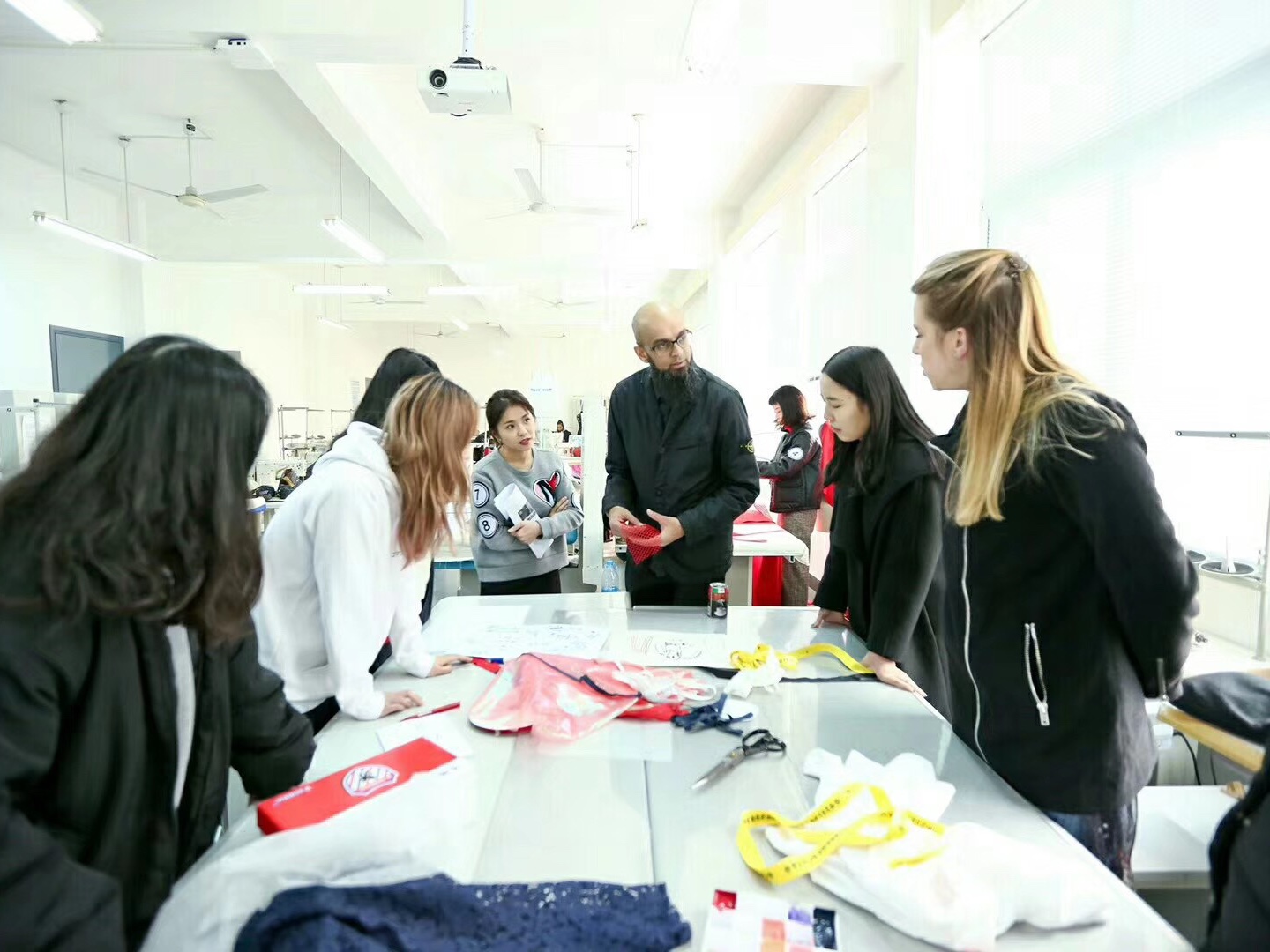
A ribbed activewear manufacturer must turn rib direction, wale scale, stretch, recovery, opacity, handfeel, seam placement and intended fit into a sample brief. Brands should separate fixed visual features from open material questions and state what the first sample must prove. The factory can then discuss whether the construction suits yoga, studio, training or athleisure use before production planning.
Ribbed fabric can make a yoga legging, studio set, bra, tank or lifestyle layer look dimensional and tactile. It can also reveal fit and material issues more clearly than a smooth surface. Ribs may widen, flatten, twist, show shade variation or become more transparent when the body stretches. A photograph cannot confirm how the selected knit behaves on a body, through movement or across sizes. This guide is for B2B brands, private-label buyers, studios, online retailers and small-batch programmes comparing a ribbed activewear supplier, factory or manufacturer.
When does ribbed activewear need factory-custom development?
An existing product direction can be useful when the silhouette, base fit, material family, colour route and commercial purpose match the buyer's programme. If the request is limited to confirmed colour, logo, labels, hangtags or packing, the discussion may fit wholesale or light customisation. The buyer should still verify the actual product, available fabric, size range, branding method and project conditions.
Factory-custom development is more suitable when the brand needs a new rib scale, direction, width, body length, rise, waistband, leg opening, support area, opacity level, panel map, colour break, logo treatment, grading direction or sample sequence. These choices interact. A narrow rib can stretch differently from a broad rib; a high-waist rib may need another recovery solution; a contrast panel can change the visual balance of the whole set.
The custom activewear manufacturer route is the appropriate commercial path for connected decisions. A yoga activewear reference can show a product role or silhouette, but it does not confirm another buyer's fibre content, rib construction, measurements, shade, logo, price, quantity, capacity or delivery conditions.
What should “ribbed” mean in a technical brief?
Use ribbed as a starting description, then name the construction questions. A buyer may mean a fine vertical rib, a wide channel, a two-by-two texture, a subtle plated effect, a crosswise rib, a body-mapped rib zone or a ribbed waistband on an otherwise smooth garment. These are different development tasks. Record the direction, scale, visual regularity, surface prominence and body areas where the texture should appear.
State whether the rib is intended to create a quiet texture, a visible fashion line, a body-contouring effect, a colour boundary, a support zone or a handfeel difference. Avoid describing ribbing as proof of sculpting, compression, cooling, anti-pilling or opacity. Those outcomes depend on yarn, structure, finishing, measurements, colour, size and the approved sample. “Use a ribbed knit” is less useful than “keep the front visually calm, review the waistband recovery, and test the selected light colour in the base size.”
Which rib direction and scale should a brand choose?
Rib direction changes the way a garment reads and stretches. A vertical rib may emphasise length, while a crosswise or angled direction creates another visual rhythm and recovery question. A wider rib makes the surface more obvious but can open more when the body stretches. A fine rib can look smooth at rest but still reveal transparency or distortion under tension.
Define direction separately for body, waistband, underband, cuff, side panel and leg opening when the garment needs more than one zone. Explain whether transitions should align with seams or remain continuous. Ask the factory whether the selected rib scale can maintain its appearance across the intended size range and whether a change in scale affects weight, handfeel or shade.
| Rib decision | Buyer input | Manufacturer review | Evidence to keep |\n| --- | --- | --- | --- |\n| Direction | Vertical, crosswise, angled or zone-specific. | Stretch path, visual balance, seam and grading relationship. | Front, side and movement images. |\n| Scale | Fine, medium, wide or mixed. | Surface prominence, openness, handfeel and feasibility. | Close-up view at rest and under stretch. |\n| Waistband | Same rib or firmer contrasting rib. | Recovery, roll behaviour, edge finish and comfort. | Static and movement review. |\n| Logo area | Clear, ribbed or mixed surface. | Method, distortion, contrast and grading. | Artwork shown on actual surface. |
This decision table is not a substitute for a fabric or fit approval. It lets a brand compare responses from a ribbed activewear supplier and manufacturer using the same vocabulary, and it makes sample evidence visible.
How do fibre and yarn choices change a ribbed fabric?
Yarn affects surface, stretch, recovery, handfeel, colour depth, durability questions and the way a rib zone reads on the body. A fibre name alone does not describe finished fabric. The same fibre family can behave differently with another yarn size, blend ratio, knit density, finish or rib construction.
Ask for the proposed composition or fibre direction, stretch and recovery question, weight or hand reference, colour process, finishing route, care expectation and documentation needed for claims. If recycled content, organic fibre, nylon, polyester, elastane or a specific handfeel matters, keep the request tied to the selected material and approved records rather than a general catalogue statement.
The fabrics and trims resource can organise this review. A swatch is useful for colour and touch, but it does not approve a garment. Review the actual ribbed sample for stretch, recovery, opacity, surface regularity, seam behaviour and handfeel at rest and in named movement. If the factory proposes another yarn or structure, record it as a deliberate development change.
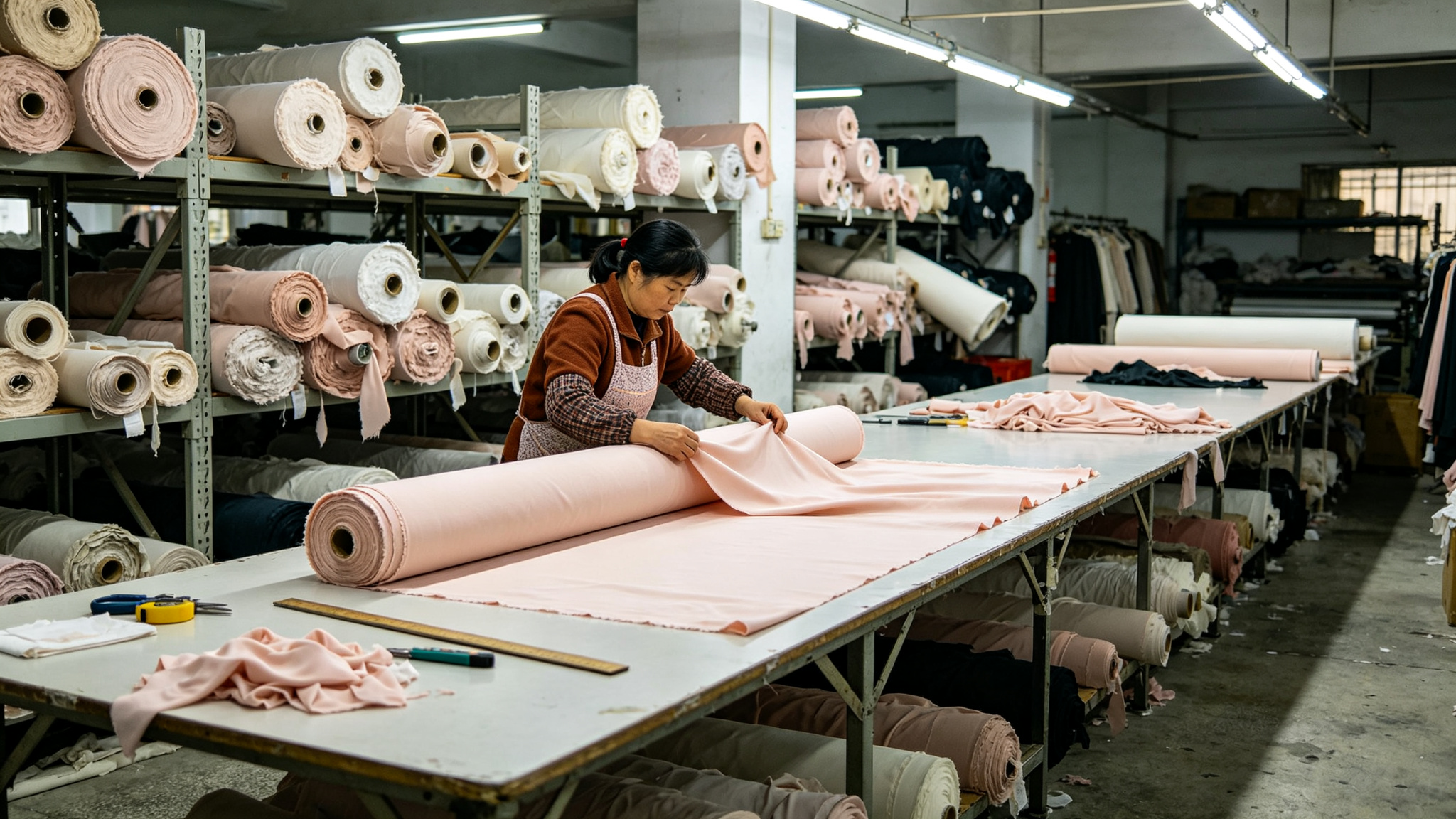
This factory-context image supports a material planning discussion only. It does not confirm the selected rib construction, fibre content, colour, availability, factory assignment or production condition for a future project.
How should brands check stretch, recovery and opacity?
Ribbed fabric can look opaque while relaxed and become more open when stretched. It can recover promptly in one direction and more slowly in another. A waistband can feel secure while standing and then change position during a squat, lunge or overhead reach. These are sample questions, not assumptions answered by the word ribbed.
Write observations another reviewer can repeat: check the front panel in the selected colour and base size during a named squat; compare the waistband after repeated movement; note whether rib direction remains even at the hip; and record whether the fabric returns to the approved visual state after the movement sequence. Avoid universal claims such as “never transparent” or “no ride-up.”
Use the same sample version, material and movement sequence when comparing revisions. A firmer waistband may change torso balance. A denser rib may change perceived length. A new finish may change hand or shade. If an improvement moves a problem to an adjacent zone, document that connection before approving the revision.
What fit and pattern questions matter for ribbed leggings and sets?
Ribbed texture can change the visual reading of a seam, panel and body curve. Define the product role first: studio legging, low-impact set, training layer, warm-up, staff item or athleisure piece. Then state intended base fit, waist position, body length, rise, leg length, leg opening, neckline, armhole, underband and coverage direction.
The activewear fit-model brief helps connect a size, sample version, material, movement, observation and decision owner. For a ribbed item, add a surface observation: does the rib remain aligned, does the pattern create unwanted visual drag, does the side seam sit where expected, and does texture make a local fit issue easier or harder to see?
A product photo should not be treated as a measurement sheet. Send an annotated image, reference garment, tech pack or measurement table and mark which points are fixed, proposed or open to manufacturer advice. If a change to rise, waist, inseam or body length affects rib direction or panel transition, carry that change into the next sample record.
How should grading be planned across sizes?
Ribbed activewear is not automatically easier to grade. When size changes, circumference, length, rib appearance, logo scale, waistband height, coverage and zone boundaries may all change. A base-size sample can look balanced while a smaller or larger size reveals a different openness, distortion or transition.
Give the manufacturer base size, size range, measurement reference, intended wearer and grading priorities. Identify what must stay visually aligned across sizes: logo position, colour break, waistband height, side panel, rib direction or ventilation zone. A size-set review should compare measurements and surface appearance, not only whether the garment can be put on.
Keep size, colour and quantity decisions separate. A proposed size pack does not approve the grade, and a colour pack does not prove that a light shade has the same coverage as a dark shade. The size, colour and quantity planning guide supports commercial planning, while fit and opacity approval stays attached to actual samples.
What branding methods work on a ribbed surface?
Branding needs to respect the surface. A knitted or jacquard logo, heat transfer, print, embroidery, woven label or care label can interact differently with ribs, high-stretch zones, seams and colour transitions. A placement that looks clean on a flat mock-up may distort when the rib opens or sit across a transition that changes legibility.
Send artwork, placement, scale, contrast, repeat direction and label requirements. Ask to see the mark on the actual ribbed material and selected size. The logo methods for stretch activewear guide is the adjacent decision page. Keep print, embroidery, wash-effect or finishing support conditional until compatibility and appearance are approved on the garment.
This image is a material-context reference. It does not prove a specific rib composition, machine, factory assignment, capacity, certification or customer production condition.
How should the sample plan be staged?
Give each sample one purpose. A development sample can test rib scale, direction, yarn and body shape. A material sample can compare composition, colour, handfeel, stretch, recovery and opacity. A fit sample can review base size, waist, rise, length, leg opening, neckline and movement. A branding sample can show artwork on actual rib. A later approval sample can confirm which decisions transfer into production instructions.
The activewear sample feedback guide explains why comments should stay with the reviewed version. An approved base-size fit does not automatically approve all sizes, colours, decoration, packing or later fabric substitutions. Mark every point approved, revise, open or not tested.
For suitable projects, inPACE can discuss sampling support that may include printing, embroidery and wash effects. Sample planning commonly falls within about 5–10 days and production planning commonly falls within about 25–50 days after scope and approvals are confirmed. These are planning ranges, not fixed promises. Material availability, rib complexity, colour, decoration, revisions, quantity direction and partner-factory planning affect the actual route.
What QC checks should be named?
QC should follow approved garment decisions. A useful checklist can include material identity, colour and shade, rib direction and scale, measurement points, stretch and recovery observations, opacity in selected colours, surface regularity, seam consistency, waistband or underband position, logo placement, label content, care information and packing.
The record should say what was observed, against which approved version, by whom and with what disposition. “Passed inspection” is too broad if the buyer needs to know whether the logo was checked on a stretched surface, whether waistband height matches the approved sample or whether a colour break is in the agreed position.
Sampling and QC create evidence for selected material, construction, size, colour, decoration and quantity direction. They do not prove every future run without the same inputs and controls. If yarn, rib structure, size, colour or component changes, identify whether a new review is required.
The activewear manufacturing workflow shows how material, fit, construction, branding, QC and packing records connect. inPACE can coordinate a suitable path through multiple partner factories when a project requires it. That coordination depends on approved scope; it is not a promise of fixed capacity, factory ownership, price or delivery.
How do supplier, manufacturer and factory roles differ?
A supplier discussion compares material direction, references, sample planning and commercial assumptions. A manufacturer discussion turns the brief into a rib, yarn, fit, grading, branding and approval path. A factory discussion implements approved instructions through material handling, knitting or sewing, finishing, inspection, packing and coordination.
For ribbed activewear, those roles must connect. A supplier should not infer opacity or support from a mood-board image. A manufacturer should not treat ribbed as a complete specification. A factory should not treat a development sample as final production instruction when rib scale, grade, colour or branding remains open.
More than 30 years of garment-production experience through Yinshan Garments informs inPACE Sports’ manufacturing judgement and production coordination. This is experience context, not a claim that inPACE itself has operated for that period, and it is not a promise of fixed capacity, certification, delivery or performance.
What should a buyer send before requesting a sample?
- Product role, intended wearer, activity context and adjacent collection pieces. - Garment type, base size, size range, body length, rise, waist and opening direction. - Rib direction, scale, depth, panel map, colour break and visual reference. - Fibre or yarn preference, handfeel, stretch, recovery, opacity and care questions. - Artwork, logo placement, label, hangtag, packing and barcode requirements. - Named movements and the evidence each sample should create. - Sample stages, review owners, approval boundaries and open questions. - Quantity direction and target market, without treating them as a fixed MOQ or delivery promise.
The clearer the input, the easier it is to compare responses from a ribbed activewear supplier, manufacturer or factory. It also reduces the risk that an unresolved design choice is silently converted into a production assumption.
Three useful product and service routes
Yoga Activewear Product Reference. The yoga activewear product direction can help establish silhouette, use context and a starting product role. Confirm the actual material, measurements, colour and commercial route for the new ribbed project.
Custom Activewear Development. Use the custom activewear development route when the brief needs a new rib scale, material, fit, panel, colour, logo or sample plan.
Activewear Performance Collection. The activewear performance collection can provide adjacent product references for a coordinated programme. Product references do not confirm another buyer's fabric, measurements, price, quantity or production conditions.
Start with a ribbed activewear manufacturer brief
Send inPACE Sports the garment type, product role, base size, size range, rib direction and scale, yarn or fabric direction, stretch and recovery questions, colour and branding route, named movements, sample purpose, quantity direction and target market. We can discuss whether a reference-led programme, small-batch development or factory-custom manufacturing path fits the project. When the brief is ready, request an activewear manufacturing quote so the ribbed concept can move into a sample-ready, evidence-based discussion.## How should a brief separate facts from assumptions?\n\nMark every line as confirmed, proposed, substituted, open or not tested. A confirmed yarn code is different from a preferred fibre family. An approved base-size measurement is different from an assumed grade. A colour reference is different from a shade approval. This language prevents a supplier response from treating a mood-board preference as a production instruction and gives the factory a clear list of questions that still need evidence.\n\nKeep a version number on the rib map, artwork, measurement sheet, sample photos and comments. If the buyer changes the waistband, legging length, rib direction, yarn, logo size or colour after the first sample, identify the new version and note which connected areas need review. A rib transition can move with the garment rather than sitting inside a single sewn panel, so a local change can alter the visual and fit balance of another area.\n\nThe buyer should identify who can approve each decision. A designer may own visual proportion, a technical reviewer may own measurement and construction, and a brand or commercial owner may approve colour and packing. The factory should not guess which disagreement has priority. A short decision record is usually more useful than a long email thread because it preserves the exact sample, material and movement context.\n\n## What can a small brand realistically ask a ribbed manufacturer to do?\n\nSmall brands do not need to arrive with a perfect knit programme. They do need a focused product decision. A reference, annotated sketch, base-size measurement, target handfeel, movement context and a short list of must-have and open points can be enough to start a development conversation. The factory or supplier can explain which questions require yarn work, fit sampling, colour approval, finishing or another construction route.\n\nIf the brand wants a ready direction with logo, labels and packaging, keep that route separate from a completely new rib map. If it needs a new structure, fabric, grade, support direction or feature, call it factory-custom development. That distinction helps compare quotes and prevents a low-scope catalogue discussion from being mistaken for a full technical development promise.\n\nQuantity direction matters, but it is not a substitute for a technical brief. A small-batch project may need a narrower colour plan or a staged size review. A larger programme may justify more colourways or a wider size set, but it still needs approved construction and material. inPACE can discuss the route and coordinate suitable partner factories according to the confirmed project; it does not promise fixed MOQ, capacity, factory ownership or an unconditional delivery date.\n\n## How should the final approval meeting be prepared?\n\nBring the physical or photographed sample, approved material reference, size and colour being reviewed, latest rib map, artwork version and intended use context. Review the garment in a repeatable order: overall proportion, body length, waistband, rib transitions, coverage, openings, logo, labels and packing. Note what was seen at rest and in named movement. Avoid mixing a new design idea into a fit approval without marking it as a new request.\n\nThe approval record should say what is accepted, what is changed, what remains open and whether the change requires a new sample. It should also state whether approval applies to one size, a size range, one colour, all colours, one material, all materials, one decoration method or the intended programme. This boundary is important because a different yarn, size, colour or rib density can change the visible and physical result.
FAQ
Buyer questions
What should a ribbed activewear manufacturer receive before sampling?
Send the garment role, base size, size range, rib direction and scale, yarn or fabric direction, stretch, recovery and opacity questions, colour, branding, named movements, sample purpose and quantity direction. Separate confirmed details from open questions.
Does ribbed fabric automatically provide compression or opacity?
No. Ribbed describes a surface or knit structure, not a universal performance result. Opacity, support and recovery depend on yarn, construction, density, colour, size, finishing and the approved sample.
How should a brand choose rib direction and scale?
Start with product role, body area, visual proportion and stretch direction. Review fine, medium or wide ribs on the actual selected material, size and colour at rest and during named movements before approving the direction.
Can inPACE help with ribbed fabric and fit recommendations?
inPACE can discuss fabric, yarn, rib structure, stretch, recovery, coverage and fit directions from a brief, reference, sample or tech pack. Final choices should be confirmed on the selected material and approved sample.
How long does a ribbed activewear sample take?
Sample planning commonly falls within about 5–10 days after scope is confirmed. Actual timing depends on material, rib complexity, colour, components, decoration, revisions and sample purpose, so it must be confirmed for the project.
Can a ribbed activewear garment include printing or embroidery?
A project may evaluate print, transfer, embroidery, jacquard, labels or other routes, but placement, stretch, surface, care and compatibility must be reviewed on the actual ribbed structure before production planning.
What QC points matter for ribbed activewear?
Name the material, colour, rib direction and scale, measurements, stretch and recovery observations, opacity where relevant, seam consistency, waistband, logo, labels, care information and packing. Check each against the approved sample version.