
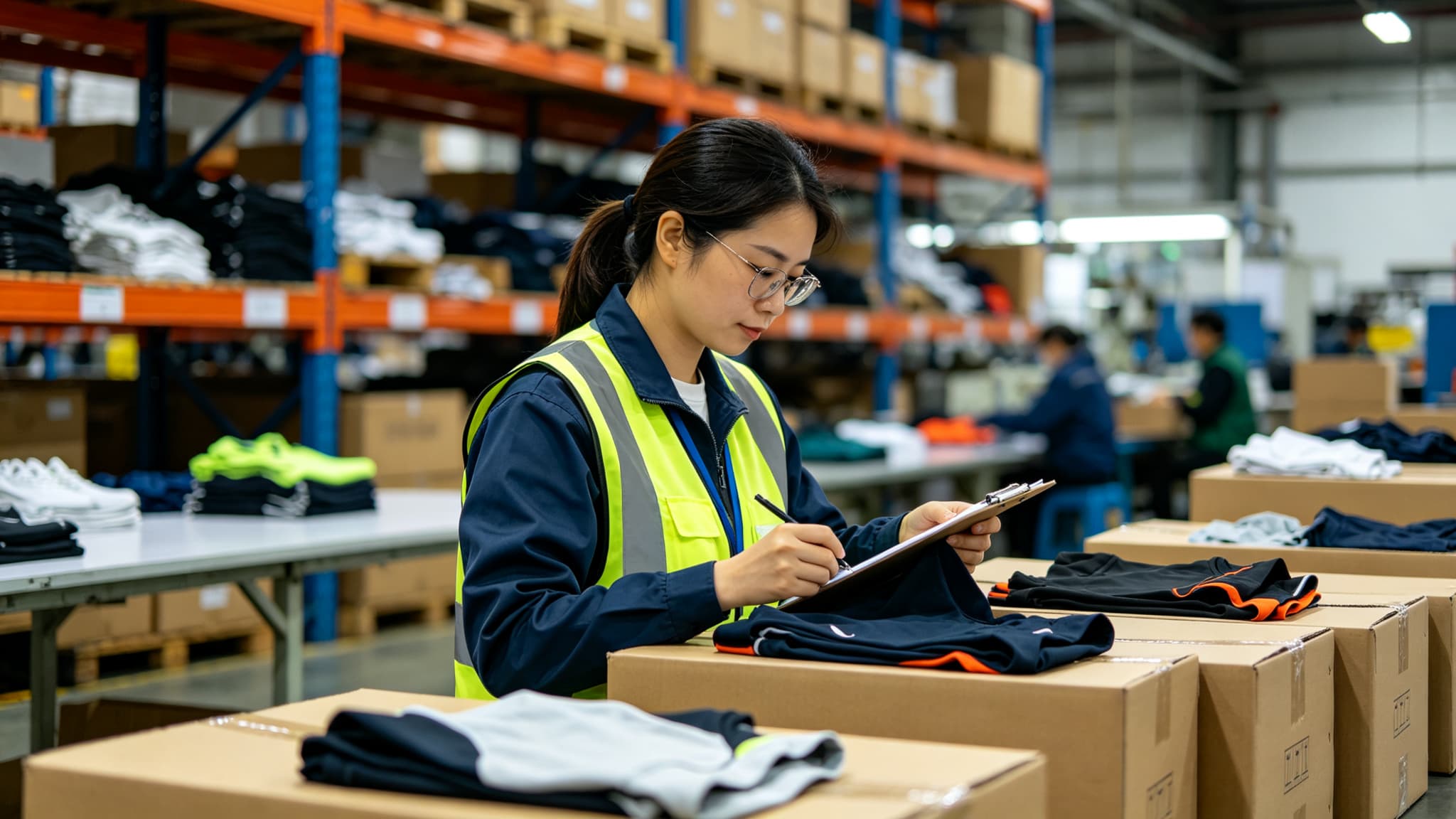
Comparez les fournisseurs selon leur spécialisation produit, la qualité des échantillons, la connaissance des tissus, le MOQ, la communication, la rigueur du contrôle qualité et la préparation à la livraison.
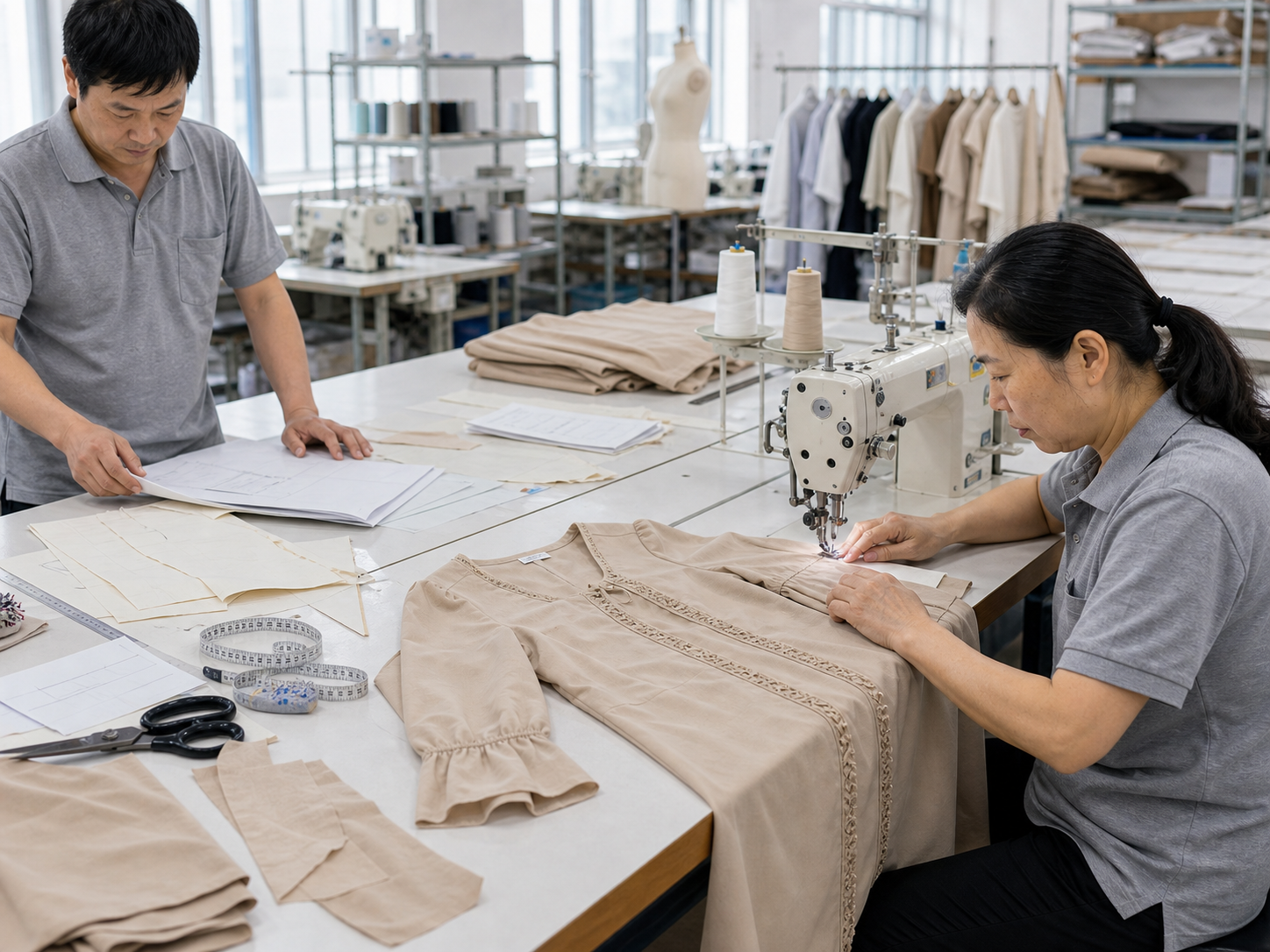
Un fournisseur d'activewear fiable doit maîtriser les tissus extensibles, la coupe, les commentaires sur les échantillons, les techniques de logo, les détails de marque privée, le contrôle qualité, les normes d'emballage, les délais de commande et les documents d'exportation.
Ce qu'il faut examiner
Questions auxquelles les designers, acheteurs et marques doivent répondre
Les acheteurs et les équipes d'approvisionnement comparent les fabricants d'activewear personnalisé avant de demander des échantillons ou de passer une première commande.
Examinez l'expérience produit pertinente, la qualité des échantillons et la connaissance des tissus avant de comparer les prix unitaires.
Clarifiez par écrit le MOQ, les délais de développement, les méthodes de logo, les étiquettes, l'emballage et les points de contrôle qualité.
Évaluez la qualité de la communication avec un vrai brief produit, et non avec un questionnaire fournisseur générique.
Prochaine étape pratique
Transformez la recherche en un brief produit plus clair
Envoyez les mêmes informations produit aux fournisseurs présélectionnés et comparez leurs retours, hypothèses et parcours d'échantillonnage.
Orientations produit
Explorez des produits activewear pertinents
Utilisez ces pages produits comme références pratiques pour votre brief, puis confirmez les matériaux, la coupe, la personnalisation et les détails de production par l'échantillonnage.
Cadre d'achat long format
Comment un acheteur peut-il transformer cette recherche en une décision prête pour la production ?
La tâche centrale lors du choix d'un fournisseur d'activewear pour un programme de marque B2B consiste à déterminer quel fournisseur comprend le vêtement envisagé, peut expliquer ses hypothèses et peut soutenir un parcours documenté de l'échantillon à la commande emballée. Cette décision ne peut pas être prise à partir d'un prix d'appel, d'une photo de produit ou d'une déclaration générale sur la personnalisation. Elle nécessite un enregistrement qui relie l'objectif commercial au vêtement, au matériau, à la coupe, à la construction, au branding, à la quantité, aux contrôles qualité, à l'emballage et à la destination. Lorsque ces éléments sont visibles ensemble, un acheteur peut poser des questions plus précises et une usine peut expliquer le parcours sans prétendre que des détails ouverts sont déjà confirmés.
L'objectif du cadre ci-dessous n'est pas de transformer un fondateur de marque ou un acheteur en technicien du vêtement. Il s'agit de clarifier les responsabilités et les preuves. L'acheteur définit le besoin client et commercial, partage ce qui est connu et identifie les décisions qui comptent. L'usine doit montrer comment la connaissance produit, l'analyse des matériaux, l'échantillonnage, la communication, les contrôles de production, le QC et l'emballage d'exportation fonctionnent ensemble. Les deux parties consignent ensuite ce qui a été examiné, ce qui reste conditionnel, ce qui doit être approuvé physiquement et quelles informations guideront la production ou une commande répétée ultérieure.
Tester la pertinence de la catégorie avant de discuter du prix
Un fournisseur doit comprendre le mouvement, la coupe, le matériau, la construction et les attentes des clients derrière le produit yoga, gym, training, teamwear ou athleisure de l'acheteur.
Pour cette décision, l'acheteur doit énoncer le résultat souhaité, fournir la preuve la plus proche disponible et identifier ce qui est flexible. Le fournisseur peut alors expliquer les implications produit ou processus et signaler toute dépendance à la disponibilité du tissu, à la couleur, à la construction, à la méthode de logo, aux composants, à la quantité ou à l'emballage. Une réponse utile distingue une recommandation d'une instruction de production confirmée et indique ce qui devrait être examiné au moyen d'un échantillon ou d'une autre étape d'approbation.
Consignez le résultat dans une comparaison de fournisseurs à qualité équivalente, construite à partir d'un seul brief, d'une seule liste de questions, des preuves d'échantillons, des hypothèses de devis et des notes de suivi. Incluez la date, le fichier ou l'échantillon pertinent, la personne responsable de l'action suivante et le statut de la décision. Si une modification ultérieure affecte la coupe, le matériau, la fabrication, le branding, l'assortiment ou la préparation de la livraison, revenez à cet enregistrement et identifiez quelles approbations liées doivent être vérifiées à nouveau. Cela évite qu'une modification locale crée une incohérence en aval non détectée.
Juger les questions dès la première réponse
Une réponse utile identifie les détails manquants concernant le tissu, la taille, la couleur, le logo, l'emballage, la quantité et la destination, plutôt que de répondre à un brief incomplet avec une fausse précision.
Pour cette décision, l'acheteur doit énoncer le résultat souhaité, fournir la preuve la plus proche disponible et identifier ce qui est flexible. Le fournisseur peut alors expliquer les implications produit ou processus et signaler toute dépendance à la disponibilité du tissu, à la couleur, à la construction, à la méthode de logo, aux composants, à la quantité ou à l'emballage. Une réponse utile distingue une recommandation d'une instruction de production confirmée et indique ce qui devrait être examiné au moyen d'un échantillon ou d'une autre étape d'approbation.
Consignez le résultat dans une comparaison de fournisseurs à qualité équivalente, construite à partir d'un seul brief, d'une seule liste de questions, des preuves d'échantillons, des hypothèses de devis et des notes de suivi. Incluez la date, le fichier ou l'échantillon pertinent, la personne responsable de l'action suivante et le statut de la décision. Si une modification ultérieure affecte la coupe, le matériau, la fabrication, le branding, l'assortiment ou la préparation de la livraison, revenez à cet enregistrement et identifiez quelles approbations liées doivent être vérifiées à nouveau. Cela évite qu'une modification locale crée une incohérence en aval non détectée.
Comparer les échantillons avec un objectif écrit
Les acheteurs doivent définir si un échantillon confirme la silhouette, les mesures, le maintien, l'opacité, la récupération, le confort des coutures, le comportement du logo, les étiquettes ou la présentation de l'emballage.
Pour cette décision, l'acheteur doit énoncer le résultat souhaité, fournir la preuve la plus proche disponible et identifier ce qui est flexible. Le fournisseur peut alors expliquer les implications produit ou processus et signaler toute dépendance à la disponibilité du tissu, à la couleur, à la construction, à la méthode de logo, aux composants, à la quantité ou à l'emballage. Une réponse utile distingue une recommandation d'une instruction de production confirmée et indique ce qui devrait être examiné au moyen d'un échantillon ou d'une autre étape d'approbation.
Consignez le résultat dans une comparaison de fournisseurs à qualité équivalente, construite à partir d'un seul brief, d'une seule liste de questions, des preuves d'échantillons, des hypothèses de devis et des notes de suivi. Incluez la date, le fichier ou l'échantillon pertinent, la personne responsable de l'action suivante et le statut de la décision. Si une modification ultérieure affecte la coupe, le matériau, la fabrication, le branding, l'assortiment ou la préparation de la livraison, revenez à cet enregistrement et identifiez quelles approbations liées doivent être vérifiées à nouveau. Cela évite qu'une modification locale crée une incohérence en aval non détectée.
Demander comment les choix de matériaux sont confirmés
Un nom de tissu seul n'explique ni le poids, ni le sens d'élasticité, ni la récupération, ni la surface, ni le procédé de coloration, ni la disponibilité, ni l'adéquation au vêtement envisagé.
Pour cette décision, l'acheteur doit énoncer le résultat souhaité, fournir la preuve la plus proche disponible et identifier ce qui est flexible. Le fournisseur peut alors expliquer les implications produit ou processus et signaler toute dépendance à la disponibilité du tissu, à la couleur, à la construction, à la méthode de logo, aux composants, à la quantité ou à l'emballage. Une réponse utile distingue une recommandation d'une instruction de production confirmée et indique ce qui devrait être examiné au moyen d'un échantillon ou d'une autre étape d'approbation.
Consignez le résultat dans une comparaison de fournisseurs à qualité équivalente, construite à partir d'un seul brief, d'une seule liste de questions, des preuves d'échantillons, des hypothèses de devis et des notes de suivi. Incluez la date, le fichier ou l'échantillon pertinent, la personne responsable de l'action suivante et le statut de la décision. Si une modification ultérieure affecte la coupe, le matériau, la fabrication, le branding, l'assortiment ou la préparation de la livraison, revenez à cet enregistrement et identifiez quelles approbations liées doivent être vérifiées à nouveau. Cela évite qu'une modification locale crée une incohérence en aval non détectée.
Rendre visibles les hypothèses de MOQ, de coût et de délai
Les variables de commande dépendent de la complexité du style, de la disponibilité du tissu, des coloris, du branding, de l'emballage, de la quantité et de la planification de l'usine ; les premiers chiffres nécessitent donc un périmètre documenté.
Pour cette décision, l'acheteur doit énoncer le résultat souhaité, fournir la preuve la plus proche disponible et identifier ce qui est flexible. Le fournisseur peut alors expliquer les implications produit ou processus et signaler toute dépendance à la disponibilité du tissu, à la couleur, à la construction, à la méthode de logo, aux composants, à la quantité ou à l'emballage. Une réponse utile distingue une recommandation d'une instruction de production confirmée et indique ce qui devrait être examiné au moyen d'un échantillon ou d'une autre étape d'approbation.
Consignez le résultat dans une comparaison de fournisseurs à qualité équivalente, construite à partir d'un seul brief, d'une seule liste de questions, des preuves d'échantillons, des hypothèses de devis et des notes de suivi. Incluez la date, le fichier ou l'échantillon pertinent, la personne responsable de l'action suivante et le statut de la décision. Si une modification ultérieure affecte la coupe, le matériau, la fabrication, le branding, l'assortiment ou la préparation de la livraison, revenez à cet enregistrement et identifiez quelles approbations liées doivent être vérifiées à nouveau. Cela évite qu'une modification locale crée une incohérence en aval non détectée.
Examiner le transfert QC et approbation
Le fournisseur doit expliquer comment les mesures, matériaux, fabrications, illustrations, étiquettes et détails d'emballage approuvés deviennent des points de contrôle pendant la production et avant l'expédition.
Pour cette décision, l'acheteur doit énoncer le résultat souhaité, fournir la preuve la plus proche disponible et identifier ce qui est flexible. Le fournisseur peut alors expliquer les implications produit ou processus et signaler toute dépendance à la disponibilité du tissu, à la couleur, à la construction, à la méthode de logo, aux composants, à la quantité ou à l'emballage. Une réponse utile distingue une recommandation d'une instruction de production confirmée et indique ce qui devrait être examiné au moyen d'un échantillon ou d'une autre étape d'approbation.
Consignez le résultat dans une comparaison de fournisseurs à qualité équivalente, construite à partir d'un seul brief, d'une seule liste de questions, des preuves d'échantillons, des hypothèses de devis et des notes de suivi. Incluez la date, le fichier ou l'échantillon pertinent, la personne responsable de l'action suivante et le statut de la décision. Si une modification ultérieure affecte la coupe, le matériau, la fabrication, le branding, l'assortiment ou la préparation de la livraison, revenez à cet enregistrement et identifiez quelles approbations liées doivent être vérifiées à nouveau. Cela évite qu'une modification locale crée une incohérence en aval non détectée.
Inclure la communication et la répétabilité
Des enregistrements clairs des révisions, des responsables de décision, des versions de fichiers, des instructions d'emballage et des références de commandes répétées font partie de la capacité d'un fournisseur, et non d'extras administratifs.
Pour cette décision, l'acheteur doit énoncer le résultat souhaité, fournir la preuve la plus proche disponible et identifier ce qui est flexible. Le fournisseur peut alors expliquer les implications produit ou processus et signaler toute dépendance à la disponibilité du tissu, à la couleur, à la construction, à la méthode de logo, aux composants, à la quantité ou à l'emballage. Une réponse utile distingue une recommandation d'une instruction de production confirmée et indique ce qui devrait être examiné au moyen d'un échantillon ou d'une autre étape d'approbation.
Consignez le résultat dans une comparaison de fournisseurs à qualité équivalente, construite à partir d'un seul brief, d'une seule liste de questions, des preuves d'échantillons, des hypothèses de devis et des notes de suivi. Incluez la date, le fichier ou l'échantillon pertinent, la personne responsable de l'action suivante et le statut de la décision. Si une modification ultérieure affecte la coupe, le matériau, la fabrication, le branding, l'assortiment ou la préparation de la livraison, revenez à cet enregistrement et identifiez quelles approbations liées doivent être vérifiées à nouveau. Cela évite qu'une modification locale crée une incohérence en aval non détectée.
Scénarios d'acheteurs
Comment la décision change-t-elle dans les situations de sourcing courantes ?
Les projets réels arrivent rarement avec tous les détails complets. La question utile n'est pas de savoir si le brief est parfait ; il s'agit de savoir si l'information manquante est visible et si l'étape suivante produira des preuves. Ces scénarios montrent comment un acheteur peut continuer à choisir un fournisseur d'activewear pour un programme de marque B2B de manière pratique sans transformer des hypothèses initiales en promesses.
L'acheteur a une direction mais des dossiers techniques incomplets
Commencez par le rôle du produit, le client cible, l'usage prévu, le matériel de référence et les décisions déjà prises. Marquez les mesures, tissus, artworks ou détails d'emballage manquants comme questions ouvertes. La réponse du fournisseur doit montrer ce qui peut être examiné immédiatement, ce qui nécessite un échantillon et quelles informations sont requises avant que la voie ne devienne plus spécifique.
Appliquez le scénario au fournisseur qui comprend le vêtement envisagé, peut expliquer les hypothèses et peut soutenir une voie documentée de l'échantillon à la commande emballée. Notez ce qui peut être accepté comme direction, ce qui nécessite un examen en usine et ce qui doit faire partie d'une comparaison de fournisseurs à l'identique construite à partir d'un seul brief, d'une liste de questions, de preuves d'échantillons, d'hypothèses de devis et de notes de suivi avant que l'acheteur ne compare les fournisseurs ou n'approuve l'étape suivante.
Une référence de catalogue est proche mais pas exacte
Listez les caractéristiques qui fonctionnent déjà et séparez la présentation de la marque des modifications du vêtement. Un logo, une étiquette, un hangtag ou un sac peuvent rester dans une voie fondée sur le catalogue, tandis qu'une nouvelle coupe, matière, patron, construction ou caractéristique de performance peut nécessiter un développement sur mesure. La décision doit être fondée sur la modification demandée, et non sur un libellé de catégorie.
Appliquez le scénario au fournisseur qui comprend le vêtement envisagé, peut expliquer les hypothèses et peut soutenir une voie documentée de l'échantillon à la commande emballée. Notez ce qui peut être accepté comme direction, ce qui nécessite un examen en usine et ce qui doit faire partie d'une comparaison de fournisseurs à l'identique construite à partir d'un seul brief, d'une liste de questions, de preuves d'échantillons, d'hypothèses de devis et de notes de suivi avant que l'acheteur ne compare les fournisseurs ou n'approuve l'étape suivante.
La commande contient plusieurs coloris, tailles et composants de marque
Créez un enregistrement d'assortiment par style, coloris et taille, puis reliez chaque logo, étiquette, code-barres, sac et instruction de carton au SKU correct. Demandez quels choix affectent la planification des matières, les méthodes d'application, les ratios d'emballage ou les hypothèses de devis. C'est ici qu'une collection d'apparence simple peut devenir opérationnellement complexe.
Appliquez le scénario au fournisseur qui comprend le vêtement envisagé, peut expliquer les hypothèses et peut soutenir une voie documentée de l'échantillon à la commande emballée. Notez ce qui peut être accepté comme direction, ce qui nécessite un examen en usine et ce qui doit faire partie d'une comparaison de fournisseurs à l'identique construite à partir d'un seul brief, d'une liste de questions, de preuves d'échantillons, d'hypothèses de devis et de notes de suivi avant que l'acheteur ne compare les fournisseurs ou n'approuve l'étape suivante.
Le programme est censé se répéter
Décidez quels enregistrements approuvés seront conservés après l'expédition et quels changements doivent déclencher un nouvel échantillon. Les spécifications produit, les références de matières et de coloris, les artworks, le placement, les étiquettes, l'emballage, les notes de contrôle qualité et les données de commandes antérieures rendent les réapprovisionnements ultérieurs plus contrôlés. Une récommande ne doit pas dépendre de la mémoire ou d'un ancien fil de messages.
Appliquez le scénario au fournisseur qui comprend le vêtement envisagé, peut expliquer les hypothèses et peut soutenir une voie documentée de l'échantillon à la commande emballée. Notez ce qui peut être accepté comme direction, ce qui nécessite un examen en usine et ce qui doit faire partie d'une comparaison de fournisseurs à l'identique construite à partir d'un seul brief, d'une liste de questions, de preuves d'échantillons, d'hypothèses de devis et de notes de suivi avant que l'acheteur ne compare les fournisseurs ou n'approuve l'étape suivante.
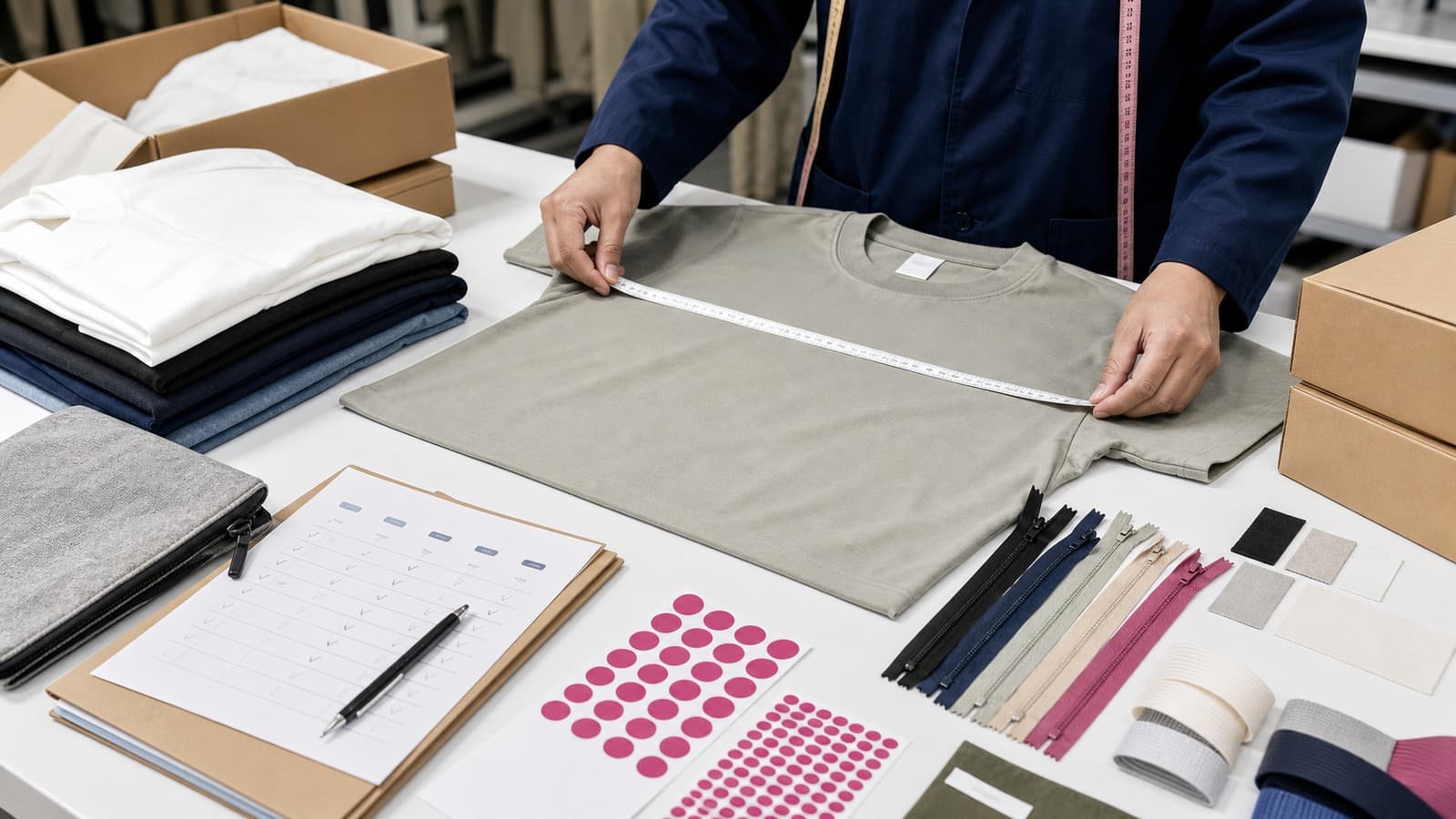
L'évaluation des fournisseurs devient plus utile lorsque les acheteurs comparent les preuves issues du même brief au lieu de comparer des promesses générales.
Cadre d'exécution en usine
Que doit-il se passer entre le premier brief et une commande reproductible ?
Un article B2B n'est utile que lorsqu'il aide le lecteur à comprendre l'exécution. Pour choisir un fournisseur d'activewear pour un programme de marque B2B, les étapes suivantes offrent un parcours pratique, de la première orientation à l'approbation consignée. Ce ne sont ni des promesses fixes ni un calendrier universel. La complexité du produit, la disponibilité des matières, les couleurs, le branding, l'emballage, la quantité, les retours sur échantillons et la planification de l'usine peuvent modifier l'organisation des étapes.
Étape 1
Définition du produit et du cas d'usage
Nommez le vêtement, l'activité prévue, le client, le canal de vente, la couverture, le maintien, le rôle de superposition et les exigences non négociables. Cela évite qu'un nom de produit familier ne masque des attentes différentes.
Dans le contexte de cet article, utilisez cette étape pour clarifier quel fournisseur comprend le vêtement envisagé, peut expliquer ses hypothèses et peut accompagner un parcours documenté de l'échantillon à la commande emballée. Ajoutez la décision, la question ouverte ou la référence d'approbation qui en résulte à une comparaison de fournisseurs à qualité équivalente, construite à partir d'un seul brief, d'une seule liste de questions, de preuves d'échantillons, d'hypothèses de devis et de notes de suivi, et revenez sur les étapes liées chaque fois qu'une exigence produit change.
Étape 2
Revue des références et de la spécification
Expliquez ce que chaque photo, échantillon physique, style de catalogue, croquis, tableau de tailles ou tech pack doit communiquer. Indiquez ce qui doit rester, changer ou rester ouvert à un conseil.
Dans le contexte de cet article, utilisez cette étape pour clarifier quel fournisseur comprend le vêtement envisagé, peut expliquer ses hypothèses et peut accompagner un parcours documenté de l'échantillon à la commande emballée. Ajoutez la décision, la question ouverte ou la référence d'approbation qui en résulte à une comparaison de fournisseurs à qualité équivalente, construite à partir d'un seul brief, d'une seule liste de questions, de preuves d'échantillons, d'hypothèses de devis et de notes de suivi, et revenez sur les étapes liées chaque fois qu'une exigence produit change.
Étape 3
Confirmation des matières et des accessoires
Reliez les exigences d'élasticité, de reprise, d'opacité, de compression, de poids, de surface, de toucher, de couleur, d'élastique, de fermeture à glissière, d'étiquette et de logo au produit réel plutôt que d'approuver des composants isolés.
Dans le contexte de cet article, utilisez cette étape pour clarifier quel fournisseur comprend le vêtement envisagé, peut expliquer ses hypothèses et peut accompagner un parcours documenté de l'échantillon à la commande emballée. Ajoutez la décision, la question ouverte ou la référence d'approbation qui en résulte à une comparaison de fournisseurs à qualité équivalente, construite à partir d'un seul brief, d'une seule liste de questions, de preuves d'échantillons, d'hypothèses de devis et de notes de suivi, et revenez sur les étapes liées chaque fois qu'une exigence produit change.
Étape 4
Objectif de l'échantillon et commentaires
Décidez ce que l'échantillon doit prouver, puis consignez les observations par problème, emplacement, mesure, modification demandée, référence, responsable et statut d'approbation. Un échantillon est une preuve, pas une promesse informelle.
Dans le contexte de cet article, utilisez cette étape pour clarifier quel fournisseur comprend le vêtement envisagé, peut expliquer ses hypothèses et peut accompagner un parcours documenté de l'échantillon à la commande emballée. Ajoutez la décision, la question ouverte ou la référence d'approbation qui en résulte à une comparaison de fournisseurs à qualité équivalente, construite à partir d'un seul brief, d'une seule liste de questions, de preuves d'échantillons, d'hypothèses de devis et de notes de suivi, et revenez sur les étapes liées chaque fois qu'une exigence produit change.
Étape 5
Approbation du branding et de l'emballage
Examinez les visuels et le placement du logo, les étiquettes, les hangtags, les données de code-barres, les sachets, le pliage, l'assortiment, les marquages de carton et les instructions de réception suffisamment tôt pour influencer la commande et le plan de contrôle qualité.
Dans le contexte de cet article, utilisez cette étape pour clarifier quel fournisseur comprend le vêtement envisagé, peut expliquer ses hypothèses et peut accompagner un parcours documenté de l'échantillon à la commande emballée. Ajoutez la décision, la question ouverte ou la référence d'approbation qui en résulte à une comparaison de fournisseurs à qualité équivalente, construite à partir d'un seul brief, d'une seule liste de questions, de preuves d'échantillons, d'hypothèses de devis et de notes de suivi, et revenez sur les étapes liées chaque fois qu'une exigence produit change.
Étape 6
Transfert vers la production et la qualité
Confirmez quelles mesures, matières, couleurs, points de construction, visuels, composants, détails d'emballage et échantillons approuvés sont disponibles pour les équipes de production et d'inspection.
Dans le contexte de cet article, utilisez cette étape pour clarifier quel fournisseur comprend le vêtement envisagé, peut expliquer ses hypothèses et peut accompagner un parcours documenté de l'échantillon à la commande emballée. Ajoutez la décision, la question ouverte ou la référence d'approbation qui en résulte à une comparaison de fournisseurs à qualité équivalente, construite à partir d'un seul brief, d'une seule liste de questions, de preuves d'échantillons, d'hypothèses de devis et de notes de suivi, et revenez sur les étapes liées chaque fois qu'une exigence produit change.
Étape 7
Expédition et dossier de réassort
Conservez les fichiers produits finaux, les modifications, la décision QC, les instructions d'emballage, les références de couleurs et de composants, ainsi que les informations de commande antérieure pour le réapprovisionnement ou l'extension de gamme.
Dans le contexte de cet article, utilisez cette étape pour clarifier quel fournisseur comprend le vêtement envisagé, peut expliquer ses hypothèses et peut accompagner un parcours documenté de l'échantillon à la commande emballée. Ajoutez la décision, la question ouverte ou la référence d'approbation qui en résulte à une comparaison de fournisseurs à qualité équivalente, construite à partir d'un seul brief, d'une seule liste de questions, de preuves d'échantillons, d'hypothèses de devis et de notes de suivi, et revenez sur les étapes liées chaque fois qu'une exigence produit change.
Dossier de décision
Quelles preuves l’acheteur doit-il demander et conserver ?
Le tableau transforme les questions clés de l’article en un format de revue opérationnel. Il est volontairement plus large qu’une simple comparaison de prix unitaires, car un programme d’activewear complet inclut des hypothèses sur le produit, la matière, l’échantillon, la personnalisation de marque, l’emballage et la livraison.
Checklist de l’acheteur
Que doit-on avoir prêt avant le prochain échange avec l’usine ?
Un acheteur peut commencer même lorsque certaines cases restent à cocher. Identifiez-les clairement et demandez quelles preuves permettraient de les clore. Cette approche est plus utile que de masquer l’incertitude ou d’attendre un niveau de perfection impossible. Elle permet aussi d’évaluer plus facilement le raisonnement d’un fournisseur : la réponse doit identifier les décisions liées et expliquer pourquoi un échantillon, une approbation de composant, un brief révisé ou un enregistrement d’emballage est nécessaire.
Poursuivre le parcours de l’acheteur
Gardez l'étape suivante liée à la décision produit
Poursuivez avec préparer une demande de devis (RFQ) pour des vêtements de sport personnalisés lorsque cette question est adjacente à la décision en cours. Si le projet est prêt pour l'examen en usine, envoyez le type de produit, la référence, les priorités en matière de matière et de coupe, la portée du branding, la quantité estimée, les besoins d'emballage et le marché de destination. inPACE Sports pourra alors discuter si l'étape suivante est la sélection des produits, l'examen en marque blanche, le développement personnalisé, l'échantillonnage ou un brief de devis plus complet.
Indiquez ce qui est confirmé, flexible et encore ouvert aux conseils de l'usine.
Demandez comment les décisions passent à l'échantillonnage, à la production, au contrôle qualité et à l'emballage.
Conservez les dossiers d'approbation et de réception nécessaires pour l'expédition et les réapprovisionnements.
FAQ
Questions des acheteurs
Que doit préparer un acheteur lorsqu'il choisit un fournisseur d'activewear pour un programme de marque B2B ?
Préparez l'orientation produit ou collection envisagée, le client et le cas d'usage, les styles ou échantillons de référence, les priorités en matière de tissu et de coupe, les couleurs et tailles, les besoins en branding et emballage, la quantité estimée, le marché de destination et le contexte de lancement. Indiquez clairement les questions en suspens. Cela donne au fournisseur une base pour évaluer quel fournisseur comprend le vêtement envisagé, peut expliquer ses hypothèses et peut soutenir un parcours documenté de l'échantillon à la commande emballée sans traiter les hypothèses comme des spécifications confirmées.
Un acheteur peut-il commencer sans tech pack complet ?
Oui. Un produit de catalogue, un échantillon physique, une image de référence, un croquis, un tableau de mesures, un mood board ou un brief écrit peuvent lancer la discussion. Expliquez ce qui doit être conservé, modifié ou revu, puis utilisez l'échantillonnage et les commentaires écrits pour construire une comparaison de fournisseurs à qualité équivalente à partir d'un seul brief, d'une liste de questions, de preuves d'échantillons, d'hypothèses de devis et de notes de suivi. Une référence est une direction ; ce n'est pas automatiquement une spécification prête pour la production.
Comment aborder le MOQ, le coût et les délais ?
Le MOQ, le coût et les délais dépendent du parcours produit réel, de la disponibilité des tissus, des coloris, de la construction, de la méthode de logo, des étiquettes, de l'emballage, de la quantité et de la planification de l'usine. Demandez au fournisseur de préciser ce qu'un chiffre préliminaire inclut et suppose. Ne comparez pas les chiffres tant que les fournisseurs participants ne répondent pas au même vêtement, matériau, branding, emballage et périmètre de livraison.
Quels détails doivent être approuvés via un échantillon physique ?
Utilisez un échantillon pour examiner les détails qui ne peuvent pas être confirmés de manière fiable à partir d'une simple description : coupe, mesures, maintien, liberté de mouvement, comportement du tissu, opacité le cas échéant, construction, apparence du logo, placement des étiquettes, toucher et présentation du produit. Consignez les observations et les modifications demandées afin que le résultat approuvé puisse guider la production et le contrôle qualité.
Que doit conserver l'acheteur pour la production et les commandes répétées ?
Conservez ensemble les mesures approuvées, les références de matériaux et de couleurs, les artwork, le placement, les fichiers d'étiquettes, les détails des composants, les instructions d'emballage, les commentaires sur les échantillons, les décisions de contrôle qualité, les hypothèses de devis et l'historique des modifications. Le résultat doit montrer comment la connaissance produit, l'examen des matériaux, l'échantillonnage, la communication, les contrôles de production, le contrôle qualité et l'emballage d'exportation fonctionnent ensemble et donner aux deux parties une référence fiable lorsque le produit est inspecté, réapprovisionné ou étendu.