
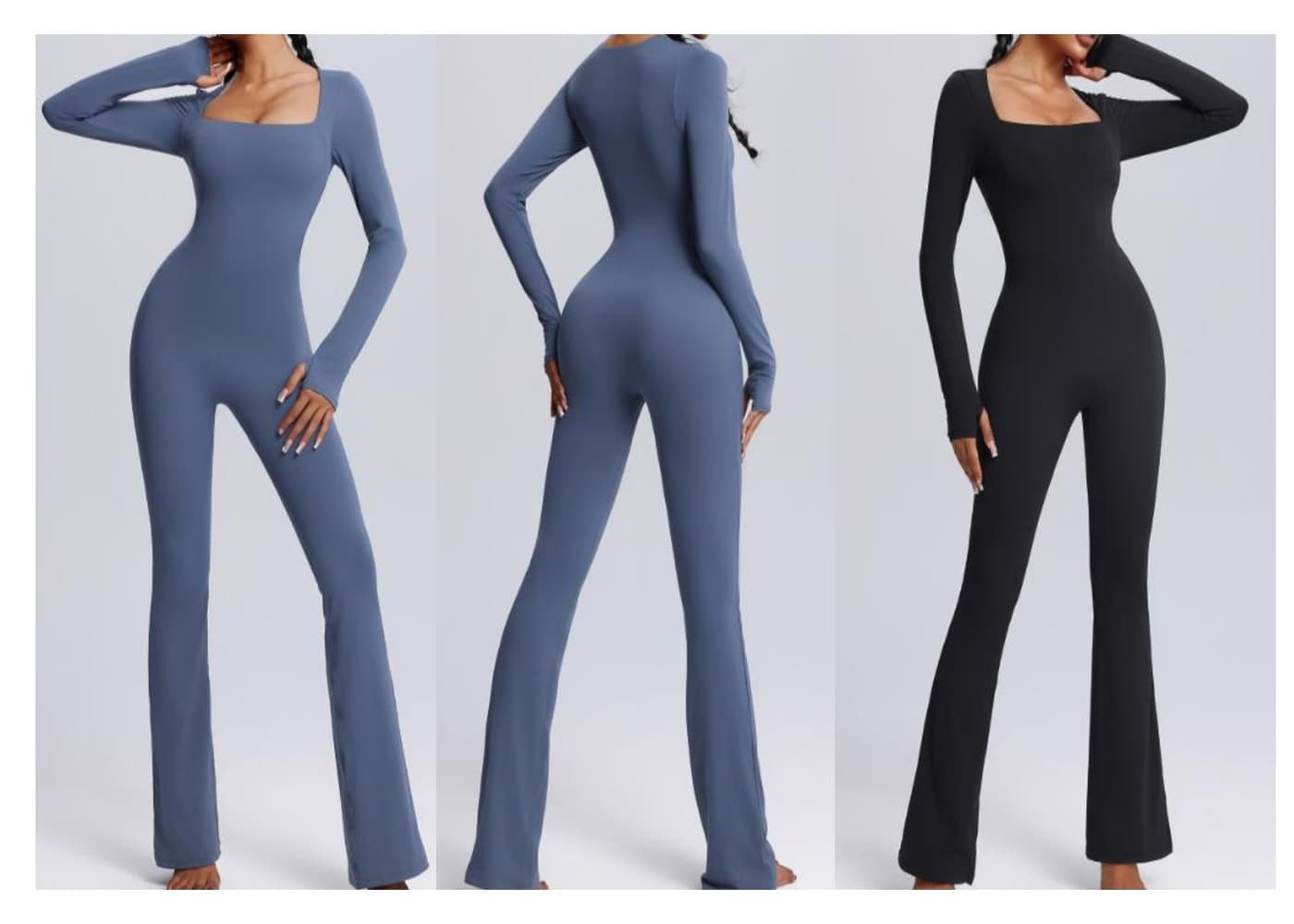
What should a yoga jumpsuit manufacturer review before sampling?
A yoga jumpsuit is a connected one-piece garment. A practical manufacturer brief names the product role, customer, reference, base size, torso-length direction, waist position, crotch and rise question, inseam, leg shape, neckline, sleeve or strap route, coverage and support direction, fabric, branding, sample purpose, and open decisions. A front-and-back image can show a silhouette, but it cannot confirm another buyer's pattern, measurements, material, construction, grading, logo placement, labels, packing, price, quantity, or production conditions.
Use a factory-custom route when the project needs a new one-piece fit, torso proportion, inseam, rise, crotch shape, neckline, sleeve, fabric, panel layout, support approach, colour, or sample plan. A catalogue reference can still establish a visual starting point, but it should be marked as a reference rather than an instruction to copy every feature. The Yoga Wear Manufacturer solution is the appropriate commercial route when a brand needs to turn that direction into a controlled development conversation.
Why does a one-piece need a connected fit brief?
A top and leggings can each sit and grade separately. In a jumpsuit, the upper body, waist, hip, crotch, inseam, leg, neckline, and entry route influence one another. A torso change can move the waist and affect the crotch relationship. A fabric change can alter how the garment feels through the body. A revised neckline or sleeve can change entry, coverage, seam placement, logo area, and the fit question the sample must answer.
That is why a brand should state what it likes about a reference and distinguish non-negotiable details from features that need manufacturer advice. The long-sleeve jumpsuit reference is useful for discussing silhouette direction, but it does not establish final fabric, size grading, support, logo method, label, packing, MOQ, price, or delivery conditions for another programme.
| Brief area | Buyer record | Why it matters | Sample evidence |
|---|---|---|---|
| Product role | Studio, travel, warm-up, layering, recovery, or another named use | Use changes the priority of coverage, entry, support, fabric, and mobility | A named movement sequence and observation |
| Torso and waist | Base size, intended waist position, front-back body relationship, flexible points | Torso proportion connects neckline, waist, crotch, and leg | Garment position before and after the named movements |
| Crotch and inseam | Rise or depth question, gusset or panel, seam route, leg length and hem direction | A local lower-body change can affect the complete one-piece fit | Area-specific fit comment, not a general comfort claim |
| Upper body | Neckline, back, sleeve or strap route, coverage, entry and support question | Upper construction affects torso fit, seams, branding and material use | Coverage, entry and construction observation |
| Fabric and trim | Body material, lining, elastic, mesh, binding, zipper, labels and logo zones | Material and components change stretch, recovery, opacity where relevant and sewing | Record of actual sample material and components |
| Sample purpose | Development, fit, material, branding, or later-stage review | One sample must not silently approve every order decision | Written decision boundary and next action |
The objective is not to demand a complete tech pack before the first conversation. It is to make uncertainty visible. “Torso length to be reviewed on the base size during a stated lunge and overhead reach” gives the manufacturer a testable question. It is more useful than assuming a styled image proves the right fit across every body, fabric, or size range.
How should a brand specify torso length, crotch, and inseam?
Start with a named base size, target customer, intended movement context, and the visual or functional relationship the buyer wants to observe. Attach a current sample, marked reference image, sketch, measurement sheet, or tech-pack page where available. State whether the target waist position is fixed, whether the body length should feel closer or easier, whether a waist seam or continuous body is intended, and which details can change if a sample reveals a connected fit issue.
There is no universal torso length, inseam, or crotch solution for a yoga jumpsuit. The useful direction depends on the silhouette, selected material, intended use, target size range, upper-body construction, leg shape, and actual fit-model or wearer observations. The activewear fit-model brief helps retain the base size, movement sequence, sample version, observation, and decision owner so comments are tied to the reviewed garment rather than memory.
Terms such as gusset, panel, shaping seam, flare, close-fit leg, or hem should be marked as confirmed, proposed, or open to factory advice. A sample can then assess the stated fit and movement question without creating an unsupported no-ride, no-pressure, coverage, or performance guarantee. When a comment is made, record the location, movement, material, size, requested change, and approval boundary.
How should neckline, sleeves, coverage, and support be described?
The upper-body brief should state the intended neckline, back, sleeve or strap route, entry method, lining, coverage direction, and support question. These are development directions, not certifications, medical claims, or universal outcomes. A square neck, high neck, open back, long sleeve, thumbhole, zipper, binding, or internal layer can change torso fit, entry, seam route, logo space, labels, and the relationship to the lower body.
The fabrics and trims resource can organise the body fabric, lining, elastic, mesh, binding, zipper, label, and logo questions before an actual material is approved. It is a planning tool, not proof that any material will create the same result across patterns, colours, weights, constructions, or sizes.

This user-provided fabric image is a material-direction reference, not confirmation of the fabric used in a yoga jumpsuit. Stretch relationship, recovery question, opacity where relevant, handfeel, surface, weight, colour, components, and sample behaviour should be reviewed on the actual one-piece before those details enter a production instruction.
What should a yoga jumpsuit sample prove?
Give the sample one purpose. A development sample may test the interpretation of the reference. A fit sample may focus on torso, crotch, inseam, neckline, sleeve, and named movement observations. A material sample may review the relationship between the selected fabric and pattern. A branding sample may examine artwork placement or label context. A later review can only support the details actually available and approved at that stage.
If a buyer accepts torso position and inseam appearance in one size, that does not approve all size grading, colours, materials, components, logo methods, labels, packing, quantity direction, QC checks, or production scope. Use the activewear sample feedback guide to preserve the style, sample version, materials, observations, change requests, and next decision. The custom activewear development route is the appropriate next discussion for a new fit, fabric, construction, or sample process rather than a catalogue-informed branding request.
How can inPACE support a custom yoga jumpsuit?
inPACE can start with a brief, reference image, existing sample, or tech pack and discuss product role, torso and inseam direction, crotch and leg relationship, neckline, sleeves, support and coverage direction, material and trim questions, fit, branding, sample purpose, QC, packing, and outstanding approvals. This is product-development support, not a claim that every reference can be copied or that an unapproved sample guarantees a bulk outcome.
More than 30 years of garment-production experience informs the manufacturing judgement used to connect a buyer brief with sampling, materials, construction, production coordination, QC, packing, and repeat-order records. This is production-experience context, not an inPACE brand-age claim, a capacity promise, or a guarantee of price, timing, certification, or technical outcome. Where suitable, inPACE can coordinate an appropriate route through multiple partner factories according to the confirmed style, materials, construction, decoration, quantity direction, and scope.
For relevant projects, sample support can be discussed for printing, embroidery, or wash effects. General planning commonly allows about 5–10 days for samples and about 25–50 days for production after scope and approvals are confirmed. These are planning ranges, not commitments; materials, components, construction, colourways, decoration, labels, packing, quantity direction, and revisions can change the applicable route.
What should be ready before a buyer requests a yoga jumpsuit quotation?
- Name the target customer, product role, selling channel, and movement context.
- Share the current reference, physical sample, sketch, marked image, measurement sheet, or tech pack and identify what should stay, change, or be reviewed.
- State the base size, size range direction, torso relationship, waist position, crotch and rise question, inseam, leg shape, and hem intent.
- Describe neckline, back, sleeve or strap route, entry, coverage, support, lining, and component questions.
- List body fabric, lining, elastic, mesh, binding, zipper, labels, logo, and colour directions, separating confirmed choices from open questions.
- Name the first sample purpose, movement sequence, observation, reviewer, and decision owner.
- Provide available artwork, labels, hangtags, bags, folding, cartons, destination, and preliminary quantity information.
- Keep approved, proposed, substituted, and unresolved decisions separate before another sample or production conversation.
The order workflow explains how a B2B product brief can progress through sampling, production, QC, packing, and export preparation. When the inputs are ready, send a custom yoga jumpsuit brief so the next step can be tied to the actual product rather than a broad category request.
What should be approved before bulk production is discussed?
Before comparing a bulk-production plan, make the current style reference, fit notes, materials, components, colours, construction, artwork, labels, packing, quantity direction, sample evidence, QC attention points, and version history easy to find. The manufacturing workflow provides the relevant context for moving the approved information into production coordination, inspection, packing, and shipping preparation. “Sample approved” should only mean what the sample actually proved; a material, colour, neckline, logo, label, packing, or pattern change can require a focused new review.
Product directions
Explore relevant activewear products
Use these product pages as practical references for your brief, then confirm materials, fit, customization, and production details through sampling.
Long-Sleeve Jumpsuit Reference
Use the silhouette to identify which torso, inseam, neckline, sleeve, fabric, or branding decisions should be retained, changed, or reviewed through sampling.
View product directionActivewear Performance Collection
Compare coordinated activewear directions before defining the one-piece role, collection relationship, materials, and private-label scope.
View product directionCustom Activewear Development
Move from a one-piece reference to a controlled brief covering fit, materials, construction, sample questions, branding, QC, and packing.
View product directionLong-form buyer framework
How can a buyer turn this research into a production-ready decision?
The central task in developing a custom yoga jumpsuit as a connected one-piece garment is deciding how to turn a reference into an approved torso, waist, crotch, inseam, upper-body, material, sample, and production record without treating a photo as a finished specification. That decision cannot be made from a headline price, a product photo, or a general statement about customization. It needs a record that connects the commercial goal to the garment, material, fit, construction, branding, quantity, quality checks, packing, and destination. When those elements are visible together, a buyer can ask more precise questions and a factory can explain the route without pretending that open details are already confirmed.
The purpose of the framework below is not to turn a brand founder or buyer into a garment technician. It is to make responsibility and evidence clear. The buyer defines the customer and business need, shares what is known, and identifies the decisions that matter. The factory should review the connected one-piece pattern, material and trim relationships, construction questions, fit evidence, sample purpose, QC attention points, and packing scope against the actual buyer brief. Both sides then record what was reviewed, what remains conditional, what must be approved physically, and what information will guide production or a later repeat order.
Define the one-piece product role
State the intended activity, customer, selling channel, coverage, support direction, layering role, entry consideration, and the visual or functional outcome that matters. A generic jumpsuit label cannot reveal how the product should work for the proposed collection.
For this decision, the buyer should state the intended result, provide the closest available evidence, and identify what is flexible. The supplier can then explain the product or process implications and flag any dependency on fabric availability, colour, construction, logo method, components, quantity, or packing. A useful response distinguishes a recommendation from a confirmed production instruction and says what would need to be reviewed through a sample or another approval step.
Record the outcome inside a yoga-jumpsuit development record connecting the reference, base size, torso and waist relationship, crotch and inseam direction, neckline and sleeve details, materials, components, sample observations, approvals, QC points, and packing instructions. Include the date, relevant file or sample, the person responsible for the next action, and the status of the decision. If a later change affects fit, material, workmanship, branding, assortment, or delivery preparation, return to this record and identify which related approvals need to be checked again. This prevents a local change from creating an unnoticed downstream inconsistency.
Connect torso, waist, crotch, and inseam
Record the base size, target torso relationship, waist position, rise or crotch question, inseam, leg shape, and hem direction together. A change in one part of a one-piece can alter the fit and construction question elsewhere.
For this decision, the buyer should state the intended result, provide the closest available evidence, and identify what is flexible. The supplier can then explain the product or process implications and flag any dependency on fabric availability, colour, construction, logo method, components, quantity, or packing. A useful response distinguishes a recommendation from a confirmed production instruction and says what would need to be reviewed through a sample or another approval step.
Record the outcome inside a yoga-jumpsuit development record connecting the reference, base size, torso and waist relationship, crotch and inseam direction, neckline and sleeve details, materials, components, sample observations, approvals, QC points, and packing instructions. Include the date, relevant file or sample, the person responsible for the next action, and the status of the decision. If a later change affects fit, material, workmanship, branding, assortment, or delivery preparation, return to this record and identify which related approvals need to be checked again. This prevents a local change from creating an unnoticed downstream inconsistency.
Make the upper body reviewable
Describe neckline, back, sleeve or strap route, entry method, lining, coverage, support, seams, and logo areas. Explain which of these are fixed visual goals and which require review on a physical sample.
For this decision, the buyer should state the intended result, provide the closest available evidence, and identify what is flexible. The supplier can then explain the product or process implications and flag any dependency on fabric availability, colour, construction, logo method, components, quantity, or packing. A useful response distinguishes a recommendation from a confirmed production instruction and says what would need to be reviewed through a sample or another approval step.
Record the outcome inside a yoga-jumpsuit development record connecting the reference, base size, torso and waist relationship, crotch and inseam direction, neckline and sleeve details, materials, components, sample observations, approvals, QC points, and packing instructions. Include the date, relevant file or sample, the person responsible for the next action, and the status of the decision. If a later change affects fit, material, workmanship, branding, assortment, or delivery preparation, return to this record and identify which related approvals need to be checked again. This prevents a local change from creating an unnoticed downstream inconsistency.
Relate material and components to the pattern
List body material, lining, elastic, mesh, binding, zipper, labels, and branding zones by product role. Discuss stretch, recovery, opacity where relevant, handfeel, surface, colour, and sewing behaviour on the actual connected garment.
For this decision, the buyer should state the intended result, provide the closest available evidence, and identify what is flexible. The supplier can then explain the product or process implications and flag any dependency on fabric availability, colour, construction, logo method, components, quantity, or packing. A useful response distinguishes a recommendation from a confirmed production instruction and says what would need to be reviewed through a sample or another approval step.
Record the outcome inside a yoga-jumpsuit development record connecting the reference, base size, torso and waist relationship, crotch and inseam direction, neckline and sleeve details, materials, components, sample observations, approvals, QC points, and packing instructions. Include the date, relevant file or sample, the person responsible for the next action, and the status of the decision. If a later change affects fit, material, workmanship, branding, assortment, or delivery preparation, return to this record and identify which related approvals need to be checked again. This prevents a local change from creating an unnoticed downstream inconsistency.
Set one sample decision at a time
Identify whether the next sample tests reference interpretation, torso and lower-body fit, material relationship, neckline construction, branding, or a later approval. Record the exact movement sequence, size, observation, requested change, and decision owner.
For this decision, the buyer should state the intended result, provide the closest available evidence, and identify what is flexible. The supplier can then explain the product or process implications and flag any dependency on fabric availability, colour, construction, logo method, components, quantity, or packing. A useful response distinguishes a recommendation from a confirmed production instruction and says what would need to be reviewed through a sample or another approval step.
Record the outcome inside a yoga-jumpsuit development record connecting the reference, base size, torso and waist relationship, crotch and inseam direction, neckline and sleeve details, materials, components, sample observations, approvals, QC points, and packing instructions. Include the date, relevant file or sample, the person responsible for the next action, and the status of the decision. If a later change affects fit, material, workmanship, branding, assortment, or delivery preparation, return to this record and identify which related approvals need to be checked again. This prevents a local change from creating an unnoticed downstream inconsistency.
Carry approvals into production and QC
Before bulk discussion, connect approved references, measurements, materials, components, construction notes, artwork, labels, packing, sample evidence, and open decisions. This provides a basis for partner-factory coordination without assuming that every item is already settled.
For this decision, the buyer should state the intended result, provide the closest available evidence, and identify what is flexible. The supplier can then explain the product or process implications and flag any dependency on fabric availability, colour, construction, logo method, components, quantity, or packing. A useful response distinguishes a recommendation from a confirmed production instruction and says what would need to be reviewed through a sample or another approval step.
Record the outcome inside a yoga-jumpsuit development record connecting the reference, base size, torso and waist relationship, crotch and inseam direction, neckline and sleeve details, materials, components, sample observations, approvals, QC points, and packing instructions. Include the date, relevant file or sample, the person responsible for the next action, and the status of the decision. If a later change affects fit, material, workmanship, branding, assortment, or delivery preparation, return to this record and identify which related approvals need to be checked again. This prevents a local change from creating an unnoticed downstream inconsistency.
Retain the record for changes and reorders
Keep style versions, size and colour information, material and component references, QC observations, packing instructions, and change history together. A revised fabric, neckline, logo, label, or packing requirement should trigger a focused review of related approvals.
For this decision, the buyer should state the intended result, provide the closest available evidence, and identify what is flexible. The supplier can then explain the product or process implications and flag any dependency on fabric availability, colour, construction, logo method, components, quantity, or packing. A useful response distinguishes a recommendation from a confirmed production instruction and says what would need to be reviewed through a sample or another approval step.
Record the outcome inside a yoga-jumpsuit development record connecting the reference, base size, torso and waist relationship, crotch and inseam direction, neckline and sleeve details, materials, components, sample observations, approvals, QC points, and packing instructions. Include the date, relevant file or sample, the person responsible for the next action, and the status of the decision. If a later change affects fit, material, workmanship, branding, assortment, or delivery preparation, return to this record and identify which related approvals need to be checked again. This prevents a local change from creating an unnoticed downstream inconsistency.
Buyer scenarios
How does the decision change in common sourcing situations?
Real projects rarely arrive with every detail complete. The useful question is not whether the brief is perfect; it is whether the missing information is visible and whether the next step will produce evidence. These scenarios show how a buyer can keep developing a custom yoga jumpsuit as a connected one-piece garment practical without converting early assumptions into promises.
The buyer has a direction but incomplete technical files
Start with the product role, target customer, intended use, reference material, and the decisions already made. Mark missing measurements, fabric, artwork, or packing details as open questions. The supplier response should show what can be reviewed immediately, what needs a sample, and what information is required before the route becomes more specific.
Apply the scenario to how to turn a reference into an approved torso, waist, crotch, inseam, upper-body, material, sample, and production record without treating a photo as a finished specification. Note what can be accepted as direction, what requires factory review, and what must become part of a yoga-jumpsuit development record connecting the reference, base size, torso and waist relationship, crotch and inseam direction, neckline and sleeve details, materials, components, sample observations, approvals, QC points, and packing instructions before the buyer compares suppliers or approves the next stage.
A catalogue reference is close but not exact
List the features that already work and separate brand presentation from garment changes. A logo, label, hangtag, or bag may stay within a catalogue-informed route, while a new fit, material, pattern, construction, or performance feature may require custom development. The decision should be based on the requested change, not a category label.
Apply the scenario to how to turn a reference into an approved torso, waist, crotch, inseam, upper-body, material, sample, and production record without treating a photo as a finished specification. Note what can be accepted as direction, what requires factory review, and what must become part of a yoga-jumpsuit development record connecting the reference, base size, torso and waist relationship, crotch and inseam direction, neckline and sleeve details, materials, components, sample observations, approvals, QC points, and packing instructions before the buyer compares suppliers or approves the next stage.
The order contains several colours, sizes, and brand components
Create one assortment record by style, colour, and size, then connect every logo, label, barcode, bag, and carton instruction to the correct SKU. Ask which choices affect material planning, application methods, packing ratios, or quotation assumptions. This is where a simple-looking collection can become operationally complex.
Apply the scenario to how to turn a reference into an approved torso, waist, crotch, inseam, upper-body, material, sample, and production record without treating a photo as a finished specification. Note what can be accepted as direction, what requires factory review, and what must become part of a yoga-jumpsuit development record connecting the reference, base size, torso and waist relationship, crotch and inseam direction, neckline and sleeve details, materials, components, sample observations, approvals, QC points, and packing instructions before the buyer compares suppliers or approves the next stage.
The programme is expected to repeat
Decide which approved records will be retained after shipment and which changes should trigger a new sample. Product specifications, material and colour references, artwork, placement, labels, packing, QC notes, and prior order data make later replenishment more controlled. A reorder should not depend on memory or an old message thread.
Apply the scenario to how to turn a reference into an approved torso, waist, crotch, inseam, upper-body, material, sample, and production record without treating a photo as a finished specification. Note what can be accepted as direction, what requires factory review, and what must become part of a yoga-jumpsuit development record connecting the reference, base size, torso and waist relationship, crotch and inseam direction, neckline and sleeve details, materials, components, sample observations, approvals, QC points, and packing instructions before the buyer compares suppliers or approves the next stage.

Relevant product directions
Which products can make the next brief more concrete?
Use these product pages to identify a silhouette or collection direction, then state what should remain, change, or be reviewed. Product images are useful references, but fabric, fit, construction, colour, branding, quantity, and packing still require project-specific confirmation.
Long-Sleeve Jumpsuit Reference
Use the silhouette to identify which torso, inseam, neckline, sleeve, fabric, or branding decisions should be retained, changed, or reviewed through sampling.
View product directionActivewear Performance Collection
Compare coordinated activewear directions before defining the one-piece role, collection relationship, materials, and private-label scope.
View product directionCustom Activewear Development
Move from a one-piece reference to a controlled brief covering fit, materials, construction, sample questions, branding, QC, and packing.
View product directionDecision record
Which evidence should the buyer request and retain?
The table turns the article's key questions into a working review format. It is intentionally broader than a unit-price comparison because a complete activewear programme includes product, material, sample, branding, packing, and delivery assumptions.
| Decision area | Buyer evidence | Factory review | Record before approval |
|---|---|---|---|
| Define the one-piece product role | Reference, requirement, intended result, and any non-negotiable constraint. | Feasibility, dependencies, assumptions, sample need, and effect on connected decisions. | Approved reference, open issue, owner, date, and the next checkpoint. |
| Connect torso, waist, crotch, and inseam | Reference, requirement, intended result, and any non-negotiable constraint. | Feasibility, dependencies, assumptions, sample need, and effect on connected decisions. | Approved reference, open issue, owner, date, and the next checkpoint. |
| Make the upper body reviewable | Reference, requirement, intended result, and any non-negotiable constraint. | Feasibility, dependencies, assumptions, sample need, and effect on connected decisions. | Approved reference, open issue, owner, date, and the next checkpoint. |
| Relate material and components to the pattern | Reference, requirement, intended result, and any non-negotiable constraint. | Feasibility, dependencies, assumptions, sample need, and effect on connected decisions. | Approved reference, open issue, owner, date, and the next checkpoint. |
| Set one sample decision at a time | Reference, requirement, intended result, and any non-negotiable constraint. | Feasibility, dependencies, assumptions, sample need, and effect on connected decisions. | Approved reference, open issue, owner, date, and the next checkpoint. |
| Carry approvals into production and QC | Reference, requirement, intended result, and any non-negotiable constraint. | Feasibility, dependencies, assumptions, sample need, and effect on connected decisions. | Approved reference, open issue, owner, date, and the next checkpoint. |
| Retain the record for changes and reorders | Reference, requirement, intended result, and any non-negotiable constraint. | Feasibility, dependencies, assumptions, sample need, and effect on connected decisions. | Approved reference, open issue, owner, date, and the next checkpoint. |
Buyer checklist
What should be ready before the next factory conversation?
A buyer can begin even when some boxes remain open. Label them clearly and ask what evidence would close them. That approach is more useful than hiding uncertainty or waiting for an impossible level of perfection. It also makes a supplier's reasoning easier to evaluate: the response should identify connected decisions and explain why a sample, component approval, revised brief, or packing record is needed.
Continue the buyer journey
Keep the next step tied to the product decision
Continue with the activewear fit-model brief when that question is adjacent to the current decision. If the project is ready for factory review, send the product type, reference, material and fit priorities, branding scope, estimated quantity, packing needs, and destination market. inPACE Sports can then discuss whether the next step is product selection, private-label review, custom development, sampling, or a more complete quotation brief.
State what is confirmed, flexible, and still open for factory guidance.
Ask how decisions move into sampling, production, QC, and packing.
Retain the approval and receiving records needed for shipment and reorders.
FAQ
Buyer questions
What should a yoga jumpsuit manufacturer brief include?
Include the product role, target customer, reference, base size, torso length direction, waist position, crotch and rise question, inseam and leg direction, neckline, sleeves or straps, coverage and support direction, materials, components, branding, size and quantity direction, sample purpose, packing context, and open decisions. Mark what is confirmed, proposed, substituted, or still needs physical review.
Why does torso length matter in a yoga jumpsuit?
Torso length connects the upper body, waist position, crotch area, inseam, and overall silhouette in a one-piece garment. It should be reviewed in the named base size and intended movement context with the actual material and construction. A reference image cannot establish the right proportion for every buyer, fabric, body, or size range.
Can a yoga jumpsuit sample approve bulk production?
A sample supports only the decision it was made to review. A fit sample may clarify a stated torso, inseam, neckline, or movement question, while final materials, components, colours, artwork, labels, packing, quantity direction, QC points, and production scope still need their relevant confirmation before a bulk discussion.
How should a buyer describe crotch and inseam requirements?
State the base size, intended leg shape and length direction, rise or crotch-depth question, gusset or panel reference where relevant, seam route, hem, movement context, and the observation needed from the sample. The manufacturer can then review connected pattern, fabric, construction, and fit implications instead of inferring them from a photo.
How can inPACE support custom yoga jumpsuit development?
inPACE can begin with a brief, reference, sample, or tech pack and discuss one-piece fit, torso, crotch, inseam, neckline, sleeves, materials, components, branding, sample evidence, QC, and packing. It can coordinate an appropriate route through partner factories subject to the confirmed style, materials, construction, decoration, quantity direction, and scope.
Should a buyer specify fabric before the first yoga jumpsuit sample?
Share the material direction that is known and identify what is open. An available development fabric may be enough to answer an early fit or construction question, but it does not automatically confirm final production material. Stretch, recovery, opacity where relevant, handfeel, surface, colour, components, and sample behaviour should be reviewed on the actual product.
How long do yoga jumpsuit samples and production normally take?
For inPACE projects, general planning commonly allows about 5–10 days for samples and about 25–50 days for production after scope and approvals are confirmed. These are planning ranges, not fixed commitments. Materials, construction, colours, decoration, components, labels, packing, quantity direction, and revisions can change the applicable plan.