
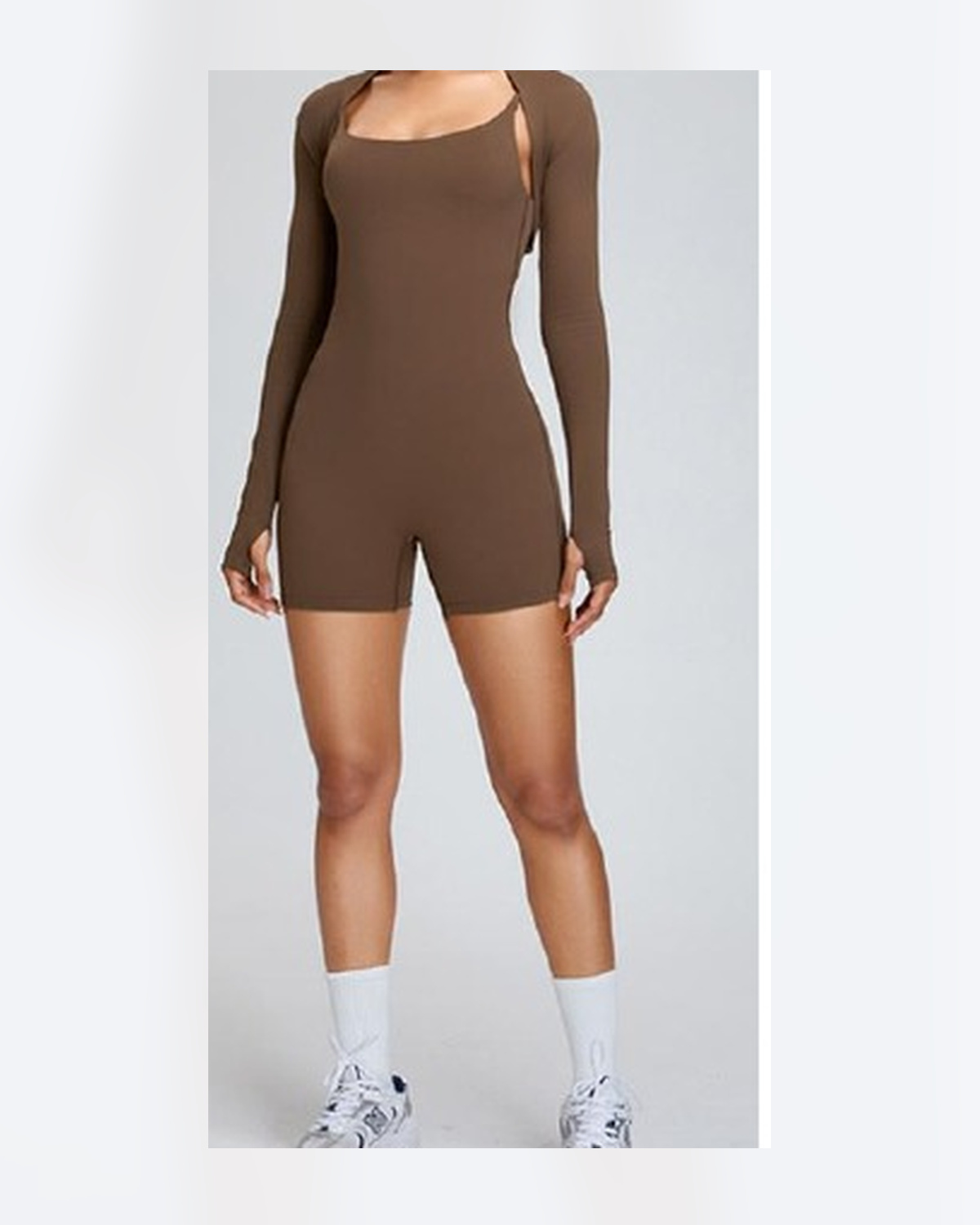
An activewear romper manufacturer needs a connected brief, not only a front-view reference. Brands should define the product role, base size, torso relationship, crotch and rise question, short length, leg opening, neckline, sleeve or strap route, coverage, fabric, branding, sample purpose and unresolved decisions. When any of these differ from an existing style, factory-custom development and approved samples provide the basis for production discussion.
A romper combines the upper body and shorts into a single fit system. That makes it useful for a concise studio, training, travel or athleisure product, but it also makes a weak brief more risky. A revised neckline can affect entry and torso ease. A different waist position can move the crotch relationship. A shorter leg can change coverage and the interaction with the wearer’s movement. A new fabric can affect all of those points at once.
This guide is for B2B brands deciding whether an existing reference can support light customisation or whether the idea needs factory-custom manufacturing. It explains the decisions that should be visible before a sample, the evidence that a sample should create, and the information that should not be assumed from a product photo.
When does a romper need factory-custom development?
A catalogue-informed programme can be a practical route if a ready silhouette already suits the buyer’s product role and the project is limited to confirmed colour direction, logo, labels, hangtags or packing. The buyer should still verify the actual product direction, available material, size range, branding method and commercial scope before treating a reference as a programme.
Factory-custom development is the more suitable route when the brand needs a new torso length, waist position, rise, crotch construction, short length, leg opening, neckline, sleeve, strap, back, lining, pocket, fabric, panel map, colour, grading direction or sample plan. These are connected decisions. A change that seems local can alter the whole garment. For example, a new under-bust seam may change body length and entry. A different inseam can change the leg opening and crotch position. A fabric with another stretch relationship may change what looks balanced on the body.
The Custom Activewear development route is the correct commercial path for these questions. A product reference such as the long-sleeve activewear romper can establish a visual starting point, but it does not confirm its exact fabric, measurements, fit, colour, logo, material availability, price, quantity or production conditions for another buyer.
Why must torso, crotch and leg opening be reviewed together?
A separate top and short can each be changed with some independence. In a romper, the upper body, waist, hip, crotch, inner leg, leg opening and hem need to work as one system. The wearer does not experience the garment as a collection of isolated pattern pieces. She experiences whether it enters comfortably, sits at the intended waist, stays balanced while moving, and gives the intended coverage without unnecessary bulk.
A useful brief names a base size, intended wearer, activity context and target product role. It then identifies which points are fixed and which points are open to manufacturer advice. “Review the body length through a squat and overhead reach on the base size” is an actionable sample question. “Make it flattering” is not. “Check whether the selected leg opening feels secure for a studio lunge without being treated as a universal no-ride claim” is likewise a more useful development instruction.
| Connected area | Buyer input | Why the relationship matters | Sample evidence |
|---|---|---|---|
| Torso and waist | Base size, preferred waist position, closer or easier body direction, front and back reference. | Torso length affects neckline, waist, rise and the apparent short length. | Side-view and movement observations before and after the agreed sequence. |
| Crotch and rise | Rise question, gusset or panel direction, seam route and intended activity. | A lower-body adjustment may require changes to body length, hip shaping or inner-leg seams. | Clear comments during squat, lunge, step-up or another named movement. |
| Short and leg opening | Intended inseam or visual length, leg opening shape, hem finish and coverage direction. | Leg construction changes how the garment meets the hip, crotch and lower-body movement. | Front, side and back observations at rest and in movement. |
| Upper body and entry | Neckline, back, sleeve or strap route, lining, support and entry question. | These choices influence how the one-piece pulls on, sits through the torso and creates seam or logo zones. | Put-on, reach, coverage and construction comments for the reviewed version. |
| Fabric and components | Body fabric, lining, elastic, mesh, binding, zipper, labels and decoration route. | Material and components change stretch, recovery, seam behaviour, opacity where relevant and finishing. | The actual fabric and components identified on a numbered sample. |
| Approval purpose | Development, fit, material, branding or later-stage approval. | A single sample should not silently approve every later production decision. | Written record of what is accepted, open or changed. |
The table is not a demand for a complete tech pack on day one. It makes uncertainty visible so a manufacturer can plan a useful first sample. A reference garment, sketch, annotated image or half-complete measurement sheet can be enough to begin if the buyer clearly separates confirmed directions from questions that require evidence.
How should a brand define the product role before specifying the fit?
First state why the romper exists in the range. A studio one-piece, a low-impact yoga romper, a warm-weather training layer, a travel or staff item, and a retail athleisure piece may look related in a mood board but they call for different fit conversations. A closer studio item may prioritise a controlled neckline, a clear leg length and coverage review. A warm-weather training version may need a defined shoulder, underarm and material discussion. A travel or staff piece may need easier entry, a more relaxed body and branded presentation.
The product role also affects the right service route. Existing styles plus logo, labels and packing can sit in a light-customisation discussion when the silhouette is confirmed. A new fit, fabric, structure, colour or feature belongs in factory-custom development. Do not call a programme wholesale merely because the word sounds commercial if the buyer is actually asking for a new pattern or material system.
Describe the user and product relationship in plain language: the intended activity, adjacent garments, climate or layer context, base layer if relevant, expected movement and which visual feature differentiates the item. This helps the manufacturer judge which questions should be handled in a development sample, a fit sample or a material sample.
Which measurements and fit observations should go into the first brief?
Use a real base-size reference where possible. The most useful information is not only a list of numbers. It is a record of where the buyer expects the garment to sit, which movement exposes the decision, and which point is allowed to change if the first sample does not produce the intended result.
Start with the torso: shoulder-to-waist relationship, front and back body length, intended waist seam or continuous body, neckline position, back route and entry method. Then define the lower body: hip and thigh fit direction, rise or crotch question, inseam or visual short length, leg opening, hem finish, seam route and any lining or inner layer. The buyer can also state whether the piece should be close to the body, have controlled ease or sit as a more relaxed layer.
The activewear fit-model brief is useful for keeping the reviewed size, sample version, actual fabric, named movement, observation, request and decision owner together. A fit comment that is not tied to a sample version is hard to translate into a controlled revision. It can create an unnecessary loop between a brand, material supplier and factory team.
Avoid universal fit claims. A statement such as “the romper must never ride up” makes a guarantee that cannot be proven across bodies, movements, sizes and materials. A better approach is to specify a sample observation: “Review the leg opening, crotch position and short length in a base-size lunge and squat, then record the result and required change.”
How should leg opening and coverage be developed without overpromising?
Leg openings are not only an aesthetic finish. Their circumference, shape, hem construction, elastic direction, seam route, short length, fabric recovery and relationship to the hip affect how the product looks and feels in motion. A wide opening can create a relaxed silhouette. A closer opening can require more careful assessment of seam bulk, recovery and movement. Neither approach is universally better.
The buyer should state the intended short length and coverage direction without treating a reference photo as a specification. Identify whether the hem should appear straight, curved, bonded-looking, turned-and-stitched, bound or another defined route. If a gripper, elastic, lining or compression-like panel is proposed, it should be marked as a component to evaluate, not proof of a performance outcome.
Review the actual selected fabric and prototype in the expected movements. Ask the wearer or fit model to sit, walk, lunge, squat, lift a knee, reach overhead or perform the named activity that matches the product role. Capture the observation at the specific area, not only a general statement such as “comfortable.” The sample record should show which change is requested and whether the change affects another connected point.
This reference image supports discussion of product shape, torso proportion, sleeve route and short length only. It does not establish the fabric, fit, colour, construction, support, available stock, logo, label, price, quantity, testing or manufacturing conditions of a future programme.
What fabric and construction questions matter most for a romper?
For a connected one-piece, fabric and pattern cannot be treated as separate late-stage decisions. The selected body fabric can change the way the upper body drapes, the way the crotch and leg opening recover after movement, the opacity of a light colour where relevant, the seam behaviour at high-motion points and the feel of a waistband or lining. A fabric swatch can start the conversation, but it cannot approve the garment fit.
A useful fabric brief includes handfeel, surface, intended weight or reference, stretch direction, recovery question, coverage concern, colour direction, lining need, panel contrast, mesh or binding direction and any decoration requirement. The fabrics and trims resource helps organise these questions before a buyer requests a final material. Final composition, construction, colour, fit and performance claims require confirmation on the selected material and approved sample.
| Construction point | Buyer decision to define | What needs sample review |
|---|---|---|
| Body fabric | Hand, surface, stretch, recovery, weight and colour direction. | Relationship to torso ease, short length, leg opening and seam behaviour. |
| Crotch or gusset | Panel, gusset, seam route or open question for factory advice. | Position, movement, bulk, construction feasibility and fit feedback. |
| Leg hem | Turned hem, binding, elastic direction, seam finish or visual reference. | Opening behaviour, recovery, visible finish and adjacent seam interaction. |
| Upper construction | Neckline, sleeve, strap, back, lining and entry route. | Pull-on, coverage direction, support question, seam balance and logo space. |
| Decoration and labels | Print, embroidery, transfer, care label, woven label or hangtag direction. | Compatibility with surface, stretch, seams, placement and intended care. |
| Packing | Folding, polybag, barcode, carton and delivery-market instructions. | What can be confirmed after the garment and branding version are approved. |
The best sample process lets the evidence change the brief. If the garment shows that a different hem, gusset, fabric construction or torso ease gives a better result for the stated product role, record the reason and move the revised requirement into the next version. The goal is an approved specification, not loyalty to the first drawing.
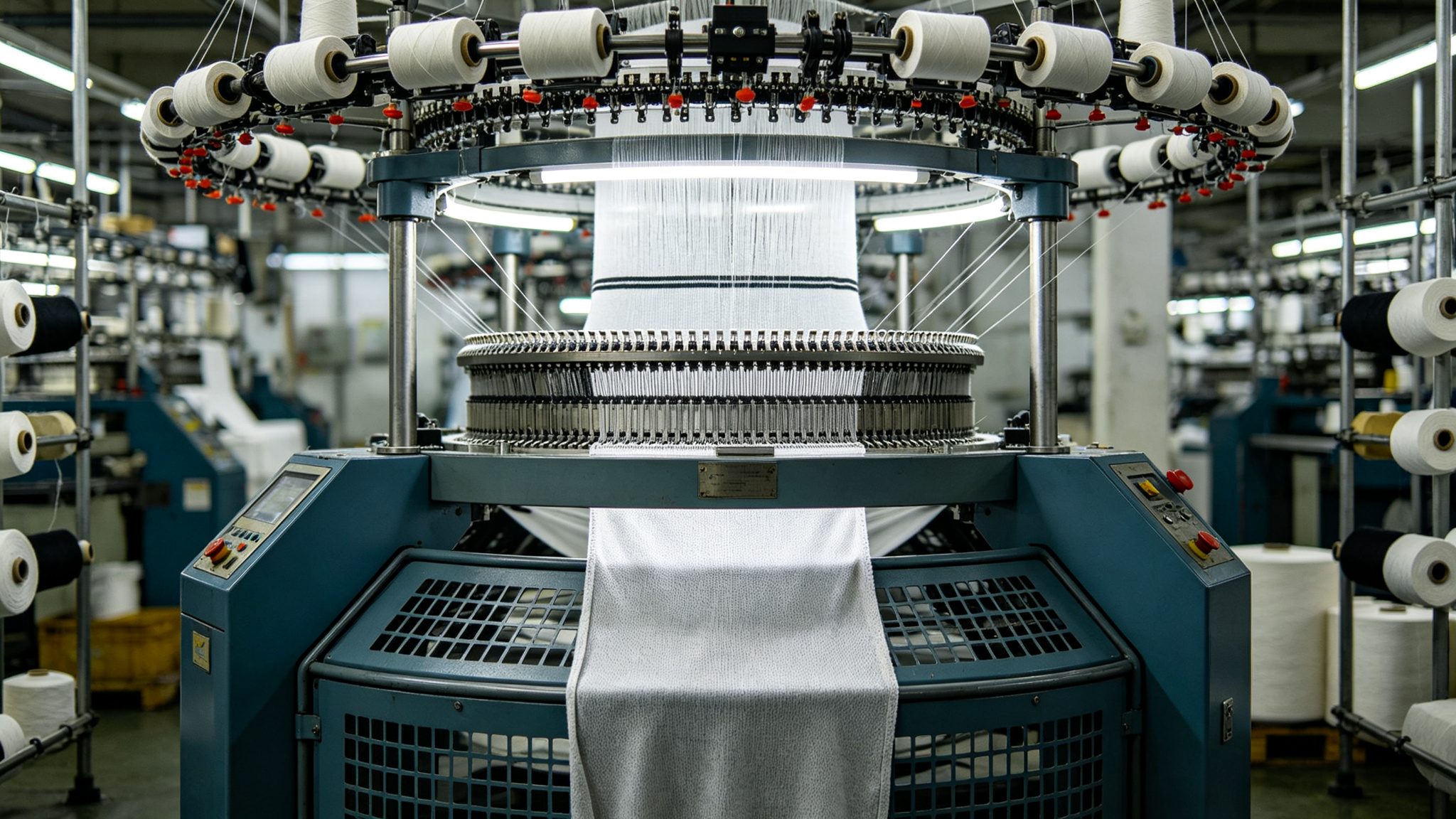
This factory-context image illustrates fabric construction only. It does not confirm a specific fibre, machine assignment, fabric availability, product specification, factory assignment, capacity or production condition for a customer project.
How should sample stages be planned for a custom activewear romper?
Give every sample one purpose. A development sample may test how a reference becomes a new silhouette, including the body shape, leg line and panel map. A fit sample can focus on base size, torso, rise, crotch, short length, leg opening, neckline and named movements. A material or trim sample can examine the selected body fabric, lining, hem construction, seams and branding route. A later approval sample can confirm which decisions are ready to transfer into controlled production instructions.
The activewear sample feedback guide explains why the reviewed garment, material and version must be retained with the comments. An accepted torso position does not automatically approve all sizes, colours, materials, components, labels, packing or future features. A new sample is not a failure if it answers a different decision. It is evidence for the next approval boundary.
For suitable projects, inPACE can discuss sample support that includes printing, embroidery and wash-effect work. Sample planning commonly falls within about 5–10 days and production planning commonly falls within about 25–50 days after project scope and approvals are confirmed. These are planning ranges, not promises. Material availability, colourways, components, construction, decoration, labels, packing, quantity direction, revisions and factory planning affect the actual timing.
How do Supplier, Manufacturer and Factory responsibilities differ?
A supplier discussion helps the buyer compare a product reference, material direction, sample route, commercial assumptions, QC and packing communication. A manufacturer discussion turns those inputs into a garment-development plan: torso, crotch, leg opening, fabric, construction, fit, sample evidence and approval points. A factory discussion implements approved specifications through material handling, cutting, sewing, decoration, quality checks, packing and production coordination.
For a romper, the three roles must connect. A supplier should not be asked to infer the intended movement or coverage from a cropped product photo. A manufacturer should not treat the word “romper” as a complete pattern brief. A factory should not regard a development reference as a final production instruction. Clear inputs make supplier responses easier to compare and reduce the chance that a production team receives unresolved design decisions.
More than 30 years of garment-production experience through Yinshan Garments informs inPACE Sports’ manufacturing judgement and production coordination. This is experience context, not a claim that inPACE itself has operated for that period, and it is not a promise of fixed capacity, price, certification, delivery or product performance. Where a confirmed project calls for it, inPACE can coordinate an appropriate route through multiple partner factories according to the approved style, material, construction, decoration, quantity direction and scope.
How should design intent be carried from sample to production?
The garment does not become production-ready merely because the silhouette looks close to the reference. Before bulk planning, turn the approved sample into a readable record. Keep the style name, version, base size, material code, component references, construction notes, measurement points, seam route, hem finish, logo position, label details, packing requirements and sample comments together. The record should make clear which facts are approved and which are still pending.
For a romper, this handover is especially important because small adjustments can reconnect several pattern areas. A change to the torso may move a waist seam. A revised crotch panel can affect inseam and leg-opening balance. A new fabric may require a fresh review of coverage, stretch, recovery and decoration compatibility. Do not carry an old approval forward automatically when a material, pattern or construction decision has changed.
Use the same version language across the brand, factory and any material or decoration partners. If the buyer asks for a shorter short length, identify whether the change is a measurement-only revision or whether it changes the leg opening, inseam, crotch shape, seam route or hem method. If artwork moves from the chest to a side panel, note whether the selected fabric, panel seam and logo method have been reviewed together. Specific records reduce the chance that a production instruction quietly fills in an unapproved detail.
The activewear manufacturing workflow gives the wider context for connecting approved material, fit, construction, logo, QC and packing information. In a B2B programme, QC is most useful when it checks named points from the approved version rather than a broad word such as “quality.” For a romper, those points may include torso and waist position on the base size, requested short length, crotch and leg-opening construction, seam consistency, decoration placement, label content, packing and the records needed for shipment preparation.
Production discussion should remain conditional until the actual sample version, confirmed materials, decoration, labels, packing, quantity direction and relevant approvals are aligned. This protects both sides: the brand receives a more comparable production plan, and the factory team receives instructions that describe the garment they are expected to make.
Three useful product and service paths
Long-Sleeve Activewear Romper
Product-reference route. The long-sleeve activewear romper can help a buyer point to a one-piece silhouette, sleeve route and short-length direction. Treat it as a reference rather than proof of a future fabric, fit, colour or commercial condition.
Custom Activewear Development
Factory-custom route. Use the custom activewear development route when the brand needs a new torso, crotch, leg opening, fabric, construction, panel, feature or sample plan.
Workout Shorts Development Guide
Adjacent decision guide. The workout shorts manufacturer guide helps a buyer consider inseam, pocket, liner and movement questions that may inform the short section of a connected one-piece.
What should a buyer send before requesting a romper sample?
- The product role, intended wearer, activity context and adjacent collection pieces.
- A current reference garment, sketch, marked image, measurement sheet or tech pack, with notes on what must stay, change or be reviewed.
- Base size, size range direction, intended torso and waist relationship, neckline, back, sleeve or strap route and entry question.
- Rise or crotch question, gusset or panel direction, short length, leg opening, hem finish, coverage direction and named movements.
- Body fabric, lining, elastic, mesh, binding, colour, logo, label and packaging directions, separated into confirmed and open items.
- First sample purpose, review evidence, reviewer, decision owner, quantity direction and delivery-market context.
- A written list of approved, proposed, substituted and unresolved details so the next version has a clear boundary.
This information gives a manufacturer something practical to develop. It also makes any quotation or production-path discussion more comparable because each response is based on the same garment, material, fit, branding and sample assumptions.
Start with an activewear romper product brief
Send inPACE Sports the product role, reference, base size, torso and waist direction, crotch and leg-opening questions, fabric and component direction, movement and fit observations, branding requirements, sample purpose, quantity direction and delivery market. We can discuss whether a reference-led customisation, a controlled small-batch development or factory-custom manufacturing path fits the project. When the brief is ready, request an activewear manufacturing quote to move the romper from a visual idea to a sample-ready development discussion.
FAQ
Buyer questions
What should an activewear romper manufacturer receive before sampling?
Send the product role, reference, base size, torso and waist direction, crotch and short-length question, leg opening, neckline, fabric and component direction, branding, sample purpose, movement review, quantity direction and delivery market. Separate confirmed details from questions that require sample evidence.
Can a product photo be used as an activewear romper specification?
A photo can establish a visual reference, but it cannot confirm another programme’s fabric, measurements, pattern, fit, construction, colour, logo, labels, packing, price, quantity or production conditions. Use it with a written brief and approved samples.
How should a brand choose a romper leg opening?
Start with product role, target short length, fit direction, fabric recovery, seam route and named movements. Review the selected leg opening on the actual sample rather than assuming a reference image will perform the same way across bodies, sizes and materials.
Why is a romper crotch review different from a shorts review?
A romper connects upper body, waist, hip, crotch, inseam and leg opening. A change at the torso or waist can affect the lower body, so the sample review needs to consider the whole garment rather than an isolated shorts block.
Can inPACE help with fabric and fit recommendations for a custom romper?
inPACE can discuss fabric, stretch, recovery, coverage, structure and fit directions from a brief, reference, sample or tech pack. Final choices should be confirmed on the selected material and an approved sample for the specific project.
How long does an activewear romper sample take?
Sample planning commonly falls within about 5–10 days after the project scope is confirmed. The actual route depends on material availability, construction, components, decoration, revisions and the required sample purpose, so timing must be confirmed for the project.
Can a brand add printing, embroidery or wash effects to a romper?
These options can be discussed during sampling. Their placement, appearance, fabric compatibility, care implications and approval requirements should be reviewed on the actual garment and selected materials before production planning.