

Activewear-Mustertypen geben einer Marke eine praktische Möglichkeit zu entscheiden, was als Nächstes nachgewiesen werden muss: Produktinterpretation, Passform, Material- und Besatzverhalten, Veredelung, Größenbereich, Verpackung oder Produktionsreife. Ein benannter Musterzweck verhindert, dass ein Kleidungsstück als Freigabe für jede Entscheidung behandelt wird, und hilft Käufer, Produktteam und Fabrik, sich auf die erforderlichen Nachweise vor dem nächsten Schritt zu einigen.
Wobei sollen activewear-Mustertypen einer Marke helfen, Entscheidungen zu treffen?
Activewear-Mustertypen sind praktische Kontrollpunkte, keine feste Reihenfolge, die jede Bestellung einhalten muss. Jede Musterart sollte eine definierte Käuferfrage beantworten: Kann die Fabrik die Produktidee umsetzen? Sitzt und bewegt sich das Kleidungsstück wie beabsichtigt? Funktionieren das ausgewählte Material und die Besätze zusammen? Sieht eine Dekoration am realen Kleidungsstück angemessen aus? Verhält sich die Größenrange wie geplant? Oder ist das freigegebene Produkt bereit für eine kontrollierte Übergabe in die Produktion?
Bei einem Factory custom manufacturing-Projekt sollte der Musterplan den Risiken im Briefing folgen. Ein eng anliegender BH kann Nachweise zum Unterbrustband, zum Futter, zu den Trägern und zur Bewegungsfreiheit benötigen, bevor es weitergehen kann. Ein bedrucktes Trainingsset kann erfordern, dass das Artwork, die Platzierung der Panels, die Stoffoberfläche und die Farbbeziehung am Kleidungsstück statt an einer flachen Datei geprüft werden. Ein an einem Katalog orientierter Style mit neuen Labels und Verpackung benötigt möglicherweise weniger Produktentwicklungsmuster, aber dennoch eine klare Bestätigung von Branding und Verpackung.
Die wichtige Unterscheidung liegt zwischen dem Zweck eines Musters und seinem Aussehen. Ein Kleidungsstück kann fertig aussehen und dennoch nur ein Entwicklungs- oder Passformmuster sein. Es sollte nicht als Freigabe für Material, Gradierung, Dekoration, Labels, Verpackung oder Serienproduktion behandelt werden, es sei denn, die Personen, die es prüfen, haben diese Punkte ausdrücklich bestätigt. Die Benennung des Mustertyps und der Entscheidung, die er unterstützen soll, verhindert ein bekanntes Problem: Eine Person sagt „das Muster ist freigegeben“, während eine andere eine spätere Prüfung einer Komponente erwartet, die tatsächlich noch nicht abgesegnet wurde.
Warum sollte ein Käufer nicht jedes Muster als finales Muster behandeln?
Jedes physische Muster enthält nützliche Informationen, aber nicht jedes physische Muster enthält die gleichen Inputs. Ein Erstmuster kann die beabsichtigte Silhouette zeigen, während es aus einem verfügbaren Ersatzstoff gefertigt ist. Ein Passformmuster kann in einer Größe und einer Farbe hergestellt sein, obwohl die endgültige Größenrange und das Artwork noch offen sind. Ein Dekorationsmuster kann eine Logoposition oder eine Druckbeziehung belegen, ohne die finalen Bekleidungsmaße zu bestätigen. Ein Verpackungsmuster kann eine Etiketten- oder Beutelanordnung zeigen, ohne das Produktionskleidungsstück selbst zu bestätigen.
Wenn diese Unterscheidungen nicht schriftlich festgehalten werden, werden spätere Diskussionen schwer nachvollziehbar. Ein Käufer kann annehmen, dass ein freigegebener Bund das gewählte Elastikband einschließt, während die Fabrik die Freigabe nur auf das Muster-Schnittmuster bezieht. Ein Marketingteam kann einen Logo-Mock-up freigeben, während das Produktteam das Logo noch auf dem Stoff unter der beabsichtigten Dehnung und Konstruktion prüfen muss. Ein Lagerteam kann ein Verpackungsbeispiel ohne definierten Bezug zur finalen SKU, Faltanweisung oder Kartonplanung erhalten.
Die Checkliste für activewear Tech Packs erklärt, wie eine Marke das Referenzpaket vor der Musterung aufbauen kann. Der Musterplan überführt dann die ungeklärten Teile dieses Pakets in konkrete Prüfungen. Er muss nicht kompliziert sein. Der Käufer muss den Style, den Mustertyp, die Version, die geprüfte Größe und Farbe, die tatsächlich verwendeten Komponenten, die Referenzdateien, den Entscheidungsverantwortlichen und die genaue Frage identifizieren, die vor der nächsten Phase beantwortet werden muss.
Welcher Activewear-Mustertyp passt zu der noch offenen Entscheidung?
Die folgende Tabelle hilft einer Marke, das Muster der Entscheidung zuzuordnen, anstatt ein vages „finales Muster“ anzufordern. Manche Programme kombinieren zwei Zwecke in einem Kleidungsstück; andere benötigen separate Muster, weil eine Änderung die Aussagekraft unklar machen würde. Der richtige Weg hängt vom Produkt, der Materialverfügbarkeit, den Komponenten, der Veredelung, dem Größenplan, dem Auftragskontext und dem Genehmigungsprozess des Käufers ab.
Diese Tabelle ist ein Entscheidungswerkzeug, kein Versprechen, dass jedes Projekt sieben separate Kleidungsstücke verwenden wird. Eine Marke sollte den Musterweg aufteilen, wenn die Kombination von Fragen eine wichtige Abhängigkeit verbergen würde. Zum Beispiel kann ein neuer BH eine Passformprüfung erfordern, bevor die endgültige Platzierung der Veredelung aussagekräftig ist; eine neue Waschbehandlung kann erfordern, dass der Käufer das resultierende Aussehen und den Griff prüft, bevor das Team eine genehmigte Produktionsreferenz besprechen kann. Umgekehrt kann ein etablierter Katalogstil mit einem bestätigten Logo, Etikett und Verpackungsrichtung einen fokussierteren Bestätigungsweg nutzen.
Was sollte ein Entwicklungsmuster beweisen, bevor ein Passformmuster angefordert wird?
Ein Entwicklungsmuster gibt der Fabrik und dem Käufer ein frühes physisches Objekt, über das sie die Produktdefinition besprechen können. Es ist nützlich, wenn ein Brief ein Referenzbild, eine Skizze, einen Produktlink, ein vorhandenes Kleidungsstück oder ein unvollständiges Tech Pack enthält, aber wichtige Entscheidungen noch offen sind. Der Käufer sollte das Muster nutzen, um zu prüfen, ob die Fabrik die Silhouette, die Bahnenbeziehung, den Ausschnitt, den Beinansatz, die Tasche, den Verschluss, das Futter, die Nahtrichtung oder die Funktionsabsicht so interpretiert hat, dass sie den beabsichtigten Activewear-Einsatz unterstützt.
Die Überprüfung sollte unterscheiden zwischen „die Produktidee ist sichtbar“ und „dieses Element ist freigegeben“. Eine Laufshorts mit Innenschicht könnte bestätigen, dass das Konzept aus Außenshorts und Innenfutter besprochen werden kann, während die Taschenpositionierung, die Beziehung zum Bund, die Stoffrichtung und der Bewegungstest noch offen bleiben. Ein Sport-BH-Muster kann die beabsichtigte visuelle Form zeigen, während die Stütze, die Trägerplatzierung, das Futter und die Unterbrustband-Komponenten eine weitere Überprüfung erfordern. Der geeignete nächste Schritt wird durch die unbeantwortete Produktfrage bestimmt, nicht dadurch, ob das Muster nah genug für ein Foto aussieht.
Verwenden Sie ein kontrolliertes Referenzset. Der Käufer kann auflisten, welches Bild, welche Skizze, welcher Produktcode, welche Messdatei, welche Stoffrichtung, welche Farbreferenz, welches Artwork, welche Etikettenanweisung und welche Verpackungsnotiz bereitgestellt wurden. Kennzeichnen Sie jedes Element als bestätigt, vorgeschlagen, für das Muster ersetzt oder noch offen. Das macht deutlich, wann ein Muster einen Platzhalter anstelle der ausgewählten Komponente verwendet, und verhindert, dass ein späterer Prüfer einen Ersatz als endgültige Zusage behandelt.
Wie sollte ein Passformmuster begutachtet werden, ohne zu übertreiben, was es beweist?
Ein Passformmuster ist das richtige Werkzeug, wenn der Käufer die Proportionen und die Bewegungsfreiheit des Kleidungsstücks mit dem vorgesehenen Produktverwendungszweck vergleichen muss. Erfassen Sie den Stil, die Version, die Farbe, die Mustergröße, den Träger oder die Passformreferenz, sofern relevant, sowie die tatsächlichen Bedingungen der Begutachtung. Eine nützliche Beobachtung benennt die Stelle, das Verhalten und die Fragestellung: zum Beispiel, ob ein Ärmel die Reichweite einschränkt, ein Bund während der Bewegung seine Position verändert, eine Öffnung zu eng erscheint oder ein Saum anders sitzt als die beabsichtigte Beziehung vorgibt.
Vermeiden Sie es, eine Beobachtung in eine allgemeingültige Leistungsaussage umzuwandeln. Eine Person, die ein Muster in einer Größe testet, kann wertvolles Produktfeedback liefern, aber das ist kein Beweis dafür, dass sich jeder Körpertyp, jede Farbvariante, jede Materialcharge oder jedes Produktionskleidungsstück identisch verhält. Der Käufer sollte feststellen, ob der nächste Schritt eine Schnittänderung, eine Maßüberprüfung, eine Material- oder Besatzdiskussion, eine Konstruktionsanpassung, ein weiteres Passformmuster oder eine Freigabe durch den Produktverantwortlichen ist.
Passformmuster hängen oft mit Material- und Konstruktionsentscheidungen zusammen. Ein eng anliegendes Kleidungsstück kann sich anders anfühlen, wenn sich die Dehnungsrichtung, das Elastikmaterial, das Futter, die Nahtzugabe, die Stichmethode oder der Stoffgriff ändern. Die Route Stoff- und Besatzprüfung ist nützlich, wenn ein Käufer diese Inputs zusammen mit dem physischen Muster besprechen muss, anstatt anzunehmen, dass ein einzelnes Maß das Ergebnis erklärt. Bei einer Frage zur Größenpalette bietet der Leitfaden zur Größenabstufung von activewear die zugehörige Käuferentscheidung: wie eine genehmigte Basisgröße und benannte Messpunkte in eine bewusste Palette übertragen werden.
Wann benötigt ein Material-, Besatz- oder Dekorationsmuster eine eigene Prüfung?
Geben Sie einem Material-, Besatz- oder Dekorationsmuster eine separate Prüfung, wenn dieses Element verändert, wie das Produkt aussieht, sich anfühlt, bewegt, zusammengesetzt wird oder freigegeben werden sollte. Fragen zu Material und Besatz können Stoffoptik, Dehnungskontext, Erholungsbeobachtungen, Futter, Gummizug, Reißverschluss, Einfassung, Mesh, Etikett oder andere Komponenten betreffen. Fragen zur Dekoration können Artwork-Version, Platzierung, Maßstab, Druck, Stickerei, Wäsche oder die sichtbare Beziehung zwischen dem aufgebrachten Detail und dem activewear-Stoff betreffen.
Die Prüfung sollte an der relevanten Kleidungsstelle erfolgen, wann immer die Oberfläche, die Konstruktion oder die Dehnung die Entscheidung verändert. Eine Grafik, die in einer Computerdatei gezeigt wird, demonstriert nicht ihren Maßstab über ein gewölbtes Panel. Ein Stickerei-Muster zeigt für sich genommen nicht, ob die gewählte Position den Griff, die Dehnung, die Nahtbeziehung oder die visuelle Balance des Kleidungsstücks beeinflusst. Eine Waschrichtung kann das Aussehen oder den Griff des relevanten Musters verändern, daher sollte sie als separate Freigabefrage identifiziert werden, anstatt durch eine frühere Prüfung eines ungewaschenen Kleidungsstücks impliziert zu werden.
inPACE Sports kann Musterarbeiten besprechen, die Druck, Stickerei, Wäsche, Material- und Besatzprüfung umfassen, wenn diese Prozesse Teil des ausgewählten Produktbriefs sind. Der Käufer sollte dennoch das genaue Artwork, die Position, das Kleidungsstück, die Musterversion, die Stoffrichtung, die Komponenten und die gewünschten Nachweise angeben. Kein Musterergebnis sollte als Test, Zertifizierung oder festes Produktionsergebnis dargestellt werden, es sei denn, dieser Nachweis ist separat verfügbar und freigegeben.
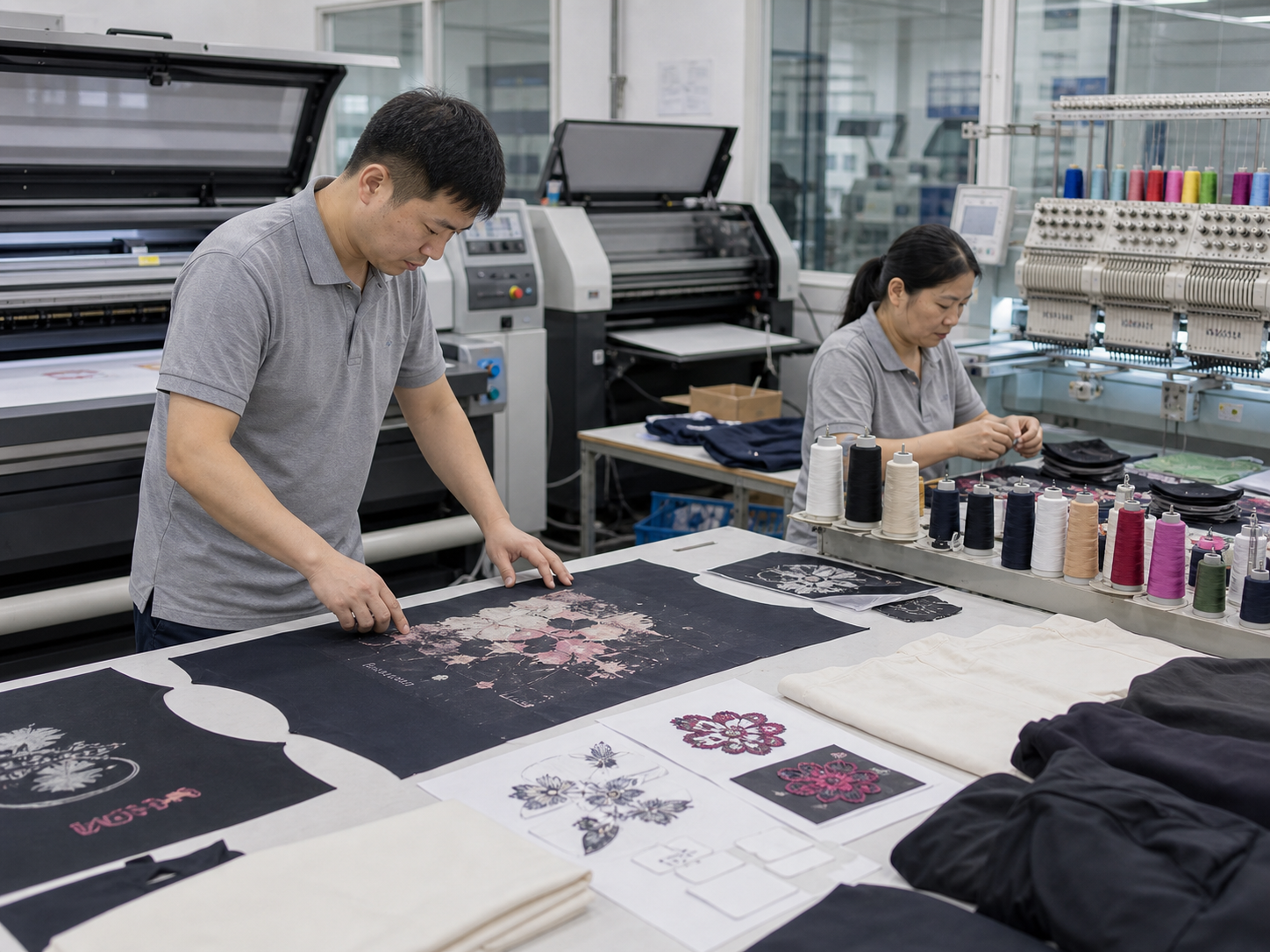
Fabrikteam bereitet ein activewear-Dekorationsmuster neben Druckausrüstung, Garnfarben und Kleidungsstückkomponenten vor
Das Bild veranschaulicht, warum eine Dekorationsentscheidung mehr ist als eine Dateiübergabe. Das visuelle Ergebnis hängt von der Kleidungsstelle, der Stoffoberfläche, der Konstruktion, der Artwork-Version, der beabsichtigten Platzierung und dem genauen zu prüfenden Prozess ab. Wenn diese Details im Musterprotokoll festgehalten werden, kann eine spätere Produktionsdiskussion von einer sichtbaren, kontrollierten Referenz ausgehen.
Was sollte ein Größensatz-Muster bestätigen, das ein Passform-Muster nicht kann?
Ein Größensatz-Muster befasst sich mit der Beziehung über ausgewählte Größen hinweg. Ein Passform-Muster kann einem Käufer helfen zu entscheiden, was das Produkt in der Basisgröße erreichen soll; eine Größensatz-Prüfung fragt, ob die beabsichtigten Maße und Proportionen über den relevanten Bereich hinweg in nutzbarer Weise fortbestehen. Der Käufer sollte die zu prüfenden Größen, die aktive Maßreferenz, die benannten Messpunkte, die geplante Gradierungsbeziehung oder offene Frage sowie die für jede Größe benötigten Nachweise angeben.
Verwenden Sie keine vagen Formulierungen wie „alle Größen sehen richtig aus“, wenn eine konkrete Frage offen bleibt. Beispielsweise muss ein Käufer möglicherweise die Veränderung von Leibhöhe, Beinöffnung, Körperlänge, Trägerlänge oder Unterbrustband über die ausgewählten Muster hinweg bestätigen. Ein koordiniertes Set kann erfordern, dass BH und Leggings zusammen betrachtet werden, aber jedes Kleidungsstück kann dennoch unterschiedliche Mess- und Konstruktionsfragen aufweisen. Der Zweck ist, die Produktentscheidung sichtbar zu machen, nicht eine allgemeine Konformitätserklärung zu erstellen.
Das Größensatz-Ergebnis sollte zusammen mit der genehmigten Basisgrößen-Referenz und etwaigen Korrekturen dokumentiert werden. Wenn eine Größe ein Problem zeigt, geben Sie an, ob eine Gradierungsprüfung, eine Schnittanpassung, eine Materialerklärung oder eine weitere physische Bestätigung erforderlich ist. Diese Aufzeichnung hilft der Fabrik zu verstehen, was sich geändert hat, und hilft dem Käufer zu vermeiden, eine Größenrange auf der Grundlage eines Kommentars freizugeben, der nur für ein Kleidungsstück oder einen Tragekontext galt.
Wie unterscheidet sich ein Vorproduktionsmuster von der Planung vom Muster bis zur Serienproduktion?
Ein Vorproduktionsmuster ist eine Referenz, die dazu dient, zu entscheiden, ob der Produktdatensatz kohärent genug ist, um eine kontrollierte Produktion zu besprechen. Es führt üblicherweise den aktuellen Style, die Materialien, die Farbrichtung, die Konstruktion, die Maße, die Komponenten, die Druckvorlagen, die Labels und die Verpackungspunkte zusammen, die für das Projekt relevant sind. Es ist nicht einfach „das schönste Muster“, sondern das Muster, dessen Beziehung zu den aktuellen Dokumenten und Freigaben von den Personen verstanden wird, die es als Nächstes verwenden müssen.
Der Leitfaden zur Produktion vom Muster bis zur Serie erläutert den breiteren Weg von der Mustergenehmigung über Material, Produktion, QC, Verpackung und Exportvorbereitung. Dieser Artikel befasst sich mit der früheren Frage: Welches Muster sollte jede Entscheidung belegen, bevor diese Übergabe in Betracht gezogen wird? Eine Vorproduktionsreferenz kann nur dann nützlich sein, wenn offene Fragen zu Passform, Material, Dekoration, Größe oder Verpackung sichtbar gemacht und mit einem Ergebnis versehen wurden.
Die Produktionsplanung bleibt bedingt. Der tatsächliche Weg hängt von der Produktkomplexität, der Stoffverfügbarkeit, den Farbvarianten, dem Druck, der Stickerei, der Wäsche, den Labels, der Verpackung, den Mengen und den noch erforderlichen Überarbeitungen ab. Als allgemeiner Planungsrahmen für inPACE-Projekte dauert das Sampling in der Regel etwa 5–10 Tage und die Produktion etwa 25–50 Tage nach Bestätigung der relevanten Freigaben und Projektbedingungen. Diese Zeiträume sind Planungskontext, keine festen Zusagen. Ein besseres Musterprotokoll hilft dem Team zu erkennen, was bestätigt werden muss, bevor der geltende Zeitplan besprochen wird.
Wie kann ein Einkäufer Musterarten in eine nutzbare Entscheidungssequenz einordnen?
Beginnen Sie mit der Einkaufsentscheidung, die das größte Produktrisiko birgt, nicht mit einer allgemeinen Liste von Fabrikschritten. Wenn das Team unsicher ist, ob eine neue Silhouette, Tasche, Nahtanordnung oder Stützkonstruktion die Produktidee ausdrücken kann, beginnen Sie mit einem Entwicklungsmuster. Wenn die zentrale offene Frage die Körperbeziehung oder Bewegung betrifft, machen Sie das nächste Muster zu einer Passformprüfung und benennen Sie die Größe, den Trägerkontext und die Messreferenzen. Wenn eine freigegebene Basisgröße auf eine Größenreihe angewendet werden muss, machen Sie die Größenreihen-Evidenz sichtbar, anstatt anzunehmen, dass ein erfolgreiches Passformmuster dies bereits beantwortet hat.
Ordnen Sie dann Abhängigkeiten zu. Ein Kleidungsstück muss möglicherweise erst dann hinsichtlich seiner Dekoration überprüft werden, wenn der relevante Stoff und der relevante Flächenbereich ausreichend stabil sind. Eine Etiketten- und Verpackungsanordnung kann zur Bestätigung geeignet sein, nachdem der Einkäufer den Stil, die Größe, die Farbe und die Markenpräsentation kennt, die sie identifizieren muss. Eine Vorproduktionsreferenz ist aussagekräftiger, wenn die früheren Produktfragen klare Status haben: freigegeben, überarbeitet, für dieses Muster ersetzt oder noch offen. Bei der Sequenz geht es nicht darum, Musterrunden hinzuzufügen; es geht darum, ein späteres Muster zu vermeiden, das ungelöste Fragen so vollständig vermischt, dass niemand erkennen kann, was sich tatsächlich geändert hat.
Halten Sie die Aufzeichnung kompakt. Ein einseitiges Musterregister kann den Produktcode, die Musterart, die Version, das Eingangsdatum, die überprüften Materialien und Komponenten, verlinkte Referenzdateien, den Entscheidungsverantwortlichen, Beobachtungen, den erforderlichen Nachweis und die nächste Aktion auflisten. Wenn sich ein Kommentar auf einen bestimmten Kleidungsbereich bezieht, verlinken Sie ein Foto oder eine Anmerkung mit derselben Kommentar-ID. Wenn ein Punkt noch nicht final ist, kennzeichnen Sie ihn als offen, anstatt ihm eine implizite Freigabe zuzuweisen. Diese Disziplin ermöglicht es einem Einkäufer, ein überarbeitetes Kleidungsstück mit der richtigen vorherigen Version zu vergleichen, und ermöglicht es der Fabrik, sich auf den für den nächsten Schritt erforderlichen Nachweis zu konzentrieren.
Der Leitfaden für Activewear-Musterfeedback erklärt, wie Beobachtungen an einem physischen Kleidungsstück in ein kontrolliertes Überarbeitungsbriefing umgewandelt werden. Diese Arbeit beginnt, nachdem der Einkäufer weiß, was das Muster beweisen sollte. Zusammen geben der Musterarten-Plan und die Überarbeitungsaufzeichnung einem Entwicklungsteam eine klarere Antwort auf zwei getrennte Fragen: Was soll dieses Kleidungsstück demonstrieren, und was muss sich nach der Überprüfung ändern oder freigegeben bleiben?
Was sollte ein Einkäufer vorbereiten, bevor er das nächste Muster anfordert?
Bevor ein Einkäufer ein Entwicklungs-, Passform-, Material-, Veredelungs-, Größensatz-, Verpackungs- oder Vorproduktionsmuster anfordert, sollte er die nächste Entscheidung leicht erkennbar machen:
- Stil- oder Produktcode, Musterart, Phase, Version, Farbe, Größe und tatsächlich im Umfang enthaltene Komponenten angeben.
- Das aktuelle Referenzpaket beifügen: Brief, Tech Pack, freigegebene Bilder, Maßtabelle, Stoff- und Besatzrichtung, Artwork, Etiketten und Verpackungshinweise, soweit relevant.
- Die ein oder zwei Hauptfragen definieren, die das Muster beantworten muss, statt ein generisches „finales Muster“ anzufordern.
- Kennzeichnen, ob ein Artikel freigegeben, vorgeschlagen, für dieses Muster ersetzt, in Prüfung oder offen ist.
- Bei der Passform den Kleidungsbereich, die geprüfte Größe, den beabsichtigten Bewegungs- oder Verwendungskontext, die Beobachtung und die nächste erforderliche Entscheidung nennen.
- Bei Maßen den Messpunkt, die aktuelle Referenz, das beobachtete Ergebnis und ob der Wert freigegeben oder nur vorgeschlagen ist, angeben.
- Bei Materialien und Besätzen den tatsächlich verwendeten Stoff oder die Komponente, den Kleidungsbereich, die sichtbare Beobachtung und jede Frage, die das nächste Muster beeinflusst, angeben.
- Bei Druck, Stickerei, Wäsche, Etiketten oder anderen Markendetails das physische Muster mit der korrekten Artwork- oder Anweisungsversion und der genauen Platzierung verknüpfen.
- Bei Größensatz-Prüfungen die Größen und Punkte auflisten, die geprüft werden müssen, nicht nur einen gesamten Größenbereich.
- Bei der Verpackung das Produkt, Etikett, Beutel, Aufkleber, Hangtag, die Faltung, Set-Gruppierung und kundenspezifische Felder, die bestätigt werden müssen, identifizieren.
- Jedem offenen Punkt einen Verantwortlichen und einen klaren Status zuweisen: freigeben, überarbeiten, bestätigen, zurückstellen oder besprechen.
- Die konkrete nächste Aktion anfordern: Interpretation, überarbeitetes Muster, Komponentenprüfung, Größensatz-Nachweis, Verpackungsbestätigung oder eine Besprechung zur Produktionsreife.
Diese Checkliste ersetzt nicht das interne Freigabesystem einer Marke. Sie gibt der Fabrik ein nutzbares Briefing und bewahrt die Unterscheidung zwischen einem Muster, das eine Idee demonstriert, und einem Muster, das eine benannte Produktionsentscheidung stützt.
Wie kann inPACE Sports einen Musterplan für ein individuelles Activewear-Projekt unterstützen?
inPACE Sports kann eine Produktreferenz eines Käufers, den Musterszweck, Passformfragen, Material- und Besatzrichtung, Artwork, Etiketten, Verpackungsanforderungen und offene Entscheidungen prüfen, um einen geeigneten Weg für die kundenspezifische Fertigung in der Fabrik zu besprechen. Die Ningbo Yinshan Garments Factory kann die relevanten Gespräche zu Musterung, Druck, Stickerei, Wäsche, Näherei, QC, Verpackung und Produktion mit dem tatsächlichen Produktbriefing verbinden, sofern diese Prozesse zutreffen.
Für eine katalogbasierte Richtung kann eine Produktreferenz einem Brand helfen, mit einer bestehenden Silhouette zu starten und zu entscheiden, welche Marken- oder Präsentationsdetails ein Bestätigungsmuster benötigen. Wenn die Anfrage die Passform, den Stoff, die Konstruktion, die Farbe, ein Merkmal, die Dekoration oder den Musterweg ändert, sollte dies klar als kundenspezifische Entwicklung gekennzeichnet werden. Diese Abgrenzung schützt sowohl den Käufer als auch die Fabrik davor, eine wesentliche Produktänderung als kleine Katalogmodifikation zu behandeln.
Was sollte eine Marke senden, um eine Activewear-Musterdiskussion zu beginnen?
Senden Sie die Produktreferenz oder Style-Idee, den benötigten Mustertyp, den Verwendungszweck, die geprüfte oder Zielgröße, aktuelle Maße, Material- und Besatzrichtung, Farbreferenz, Artwork und Platzierung, Etiketten- und Verpackungshinweise, kommentierte Bilder falls verfügbar, offene Fragen und die als Nächstes erforderliche Entscheidung. Geben Sie an, was unbekannt bleibt, statt Lücken mit Annahmen zu füllen.
Teilen Sie einen Activewear-Musterplan, wenn das Team entscheiden muss, was das nächste Kleidungsstück beweisen soll. Eine fokussierte Musteranfrage gibt einer B2B-Produktentwicklungsdiskussion einen klareren Ausgangspunkt, ohne feste Preise, MOQ, Kapazität, Tests, Zertifizierung oder Lieferergebnisse zu implizieren.
Produktrichtungen
Relevante Activewear-Produkte entdecken
Nutzen Sie diese Produktseiten als praktische Referenzen für Ihr Briefing und bestätigen Sie anschließend Materialien, Passform, Individualisierung und Produktionsdetails durch Muster.
FAQ
Fragen der Einkäufer
Was sind die wichtigsten Arten von Activewear-Mustern?
Zu den gängigen Activewear-Mustertypen gehören Entwicklungs- oder Konzeptmuster, Passformmuster, Material- und Besatzmuster, Dekorations- oder Waschmuster, Größensatzmuster, Verpackungsmuster und Vorproduktionsmuster. Ein Projekt muss nicht unbedingt jeden Typ enthalten; das richtige Muster hängt von der Produktentscheidung, den Freigabenachweisen, den Materialien, Komponenten, dem Branding, dem Größenplan und dem Produktionsweg ab.
Was ist der Unterschied zwischen einem Entwicklungsmuster und einem Passformmuster?
Ein Entwicklungsmuster hilft einem Einkäufer und einer Fabrik, die Produktrichtung, Silhouette, Merkmale und Konstruktionsfragen zu interpretieren. Ein Passformmuster konzentriert sich auf die Beziehung zwischen einer geprüften Größe, Maßen, Proportionen, Bewegung, Abdeckung, Unterstützung oder Öffnungen und dem beabsichtigten Produktgebrauch. Keines davon genehmigt automatisch jedes Material-, Dekorations-, Größen-, Verpackungs- oder Produktionsdetail.
Genehmigt ein Activewear-Passformmuster jede Größe?
Nein. Ein Passformmuster kann nützliche Nachweise für die geprüfte Größe und die Bedingungen liefern, aber eine Größensatzprüfung befasst sich damit, wie ausgewählte Maße und Proportionen über den vorgesehenen Bereich hinweg zusammenhängen. Der Einkäufer sollte die relevanten Größen, Messpunkte, den genehmigten Basisgrößen-Referenzwert, Beobachtungen und alle Gradierungs- oder Schnittfragen, die noch entschieden werden müssen, benennen.
Wann sollte eine Marke ein Druck-, Stick- oder Waschmuster anfordern?
Fordern Sie ein separates Dekorations- oder Waschmuster an, wenn der Prozess das Aussehen, die Platzierung, die Stoffoberfläche, die Dehnungsbeziehung, den Griff, den Konstruktionsbereich oder die Produktfreigabeentscheidung des tatsächlichen Kleidungsstücks beeinflusst. Die Aufzeichnung sollte die Artwork- oder Prozessversion, das Kleidungsstück, den Ort, die Materialrichtung, die Musterversion, das beobachtete Ergebnis und die erforderliche nächste Maßnahme benennen.
Was sollte ein Vorproduktionsmuster bestätigen?
Ein Vorproduktionsmuster sollte die aktuelle Produktaufzeichnung ausreichend sichtbar machen für eine kontrollierte Produktionsdiskussion: Stil, Materialien, Farbrichtung, Konstruktion, Maße, Komponenten, Artwork, Etiketten und Verpackungspunkte im Geltungsbereich. Es begründet für sich genommen keine feste Zusage zu Preis, Mindestbestellmenge, Zeitplan, Kapazität, Tests, Zertifizierung oder Lieferung.
Wie lange dauern Activewear-Muster und die Produktion normalerweise?
Für inPACE-Projekte sieht die allgemeine Planung üblicherweise etwa 5–10 Tage für die Mustererstellung und etwa 25–50 Tage für die Produktion vor, nachdem relevante Freigaben und Projektbedingungen bestätigt wurden. Dies sind keine festen Zusagen. Produktkomplexität, Stoffverfügbarkeit, Farbvarianten, Druck, Stickerei, Waschen, Etiketten, Verpackung, Mengen und Änderungswünsche können den anwendbaren Weg und den Zeitplan verändern.
Was sollte ein Einkäufer für eine Activewear-Musteranfrage senden?
Senden Sie die Produktreferenz oder Stilidee, den Musterzweck, den beabsichtigten Gebrauch, aktuelle Maße oder Passformnotizen, Material- und Besatzrichtung, Farbreferenz, Artwork und Platzierung, Etiketten- und Verpackungsanforderungen, Musterversion, annotierte Nachweise, offene Fragen und die genaue nächste erforderliche Entscheidung. Kennzeichnen Sie, was bestätigt, vorgeschlagen, ersetzt oder noch offen ist.